Moving in Cleaner Guide for Singapore Homes
This is some text inside of a div block.


You've got the keys on Friday, the movers booked for Saturday morning, and an empty flat that looks clean until you open a kitchen cabinet or run a fingertip along a wardrobe track. There's paint dust in the corners, a grease film on the splashback, and a stain inside a wardrobe that you didn't put there. If you clean first and document later, you can't prove what was already damaged.
Treat a moving in cleaner as a handover job, not a tidy. Send one written scope, photograph the condition before anyone wipes a surface, and inspect by zone before your boxes go in. That record won't guarantee a deposit return, but it'll stop an old defect becoming your argument.
You're standing in a vacant HDB flat or condo with bare floors, closed windows and that stale, shut-up smell. A moving-in clean prepares an empty or newly renovated home for occupation. It's not a weekly tidy of a lived-in home, and don't let a quote blur the two. Weekly cleaning works around furniture and laundry baskets. This job reaches inside empty cabinets, along window tracks and behind appliance bays while they're still accessible.
Start with the table. Tick only the rows that match this home, delete the rest, and send the identical list to every moving in cleaner you approach. That forces like-for-like quotes and exposes silent omissions.
ZoneStandard cleanUsually an add-onDo not treat as certifiedEntry and doorsHandles, switches, door frames, shoe areaLift lobby outside the unitLock or access-card faultsKitchenCabinets, hob, sink, splashback, countersOven, fridge, hood filters, heavy greaseGas or electrical safetyBathroomsToilet, screen, taps, grout, exhaust grilleMould treatment, regrouting, ceiling repaintConcealed leaks or waterproofingBedroomsWardrobes, tracks, skirting, floorsInside mattress, pest treatmentStructural or paint defectsLiving areasFloors, fans, window tracks, touchpointsExterior glass, high condo facadeAir-con or electrical faultsUtility or shelterFloor, shelves, door if listedHeavy debris, stored items left behindAsbestos or hazardous waste
Read the zones plainly. Entry means handles, switches, door frames and the shoe area where builder dust collects. Kitchen means cabinets inside and out, hob, sink and splashback, because your plates and food go there first. Bathrooms means toilet, shower screen, taps, grout lines and the exhaust grille, which traps lint and moisture. Bedrooms means built-in wardrobe interiors, sliding tracks and skirting before clothes go in. Living areas means floors into corners, ceiling fans and window tracks.
Don't assume these are included because a salesperson said "deep clean". Get yes or no in writing for each one.
• Appliance interiors: Oven, fridge, freezer and cooker hood filters, especially with baked-on grease
• Glass at height: Exterior panes or condo facade glass, which changes access and safety requirements
• Soft furnishings: Curtain washing as a separate job, booked through curtain cleaning for a move-in handover rather than squeezed into the room clean
• Problem soil: Mould treatment, heavy paint dust, silicone smears and adhesive residue from renovation
• Filters: Air-con filters, if you want them rinsed rather than just the cover wiped
Photograph before you clean. A timestamped photo of a chip or stain is worth more than a confident memory during a deposit discussion.
Before anyone starts, walk through with your phone. Photograph stains, chips, scratches, grout haze and residue room by room, and keep a timestamped list for the agent or landlord. Open every cabinet and wardrobe. Check mould-prone spots around bathroom silicone and window frames. This isn't fussiness. With Singapore's resident household figures from SingStat showing approximately 1.49 million resident households in 2025, up 1.6% year over year, handovers among renters, owners and families changing homes are routine, and routine handovers still produce disputes when nobody recorded the starting condition.
Say the limit out loud in your brief. A cleaner cannot certify concealed water leaks, pest infestations, asbestos, or electrical and air-conditioning faults. Those need a plumber, pest contractor, electrician or air-con technician. If a cleaner offers to "check everything", that's a red flag, not extra value. Their job is to clean what's listed and record what they found, not to sign off hidden systems.
Sequence the clean so the next trade doesn't undo it. Clean too early and painters trail dust through it. Clean after the furniture lands and you'll never reach the floor edges again. The order below protects the one empty window you get.
The four-step flow here shows the timing logic at a glance.
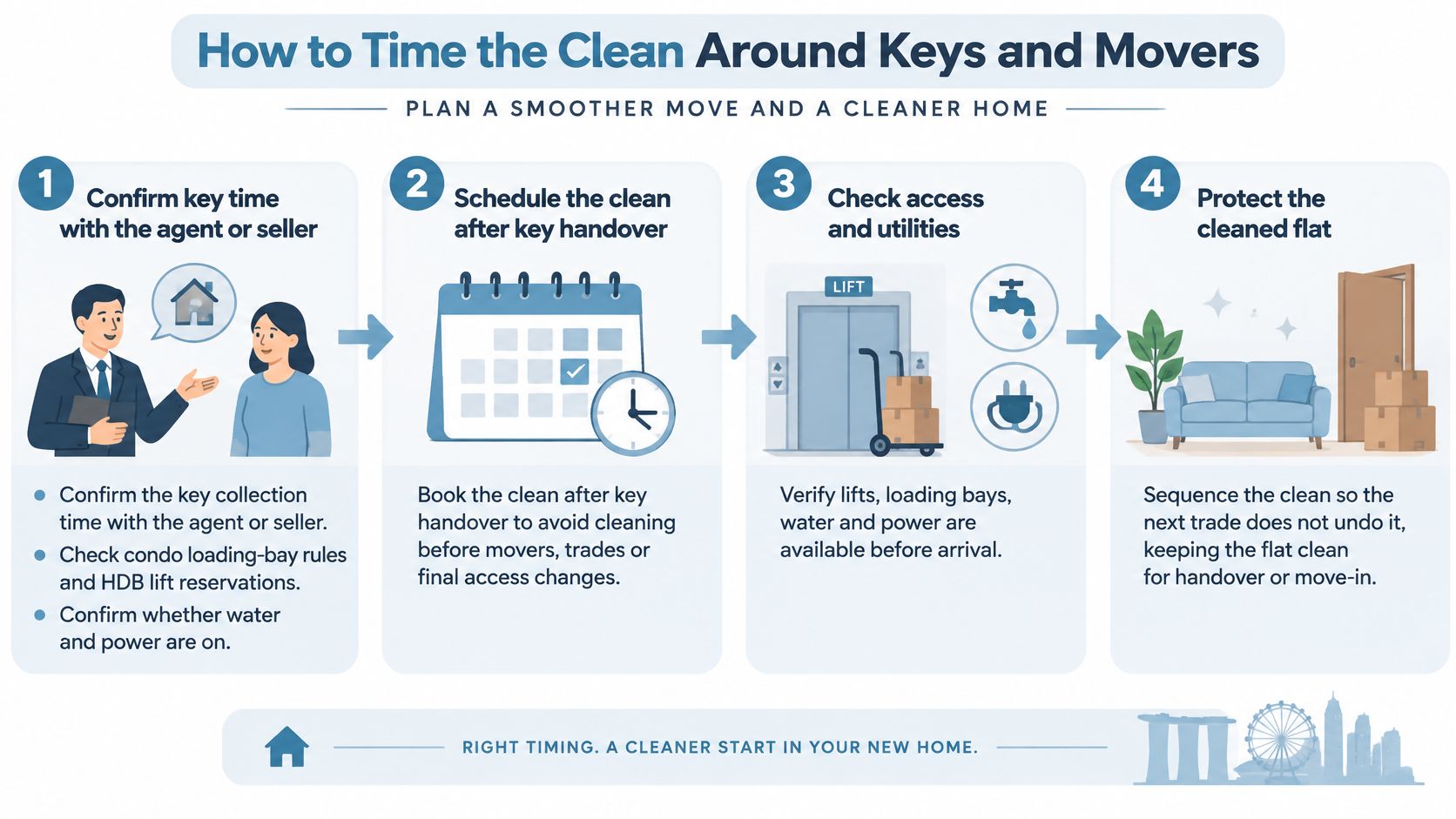
1. Confirm the key time. Ask the agent or seller for the exact release time, then check condo loading-bay rules or HDB lift reservations, plus whether water and power are on. A team arriving to a locked service lift or dead taps wastes your slot.
2. Book after trades, before furniture. Painters, installers and pest contractors leave first. Mattresses, sofas and appliances arrive after. If renovation overruns, move the clean. Never clean around wet paint.
3. Allow enough time. Book a half day for a compact vacant flat. Allow a full day or two shorter visits when there's renovation dust, more than one bathroom or a large condo layout.
4. Clear loose hazards. Remove coins, tools, blades and leftover chemicals. Name the cupboards that must stay empty so cleaners don't stack supplies inside finished cabinets.
5. Send one complete message. Attach the ticked scope, pre-clean photos, access instructions and a contact who can open the door. Scattered WhatsApp voice notes create missed items.
6. Hold a walk-through slot. Inspect the same evening or next morning, before unpacking. Once boxes cover the floor, a re-clean becomes negotiation instead of observation.
Even a short move deserves this discipline. The HDB Sample Household Survey 2023/24 found that among households that had moved, the average residence in the previous housing unit was 10.2 years, and 36.9% of movers relocated within the same town or estate. A move across your estate can still mean a decade of accumulated grease, grout soil and dust in tracks. Don't treat local as light.
This short video walks through pacing the work around access and deliveries.
Handle the weekend edge case directly. If keys are released on Saturday and movers come straight after, ask whether the team can return Monday to wipe switches, handles and taps once delivery crews leave. Those touchpoints get re-soiled within hours, and a short return visit is cheaper than redoing rooms. Good planning here is the same habit behind keeping a home clean and tidy after the move, which is sequencing tasks instead of repeating them.
Don't shop for one islandwide price. There isn't a fair single figure for a vacant two-room flat with light dust and a renovated condo with three bathrooms, adhesive on glass and grease in the hood. Ask three cleaners to price the same ticked scope and compare written lines.
Context helps you sanity-check priorities. The Singapore Department of Statistics dataset on household expenditure shows Singapore households allocated 5.4% of monthly expenditure to furnishing, household equipment and routine household maintenance in 2023. A move-in clean sits inside that practical maintenance budget, so treat it as a defined purchase with exclusions, not a vague favour priced by optimism.
Quote lineAsk the cleaner to stateRed flagLabourTeam size and hours on siteA lump sum with no timeRoomsWhich zones match your ticked scopeKitchen or bathrooms omittedInteriorsFridge, oven, hood and wardrobes yes or noAssumed included but not writtenAccessCondo rules, high glass, lift bookingExterior glass priced as a normal wipeConditionRenovation dust, mould, adhesiveVacant-flat rate used on a dusty renoAftercareRe-clean period and who attendsNo return visit if movers re-soil switches
The price should move for clear reasons. Floor area and bathroom count drive labour. A furnished home takes longer than a vacant one because staff work around and under items. Paint dust and adhesive need repeated vacuuming, damp wiping and careful scraping, while ordinary soil comes off in one pass. Fridge, oven and hood interiors add degreasing time. Window height, condo facade rules and exterior glass change access, equipment and insurance, so they belong on separate lines, never buried in "windows included".
Mould, silicone residue and cement haze also change the job. They need dwell time, dedicated pads and sometimes a second pass after drying. Weekend or same-day key handovers usually carry a premium because teams are rostered tightly. Accept that if your timing is fixed, but make the cleaner state it instead of shrinking the scope.
Ask each cleaner for team size, hours on site, who supplies products and the re-clean window. Confirm the cleaner carries public liability insurance. Ask which products they'll use on stone counters, vinyl floors and stainless steel, because the wrong acidic cleaner etches stone and excess water dulls timber finishes.
Practical rule: If a quote doesn't mention grout, inside cabinets or renovation dust, assume those items aren't priced.
Compare soft furnishings separately. If one cleaner includes curtains and another doesn't, compare room rates first, then price textiles as their own line. If you're weighing methods, read up on curtain steam cleaning options before you bundle everything into one lump sum you can't unpick later. A fair quote names zones, exclusions, products and aftercare. A very low figure that's silent on condition isn't a bargain. It's an argument scheduled for handover day.
Inspect by zone under strong light, not by whether the flat smells clean. Fragrance fades. Grease film, grout haze and dust in a sliding track don't. Carry your ticked scope, a torch and your phone, and fail specific items rather than giving a general impression.
Use this checklist visual as the order for your walk-through.
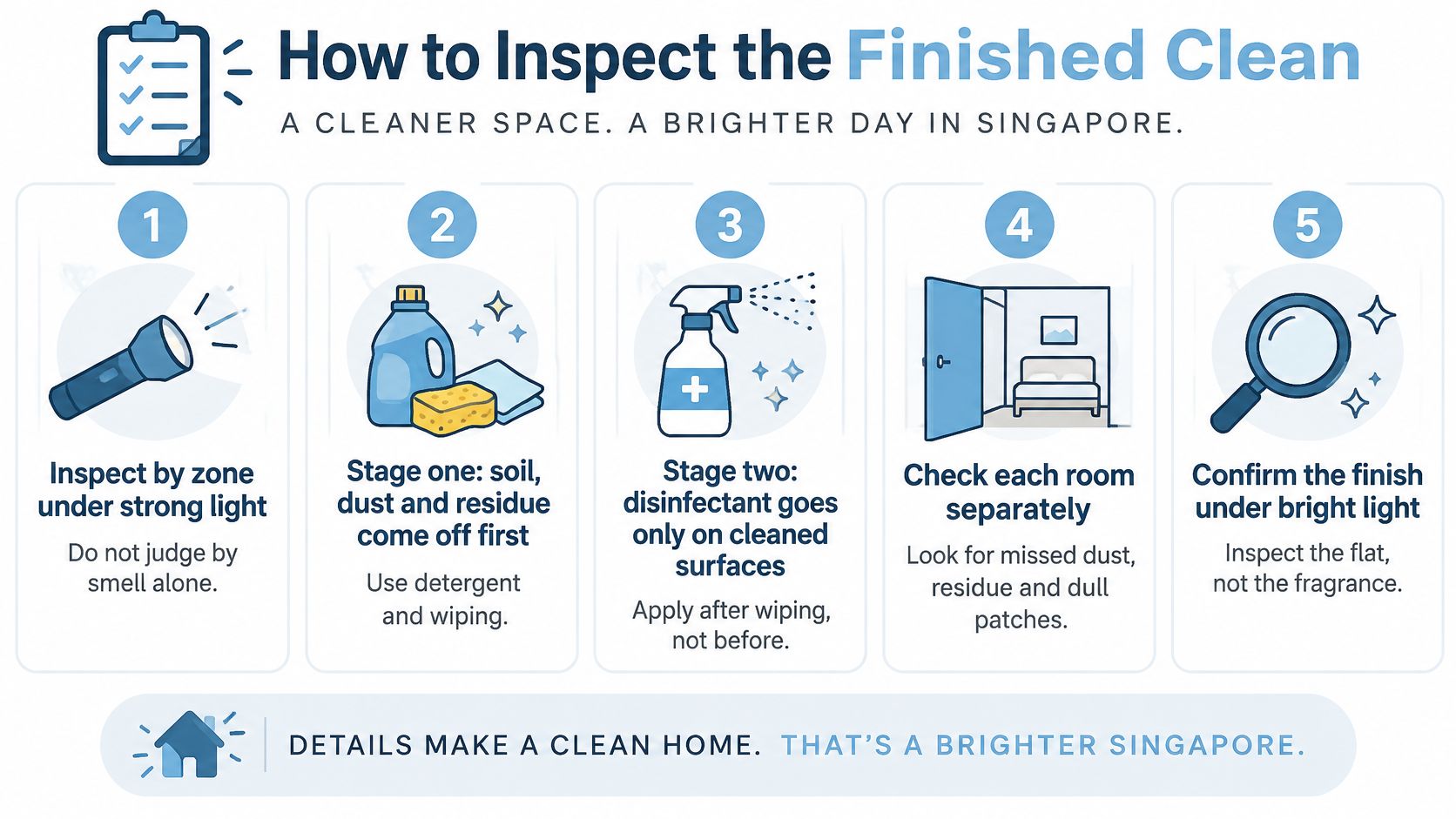
A sound job follows a clear sequence. Stage one removes soil, dust and residue with detergent and mechanical wiping. Stage two applies disinfectant only to high-touch and sanitary surfaces, including doorknobs, switches, counters, taps, toilets, sinks and floors. Disinfectant on a visibly dirty surface is wasted effort because soil shields the surface underneath.
Application matters as much as product choice. Disinfectant should go onto a cloth, keep the surface visibly wet for the product's stated contact time, then be wiped or rinsed as the label directs. Indiscriminate spraying and an immediate wipe isn't disinfection. The practical order is ventilate the unit, dust from high to low, clean bathrooms with dedicated tools, clean kitchen and touchpoints, then disinfect touchpoints and sanitary fixtures last.
That approach aligns with NEA's environmental sanitation regime, which specifies at least 10% of premises areas for daily visual inspection in covered operational settings and states that wipe-down with an effective disinfectant is recommended and should not be completely replaced by alternative application methods. You're adapting that discipline to a handover, with photographed exceptions and a final walk-through.
ZoneCheckFail ifEntryHandles, switches, door facesFinger marks or builder dust remainKitchenCabinets, hob, sink, agreed interiorsGrease film or crumbs inside agreed appliancesBathroomsToilet, screen, grout, grilleSeparate tools were not used or soil remainsBedroomsWardrobes, tracks, skirtingDust falls from a track when openedFloorsEdges, under open shelves, wet marksMop water has dried into streaksTouchpoints lastSwitches and taps after other trades leaveThey were cleaned before the movers finished
Check each area separately. Slide wardrobe doors open and closed. Run a dry tissue along a window track. Look across floors at a low angle so streaks and dull patches show. Record paint dust, grout haze, grease, mould-like growth, adhesive and missed ledges, and photograph every exception with something for scale, such as a coin beside a chip.
Fail a zone if soil remains, if the same cloth moved from toilet to kitchen, or if fragrance is offered as proof of disinfection. Don't sign a pass because the floor shines under ceiling lights. Hidden and high surfaces, including fan blades, wardrobe tops and exhaust grilles, need their own check.
Wipe switches, handles and appliance controls again after movers and delivery crews leave. They grip exactly those points while carrying boxes. The same care with fabrics you'd apply when learning how to clean upholstery properly applies here. Match the material, don't flood it, and don't declare it done while it's still dirty underneath.
Send the photo list the same day and agree which items get a return visit. Hidden leaks, pests and mechanical faults stay outside this inspection, no matter what the checklist shows.
A dispute usually starts with a vague claim. Someone says the bathroom was mouldy, the counter was scratched or the cabinets were dirty, and nobody can agree whether that was true before cleaning began. Your inspection record turns that opinion contest into a comparison.
1. Pull the before photos. Match each timestamped pre-clean image to the same angle on your inspection sheet. Side-by-side photos settle most arguments faster than messages.
2. Separate old from new. Stains, chips, grout haze and mould-like growth that appear in before photos were already there. Anything the cleaner touched and left soiled, streaked or damaged is their responsibility to address.
3. Use the agreed aftercare. Check the quote for the re-clean window and who attends. Send photos and the return-visit request the same day, while the flat is still empty and the evidence hasn't been covered by furniture.
4. Escalate concealed problems correctly. A leak under a sink, pest activity in a cabinet hinge or a wiring fault needs a qualified tradesperson. A cleaning report can't establish cause, and arguing from one wastes everyone's time.
5. Keep the file together. Store scope, quote, before photos, inspection sheet and sign-off in one folder until the deposit is settled and final bills are closed.
Write notes in neutral language. "Dark marks along bathroom silicone, photographed 9.12am, before cleaning" helps you. "Bathroom was disgusting" doesn't.
Be precise about roles. The cleaner is accountable for listed surfaces and agreed interiors. The landlord or seller remains responsible for pre-existing defects shown in your record. You're responsible for anything your movers scuffed after sign-off, so photograph walls and floors again once heavy furniture is placed if you need that boundary too.
Don't claim the clean guarantees a deposit return. It doesn't, and overstating it weakens your position. What you've built is a dated record of condition on the day, with exceptions named and photographed. That's the document an agent can work with, and it's why the record matters more than a verbal promise that everything looked fine.
Many waste a good clean in the last hour. They mix chemicals, drag dusty curtains back onto clean tracks, or unpack bedding into wardrobes that still smell of detergent fumes. Avoid those mistakes and the flat stays ready.
These four habits protect the finish before boxes open.

Keep bathroom cloths and buckets separate from kitchen and living-area tools. Colour-code them if needed. One cloth travelling from toilet rim to kitchen counter undoes the hygiene logic of the whole job.
Never mix cleaning agents. Incompatible products can react and release hazardous fumes, so use one product as labelled, rinse as directed and store leftovers sealed. Don't put the strongest chemical on every surface either. Target kitchens, bathrooms and touchpoints, ventilate before anyone sleeps in the unit, and use plain detergent wiping for low-risk dust. If renovation dust still hangs in a bedroom after wiping, compare air purification options for dusty rooms from EcoQuest Purifiers as a short-term support while you keep ventilating, rather than masking dust with fragrance.
Be honest about sustainability. The NEA waste and recycling statistics 2015 to 2025 record Singapore's 2025 domestic waste stream at about 1.861 million tonnes with a domestic recycling rate of only 11%, while textile and leather waste reached 231,000 tonnes but only 3% was recycled. A green label alone doesn't prove lower impact against those figures.
• Reuse first: Donate usable curtains, clothes and linen instead of binning them during the move
• Separate dry packaging: Flatten clean cardboard and accepted recyclables where your estate collects them
• Keep bins clean: Liquids, chemical containers with residue and contaminated wipes stay out of recycling bins
• Buy less: Reusable cloths and accurately dosed concentrates beat a trolley of single-use wipes
Treat dusty curtains as their own job. Renovation grit sits deep in folds, and expecting them to wash inside the same visit as the room clean produces rushed results. We offer Load Wash & Fold, Wash & Fold, Clean & Iron, dry cleaning and curtain cleaning, and our Clean & Iron and Curtain Cleaning orders are collected, cleaned and delivered within 5 working days, so plan textile pickup before you need privacy on the first night. We don't take in rubber-backed blackout curtains or roman blinds, so check heading tape, lining and backing before booking. If you're choosing replacements, the difference between a day curtain and a night curtain affects both light and how often they'll need washing.
Leave new or freshly cleaned floors protected with cardboard runners until furniture is placed, then remove protection and do a final dry sweep of grit. Close with this rule and you'll make sound decisions all day: clean what is dirty, disinfect what hands touch, and write down what was already damaged.
Moving into a new flat is the right moment to reset curtains, bedding and the clothes you'll unpack first, instead of putting clean items against dusty fabric. Tumble Laundry collects, cleans and delivers laundry, dry cleaning, Clean & Iron and curtain cleaning across Singapore, so you can time textile return around your keys and movers. Book your pickup before unpacking day and start with a home that's documented, cleaned by zone and ready to live in.

We make laundry days fast and easy for you. We collect, clean and deliver your laundry and dry-cleaning.
53 Ubi Ave 1 #03-43, Singapore 408934
Mon - Fri | 8:30 am–5:30 pm
Sat | 8:30 am–12:30 pm
hello@tumble.sg
+65 62554222
Whatsapp Us


