How to Remove Deodorant Stains from Every Fabric
This is some text inside of a div block.

You've got a black work shirt on the chair, a deodorant halo at the armpit, and a morning commute to catch. In Singapore's humidity, that mix of chalky white residue and faint yellowing can show up fast, especially on poly-cotton office shirts, uniforms, and dark tees that look flawless until they meet the mirror in harsh lift light. The fix depends on whether you're dealing with fresh transfer, set-in buildup, or a fabric that can't tolerate aggressive chemistry.
A lot of people think deodorant stains are one problem, but they're usually two. Fresh white marks are residue sitting on top of the fabric, while the yellowish underarm patch is the harder one, because it forms when antiperspirant ingredients and body soil bond more tightly to fibres over time.
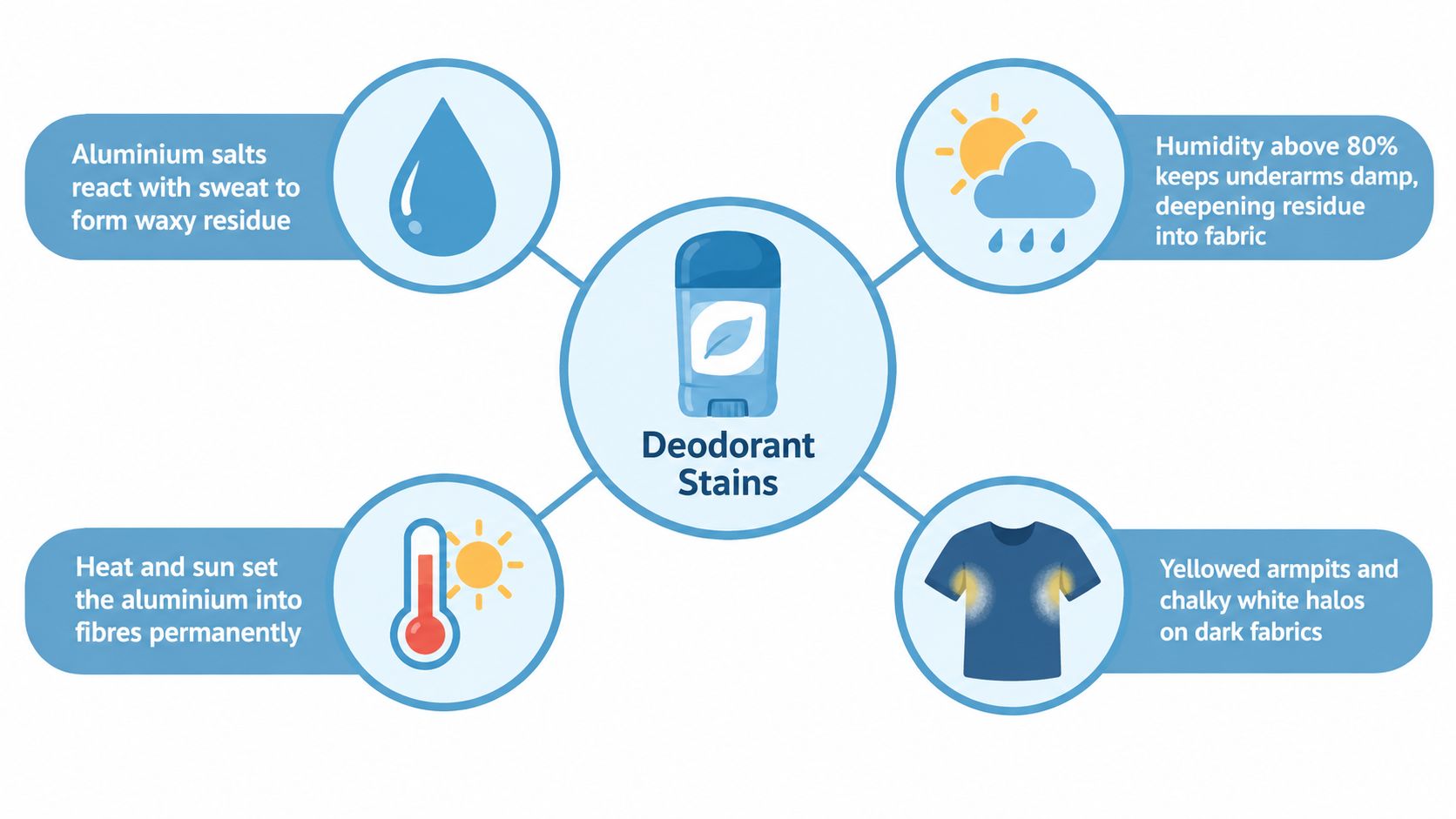
Singapore makes this worse because clothes don't always dry quickly between wear and wash. When underarms stay damp longer, residue has more time to work into the weave, especially on shirts worn through a full commute, office hours, and another outing before laundry day. A garment that looks clean at first can hold onto deodorant film in the seam and the fold of the sleeve.
That matters for everyday local wardrobes. Office shirts, school uniforms, and dark casual wear are often blends, not pure cotton, so residue can sit in the fibre structure instead of rinsing away neatly. If the shirt is dried in air-conditioning after wear, the fabric can still hold the mark even when the surface looks dry.
The distinction is practical. White residue is often the easier job, because it's fresh product transfer. Yellowing is the more stubborn issue, because it's been through sweat, heat, and repeated contact.
Practical rule: if the mark looks chalky and sits on the surface, treat it gently and early. If the underarm is yellowed or stiff, assume the stain has already bonded and needs a layered clean.
Local product instructions support that approach, too. Singapore retail guidance commonly centres on a 10 to 30 minute pre-treatment window before washing, and a Singapore market example notes that deodorant stain removers are made for persistent deodorant and sweat marks, yellowing, white residue, and odours on white and coloured textiles. The practical baseline is simple, as reflected in Tumble's laundry best practices in Singapore: act before heat and drying lock the residue in place.
Fresh marks are the easiest to beat, but only if you don't push them deeper into the weave. The goal is to lift the residue first, then loosen what remains with a mild, fabric-safe treatment before the wash cycle gets involved.
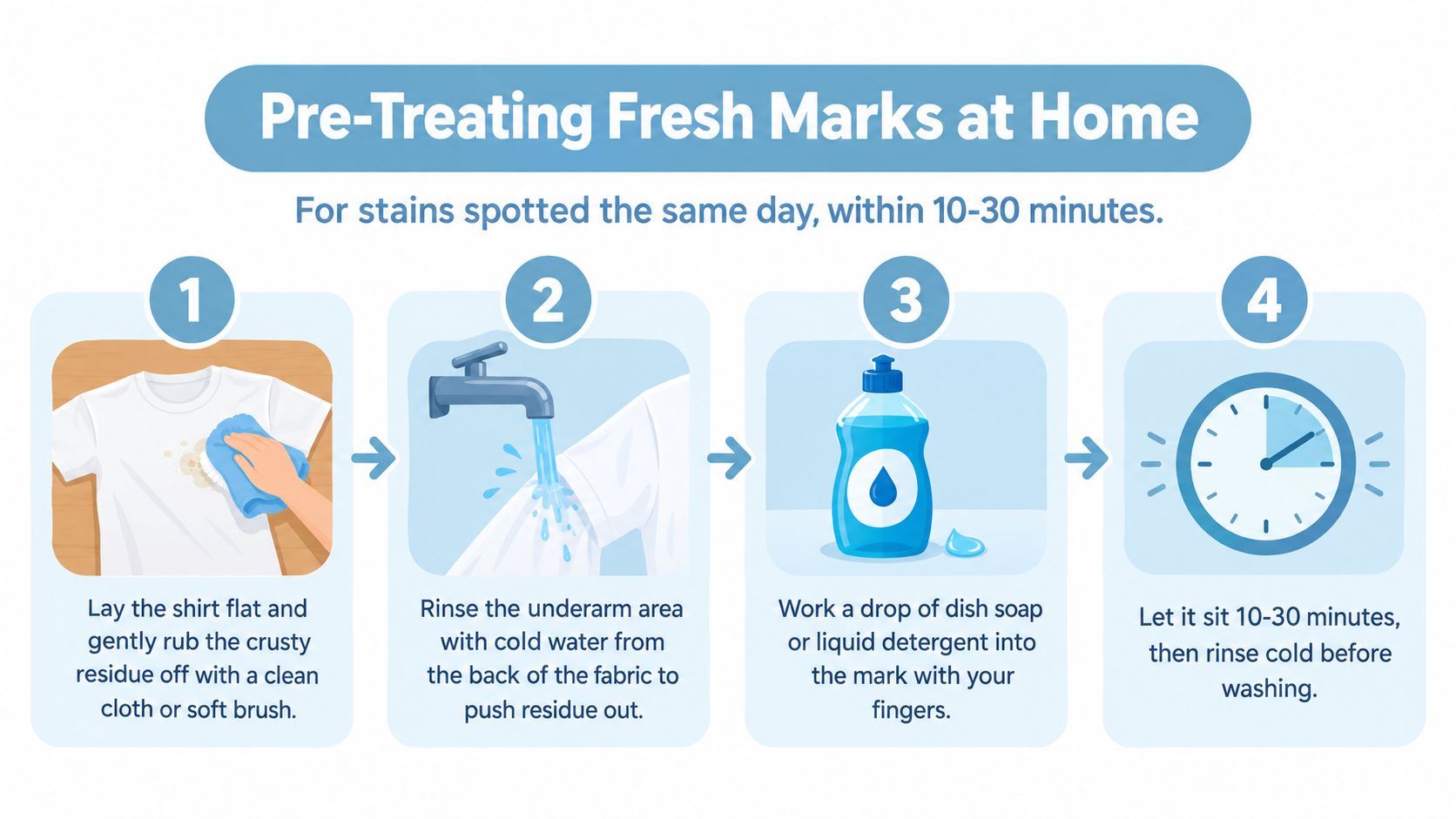
Lay the shirt flat and brush off the crusty film with a soft-bristle toothbrush or a clean microfibre cloth. Don't grind it in with your fingers, because that turns a surface mark into a fibre-level stain. If the residue is loose, a light lift is enough.
Next, turn the fabric inside out and run cool water through the back of the underarm panel. That pushes residue away from the visible face of the cloth instead of forcing it further into the front. Keep the water cool, because heat only makes your job harder later.
For many fresh marks, a small amount of white vinegar diluted 1:1 with water is a sensible first option. Let it sit for about 10 minutes, then rinse. For textured marks or heavier buildup, a baking soda paste can help, and a drop of clear dish soap can work on many everyday fabrics if you massage it lightly into the underarm zone.
The useful point is not to “scrub harder”. It's to separate the residue from the cloth with as little fibre stress as possible. A stain removal guide from Buy Me Japan's Zote soap guide is helpful here because it reinforces the same basic idea, use a gentle surfactant approach, not brute force.
Never treat silk or acetate casually with vinegar, because water spots are a real risk. Baking soda can be too abrasive for wool, and dish soap can pull dye from cheap dark cottons. Patch test on an inside hem first.
For a broader garment workflow, Tumble's stain-removal guide is useful as a reference point when you're deciding whether to spot-treat first or send the piece straight to a more controlled wash.
Leave the treatment for the 10 to 30 minute window commonly used in Singapore household laundry routines, then rinse and wash as normal. That timing matters because it gives the cleaner time to loosen the mark without inviting heat to set it. The best result usually comes from restraint, not from overworking the cloth.
Once the stain has been pre-treated, the wash itself should protect the fabric, not rescue it with more heat. That's especially true for cottons, poly-cotton shirts, and everyday knits, which are the pieces most likely to be worn, sweated in, and re-worn in a Singapore week.
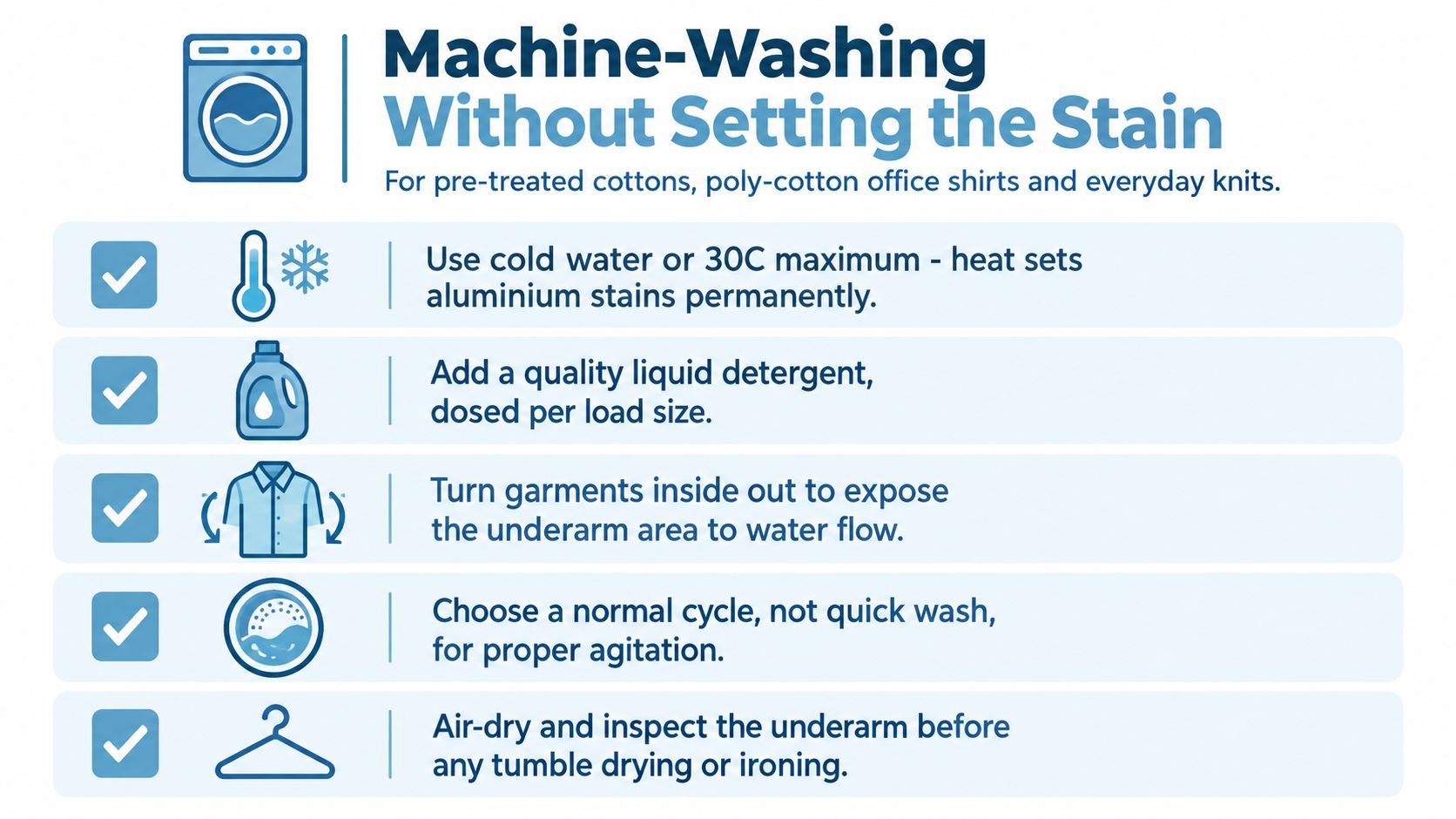
Use cold water or 30C maximum. Heat is what turns a manageable residue into a more stubborn underarm mark, so even if the rest of the laundry feels like it “needs” warmth, don't give in. If you want a deeper explanation of why temperature matters, Tumble's cold wash versus hot wash guide fits this decision well.
Liquid detergent is the safer choice for this job. Powder can leave granules behind in the underarm seam, and those leftovers can sit there like grit if the drum is overloaded or the garment is folded into a tight bundle.
Turn shirts inside out so the underarm area gets direct water flow. Choose a normal cycle rather than a quick wash, because the fabric needs real agitation to release what the pre-treatment loosened. A short second rinse helps flush out softened residue, which is especially useful on shirts that were already worn more than once before washing.
If the garment still looks clean enough to wear but smells faintly of deodorant and sweat, it's telling you the fibres haven't fully released yesterday's buildup yet.
Spin speed should match the fabric. Woven office shirts do better with a medium spin, because it limits crease-setting, while knits need a lower spin to avoid distortion. Air-dry first, inspect the underarm area, and only then decide whether the shirt can go near a tumble dryer or iron.
Chlorine bleach isn't the shortcut many people think it is, because it can worsen the look of aluminium stains on light fabric. Fabric softener sheets are another problem, since they can coat the underarm and trap residue for the next wear. Overloading the drum is just as unhelpful, because clothes can't agitate properly when they're packed into a damp clump.
For everyday loads, a controlled wash is better than a strong one. The fabric lasts longer, the stain lifts more evenly, and the shirt keeps its shape instead of turning into a tired, overworked uniform.
Most generic deodorant advice is written for white T-shirts, not for black workwear, navy blouses, charcoal uniforms, or structured garments that can't survive a rough wash. That's the gap in a lot of online guidance, and it's where people do the most damage by reaching for peroxide or chlorine bleach too quickly.
For dark cottons, a mild surfactant or a baking soda paste is usually safer than an oxidiser. White vinegar diluted 1:3 with water can be useful on colour-sensitive marks, especially when you're trying to lift fresh residue without stripping the surface colour. If the fabric is black and the stain is white, the temptation is to go aggressive, but that's exactly how dye loss starts.
Dry-clean-only items need an even lighter touch. Suit jackets, lined dresses, sequins, acetate trims, and bonded linings shouldn't be soaked casually. Spot-cleaning with isopropyl alcohol on a cotton bud can help on the underarm panel of some suits and blazers, but only when you're working locally and carefully.
FabricRecommended TreatmentAvoidDrying MethodBlack cottonBaking soda paste or mild dish soapNeat peroxide, chlorine bleachFlat or air dryPoly-cotton shirtDiluted vinegar on fresh marks, then gentle washHigh heat, over-scrubbingHang dry before any ironingSilkMinimal local spot test, then professional care if neededVinegar soaking, peroxide, baking sodaLay flat, then assessWoolVery light surfactant treatment onlyBaking soda abrasion, heat, strong oxidisersLay flat to dryDry-clean-only suit or blazerLocal alcohol spotting on the underarm panel if label-safeFull soaking, bleach, aggressive scrubbingAir out, then professional clean
If the care label says dry clean, treat the stain locally and let a professional handle the full garment rather than dunking it. Tumble's guide to two-piece suits is relevant here because structured garments need shape control as much as stain control.
Dark fabric stains are often ruined by urgency, not by the stain itself.
That's why the safest move is usually the least dramatic one. A slow local treatment, a test on an inside seam, and a flat dry can save a piece that would otherwise fade unevenly or lose its finish.
Old underarm buildup rarely comes out with one product. After repeated wear, sweat soil and antiperspirant can form a waxy layer that needs loosening, lifting, and finishing in stages, especially on shirts that have lived through Singapore's stop-start laundry habits.
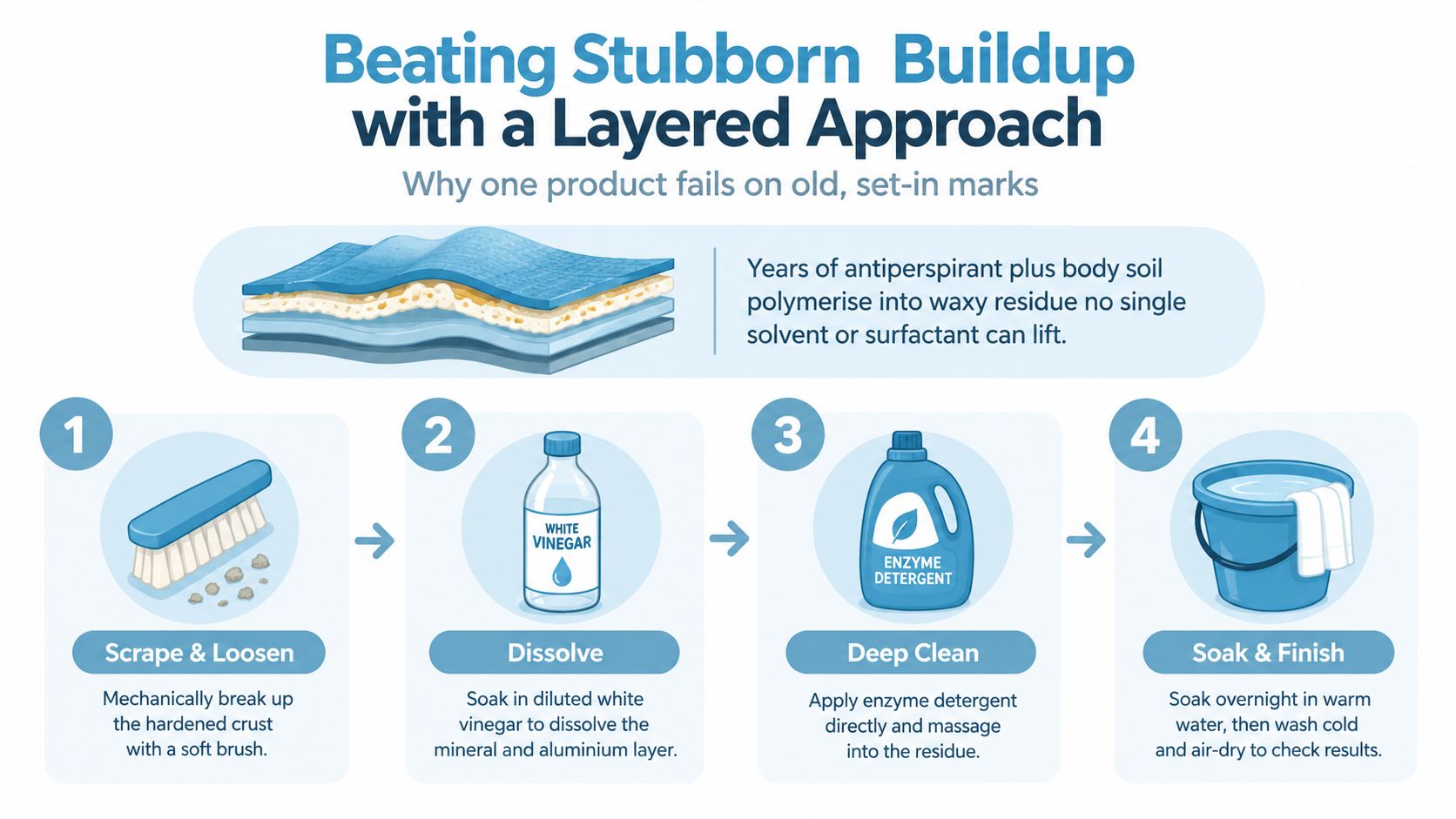
Begin with a 15-minute soak in warm water and enzyme detergent. That gives the detergent time to break down sweat-related soil before you attack the residue directly. Then use a soft-bristle brush or microfibre cloth to gently break up the hardened crust.
After that, choose the corrective treatment by fabric and stain age. Fresher mineral deposits can respond to vinegar, while tougher white cottons may tolerate dilute hydrogen peroxide. For some stubborn armpit buildup, ammonia can help, but it must never be mixed with bleach, and it still needs thorough rinsing.
Rubbing alcohol is useful as a finishing spotter on some marks after the main treatment has done its work. It's not a universal fix, and it shouldn't be the first move, but it can help with the last trace of residue that clings to the fibre surface. The point is sequencing, not force.
A practical stain-removal reference from InchBug's stain removal tips is handy because the logic is similar. You don't solve a set-in mark by skipping straight to the harshest chemical. You work through the layers.
That checkpoint matters. If the stain has lightened after the first stage, stop and rinse before adding another treatment. If the fabric starts to feel stiff, or the colour shifts, don't escalate. Old yellowed pit stains often worsen when heat is used too early, so keeping the wash cooler can rescue more garments than people expect.
The smartest move with stubborn buildup is to pause between stages and inspect the cloth, not to stack every chemical at once.
That discipline matters in a humid climate where shirts get worn hard and washed often. The more often a garment returns to the wardrobe, the more valuable it is to treat the stain like a layered problem instead of a single dirty spot.
The easiest deodorant stain to remove is the one that never had a chance to bond. In daily Singapore routines, prevention is less about perfection and more about giving the fabric less to absorb in the first place.
Let deodorant dry fully before dressing. If you rush and tug a shirt over damp underarms, you push product into the weave before it can settle on skin. Clear or low-aluminium formulas can also reduce visible residue, especially on dark tops that show every white streak.
An undershirt helps as a barrier on office days, and rotating shirts between wears gives fibres time to recover instead of trapping the same buildup again and again. Hanging shirts by the shoulder seam after each wear keeps the underarm area open to air, which matters when the commute home leaves the cloth slightly damp.
If you've just applied deodorant, don't put the shirt on by yanking it across the armpit zone. Move carefully, because repeated friction drives more product into the cloth. Don't leave worn shirts crumpled in a hot car after work either, because that's an easy way to keep residue warm and active longer than necessary.
What actually matters: dry deodorant, less friction, a barrier layer when needed, and laundry before residue gets a chance to harden.
A quick pretreatment of the armpit zone before washing also helps keep buildup from starting. That one habit is far easier than trying to repair a favoured black shirt after a few months of repeated marks.
There's a point where home care stops being sensible. If you've already tried to remove the stain twice and it's still visible, or if the garment is dry-clean-only and the buildup keeps coming back, a professional laundry service is the safer option.
Structured pieces deserve earlier intervention. Blazers, lined dresses, and formal wear can distort if you soak or scrub them at home, and dark workwear is expensive to replace when the colour starts to fade unevenly. If the stained area is spreading across a large section of the underarm, the risk of permanent fabric damage climbs fast.
That's where a service with stain inspection and controlled cleaning becomes practical. Tumble's dry cleaning service in Singapore is one example of the kind of pickup-and-delivery workflow that can handle the garment more gently than a rushed home session.
A laundry team can sequence pre-treatment spotting, controlled wet cleaning, and finishing presses in a way domestic machines often can't. That matters when aluminium residue has left a ring that ordinary detergent won't fully release. Pickup and delivery also saves time, which matters when the alternative is another evening spent reworking one shirt over the sink.
If you want to hand over a difficult piece, Tumble Laundry offers islandwide pickup, professional cleaning, and door-to-door delivery for laundry and dry cleaning, including stain treatment as part of the process. It's one option when the shirt is too valuable to gamble on harsh chemistry at home.
Ask whether deodorant staining can be noted separately at collection or in the order notes. That's a useful sign the cleaner will inspect the underarm area instead of treating the garment as a generic load. For dark shirts, branded office wear, and dry-clean-only pieces, that extra attention is often the difference between “cleaned” and actually wearable again.
If deodorant marks keep coming back on your favourite shirts, stop treating them like a one-step problem. Visit Tumble Laundry to arrange pickup and professional cleaning for workwear, dark fabrics, and dry-clean-only pieces, then let a proper stain treatment workflow handle the underarms before the damage sets in.

We make laundry days fast and easy for you. We collect, clean and deliver your laundry and dry-cleaning.
53 Ubi Ave 1 #03-43, Singapore 408934
Mon - Fri | 8:30 am–5:30 pm
Sat | 8:30 am–12:30 pm
hello@tumble.sg
+65 62554222
Whatsapp Us


