Dry Cleaning Service in Singapore
This is some text inside of a div block.

Singapore's dry cleaning and laundry market was valued at US$455.1 million in 2022 and is projected to reach US$873.1 million by 2030. That kind of scale says professional garment care isn't a luxury niche in Singapore, it's a mainstream service shaped by busy urban routines and a climate that works against fabrics every day.
A good dry cleaning service in Singapore does more than take stains out of a blazer. It protects structured garments, handles delicate fabrics properly, and gives households a way to manage clothing, curtains, and formal wear without turning laundry into a weekly chore. The difference between a decent provider and a strong one often comes down to transparency, chemistry, and how carefully each item is handled after it leaves your hands.
The Singapore market for laundry and dry cleaning was estimated at US$455.1 million in 2022 and is forecast to reach US$873.1 million by 2030, with an 8.5% CAGR from 2023 to 2030, according to Grand View Research. That kind of trajectory usually points to a service that's solving a recurring problem, not a one-off convenience purchase, and that's exactly how garment care works here (Grand View Research's Singapore Laundry Services Outlook).
For many homes, the pressure starts with space and weather. Apartments rarely make laundry easy, and Singapore's humidity makes drying slow, while formalwear, work shirts, and delicate garments keep piling up. A cleaner who understands that reality isn't just pressing clothes, they're helping people keep wardrobes wearable in a climate that punishes shortcuts.
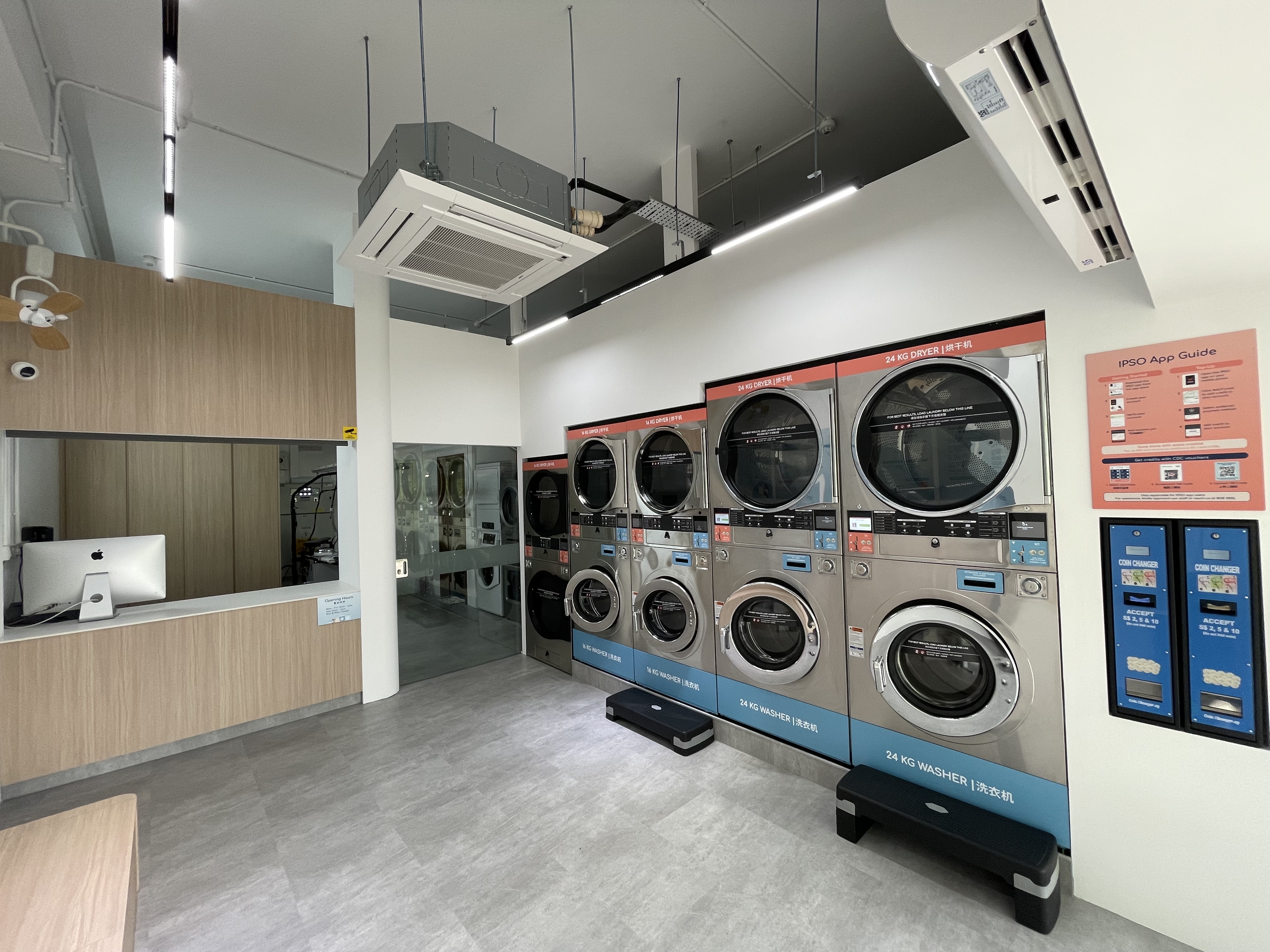
Grand View Research says residential use accounted for 59.04% of revenue in 2022, while commercial demand was the fastest-growing segment. That fits what operators see on the ground, households want convenience and consistency, while offices, hotels, schools, and event teams need recurring garment care that doesn't fail when schedules get busy. The market's size makes pickup-and-delivery, subscription laundry, and specialist garment handling practical models, not gimmicks.
For a Singapore household, that means dry cleaning usually enters the routine when something becomes difficult to wash safely at home. For a business, it's often about consistency, image, and turnaround. One serves the wardrobe, the other protects the brand.
The simplest way to think about it is this, dry cleaning sits between care and convenience. People use it when they want a result that a home wash can't reliably deliver, and Singapore creates enough of those situations to keep the service relevant.
See how that service model fits islandwide household routines at Tumble Laundry in Singapore.
Dry cleaning does not mean garments are left dirty, and it does not mean the process is dry in the literal sense. It means the cleaning method does not rely on water the way a standard wash does. Instead, a non-water solvent moves through the load, lifts soil, then gets extracted, filtered, and often reused. That is why it handles oily soils and grease so well, especially on structured or delicate garments.
The method is targeted solvent cleaning rather than soaking. Water handles many everyday residues well, but it can distort fabric structure, affect shape, and sometimes make the condition of garments with linings, interfacing, or embellishments worse. Suits, formal dresses, and finely made office wear often need that different approach because the wrong method can leave them clean but no longer wearable in the way they should be.
A proper cleaner starts with pre-inspection. Each item is checked for stains, pre-existing damage, missing buttons, and anything else that can change the outcome, then stains are treated before the main cycle begins. After that, the garment goes through solvent cleaning, and the solvent is extracted and filtered for reuse, which is part of how a modern plant keeps the process controlled.
Practical rule: if a provider cannot explain how it tags items, treats stains, and checks garments before and after cleaning, keep asking questions.
The finishing stage matters just as much as the wash. Garments are pressed or steamed, re-inspected, and packaged on hangers or in protective covers, and that is where a decent result becomes a professional one. A blazer can come back “clean” but still look poorly handled if the finishing is weak.
For fabric care basics, laundry symbols and care labels are worth reading before you send anything out. Those small icons often tell you more than the ticket price does, especially if you want to avoid guesswork with skin-contact garments, mixed fabrics, or pieces that behave badly in Singapore's humid weather.
A useful way to judge dry cleaning is to ask whether the garment needs cleaning, reshaping, or both. For structured or delicate items, the answer is usually all three.
The choice isn't about which method is “better” in the abstract, it's about what the fabric can tolerate and what kind of soil you're removing. Water-based laundry is excellent for cotton, many synthetics, and everyday washables, while solvent cleaning is usually the safer route for garments that can't afford shrinkage, distortion, or water-related damage. If you've ever wondered how a care symbol translates into action, wash tag symbols decoded is a helpful reference to keep nearby.
Fabric TypeRecommended MethodReasonCotton T-shirts and casual wearRegular laundryHandles everyday soil well and is usually straightforward to washPolyester and many blendsRegular laundryMost hold up well to water-based cyclesWool suits and tailored jacketsDry cleaningHelps preserve shape and structureSilk blouses and formal dressesDry cleaningReduces risk of water marks, snagging, and distortionBeaded or embellished garmentsDry cleaningSafer for trims and delicate constructionEveryday towels and basic uniformsRegular laundryWater wash is usually more practical and cost-effective
Some garments sit in the middle and need judgement, not blind rules. A lined dress, a business blazer, or a special-occasion piece might tolerate gentle cleaning only if the provider understands the fabric and finishing.
The biggest mistake I see is sending everything to dry cleaning because it feels safer. That gets expensive fast, and it can be unnecessary for items that are perfectly fine in a proper wash. The opposite mistake is worse, people put structured or delicate garments into a machine cycle, then act surprised when the shape is gone.
Short answer: wash what can be washed, dry clean what needs structure preserved, and don't guess on anything expensive.
A quick rule of thumb, if a garment is close-fitting, embellished, or made from a fabric that marks easily, dry cleaning is often the safer call. If it's a standard everyday textile with no special construction, regular laundry usually makes more sense.
For a deeper breakdown of the decision, the difference between laundry and dry cleaning is the simplest guide to revisit before making a wardrobe decision.
Pricing in Singapore varies because dry cleaning is not one service, it's several service models bundled under the same phrase. Per-piece dry cleaning, subscription laundry, ironing, and curtain care all solve different problems, so the right choice depends on how often you use the service and what you're sending in. A provider's website can look simple, but the bill often depends on garment type, handling complexity, and whether pickup and delivery are included.
Service TypeTypical Pricing ModelEstimated RangeSubscription wash and foldPer bagAs low as $45 per bag for standard plans and $62.50 per bag for X-Large plansPay-as-you-go wash and foldPer kilogram$7.00/kgClean and ironPer pieceQuoted by garment typeCurtain cleaningPer job, with optional takedown and rehangFrom $100 for takedown-inclusive curtain care
Those figures reflect how Tumble Laundry structures its own service options, and they show why pricing comparisons only work if you compare like for like. A bag subscription suits regular household loads, while per-piece care makes more sense for office wear, formal garments, and special textiles.
See: Tumble Laundry Dry Cleaning Offers
Tumble states that subscription Load Wash & Fold can be collected on same-day scheduling windows and returned in 2 days, while standard Clean & Iron and curtain care follow a 5 working day turnaround. That kind of split is common in the industry, and it reflects the difference between simple bulk processing and detailed item care.
What buyers should watch for is hidden complexity. A low headline price can become less attractive if the provider outsources work, separates pickup and delivery poorly, or charges extra for garments that need finishing. The better question is not “what's cheapest”, it's “what lands back in my hands clean, pressed, and on time”.
Practical rule: match the pricing model to the wardrobe problem. Regular family laundry, occasional office wear, and curtain cleaning shouldn't be priced as if they're identical jobs.
For households, subscription pricing often wins on convenience. For businesses and occasional users, a clear per-piece model with transparent turnaround may be easier to control.
A good dry cleaning provider makes its process easy to inspect. You should know what happens to your garments before you hand them over, and you should be able to see why the result turns out the way it does. If a provider stays vague about stain treatment, fabric handling, or what is included, that is usually where problems begin. In Singapore, the better operators also explain chemical choices and skin-safety trade-offs, because those details matter for clothing worn close to the body.
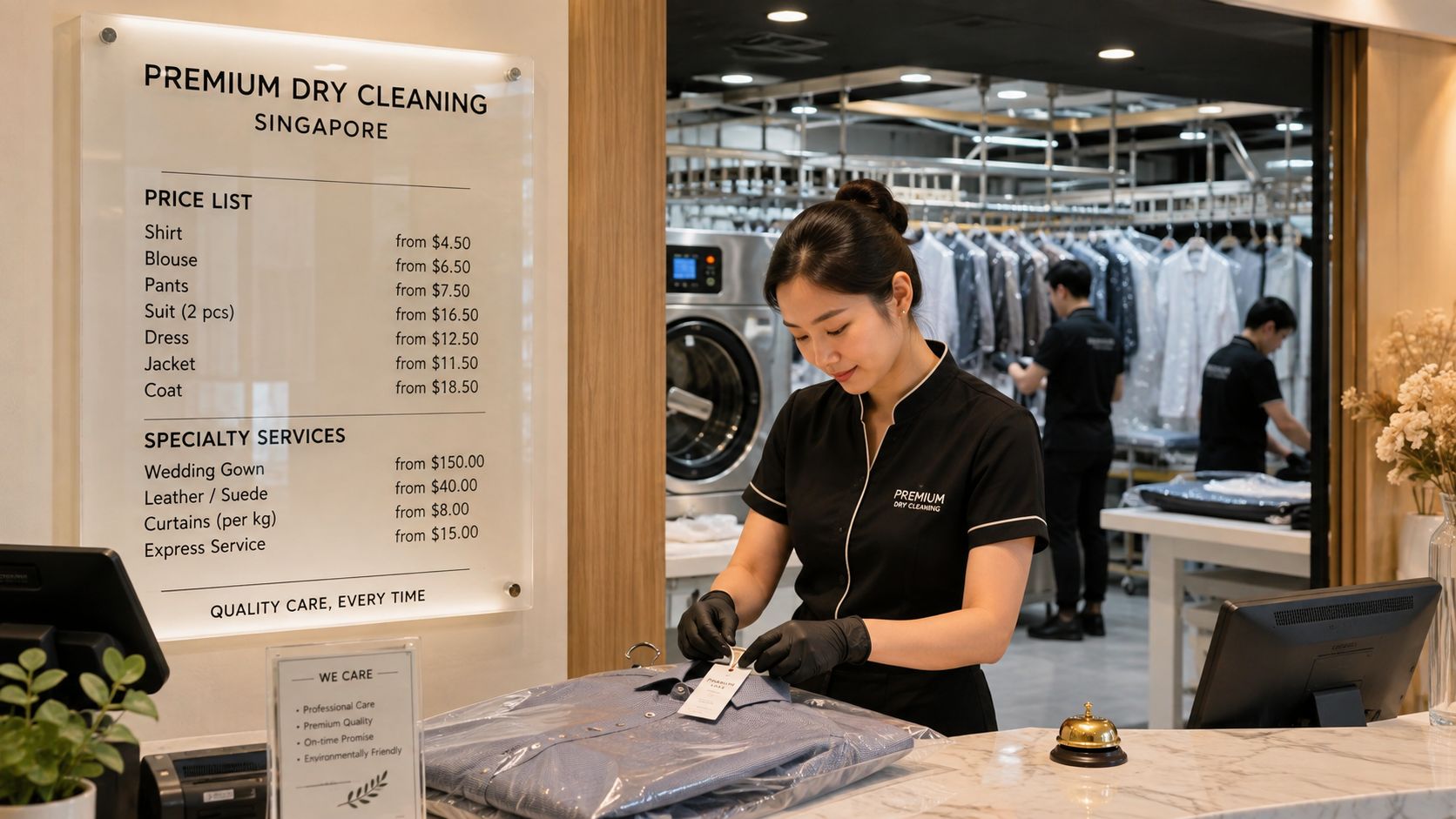
• In-house processing: Ask whether the cleaner processes garments themselves or sends them elsewhere. In-house work gives the operator more control over handling, timing, and who is responsible if something needs follow-up.
• Item-level tracking: Look for tagging and itemised lists, especially for suits, dresses, and premium pieces. That makes it easier to trace what came in, what was noted, and what should come back with each item.
• Transparent stain handling: A good provider explains what they can treat, what may remain, and how they document pre-existing damage. That conversation should cover fabric limits, not just the easy wins.
• Care-label discipline: The plant should follow garment labels instead of applying one cleaning method to everything. A wool blazer, a silk dress, and a structured jacket all need different handling.
• Convenient collection: Islandwide pickup, WhatsApp scheduling, and predictable delivery windows matter if you are managing a full household or office wardrobe.
If you want a provider that lays out service scope clearly, start with Tumble Laundry's services page and compare it against what the cleaner says in person or over chat. Tumble Laundry is one Singapore option that combines in-house processing, dedicated loads per customer, and islandwide pickup and delivery, which is relevant if you want laundry and dry cleaning handled without mixing items from different customers. It also offers customer-selectable preferences such as hypoallergenic detergent and softener, which matters when skin sensitivity is part of the decision.
The chemistry question is where many providers still fall short. Most pages talk about speed and cost, but fewer explain detergent choice, rinse quality, or what happens if you need gentler handling for clothes worn close to skin. That gap matters in a household where baby clothing, school uniforms, or sensitive-skin garments are part of the laundry mix. The same attention applies to furnishings, since stain response on fabric covers and garments depends on method as much as speed, as the guide on remove chocolate stains from sofas shows.
Subscription plans suit people who want the same routine every week. Pay-as-you-go suits occasional users who want to avoid paying for unused capacity. Neither model is automatically better, but a serious operator should be able to explain both plainly and without pressure.
A strong provider should make it easy to ask, “What happens to my item?” and answer that question clearly.
If you are choosing between cleaners, start with trust, then convenience, then price. It is cheaper to pay for the right process once than to replace a damaged garment later.
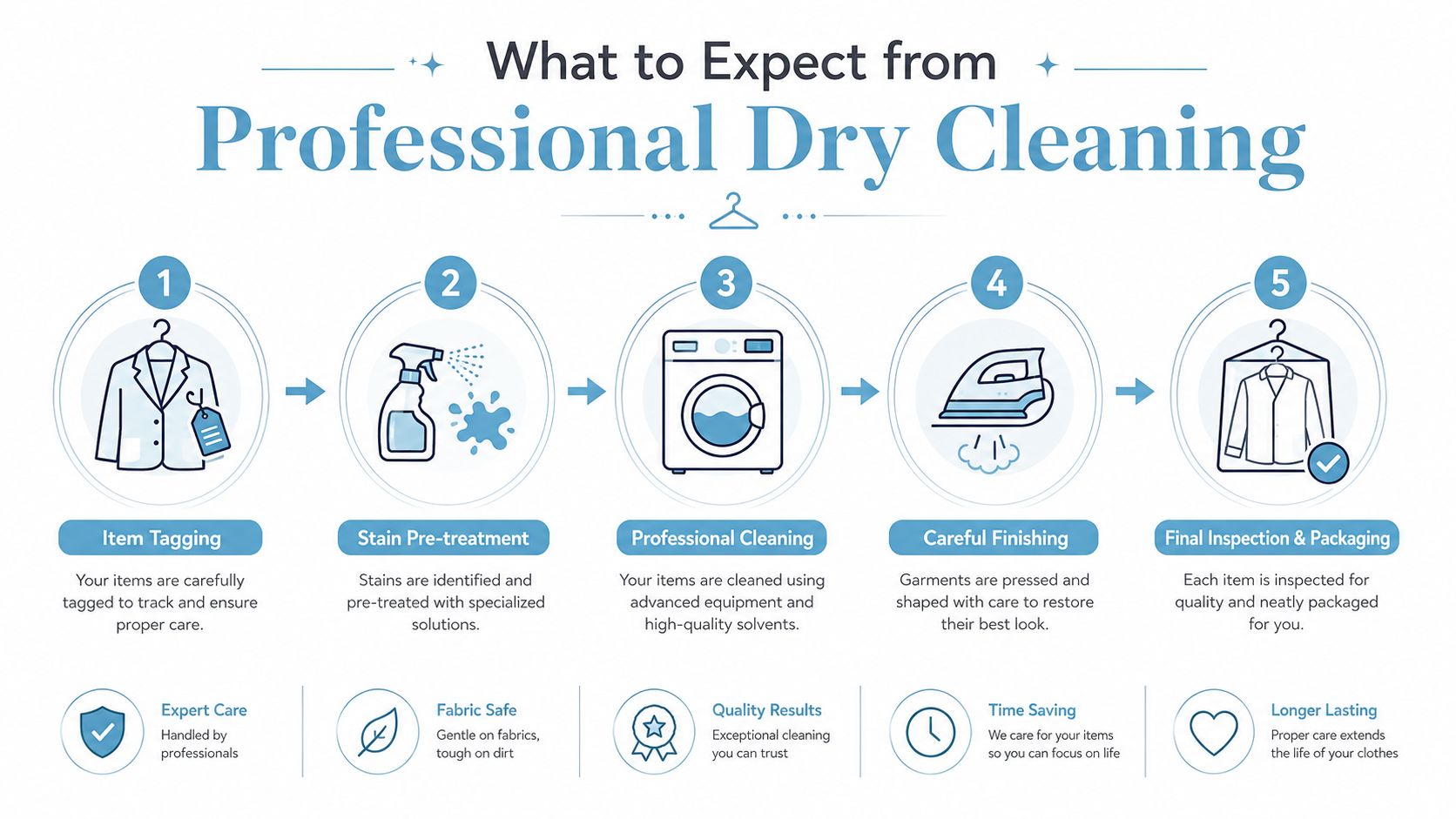
A professional job should feel organised from the first handover to the final return. Garments get tagged first, because mix-ups are the fastest way to destroy trust, then the cleaner inspects stains and any visible wear before deciding how to treat the piece. That sequence is standard because once a garment enters the plant, every missed note becomes harder to fix.
A good cleaner also records defects such as missing buttons or tears before work begins. That protects both sides, because it separates pre-existing issues from anything that might happen during processing. For premium garments, that traceability matters more than most customers realise.
After inspection and stain treatment, the garment goes through professional cleaning, then pressing or steaming, then another quality check before packaging. Hangers, protective sleeves, and neat presentation aren't just cosmetic, they reduce wrinkling and help the item arrive wearable rather than merely “clean”. The Sofa Cover Crafter's stain-removal guide is a useful reminder that stain response matters on fabrics and furnishings alike, because speed and method both affect the outcome.
A clean return tells you more than a flashy storefront does. If the collar is sharp, the seams sit properly, the stains are handled well, and the packaging is tidy, the cleaner likely understands the whole workflow.
In practice, the best results come from providers who slow down on intake and speed up only after they've understood the garment. That's the opposite of a volume-first mindset, and it's usually the difference between acceptable and dependable.
Singapore's climate changes the care conversation. High humidity means garments can hold onto odour and moisture, and it makes at-home drying much less practical for bulky or awkward items. Curtains are the clearest example, especially in HDB flats and condominiums where drying space is limited and full-length fabric traps dust, damp, and mould risk.
Curtain cleaning is one of the most overlooked services in Singapore because people treat it like an occasional chore instead of a maintenance job tied to tenancy turnover and indoor air quality. If you're moving out, preparing a unit for handover, or dealing with blackout or layered curtains, takedown and rehang support can save hours and reduce the chance of damage. Tumble Laundry offers curtain cleaning with optional takedown service from $100, which makes sense for households and agents who want one contractor to handle the removal and return process.
There's also a chemistry issue that gets ignored too often. Many consumers want to know whether a provider can use gentler detergents, separate sensitive items, or document how a garment was handled, and that's especially relevant for skin-sensitive households. The public conversation often stops at “dry cleaning” versus “laundry”, but for many families the concern is what touched the fabric, how it was rinsed, and whether the item came back suitable for close-to-skin wear.
Tumble Laundry says it processes items in-house, keeps dedicated loads per customer, and offers islandwide pickup and delivery. Those are practical differentiators, not slogans, because they affect control, traceability, and the chance of items being mixed with another customer's order. It also offers subscription wash and fold, pay-as-you-go laundry, clean-and-iron by piece, and commercial laundry services, which gives households and businesses different ways to solve the same care problem.
The other advantage is simple ordering. When a service supports online booking, phone, and WhatsApp, it fits the way Singapore households schedule chores around work and school. That convenience matters more than people admit, because a laundry process that is hard to start tends to get postponed.
Useful habit: for sensitive garments and curtains, ask the provider how items are tagged, what detergent or solvent approach they use, and whether rehang or protective packing is included.
Tumble also states customer-selectable preferences such as hypoallergenic detergent and cold-water cycles on request, which is relevant if skin comfort or fabric sensitivity is part of your laundry decision. For busy homes, that kind of specificity is more useful than a generic promise of “care”.
If you want a dry cleaning service in Singapore that handles household laundry, formal wear, and curtain care without the usual guesswork, visit Tumble Laundry and review the service options that fit your wardrobe, your schedule, and the fabrics you wear.

We make laundry days fast and easy for you. We collect, clean and deliver your laundry and dry-cleaning.
53 Ubi Ave 1 #03-43, Singapore 408934
Mon - Fri | 8:30 am–5:30 pm
Sat | 8:30 am–12:30 pm
hello@tumble.sg
+65 62554222
Whatsapp Us


