How to Care for 2 Piece Suits the Right Way
This is some text inside of a div block.


You know the feeling. A suit that looked sharp at 8 a.m. feels heavy, slightly damp, and a bit tired by the time you've moved through MRT platforms, a boardroom, lunch, and one too many air-conditioned rooms. In Singapore, 2 piece suits work hard, and humidity works harder, so care has to be practical, not precious.
A common error is treating suit care like an occasional chore instead of part of wardrobe rotation. That's how you end up with lingering odours in the lining, shine on the trousers, and jackets that smell fine when hung up but still feel stale once worn. A suit can be formal and still be managed sensibly, if you handle fabric, cleaning, pressing, and storage with local conditions in mind.
A Singapore professional can leave home in a crisp jacket, then spend the day moving through heat, humidity, transport, and meetings before the suit ever gets a proper rest. That routine does more damage than many realize. Sweat lines build up at the collar, underarms, and waistband, while the lining traps odour long after the outer cloth still looks presentable.
The old British business uniform that shaped local formalwear was built for a different climate, but the two-piece suit stayed because it is still the practical default for offices, meetings, and formal functions. Its history matters because it explains why people keep wearing it, even when the weather is unforgiving. The modern lounge suit became the standard men's business uniform in the late 19th century, and by the end of that century it had overtaken the tailcoat in business settings, establishing the jacket-and-trouser format that still defines corporate dress in Singapore today, as noted in this history of the men's lounge suit.
The care problem in Singapore is not about fashion anxiety. It's about preventing avoidable wear. Persistent humidity encourages mould on stored jackets, and repeated wear without proper airing can turn a decent suit into something that looks older than it is.
Practical rule: if the suit feels damp, smells flat, or has visible neck or waistband marks, don't hang it straight back into the wardrobe and hope for the best.
For busy professionals, suit care is a rotation strategy. Wear it, air it, brush it, then decide whether it needs refreshing or a full clean. If you rely on pickup and delivery laundry support for the rest of your wardrobe, it helps to keep suit care just as systematic, not improvised. A useful local reference on routine garment handling is Tumble Laundry's laundry best practices in Singapore.
A suit only performs as well as its cloth and internal build allow. If you do not know what you are holding, you cannot choose the right cleaning method. In Singapore, buyers need to look at cloth weight, yarn quality, and whether the jacket is fused or canvassed, because those details decide how the garment handles heat, moisture, and repeated pressing.
For year-round office wear in Singapore, mid-weight wool around 260 to 300 g/m² is a practical range. Lighter 220 to 260 g/m² cloth suits warmer conditions, while 300 to 340 g/m² cloth is better suited to cooler climates and can feel too warm locally. On yarn count, Super 120s to 150s wool is often used when you want a balance of drape, durability, and crease recovery, according to the tailoring guidance in this made-to-measure two-piece suit guide.
For guidance on cleaning wool specifically, see this guide to washing wool garments. That matters because the cleaner the cloth, the less likely you are to set in odour, flatten the nap, or stress fibres with the wrong treatment.
The jacket's construction matters as much as the cloth. A fused suit uses glued interlining, which is faster to produce but less forgiving under long-term heat and moisture. A half-canvas or full-canvas build usually drapes better and responds more naturally to the body, which is why better-made suits tend to hold shape longer in regular use.
If you are comparing cloths for different climates and dress codes, compare suit fabric types before buying. That kind of comparison is more useful than vague “summer suit” advice, because Singapore wearers need to know what will survive humidity, not just what looks elegant on a hanger.
The simplest at-home check is tactile and visual. Good suiting should feel consistent, not plasticky, and the grain should look regular under light. A fabric-performance guide also recommends a quick rub test, a stretch test, and a crumple test, where good wool relaxes quickly after it has been compressed, while poor recovery and heavy pilling are warning signs. Those checks matter because a suit that already fights you at the cloth level usually will not improve after cleaning.
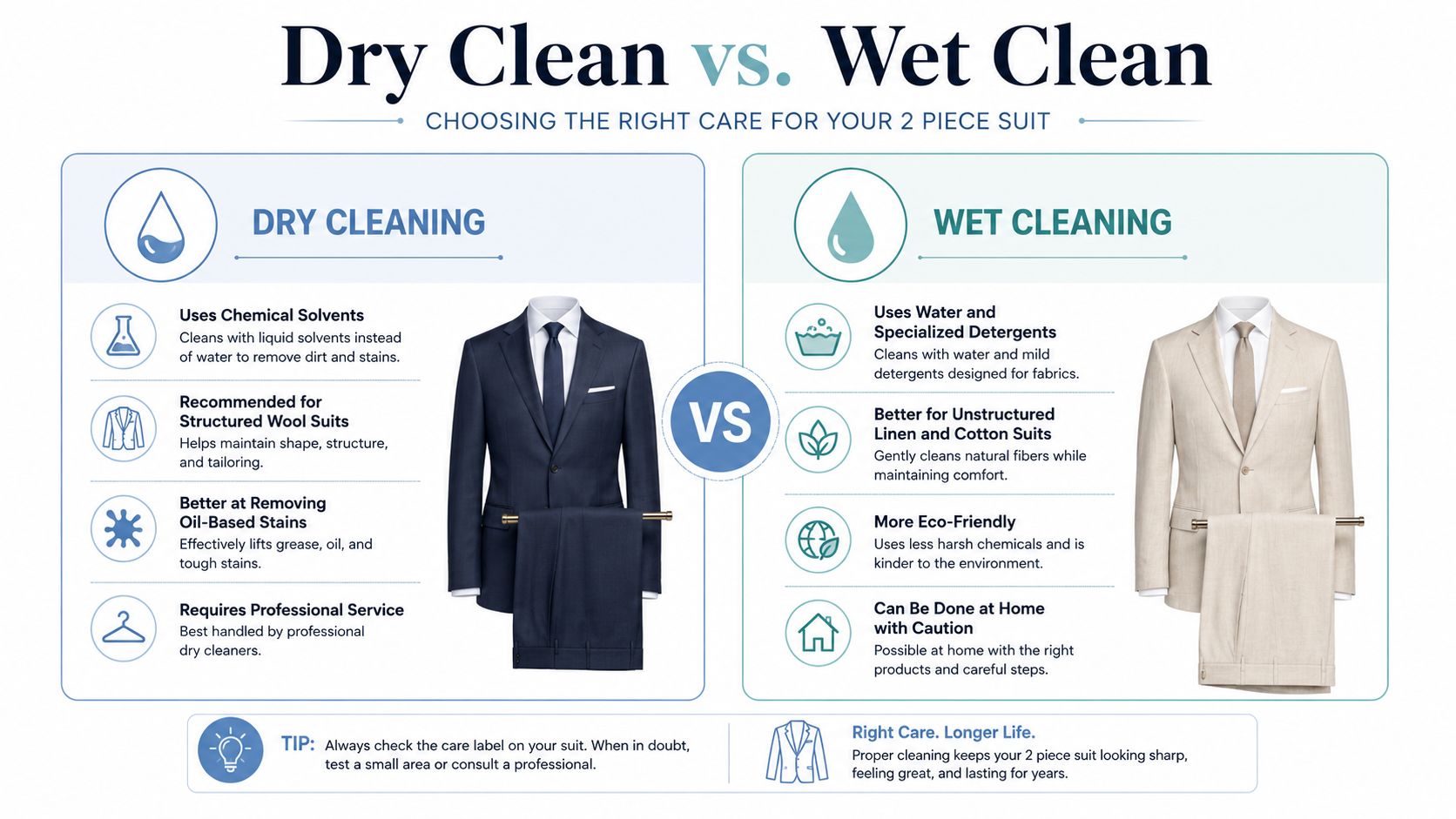
The cleaning method should match the cloth, the build, and the kind of soil on the garment. Dry cleaning uses solvents, which is why it's generally preferred for structured wool suits and for oil-based marks that water won't shift cleanly. Wet cleaning uses water and specialised detergents, which can be a better fit for some unstructured linen or cotton garments, provided the fabric and construction can take it.
For most office suits, dry cleaning is the safer default when you need the jacket to keep its shape. If the suit has picked up smoke, food, or a visible stain, hand it off rather than trying to delay the decision. A suit can look acceptable on the outside while still holding odour inside the lining, especially after repeated wear in Singapore's humidity.
One good rule is to clean after every six to eight wears, after any visible stain, after exposure to smoke or food spills, or before long-term storage. If the garment's care label allows it and the suit is made from a more relaxed cloth, wet cleaning can be an option for some pieces, but structure matters. That's why reading the cloth, not just the label, is so important.
Spot-cleaning should be restrained, not aggressive. Use a slightly damp cloth, a tiny amount of mild detergent if needed, and light pressure from the outside of the fabric. Work only on the marked area, then let it dry naturally away from heat.
Rule of thumb: if you can see the stain clearly but can't identify it, stop before you make a second problem.
For a broader comparison of service methods, Tumble Laundry's laundry vs dry cleaning guide is a useful reference. If you want a sense of how often people typically dry clean suits, Dandylion Style's dry cleaning guide gives a practical perspective on frequency without pretending every fabric needs the same treatment.
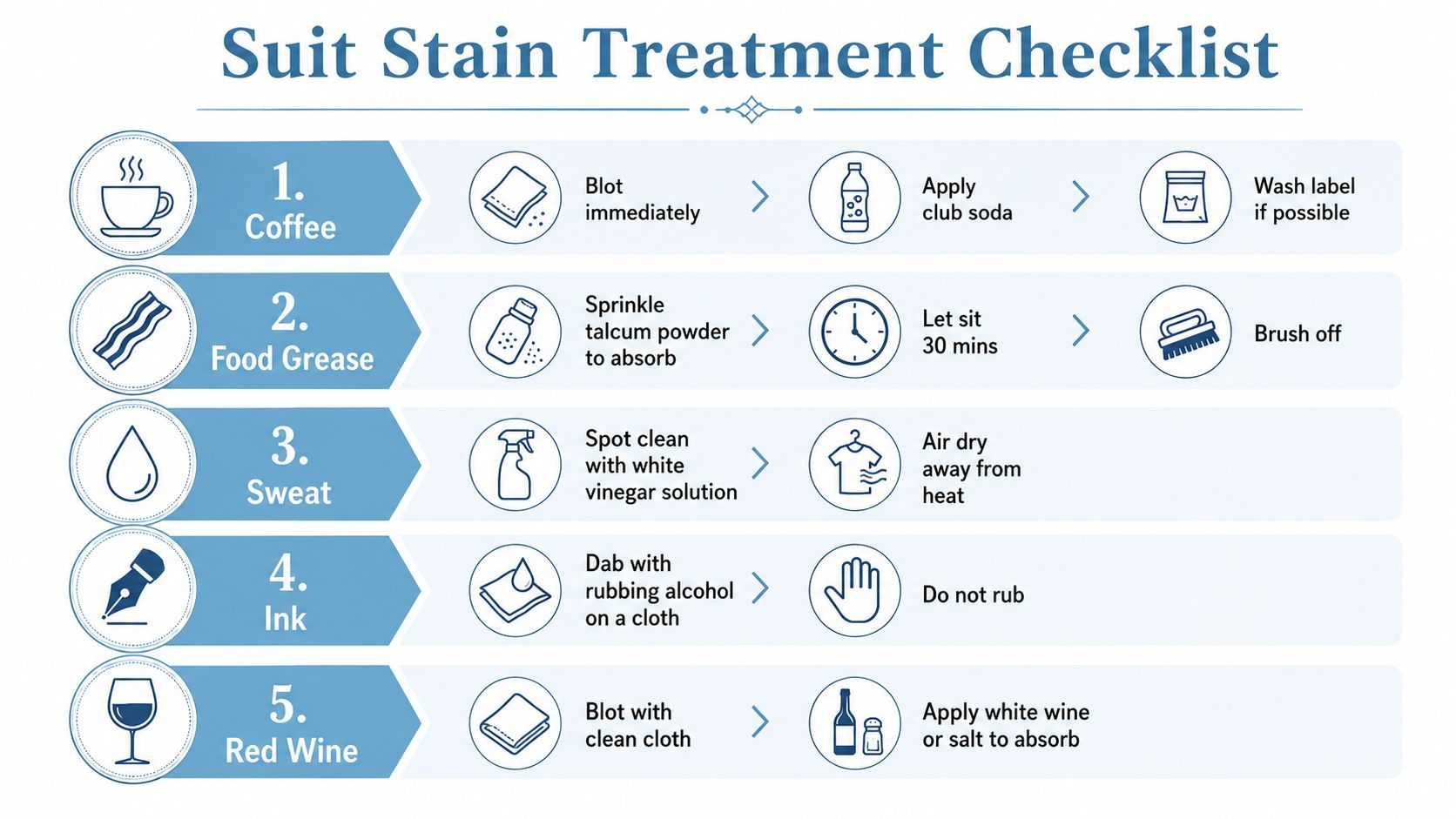
The fastest way to ruin a suit stain is to panic, rub, and add heat. That combo drives soil deeper into the fibres and can leave a permanent mark where a quick response would have worked. The practical sequence is simple, identify the stain, act lightly, and stop before the cloth starts to distort.
Coffee and wine need immediate blotting with a clean cloth. Grease should be absorbed first, not scrubbed, and anything ink-like should be treated with minimal liquid and very little movement. The main mistake is overworking the spot, especially on wool, where the nap or finish can change if you rub too hard.
The problem area on a suit is often not the lapel, but the inside. Jacket linings and trouser waistbands collect sweat, deodorant residue, and body oils over time, then hold odour long after the outside still looks tidy. That's one reason a suit can seem clean and still feel unpleasant in the office.
If the mark is on the lining, use a very light touch on the affected area and air the garment properly afterwards. Don't treat the whole jacket as if it were a T-shirt, and don't reach for hot water. Heat sets many stains, and on structured cloth it can also flatten texture in a way that never looks fully right again.
Any stain that's set, unknown, or spreading needs professional handling. A home remedy that looks “better” for five minutes can leave a halo once the garment dries. That's especially true on dark suits, where patchy cleaning shows up faster than people expect.
Use Tumble Laundry's stain-removal guide as a reference point if you want to think through the basics before sending the garment out. But if you're dealing with a suit you need to wear again soon, speed and caution matter more than experimenting.
Pressing and steaming are not interchangeable. Pressing uses pressure and heat to reset structure, which is what you want for trouser creases and lapel edges. Steaming relaxes wrinkles and freshens the jacket, which is better for day-to-day maintenance and odour reduction.
A good steamer can rescue a jacket that's been worn but not soiled. Keep the nozzle moving, hold it at a small distance from the cloth, and let the fabric relax rather than saturate. That's especially useful in Singapore, where a suit may only need a quick refresh after commuting or between event venues.
Pressing should be deliberate. Use medium heat for wool, keep the iron on steam, and always place a pressing cloth between the iron and the suit fabric. Without that barrier, you risk creating trouser shine, especially along the front of the leg where repeated contact and too much heat flatten the fibres.
Do not press directly on the outside of wool unless you're prepared to accept glossing. The problem is most obvious on dark trousers, where the front crease starts to reflect light before the rest of the leg does. That's why a suit that looks perfectly acceptable after steaming can still need professional pressing before a formal event.
For a clean comparison of garment-care methods, Tumble Laundry's steaming vs ironing guide is worth a read. The practical takeaway is simple, steam to maintain, press to restore structure.
Storage and travel are the same battle in different settings. In both cases, the enemies are moisture, compression, and bad packing habits. In Singapore, that means a suit can be perfectly fine in the morning, then pick up trouble from a cramped wardrobe, a plastic bag, or a badly packed suitcase before the week is done.
Use a wooden or padded hanger that supports the jacket's shoulders properly. Plastic wire hangers bend the shape over time, and flimsy hangers leave dents that are hard to press out cleanly. After cleaning, let the suit air fully before storing it, and avoid sealing a still-damp garment in a bag.
Breathability matters more than people think. A breathable garment bag is better than a plastic dry-cleaning bag for anything that will sit in storage, because plastic traps moisture. If you're using cedar blocks or silica gel for moisture control, keep them as part of the wardrobe environment, not as a substitute for airing the suit.
Fold the jacket with care, use a garment folder if you have one, and don't jam the suitcase full. A half-full case gives the suit room to settle instead of grinding against shoes, chargers, and toiletry kits. Once you arrive, hang the suit immediately and use hotel bathroom steam only as a light refresh, not a replacement for pressing.
If the suit has been hanging in a garment bag after cleaning, don't leave it trapped indefinitely. In a humid climate, that's asking for stale odour to build up again. Air it out, rotate it back into use, and clean it before long-term storage rather than after you notice a problem.
Some suit care belongs at home. Some doesn't. A simple decision rule works well in Singapore, handle steaming, brushing, and minor spot treatment yourself, then send the full clean and press out when the garment needs real restoration.
A professional pickup and delivery service like Tumble Laundry is built around that kind of workflow. Its Clean & Iron service is processed in-house, uses care-label adherence and stain inspection, keeps dedicated loads per customer, and returns items on hangers in protective sleeves. That matters for suits because you're not just paying for cleaning, you're paying for consistency and handling that preserves the shape of the garment.
The trust question usually comes down to three things, turnaround, transparency, and whether the cleaner knows the difference between a suit and a regular shirt load. Tumble Laundry states a standard 5 working-day turnaround for Clean & Iron, which suits office wear better than ad hoc drop-off errand runs when your week is already packed. For households and professionals juggling multiple garments, pickup and delivery also removes the worst part of suit care, the half-finished pile that sits at home waiting for attention.
If the garment needs structure restored, let a professional press it. If it only needs a quick refresh, handle that yourself.
For Singapore wearers who want the suit back ready to wear, not just “clean”, that split is the most useful one. You keep daily maintenance in your own hands and outsource the work that's most likely to go wrong under humidity, heat, and time pressure.
If you want suit care that fits Singapore's pace, book a clean and press with Tumble Laundry and let the jacket come back ready to wear, hung properly and handled with care. It's a straightforward way to keep your 2 piece suits sharp without turning every stain, crease, or weekday rush into a laundry problem.

We make laundry days fast and easy for you. We collect, clean and deliver your laundry and dry-cleaning.
53 Ubi Ave 1 #03-43, Singapore 408934
Mon - Fri | 8:30 am–5:30 pm
Sat | 8:30 am–12:30 pm
hello@tumble.sg
+65 62554222
Whatsapp Us


