Carpet Cleaning in Singapore: A Practical DIY Guide
This is some text inside of a div block.

Your carpet usually doesn't tell you it's dirty first. It tells you it's holding moisture.
You feel it under bare feet after a humid week. The room smells slightly closed up even after the windows were open. A spill you thought you handled properly leaves a faint mark again two days later. In Singapore homes, that sequence is common because carpet cleaning here isn't mainly about appearance. It's about how fast you can remove soil and get the carpet dry again.
In HDB flats and condos, the mistake isn't only leaving stains behind. It's pushing water into the pile and backing, then assuming the surface feels dry so the job is done. That's how musty odours, recurring spots, and microbial growth start. If you treat carpet care as a humidity-management job first, your results get better immediately.
A lot of homes here have the same problem. The carpet looks passable from standing height, but the fibres feel slightly heavy, and the room has that mild stale smell that air freshener never fixes. That usually means the carpet has become a storage layer for dust, moisture, and residue.
In Singapore, carpets also matter for allergen control. A Singapore home study found mites in all carpet samples tested, 13 out of 13, and every carpet sample contained more than 500 mites per gram of dust. Across all sampled home sites, mites were isolated from 130 of 134 samples, or 97%. The same study identified Blomia tropicalis as the dominant mite species, accounting for 62% of all mites found, which is why carpet cleaning is a basic indoor hygiene task in our climate, not just a visual one (Singapore mite study).
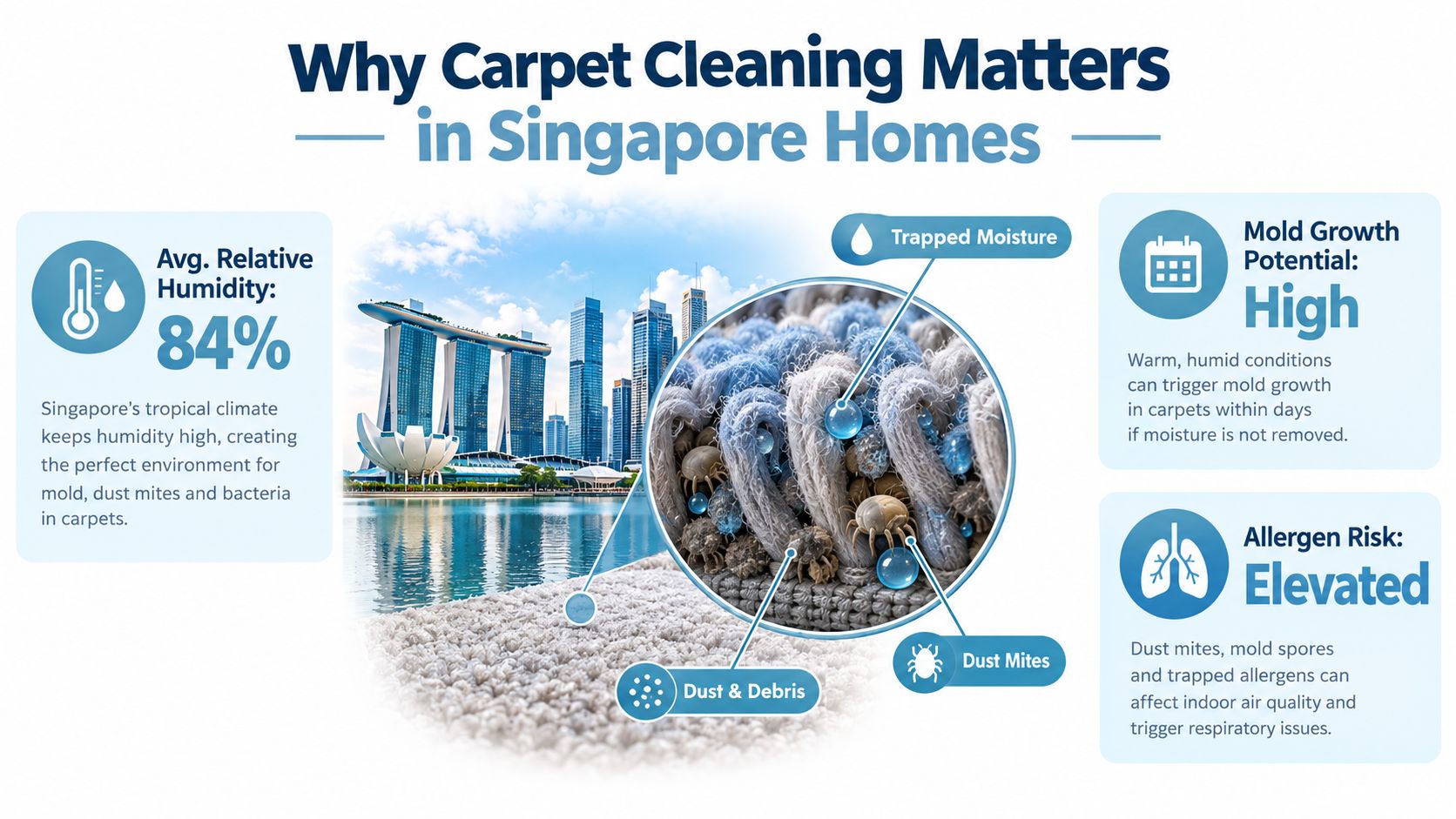
Another Singapore allergen study found that carpet dust had a geometric mean of 1.5 micrograms per gram of dust for Der p 1 and 1,620 allergen units per gram dust for Blo t, placing carpets just behind mattresses as a major reservoir for mite allergens. The same body of local research reinforces that carpets are one of the indoor niches that matter when you're trying to reduce allergen burden at home (Singapore allergen findings).
That's why I don't treat carpet cleaning as an isolated chore. It sits in the same category as curtain care, upholstery maintenance, and airflow control. If you're already dealing with fabric-heavy rooms, it helps to think about curtain steam cleaning for homes in Singapore alongside carpet maintenance, because both can trap dust and moisture in enclosed rooms.
Practical rule: In Singapore, the best carpet clean is the one that dries properly. A deeper wash that stays damp too long can create more trouble than a lighter, better-controlled clean.
For routine maintenance, homeowners can do a lot well. Vacuuming, immediate spill treatment, and careful low-moisture cleaning stop most carpets from reaching the emergency stage. But once odours keep returning, or the backing has taken on moisture, the job changes.
That's when it helps to compare your options with firms that focus on specialized carpet cleaning services, especially if you're dealing with wool, repeated pet accidents, or rooms with poor ventilation. Not every carpet needs a professional visit, but every carpet in Singapore does need a drying strategy.
By the time a carpet looks dirty in a Singapore flat, the fibres usually hold more than visible dust. They have picked up grit from the corridor, skin flakes from the sofa area, and moisture from feet, mopping, or humid air that never fully cleared. That mix is why routine care here is less about keeping up appearances and more about keeping soil dry enough to remove.
In HDB and condo homes, the goal is simple. Stop dry soil from turning into damp residue that settles lower into the pile.
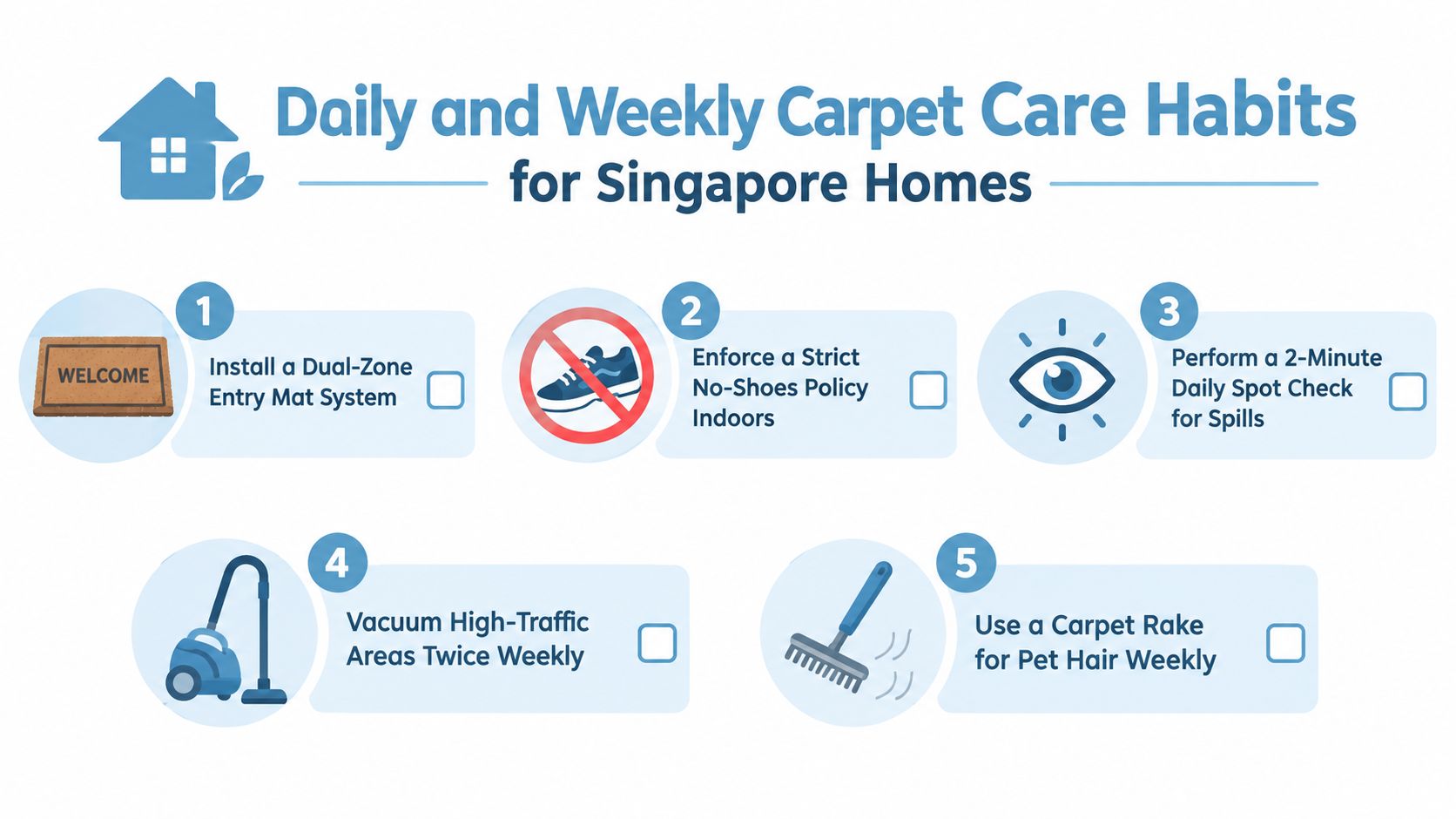
• Use a proper entry buffer: Place one mat outside the main door and another just inside. The first catches larger grit. The second picks up finer dust and some moisture before it reaches the carpet.
• Keep shoes off indoors: Shoe soles carry in roadside dust, lift grease from common areas, and track in light moisture. On carpet, that combination sticks fast.
• Check problem spots daily: Look at dining chairs, sofa arms, bedside edges, and pet resting areas. Fresh marks lift with less water. Older marks usually need more product, more rinsing, and more drying time.
• Vacuum traffic lanes more often than the whole room: Entrance strips, TV areas, and dining paths collect the heaviest load. In many homes, those sections need attention far more often than corners or guest rooms.
• Remove pet hair before it binds into the pile: A rubber brush or carpet rake often pulls out trapped hair better than repeated vacuum passes, especially on low to medium pile carpets.
I tell homeowners to build their routine around humidity, not just dirt. If the room already feels stuffy, postpone any damp spot cleaning unless you can run a fan or dehumidifier after. A lightly soiled carpet that stays dry is easier to maintain than a freshly cleaned patch that remains damp for hours.
A useful home pattern looks like this: vacuum busy areas several times a week, vacuum quieter rooms on a steadier schedule, and deal with spills on the same day. Low-moisture touch-ups help in between deeper cleans, but only if you keep the carpet from staying wet.
That last part is where many DIY routines go wrong. People focus on lifting the mark and ignore what happens after. In Singapore, slow drying can leave the carpet smelling musty, pull old residue back up, or leave the backing slightly damp. Once that happens, the carpet gets dirty faster even if the surface looked fine on cleaning day.
For broader housekeeping routines that support carpet care, clean and tidy home habits help because cleaner entryways, sofas, and surrounding floors reduce what falls back into the carpet.
Vacuuming works best when the machine is set for the carpet you have. Low-pile synthetic carpets usually tolerate an adjustable beater bar well because it lifts dry soil from the base of the pile. Loop pile, wool, and delicate fibres need more care. Strong agitation can fuzz the surface, pull loops, or leave the carpet looking worn before its time.
Slow, overlapping passes remove more than quick back-and-forth strokes. One careful pass forward and back over a traffic lane usually does more than five rushed swipes.
If a carpet starts looking flat soon after vacuuming, the issue is often residue or retained moisture rather than lack of effort. That is a maintenance problem, not just a cleaning problem.
A spill at 9 pm in a closed bedroom can look solved by 9:10, then smell sour by the next afternoon. In Singapore, stain removal is a drying job as much as a spotting job. If the carpet stays damp below the surface, the mark often returns, the area turns tacky, or the backing starts holding odour.
Order matters more than buying a stronger bottle. Use blot, treat, rinse, dry in that sequence, and keep moisture as controlled as possible.
1. Blot
Use white cloths or paper towels and press firmly to lift as much liquid as possible before adding any cleaner.
2. Treat
Match the cleaner to the stain type. Apply to the cloth or use a very small amount on the spot. Flooding the area makes drying harder and often spreads the stain into the underlay.
3. Rinse
Rinse lightly with clean water after treatment. This removes leftover detergent, which is one of the main reasons a cleaned patch attracts fresh soil.
4. Dry
Towel-press until little moisture transfers, then run a fan across the area. Air-conditioning or a dehumidifier helps in rooms that stay muggy.
Scrubbing is where many homeowners damage the fibres and drive the stain deeper. Heavy soaking causes a different problem. The surface looks cleaner, but the lower pile and backing stay wet long after the top feels dry.
Food and drink spills such as coffee, tea, soy sauce, and coloured sauces respond best to quick blotting first. Start with cool water on a cloth. If colour remains, use a mild white vinegar solution sparingly, working from the outer edge toward the centre so the mark does not spread.
Pet urine and vomit need an enzyme cleaner if you want to remove the source rather than cover it. Detergent can improve the appearance for a short while, but if the contamination has reached the backing, odour usually returns in humid rooms.
Mud and tracked-in soil should dry first. Wet mud smears fast, especially on low-pile synthetic carpet. Once it has dried, vacuum thoroughly, then spot clean the remaining mark.
Oil, grease, and lipstick need a degreasing step. A small amount of dish soap diluted in water often works on synthetic household carpet. Put it on the cloth, not straight onto the carpet, and rinse well after.
Ink and marker can respond to rubbing alcohol on a cloth, dabbed gently with frequent rotation to a clean section. Test first on delicate fibres or patterned carpets, because some dyes are less stable than homeowners expect.
Stain Treatment Reference for Common Singapore Household SpillsStain TypeFirst AgentTechniqueKey WarningCoffee, tea, soy sauceCool water, then white vinegar solutionBlot, apply lightly, rinse, dryAvoid hard rubbing on tannin stainsPet urine, vomitEnzyme cleanerBlot first, allow dwell time, rinse lightlyFragrance products do not remove the sourceMud, soilDry vacuum firstLet dry, vacuum, then spot treat residueWet mud spreads quicklyOil, grease, lipstickMild dish soap solutionDab with cloth, rinse carefullyExtra soap leaves sticky residueInk, markerRubbing alcoholDab from edge inwardTest first on delicate fibres
For stain chemistry by fabric type, this guide to removing oil, protein, and dye-based stains gives useful background, though carpet work needs much tighter moisture control than clothing care.
Two causes show up again and again in HDB and condo homes. The first is incomplete extraction. The top of the pile looks clean, but the spill or cleaner remains deeper down. The second is residue. Too much shampoo, soap, or spotter dries sticky and pulls in fresh dirt within days.
Humidity makes both problems worse.
A safe spot-cleaned area should feel neutral, not slick, cool, or slightly damp an hour later. If it still feels cool to the touch, keep drying it. That usually means moisture is still sitting lower in the carpet.
Never mix bleach with vinegar or with any unknown cleaner.
For local homes, the drying step needs discipline:
• Press with dry towels after rinsing until transfer slows
• Aim a fan across the carpet to move humid air away
• Run air-conditioning in rooms with poor airflow
• Use a dehumidifier if the patch still feels cool after the surface looks dry
• Keep foot traffic off the area until it is fully dry
That last point matters more than people think. Walking on a damp patch grinds loosened soil back into the fibres and slows evaporation at the same time.
A common Singapore mistake looks clean for one evening. The carpet feels fresh after a weekend wash, then the room smells slightly sour the next day and the traffic lane turns dull again by midweek. In HDB bedrooms and closed-up condo studies, that usually points to a poor method match, weak extraction, or slow drying at the base of the pile.
Home carpet cleaning methods do different jobs. Some remove embedded soil well but demand stronger drying support. Others are safer for quick turnarounds yet leave more residue or miss the deeper grit that drives wear and dust buildup.
Local equipment guidance generally follows the same sequence: vacuum first, pre-treat, clean in controlled passes, extract as much solution as possible, then dry thoroughly before normal use. For home users, the practical part is not the machine label. It is whether the method can clean enough without leaving the backing damp for too long.
Deep-Cleaning Methods Compared for Singapore HomesMethodWater UseDrying Pattern in Singapore HomesBest ForSkill LevelHot-water extractionHighSurface may dry within hours, but backing and underlay can stay damp much longerDeep soil, dust, tracked-in grime, heavier allergen loadHigherDry compound cleaningLowUsually quickest to stabilise for normal room useLight soiling, tighter drying windows, more delicate fibresModerateShampooingMedium to highOften looks dry before residue and deeper moisture are fully dealt withHeavier visible soil if you can rinse and extract properlyModerateBonnet cleaningLow to mediumFast cosmetic improvement, limited depthSurface dullness and appearance refreshModerate
Hot-water extraction gives the best reset when the carpet has real soil in it, not just a few marks on top. In family bedrooms, under dining chairs, and along entry paths, it removes grit that dry methods usually leave behind. The problem is not the cleaning power. The problem is what happens after, especially with thicker carpets, underlay, or rooms that stay shut for most of the day.
Dry compound cleaning suits Singapore homes better than many people expect. It is not a full restorative clean, but it buys speed. In a spare room with weak airflow, or in a condo study where you need the floor usable again the same day, that lower-moisture approach can be the safer choice.
Shampooing is where DIY users often get into trouble. It can make the pile look brighter fast, but if the machine does not rinse and recover well, detergent stays behind and the carpet re-soils quickly. That is one of the clearest differences between cleaning and only improving appearance.
Bonnet cleaning sits at the maintenance end. It works mainly on the upper pile, so I rarely suggest it for homes unless the goal is a quick visual tidy-up before guests. It does not address the deeper dust and compacted soil that build up in enclosed rooms.
This is the part many guides skip. Two homes can use the same machine on the same carpet and get very different results because the drying setup is different.
Air-conditioning helps, especially if the room is small and can be kept closed. A dehumidifier usually does more to pull moisture out of the carpet system itself, particularly in rooms where outdoor air is already humid and opening windows just replaces one batch of damp air with another. The fastest setup in many flats is fan plus air-con, or fan plus dehumidifier, not fan alone.
I judge home-safe drying by touch and by smell. If the pile feels dry but the base still feels cool, moisture is still sitting lower down. If the room smells slightly woolly, stale, or sweet after cleaning, drying is not finished. That is when mites, odour, and resoiling problems start to creep back.
For a related fabric-care comparison, how the dry cleaning process differs from washing methods helps explain why lower-moisture systems can be gentler but also more limited.
For readers comparing service standards beyond Singapore, it can help to look at how trusted carpet cleaners in CO and AZ explain deep-cleaning expectations. The geography is different, but the distinction between maintenance cleaning and restorative cleaning still holds.
By 10am, the carpet can look manageable. By evening, the room smells slightly stale, the pile feels dry on top, and the base is still holding moisture. In Singapore homes, that is the risk with DIY carpet cleaning. Soil matters, but trapped dampness causes more trouble here than many people expect.
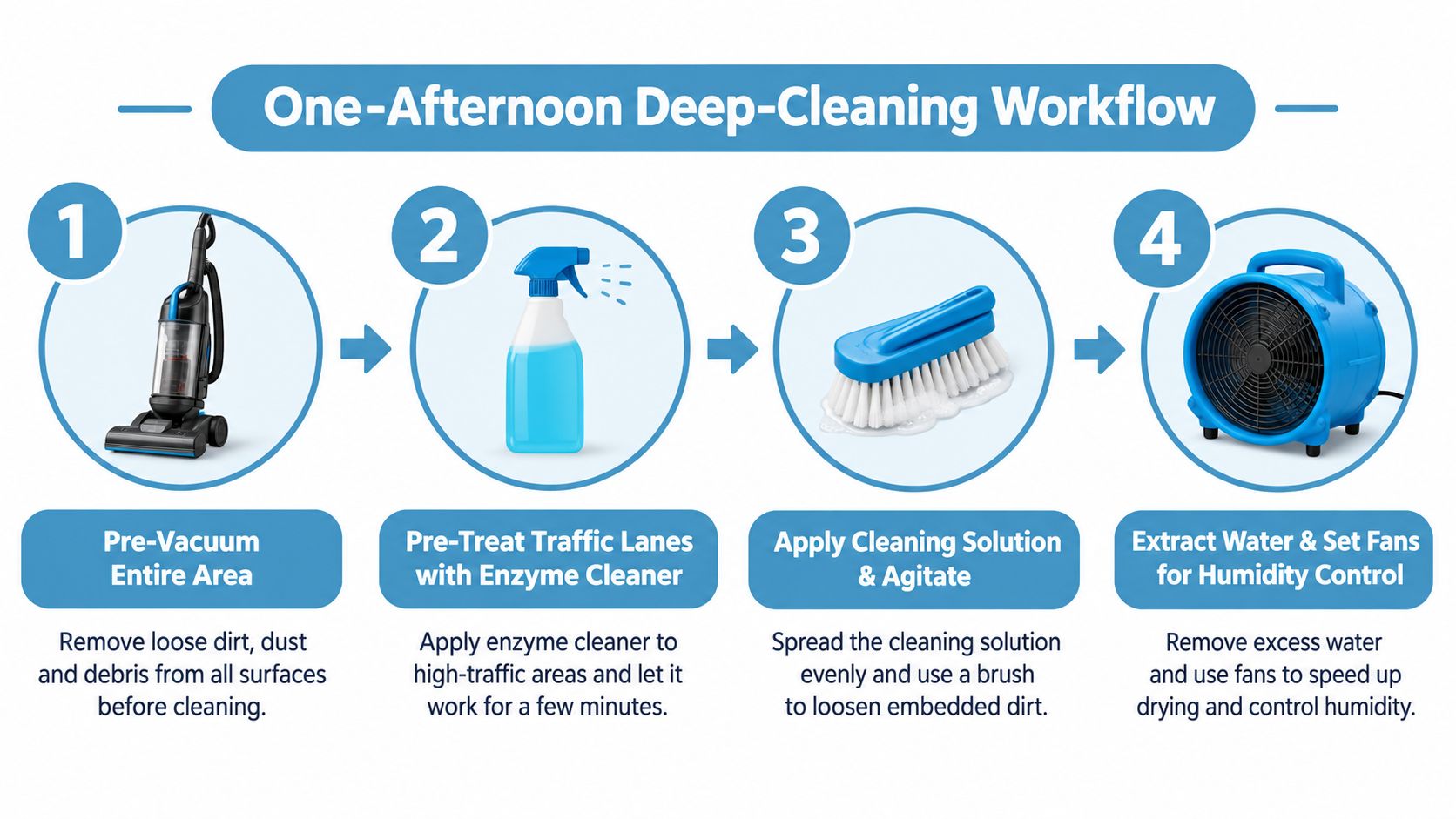
Vacuum first, and do it slowly. One rushed pass only skims the top. I pay extra attention to skirting edges, bed perimeters, sofa fronts, and the darkened walking lanes near doors because that is where grit and skin dust collect.
Dry soil cuts fibres over time. Once it gets wet, it also turns into sludge that is harder to extract cleanly.
Move light furniture out of the room if you can. If you cannot, clear enough space to reach the traffic lanes properly. That is where the visible improvement usually comes from.
Match the spotter to the stain. Enzyme products suit food spills, sweat, or pet-related marks. A mild surfactant spotter works better for general grey traffic soil and oily residue tracked in from feet.
Use restraint. Lightly dampen the stained area and traffic lanes, then give the product a short dwell time. Over-wetting a stain often pushes it deeper into the backing or underlay, which makes drying slower and the mark harder to remove on the next attempt.
A visual demonstration helps if you've never used a home machine before:
Keep the cleaning passes even and restrained. With a wet extraction machine, overlap slightly, work with the pile direction where possible, and avoid flooding the same strip because you want rinse and recovery, not saturation.
A simple rule helps. Spray less than you think you need, then extract more than you think is necessary. Hold the spray close enough to control the application, and keep making dry passes until the recovery looks clear and the carpet stops giving back obvious moisture.
If you are using a dry compound system, spread it evenly, brush it in gently, let it absorb the soil, then vacuum thoroughly. It will not flush out heavy contamination as well as extraction, but it keeps moisture load lower, which can be the safer trade-off in flats that dry slowly.
The common DIY failure is not weak chemistry. It is leaving too much water behind.
Start drying the moment the last pass is done. In Singapore, the success of the whole job often depends on what happens in the next few hours.
Run the air-con if the room can stay closed. Add fans to keep air moving across the carpet surface. Use a dehumidifier if you have one, especially in bedrooms and study rooms where air tends to sit still. Open windows only if outdoor conditions are helping. On many humid days, they are not.
If the carpet ended up wetter than planned, this guide on how to dry wet carpet in Florida is still useful for the drying logic. The climate is different, but the shared problem is the same. Moisture trapped below the pile takes longer to leave than many homeowners expect.
A few habits make DIY results more reliable:
• Start in the morning: Give the carpet the full day to release moisture.
• Check below the surface: If the pile feels dry but the base feels cool, drying is still incomplete.
• Vacuum again after full drying: This removes loosened residue and lifts the pile.
• Delay furniture return if needed: Heavy bases trap moisture and can leave compression marks or odour pockets.
Done well, a home deep clean improves appearance, reduces grit, and cuts down the dusty smell that builds up in enclosed rooms. Done too wet, it creates a humidity problem wearing a clean-carpet disguise.
This decision comes down to soil level, fibre type, and your tolerance for risk. Not every home needs a professional every time. But some carpets are very easy to make worse with a rental machine.
The honest split is this. DIY works best for maintenance cleaning on durable synthetics when the carpet is lightly soiled and the room dries well. Professional cleaning makes more sense when the carpet is delicate, heavily soiled, odorous, or slow to dry.
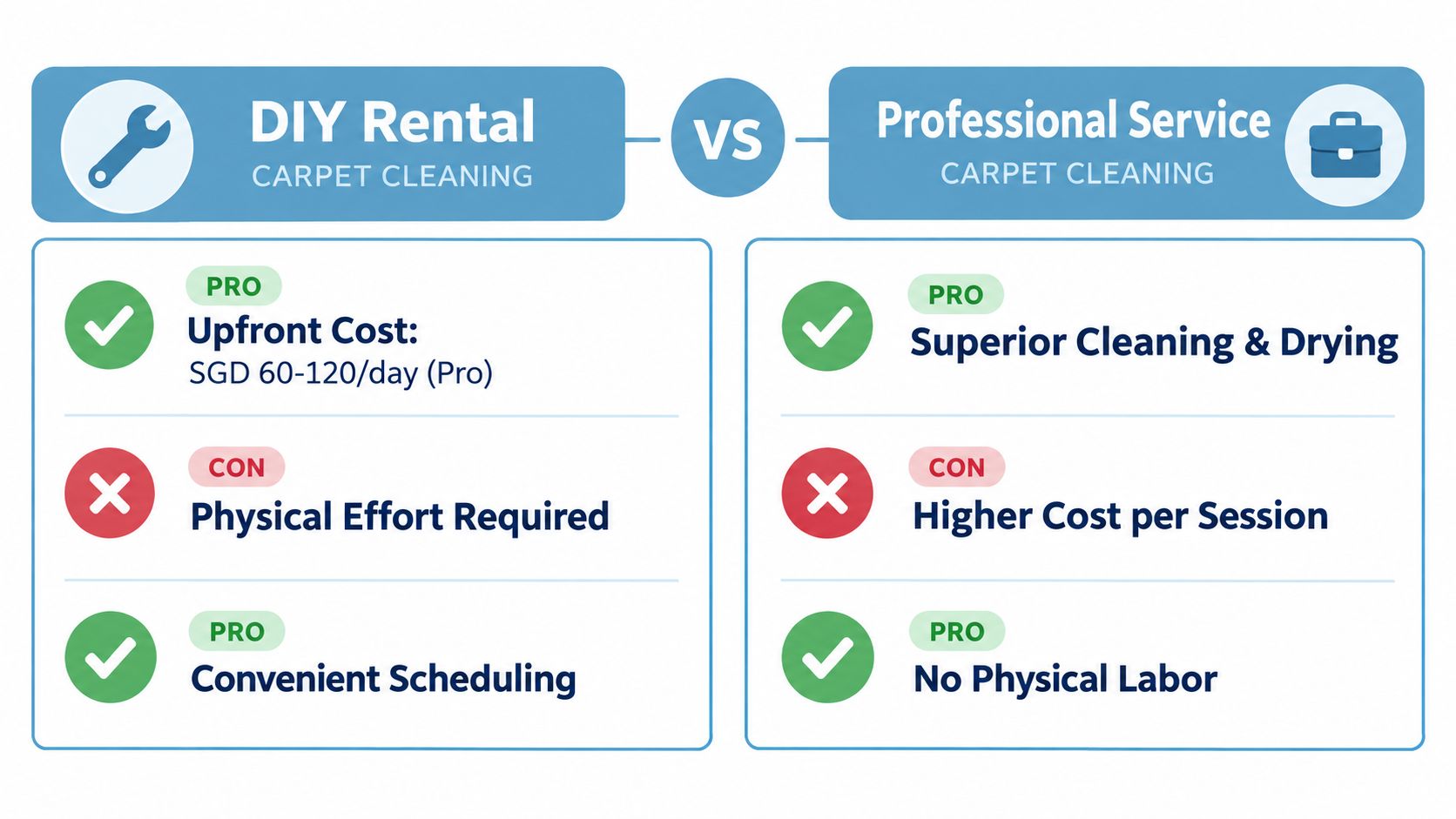
A homeowner can get acceptable results from a rented machine on polypropylene or basic synthetic pile if the goal is refreshment, not full restoration. You control timing, you can revisit spots, and for one room, the convenience is real.
But domestic users often under-extract after applying too much solution. The machine leaves the carpet looking cleaner while the backing stays damp. That's the trap.
Professionals bring stronger extraction, better moisture control, and better judgement about fibre sensitivity. They're also less likely to attack every stain with the same detergent and brush.
Call for help if you have:
• Wool or delicate natural fibres
• Persistent odours after prior DIY cleaning
• Pet contamination that may have reached underlay
• Recurring dark traffic lanes
• Any water incident that left the carpet broadly damp
For households already managing multiple fabric-care jobs, Tumble's services in Singapore are relevant on the soft-furnishing side because pickup-and-delivery care can reduce the backlog around curtains and other household textiles while you focus your effort on flooring decisions. If you need carpet or rug care, keep it separate from ordinary laundry logic and ask specifically about method and drying.
Do it yourself when the carpet is structurally sound, the stains are recent, and you can keep moisture tightly controlled. Hire a professional when the problem is deeper than the face fibre.
A bad DIY clean usually fails in one of three ways. It leaves residue. It leaves odour. Or it leaves moisture. The third one causes the longest headache.
A good carpet plan in Singapore should feel boring. That's the point. Boring routines stop expensive problems.
Use this as a practical baseline, then adjust for pets, children, open-window habits, and how much corridor dust enters your unit:
• Daily: Check entrances, dining areas, and pet spots. Remove crumbs, hair, and fresh spills immediately.
• Several times each week: Vacuum traffic lanes and active living spaces.
• Weekly: Inspect under good light for dull patches, sticky spots, or areas that still feel cool.
• Periodically: Freshen neglected edges, under-bed zones, and furniture lines.
• On a planned basis: Deep clean according to use, fibre, and drying conditions.
A local content gap worth noting is that many Singapore carpet articles talk broadly about dust mites and cleaner air, but they often skip the practical issue of how often wet cleaning is wise in a humid home. Local guidance puts real weight on weekly vacuuming and careful moisture removal after wet cleaning, which is exactly where many households go wrong (Singapore carpet cleaning guide discussion).
Call a professional if any of these apply:
• The carpet still looks soiled after two careful DIY attempts
• The smell returns after the area dries
• There has been a water leak or flooding event
• The carpet is wool, silk, viscose, or otherwise delicate
• You're dealing with illness-related contamination
• The carpet remains damp longer than it should
Another under-discussed local point is that cleaning alone isn't always the full answer in tightly sealed flats and condos. Some situations need source control too. Singapore-facing guidance notes that humidity and enclosed indoor conditions support microbial growth, and carpets can release trapped particles when disturbed, so cleaning may need to sit alongside ventilation, dehumidification, or even a flooring rethink in some homes (local discussion on carpets, humidity, and source control).
Before you call, prepare four facts: fibre type, room size, stain type, and drying constraints. That gets you a better quote and a better method recommendation. If you can also say whether the smell is surface-level or strongest near one corner, even better.
Tumble Laundry helps Singapore households stay on top of fabric care with islandwide pickup and delivery, including laundry, dry cleaning, and curtain cleaning that suits busy condo and HDB living. If you're organising a broader home refresh and want the soft-furnishing side handled properly while you sort out carpet cleaning decisions, visit Tumble Laundry.

We make laundry days fast and easy for you. We collect, clean and deliver your laundry and dry-cleaning.
53 Ubi Ave 1 #03-43, Singapore 408934
Mon - Fri | 8:30 am–5:30 pm
Sat | 8:30 am–12:30 pm
hello@tumble.sg
+65 62554222
Whatsapp Us


