Carpet and Curtain Cleaning in Singapore: A Practical Guide
This is some text inside of a div block.

You might be standing in your living room right now, looking at curtains that smell faintly stale when the air-con switches on, or noticing that the carpet near the sofa feels a bit tacky underfoot. In Singapore, that usually isn't just “normal dust”. It's a mix of humidity, trapped particles, and fabric that's holding on to more than it should.
Carpet and curtain cleaning makes more sense when you treat it as part of home maintenance, not a luxury add-on. Singapore's cleaning-services sector is already large, with about S$3.6 billion in annual operating receipts across roughly 2,316 establishments in 2024, up from about S$2.6 billion in 2019 and growing at roughly 6.7% a year over that period, which shows how embedded fabric care is in daily life here. Housing patterns matter too, because over 80% of residents live in HDB flats or condos, and the country's average relative humidity sits around 84%, conditions that make soft furnishings pick up moisture, odours, and dust more quickly than many people expect. For a practical local reference on musty curtain smells, see this Singapore guide on curtain odours.
A typical condo or HDB home in Singapore has all the ingredients that make fabric care harder than it looks. Curtains sit near windows that are opened and closed often, carpets catch the dust you bring in after a day out, and the air-con runs long enough for fibres to go through repeated cool, damp cycles. That mix can leave light-coloured fabrics looking grey at the hem and carpets feeling a little sticky even when the surface looks fine.
Humidity is the big reason. Fabric doesn't just collect dirt in Singapore, it also holds onto moisture, and moisture gives dust, odours, and mould a better place to linger. If your household has ever noticed morning sneezing, a stale smell after rain, or a darker band at the bottom of a curtain, those are usually signs that the textile is carrying a load that vacuuming alone won't fully remove.
The warning signs are often subtle before they become obvious. A curtain can still hang neatly while holding cooking fumes and airborne dust in its folds, and a carpet can still look intact while grit has settled deep into the pile.
Practical rule: if a fabric smells different after the air-con has been on for a while, it's already telling you moisture and soil are sitting inside it.
This is why the topic matters more in Singapore than in drier places. Fabric maintenance isn't about chasing perfection, it's about stopping soft furnishings from becoming the home's quiet dust reservoir. If you want a simple domestic benchmark for upholstery care, this upholstery cleaning guide is a useful companion read.

Curtains and carpets work as passive air filters in a Singapore home. Each time the fan runs, a window opens, or the air-con circulates air, small particles settle into the weave, folds, and pile. Skin flakes, cooking residue, pollen, road dust, and moisture can all become part of that hidden load.
Humidity makes fibres swell slightly, helping debris stay lodged between threads. As the air becomes drier, only some of the trapped material comes loose. The cycle is gradual: fibres collect particles, hold them, release a little, then collect more. A vacuum can remove surface dust, but it may not reach everything held deeper inside.
A polyester sheer is light and usually easier to flush clean. A velvet drape has a denser surface that can retain odours and show crush marks if handled poorly. A wool or polypropylene carpet faces another problem, ground-in grit pressed deeper by daily foot traffic. The right cleaning method therefore depends on the textile, its condition, and whether it can be safely removed from the home.
That distinction also affects the choice between onsite and takedown cleaning. A removable curtain may be cleaned more evenly away from the track, while a fixed carpet needs careful treatment in place. Understanding how upholstery fibres behave can help, and this upholstery cleaning resource offers a practical comparison of textile surfaces.
A curtain can look clean and still be re-releasing a week of cooking fumes into the room.
Allergy symptoms can therefore be difficult to trace. Residents may blame the weather or air-con, while curtains and carpets continue releasing what they have retained. For practical dust-control habits, the guide from Professional Window Cleaning explains how particles settle and why regular maintenance matters. In Singapore homes, humidity adds another reason to clean beyond what the eye can see.
The first question to ask is simple, can the item stay where it is, or does it need to leave the home to be cleaned properly? That decision matters more than brand names or fancy service descriptions.
Onsite cleaning uses portable equipment brought into the residence. It suits wall-to-wall carpets, lighter curtains, and setups where removal would be awkward or risky. Takedown cleaning means the fabric is removed and processed at a dedicated facility, which gives the cleaner more control over water use, drying, and fabric handling.
In a high-ceiling condo with heavy blackout curtains, takedown is usually easier because the fabric can be handled away from the track and treated more evenly. In an HDB bedroom with a smaller rug or straightforward curtain panels, onsite service may be more convenient if the concern is quick refresh rather than a full restoration.
Good fit beats convenience alone. A fast onsite visit is useful if the item is manageable in place, but a removable panel or a deep-soiled carpet often benefits from dedicated processing.
For methods that rely on gentle heat and moisture control, this curtain steam cleaning guide is a useful reference point. It helps explain why some fabrics tolerate low-moisture treatment well, while others need a more careful approach.
FeatureOnsite cleaningTakedown cleaningAccessDone in the homeItem removed from the homeBest forFixed carpets, easy-access curtainsDelicate, heavy, or heavily soiled curtains and rugsDrying controlFaster return to useBetter control in a dedicated spaceCleaning depthUseful for routine refreshBetter for deeper, more controlled treatmentConvenienceLess disruptionMore handling, but less stress on the fabric during cleaning
For readers comparing service options more broadly, the commercial carpet shampoo service is a helpful example of how some providers frame deeper carpet treatment as a separate workflow. In Singapore homes, the same logic usually comes down to whether the item can safely stay in place or needs a more controlled process elsewhere.
A proper service starts before any water or detergent comes out. You book, give the provider the item type and condition, and arrange pickup or onsite access. That early step matters because curtains and carpets need different handling, and the cleaner should know about stains, sun damage, weak stitching, or blackout layers before the job begins.
First, the technician checks the fabric and records the item details. Curtains are then tagged, folded, and packed separately so they don't rub against other items, while carpets are rolled and sealed to keep grit from transferring during transport. Once the items reach the facility, they're sorted into dedicated loads rather than mixed with everyday laundry, which reduces cross-contamination and keeps treatment more controlled.
Cleaning itself depends on the material. Carpets usually get stain-specific pre-treatment and fibre-safe extraction, while curtains may go through gentle wet or dry methods depending on the label and lining. After that, the items are dried under controlled conditions so they don't sit damp in Singapore's humidity, then finished with deodorising, light pressing, and refolding before return.
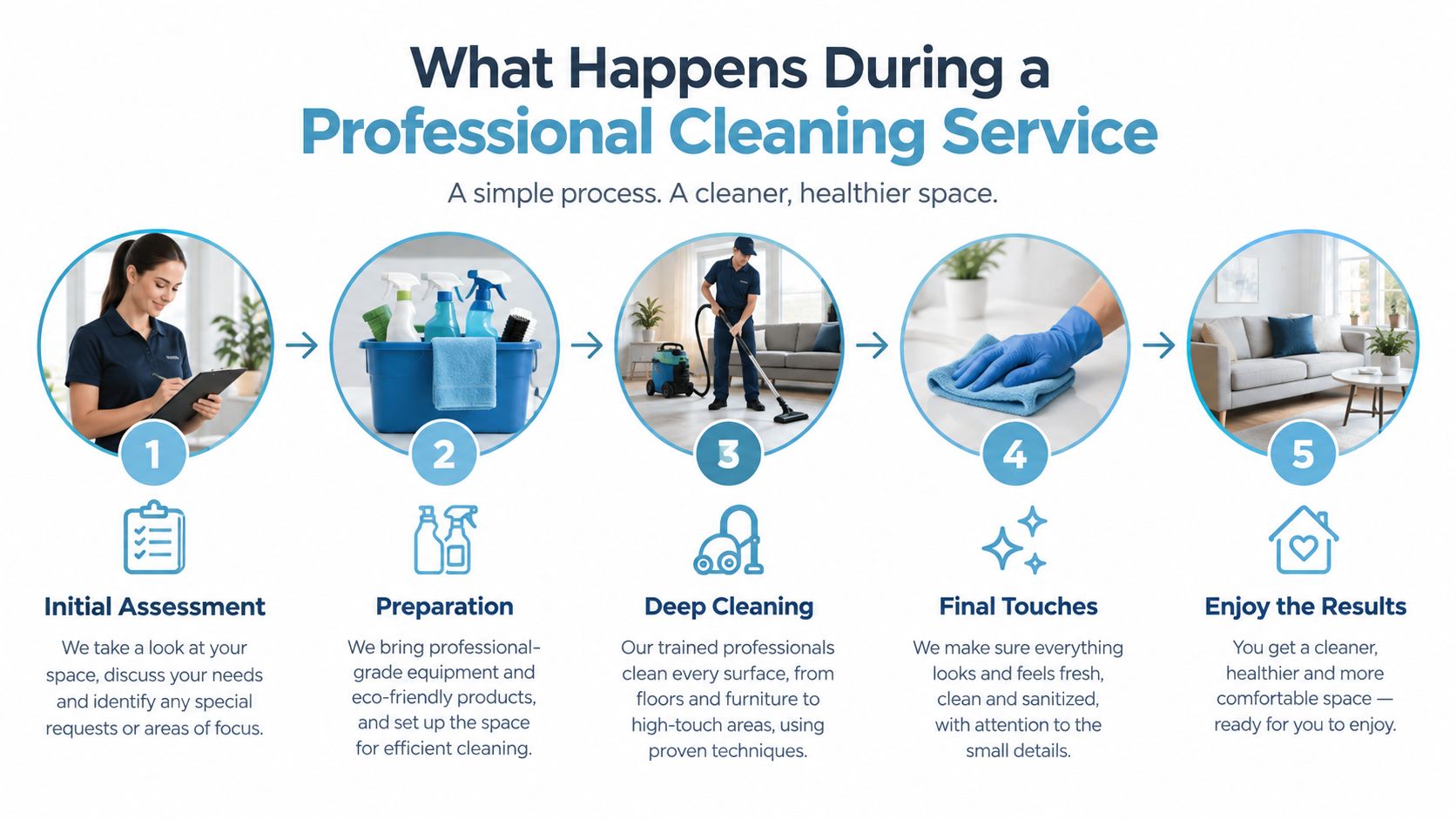
The hard part isn't only washing the fabric. It's handling it so the shape, lining, and drape still look right when it comes back.
If you want a more detailed look at how a fabric-specific workflow is handled, this dry cleaning process guide gives useful context. A Singapore-based provider such as Tumble Laundry also offers curtain cleaning with pickup, cleaning, and delivery support, which is the sort of service many condo residents look for when handling large or delicate panels.
Singapore pricing for carpet and curtain cleaning usually makes more sense when you compare the method, not just the headline number. A curtain that needs careful removal, sorting, and rehanging costs more to process than a simple refresh, and a deep carpet clean takes longer because the cleaner has to treat the soil, extract it, and let the item dry properly.
Ask whether the price is based on panel, weight, size, or square metre, because those structures are not interchangeable. Also check whether surcharges apply for silk, velvet, blackout-lined, or embellished fabrics, because those items often need slower, gentler treatment.
Request the itemised quote in writing. That's the easiest way to avoid confusion over pickup, treatment, drying, and delivery.
For a general residential pricing reference, this turnkey residential interior costs guide shows why itemised service planning matters in Singapore homes where multiple trade services can overlap.
Typical Carpet and Curtain Cleaning Price Ranges in SingaporeStandard Price (SGD)Express TurnaroundCurtain cleaning, standard panelsVaries by fabric and panel countFaster return possible with premium schedulingCurtain cleaning, delicate or lined fabricsHigher due to careful handlingExpress available in selected casesCarpet cleaning, small to large itemsVaries by size and soil levelFaster turnaround possible for simple itemsCarpet cleaning, oversized or specialty piecesHigher due to handling and dryingExpress may be limited by drying needs
Turnaround is tied to process, not just queue length. Carpet cleaning can take longer because the cleaner needs to pre-treat stains, extract soil, and allow full drying, while curtain services may move faster if the fabric is straightforward. If you're comparing service levels, this Singapore dry cleaning service overview is a helpful way to think about how specialist care is usually structured.
The smoother you make pickup day, the less chance there is of mistakes, delays, or damaged fittings. Start with the curtains, because those are often the most awkward items to remove in a rush. Slide all hangers or hooks to one side of the track if that helps the technician work faster, and label any panels that need special attention, such as blackout layers or sheer overlays.
For carpets, vacuum first so loose grit doesn't travel with the item. Roll the carpet loosely instead of folding it, because folds can leave deep creases, and note any permanent stains so the technician doesn't waste time guessing what they're dealing with.
• Clear the path early: Move stools, side tables, and small decorative pieces away from the route to the door.
• Protect fragile items: Put lamps, vases, and loose ornaments somewhere safe before the crew arrives.
• Send photos in advance: Share close-ups of stains, worn hems, or problem spots so the provider knows what to expect.
If anyone in the household has fragrance sensitivity or fabric concerns, flag that before pickup day. Confirm the time window the night before, then keep a copy of the item count and your own photos from the walkthrough so there's a record of what went out.
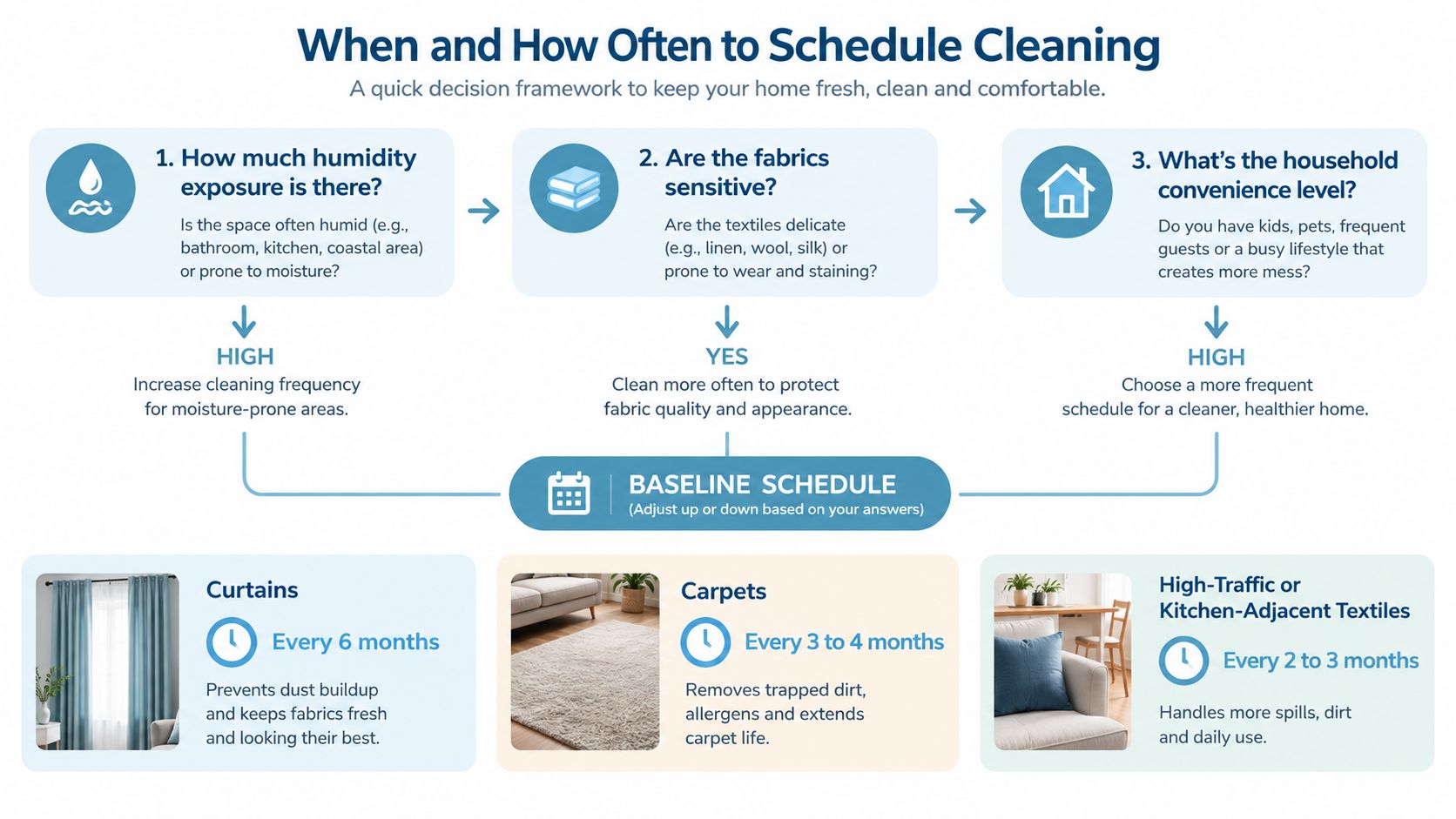
A good schedule depends on what the fabric faces every day. In most Singapore homes, a practical baseline is to clean curtains every 6 to 9 months, bedroom carpets every 12 months, and high-traffic living-room carpets every 6 to 9 months. If the fabric sits near a kitchen, a balcony, or a busy road, bring that timing forward.
The triggers matter more than the calendar. Musty odours after rain, visible dust lines on curtain hems, allergy flare-ups, a new baby or pet, post-renovation dust, or a tenant move-out are all good reasons to act sooner. Weekly vacuuming helps between services, and spot treatment prevents a small spill from becoming a permanent stain.
If the curtains haven't had a professional clean in over a year, book a takedown service. If the carpet is wall-to-wall and still in decent condition, use onsite steam cleaning between deeper washes. If both items are due, combine them in one pickup so you only manage the logistics once.
Schedule by exposure, not habit. A lightly used study curtain and a kitchen-adjacent curtain shouldn't follow the same calendar.
That approach fits Singapore living better than rigid annual habits. Humidity, space constraints, and convenience all push fabric care towards more practical planning, which is why the right service model is as important as the cleaning itself.
If you want a cleaner routine without juggling separate providers, book your next curtain or carpet service through Tumble Laundry. They handle pickup, professional cleaning, and door-to-door delivery, which makes it easier to keep Singapore homes fresh without adding another errand to your week.

We make laundry days fast and easy for you. We collect, clean and deliver your laundry and dry-cleaning.
53 Ubi Ave 1 #03-43, Singapore 408934
Mon - Fri | 8:30 am–5:30 pm
Sat | 8:30 am–12:30 pm
hello@tumble.sg
+65 62554222
Whatsapp Us


