A Traditional Chinese Outfit Guide for Modern Singapore
This is some text inside of a div block.

Chinese New Year brings out the same small crisis in many Singapore homes. You've got the invite, the family photos are planned, and now you're standing in front of the wardrobe wondering whether that dress with the delicate collar, the flowing robe, or the neat jacket is the right traditional Chinese outfit for the day. The clothes look related at first glance, but they tell very different stories, and they behave very differently once you wear them in Singapore's heat, humidity, and packed festive schedule.
In Singapore, this isn't a niche heritage topic. Chinese Singaporeans make up about 74.3% of the resident population in the 2020 Census Google Arts & Culture, so festive clothing still has a visible place in everyday cultural life. That's why the cheongsam, Hanfu, and Tangzhuang keep showing up at Lunar New Year gatherings, weddings, temple visits, school performances, and formal dinners, not as props, but as living garments that people choose and wear. For a practical look at garment handling in Singapore, this laundry guide is a useful place to start.
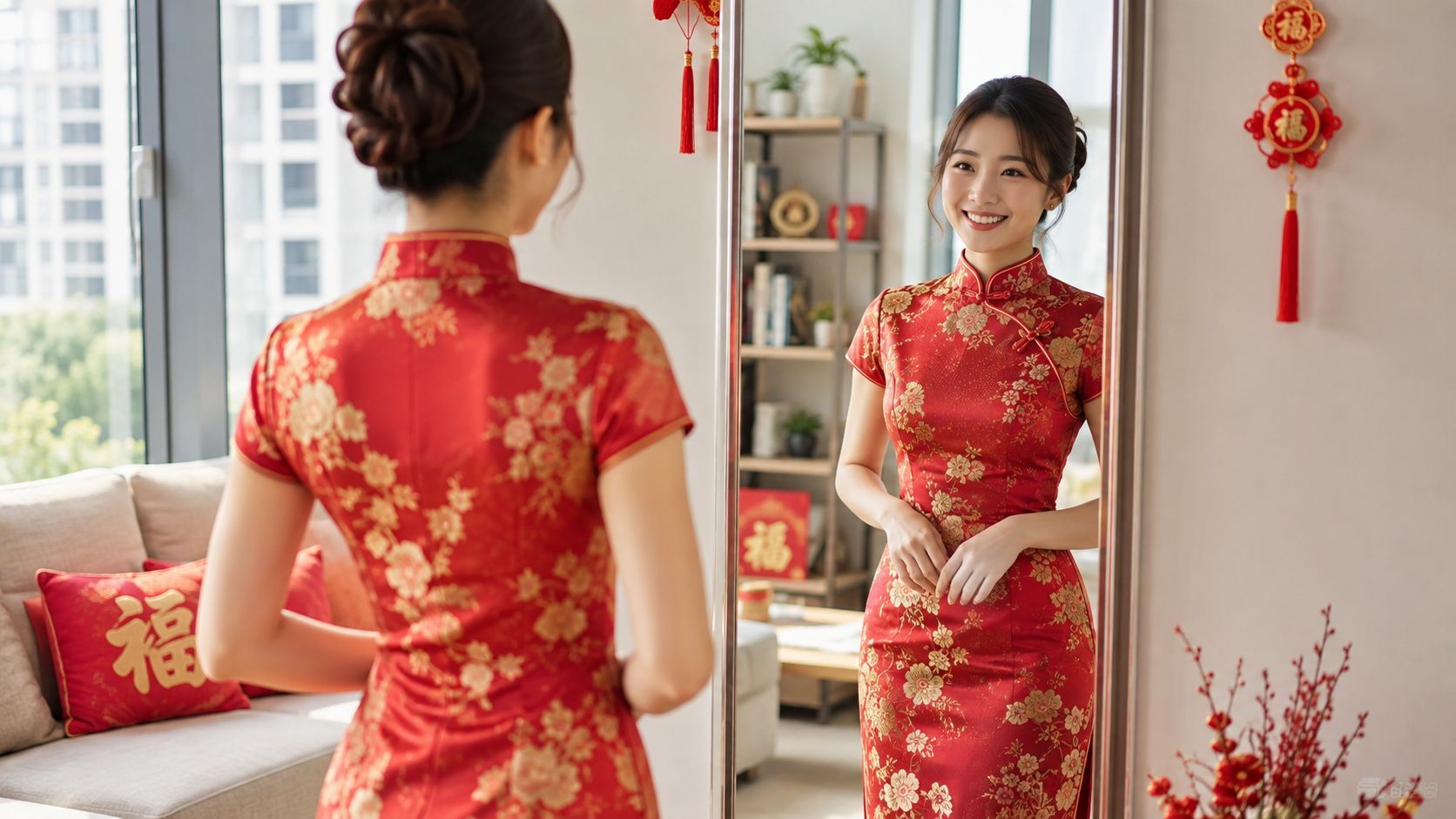
A mother getting ready for a reunion dinner in Bedok might pick up one dress and reject another after a single glance in the mirror. The fitted one feels elegant but a little formal, the flowing one feels beautiful but maybe too dramatic, and the neat jacket seems easiest to move in when greeting relatives, carrying dishes, and posing for photos. That choice is exactly where understanding a traditional Chinese outfit becomes useful.
The main families you'll hear about are qipao, Hanfu, and Tangzhuang. They're not interchangeable, and they aren't just “Chinese costumes” in one flat category. The cheongsam is the familiar modern dress many people recognise in Singapore, Hanfu is the broader historical robe tradition, and Tangzhuang is the more recent jacket style often worn for festive occasions.
Singapore's Chinese heritage is lived, not frozen. The cheongsam became especially visible in modern Chinese-Singaporean identity during the mid-20th century, while Hanfu carries a much older historical lineage, and Tangzhuang fills a practical role in contemporary festive dress. The right choice depends on the event, the weather, and how much movement you need.
Practical rule: if the outfit needs to survive family greetings, photos, and a long dinner in a warm room, comfort and finish matter as much as symbolism.
That's why this guide keeps history tied to real use. A garment can be culturally rich and still be uncomfortable, hard to press, or unsuitable for a humid evening. Once you start looking at these clothes as wearable heritage instead of costume rack items, the differences become a lot easier to see.
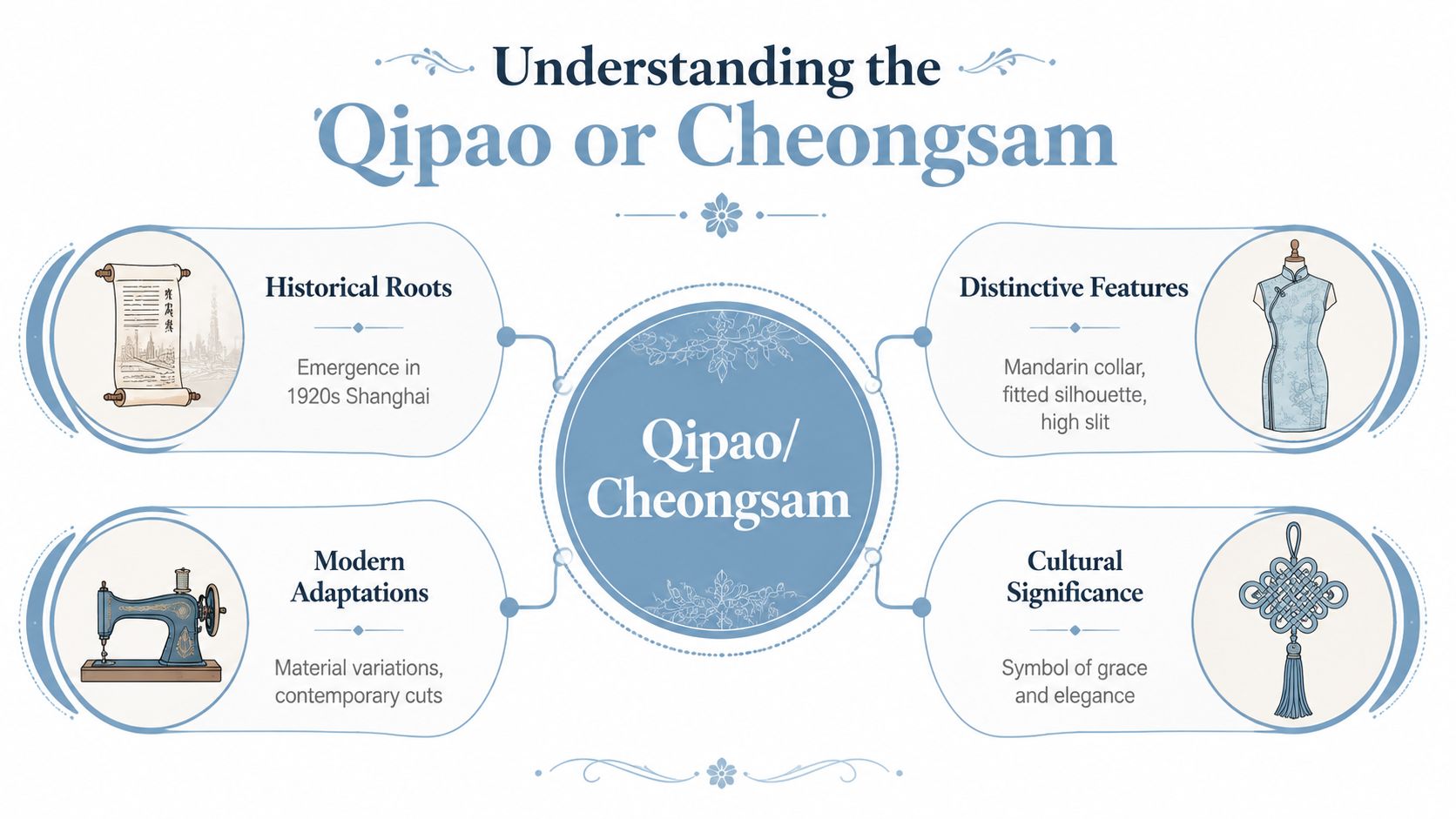
The qipao, also called the cheongsam in many English-language contexts, is often the first garment people picture when they think about a traditional Chinese outfit in Singapore. It grew into its modern form in the 1910s and 1920s, then was formally selected in 1929 as one of the national dresses of the Republic of China under the Clothing Regulations of 1929 Wikipedia. That history matters because the dress seen today is a shaped, modern garment, not the older loose robe many people still associate with “traditional.”
The structure is precise. A qipao is a figure-fitting one-piece dress with a Mandarin collar, an asymmetric left-over-right opening, pankou knot fasteners, and two side slits China Highlights. One source notes there are about five pankous per qipao, which tells you something practical, the closure is part of the design logic, not just decoration China Highlights. If the collar, placket, or fasteners sit badly, the whole silhouette looks off.
That close fit is why the qipao reads as formal and polished. It also means fabric matters. In Singapore, qipaos are commonly made from silk, cotton, or brocade, and those fabrics behave differently under heat, friction, and storage. If you need guidance on keeping silk in good condition, a plain care routine like the one in this guide to washing silk garments helps explain why gentle handling matters. A dress with structured seams and delicate closures needs careful treatment if you want it to keep its shape.
If you are deciding whether a piece is a true qipao or a dress featuring Chinese-style details, start with the cut. The waistline should be built into the garment, the collar should sit cleanly against the neck, and the front opening should be intentional rather than purely decorative.
A helpful comparison is that the qipao relies on tailoring first and ornament second. The embroidery, shine, and colour catch the eye, but the geometry provides its underlying structure. That is why cleaning and finishing need to stay gentle, especially around the collar and placket where puckering appears quickly.
The qipao rewards careful wear. If it fits well, it looks graceful with very little effort. If it fits badly, every fold tells on it.
A qipao is best treated as a precision garment, so fit checks and proper cleaning matter when you wear one for weddings, dinners, or Lunar New Year photos.
Hanfu is often mistaken for a single costume, but it is really a clothing system with a long historical span. Chinese dress traditions have a recorded history that stretches across more than three millennia, and Hanfu belongs within that older continuum. In practice, that means the silhouette changes from one period to another, yet the structure still follows recognisable rules.
For someone in Singapore, that matters because Hanfu is not only about appearance. It affects how the garment feels in heat, how much space it needs in storage, and how carefully it should be handled after wear.
Historical Hanfu garments were assembled from components cut from 50 cm-wide cloth New Hanfu. The canonical closure is jiaoling youren, the cross-collar with the right lapel over the left, and it creates a wrap structure that does not depend on buttons. That detail sounds small until you have to fold, press, or store one. The overlap lines, sleeve hems, and collar edges become the places that need the most care.
Because Hanfu is built from layered panels and wraps, it behaves differently from a fitted dress. The sleeves can be wide, the fabric can travel across the body in long lines, and the closure needs to sit flat or the whole garment starts to look uneven. Pressing is not only about removing wrinkles. It is also about restoring the garment's shape language.
A lot of people are drawn to Hanfu because it feels expansive rather than body-clinging. It gives movement, drape, and visual rhythm, which makes it appealing for photos, cultural events, and heritage-themed gatherings. In Singapore, that elegance comes with practical trade-offs, especially when heat, perspiration, and limited storage space are part of the picture.
Care note: wide sleeves and wrapped layers crease differently from a fitted dress, so avoid treating Hanfu like a casual top and skirt set.
If you are storing one, do not compress the folds carelessly. Press the collar and overlap lines with attention, then let the sleeves fall naturally rather than forcing sharp creases everywhere. If the piece is embroidered or hand-finished, this care guide for embroidered and hand-woven fabrics is worth keeping nearby.
Hanfu's appeal is not only historical. It lets the wearer show a deeper connection to older Chinese aesthetics without copying the exact look of a cheongsam or Tang jacket. That distinction matters when you are choosing an outfit for a heritage performance, a themed event, or a family occasion where you want something recognisably traditional but not identical to the more common dresses.
The Tangzhuang, or Tang suit, solves a very different problem from the qipao and Hanfu. It's a jacket-based garment with a cleaner, more relaxed fit, so it tends to feel easier for everyday festive wear. The name can be misleading, though. It's a modern creation, not an actual Tang Dynasty garment, even if the styling borrows Chinese visual cues.
Compared with a fitted qipao, the Tangzhuang usually gives more room through the torso and shoulders. Compared with Hanfu, it's far less layered and usually much simpler to put on. That makes it practical for men, for older relatives who want something dignified without tight tailoring, and for anyone who prefers a straightforward festive jacket rather than a dress or robe.
The front opening, frog closures, and straight-cut shape create a tidy look that works well in group settings. It doesn't rely on a body-hugging silhouette to make its point. Instead, it communicates formality through symmetry, structure, and ornament placed on a compact jacket form.
That makes the Tangzhuang especially useful when you want cultural recognisability without fuss. It pairs well with trousers, moves easily in warm weather, and doesn't demand the same careful body fit that a qipao does. In Singapore's climate, that difference is practical, not cosmetic.
If you're trying to compare the three garment families, think of them this way. The qipao is the most sculpted, Hanfu is the most expansive, and Tangzhuang is the most straightforward. Each one carries Chinese visual heritage, but each one asks for a different kind of wearing experience.
A family photo at Chinese New Year is a good example. One person might want the elegance of a qipao, another may prefer the movement of Hanfu for a cultural performance, and a third may choose a Tangzhuang because it's easier to wear all evening. None of those choices are wrong. They're just different tools for different occasions.

A lot of confusion around Chinese clothing comes from mixing up style with suitability. Guides often blur Hanfu, qipao, and Tangzhuang together, even though they serve different purposes and have different comfort levels StudyCLI. If you live in Singapore, that distinction matters because your outfit has to work not just in a cultural sense, but in heat, movement, and the social tone of the event.
Start with the event, then narrow by fabric and fit.
OccasionBetter fitWhy it worksCasual family gatheringTangzhuang or a simpler modernised qipaoEasier movement, less formal, more comfortableFormal dinner or weddingQipao in refined fabricStructured silhouette, polished appearanceCultural celebration or performanceHanfu or TangzhuangStrong heritage look, visually distinctive
That framework helps because formality is not the only issue. Breathability matters in Singapore, especially if you'll be outdoors, moving between venues, or spending time in rooms with limited air-conditioning. A heavily structured dress may look excellent in photos, but a lighter cut can be the smarter choice if you're on your feet for hours.
For people buying online, measurements also matter more than many shoppers expect. A helpful starting point is this guide on measurements for virtual fitting rooms, especially if you're comparing a close-fit qipao against a looser jacket or robe. The more structured the garment, the less forgiving the fit.
Practical rule: choose the outfit that matches the event first, then decide how much structure your body and your schedule can comfortably handle.
It also helps to ask one simple question before buying. Will this piece be worn for a short photo session, a whole wedding dinner, or a full day of visits? The answer usually points you towards either the sculpted elegance of a qipao, the airy drama of Hanfu, or the easy versatility of a Tangzhuang.
If you're unsure, check fabric and closure next. A garment with delicate embroidery, a fitted waist, or a knot-heavy front needs more attention than a casual-looking jacket. For a clearer laundry versus dry cleaning comparison, this overview is useful before you decide how much care the piece needs after the event.
The hardest part of owning a beautiful outfit is often what happens after the celebration. In Singapore's climate, humidity, perspiration, and delicate components like bias binding and embroidery can make standard home washing risky, which is why specialised maintenance matters YouTube. This is especially true for pieces worn only a few times a year, then stored for long stretches.
Traditional garments can suffer in ways that everyday clothes usually don't. Silk can lose its clean drape, decorative fasteners can distort, and structured collars can lose their shape if they're washed or handled roughly. The same goes for embroidered or antique-inspired pieces, where friction and heat can damage surface detail.
For a qipao, the main risks are puckering at the collar, placket, and side seams. For Hanfu, the issue is often the long wrap lines and wide surfaces that crease in the wrong places. For delicate jackets and formal wear, moisture can linger in seams and trims if storage isn't managed well.
That's why professional cleaning makes sense for many owners. A good cleaner looks at the fabric, the structure, and the visible decorations before deciding how to treat the garment. That approach is much safer than assuming every piece can go into a standard wash.
If you're comparing service options, Tumble Laundry is one Singapore provider that handles Traditional Wear and Cheong Sam cleaning as part of its dry-cleaning and garment-care services. Its process includes in-house handling, which matters when you're trusting someone with delicate structure, closures, or embroidery. For a closer look at the workflow, this dry-cleaning process guide explains the steps more clearly.
Practical rule: if the outfit has a structured collar, fragile trim, or decorative fasteners, treat cleaning as preservation, not just stain removal.
Storage matters too. Don't compress a formal piece into a crowded cupboard straight after wearing it. Let it air properly, check for stains before they set, and keep it away from rough hangers that can distort shoulders or neckline shape. The goal isn't only to make the garment clean again, but to keep it ready for the next celebration without visible wear.
If you've got a qipao, Hanfu, or Tangzhuang waiting in your wardrobe, don't leave its care to guesswork. Bring it to Tumble Laundry for professional cleaning and handling that respects delicate fabrics, structured collars, and festive wear made to last.

We make laundry days fast and easy for you. We collect, clean and deliver your laundry and dry-cleaning.
53 Ubi Ave 1 #03-43, Singapore 408934
Mon - Fri | 8:30 am–5:30 pm
Sat | 8:30 am–12:30 pm
hello@tumble.sg
+65 62554222
Whatsapp Us


