Suit Alterations Near Me How to Find the Right Fit
This is some text inside of a div block.

You're standing in the changing room with a suit that's almost right. The shoulders sit fine, the trousers are a touch long, and the jacket pulls just enough for you to notice when you button it. In Singapore, that small mismatch matters because formalwear doesn't just live in the wardrobe, it gets worn for work, weddings, dinners, interviews, and the kind of office days where looking pulled together still counts.
That's why suit alterations near me is a practical search, not a luxury one. A good tailor preserves what's already worth keeping, then corrects the parts that break the silhouette. When a suit fits well, it usually looks sharper, feels easier to wear, and lasts longer in rotation. The choice isn't just repair versus replacement, it's fit preservation versus throwing away a garment that only needed the right hands on it.
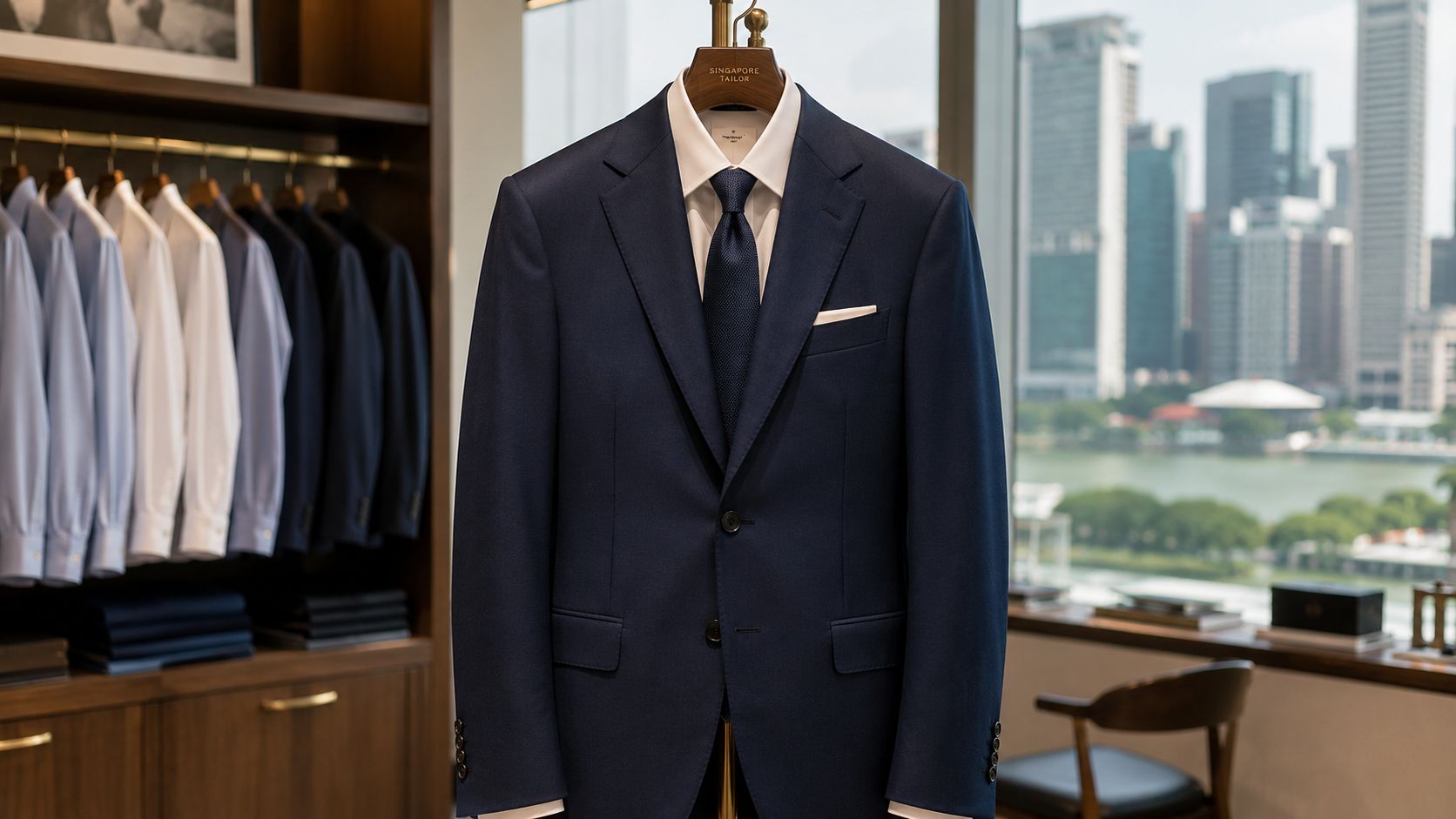
A suit that once sat well can drift out of shape fast. Office wear gets folded into commutes, meeting rooms, weddings, dinners, and long days in air-conditioned spaces, so the jacket, sleeves, or trousers can start to feel off even when the suit is still worth keeping. In Singapore, that is the point where alteration usually makes more sense than replacement.
Household spending data from SingStat keeps that choice grounded. The SingStat household expenditure data shows average monthly resident-household spending rising from S$122.9 in 2017/18 to S$143.1 in 2023, and wearing apparel and footwear remains a tracked category in the same dataset. Clothing here is not a one-off purchase, it is part of regular upkeep.
I see this often with office suits. The shoulders are acceptable, but the jacket waist sits boxy, the sleeves show too much cuff, or the trousers break too heavily over the shoe. Those are not reasons to discard the suit. They are reasons to assess what the cloth can still support.
Good alteration work preserves the parts that already suit your frame and corrects the parts that spoil the line. That is the trade-off. If the suit structure is sound, you can usually keep it in service longer, and that is especially practical when wardrobes are being chosen with more room in mind, as noted in a local discussion of 2-piece suits.
The sequence matters too. I would dry clean first only when the garment is dirty enough to affect fitting or handling, then alter after the suit is clean and stable, especially at the waist, sleeves, and trouser hem. If the cloth is clean but the fit is wrong, alteration comes first. If the suit is heavily worn or smells stale, clean it before any pinning. That is how you avoid paying to alter a garment that later shifts after cleaning, and it is why a good tailor works from the condition of the cloth, not just the measurements.
For readers who want to see how a jacket is built from the ground up, the bespoke suit process for tailors is a useful reference. It shows why fit is a sequence of decisions, not a single measurement.
The first mistake people make is asking for the wrong alteration in the wrong order. Shoulders and chest come first, because they define the jacket's frame. If those are off, everything else becomes a compromise.
A jacket with the right shoulder line and chest fit can usually be refined at the waist, sleeves, and hem. That's where most successful suit work happens. The easiest jobs are the ones that follow the suit's original architecture, not the ones that fight it.
Practical rule: if the shoulders are wrong, don't try to rescue the suit with waist shaping.
A useful local benchmark is that common Singapore alteration work is usually handled as incremental refinement, not full reconstruction. Guidance from a Singapore alterations resource describes trouser hems at about S$10 to S$18, leg tapering at about S$20 to S$35, and shirt taking-in at about S$18 to S$30, which tells you the market expects modest correction rather than rebuilding (Singapore alteration guide). That's the zone where alterations make sense.
The jobs that usually work best are the ones that change the silhouette without changing the suit's balance. Taking in the jacket waist, shortening sleeves, and hemming trousers are straightforward when there's enough seam allowance. Trousers that pool at the ankle are often much easier to correct than a jacket that pulls across the chest.
Alteration areaWhat usually worksWhat often does notShoulders and chestOnly minor refinements when the base fit is already correctMajor reshaping, width changes, or rescue workSleeves and waistCleaner, more predictable correctionsOver-tightening that distorts the drapeTrousers and hemsHemming, tapering, and small waist changesLarge size changes that exhaust seam allowance
For a broader garment context, Alexander Noel's understanding blazer and sport coat helps explain why jacket structure matters. A blazer or sport coat may tolerate a different style of correction, but a suit jacket still needs its original proportions respected.
A tailor can make a suit look cleaner, but a tailor can't turn the wrong base size into the right one.
A map pin doesn't tell you much. A nearby shop can still be the wrong shop if the tailor skips proper fitting, guesses at the chalk marks, or rushes the job. In Singapore, the best approach is to compare a few options on process, not just distance.
The strongest signal is what happens before the scissors come out. Quality tailors pin, mark, and check drape before they cut. If the person at the counter wants to quote you quickly without seeing you move, sit, or button the jacket, that's a red flag.
The second signal is how they talk about the fitting process. Good tailors explain what's being adjusted, what's being left alone, and what the limits are. They'll tell you if a jacket is worth saving or if the shoulders make the whole job a bad investment.
• What do you check first? A good answer starts with shoulders, chest, and balance, not just “we can slim it.”
• Do you pin and mark before sewing? That should be standard, not optional.
• How do you handle multiple garments? This matters if your jacket, trousers, and shirt all need work.
• What can't you alter cleanly? Honest limits are a good sign, not a weakness.
If you're comparing local branches or trying to fit an errand into lunch hour, the store locator on Tumble's stores page gives a practical sense of where an islandwide service is anchored. For another useful benchmark on structured service workflows, the guide by Stoles.com shows how a specialist process should be described when precision matters.
Most suit alterations are cheaper when they're incremental. A hem, a sleeve shorten, or a simple waist take-in uses the suit's existing structure. Once you move into major reshaping, the tailor has to open more of the garment and protect the balance of the jacket or trouser line.
The Singapore market also supports this kind of precision work. One market study estimates the local tailoring and alteration services market at USD 37.09 million in 2025, rising to USD 57.2 million by 2034 (Singapore tailoring and alteration services market). That points to sustained demand for fit corrections, not just emergency repairs.
AlterationDifficultyIndicative Price in SingaporeTypical TurnaroundTrouser hemEasyAbout S$10 to S$18Usually among the fastest jobsLeg taperingEasy to moderateAbout S$20 to S$35Short turnaround when seam allowance is adequateShirt taking-inEasy to moderateAbout S$18 to S$30Often quick, depending on lining and constructionJacket waist suppressionModerateVaries by tailor and constructionUsually needs careful fittingSleeve shorteningModerateVaries by cuff, buttons, and liningOften handled as a standard alterationMajor reconstructionDifficultHigher, because it's more labour-intensiveLonger, and sometimes not worth doing
Bring the shirt and shoes you'll wear. The hem on your trouser changes with shoe height, and the shirt cuff affects how much sleeve should show. I always prefer to see the complete outfit together, because a suit doesn't exist in isolation.
During the fitting, the tailor should pin and mark while you stand naturally, then check how the jacket moves when you sit or raise your arms. If you're getting both jacket and trouser work done, expect at least one follow-up check for cleaner alignment. That's normal, and it's usually what keeps the final result sharp rather than merely acceptable.
For service timing, Tumble's dry cleaning service in Singapore is a useful reference point if you're coordinating garment care with tailoring in the same week. That kind of planning matters when you need the suit ready for a work event, wedding, or interview.
A suit should be clean before it's altered if you want the fit to be accurate. Dust, body oils, and old pressing lines can hide the way the cloth really sits. If a jacket is altered while it's still carrying wear and creasing, the finished line can be slightly off.
Singapore's humidity and commute-heavy routine make this even more relevant. The garment often needs care as much as it needs tailoring. Dry cleaning, pressing, and stain treatment aren't separate chores, they're part of how you keep formalwear wearable for longer.
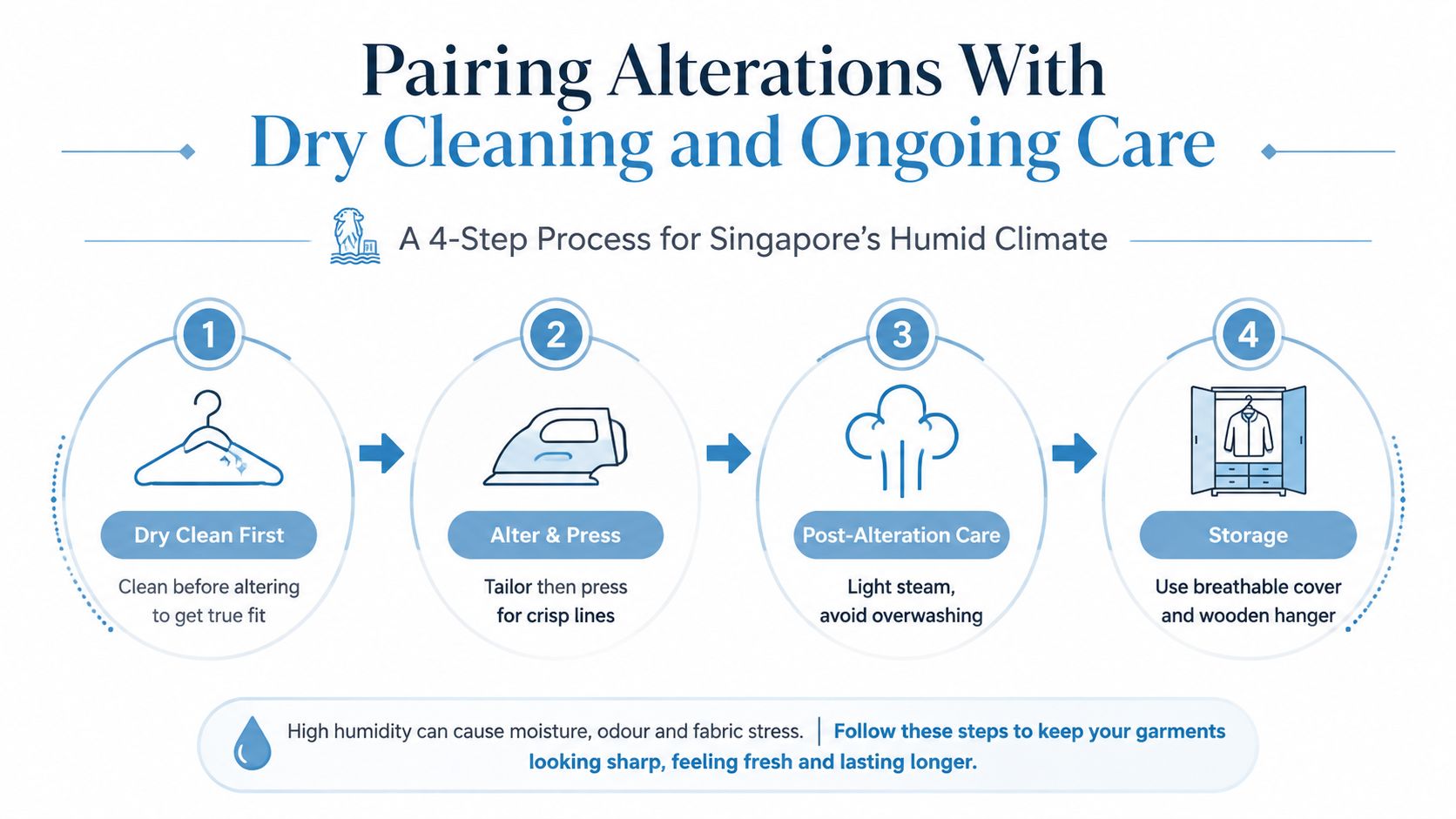
The cleanest workflow is straightforward. First, dry clean the suit if it's due. Then alter and press it. After that, keep the suit lightly steamed or professionally pressed only when needed, not repeatedly overwashed. Finally, store it on a breathable cover and a proper wooden hanger so the shoulder line keeps its shape.
Clean before altering, then press after the final adjustment. That order protects the fit.
This sequence also makes sense as silhouettes shift. CNA Luxury reported that Singapore corporate executives have been moving away from slim-fit suits toward roomier classical fits (CNA Luxury coverage via Singapore women formal wear market). That means more readers now need light refinement and better garment care, not aggressive restyling.
A suit worn regularly doesn't need constant intervention. Pressing keeps the line sharp, but repeated harsh cleaning wears the cloth down. Use cleaning for soil and odour, pressing for presentation, and alterations for actual fit problems.
If you're handling officewear in one trip, a service with islandwide dry cleaning support is useful because it reduces the number of separate errands. That convenience matters when the suit is part of a weekly rotation, not a one-off event outfit.
Start with the jacket structure. If the shoulders and chest are wrong, walk away or choose a different size. If those are right, the suit is often worth saving with sleeve, waist, and hem work.
Then compare two or three nearby tailors and look for pinning, marking, clear limits, and honest turnaround advice. Ask whether they'll alter first and press last, because that sequence is what preserves the final line. If you're pairing tailoring with cleaning, the clean-then-alter-then-press workflow is the simplest way to avoid rework.
Use this quick checklist before you book:
• Check the shoulders first. They decide whether the suit is salvageable.
• Bring the right shirt and shoes. Small details change the final fit.
• Ask what's easy and what's risky. A good tailor will answer directly.
• Plan cleaning and alterations together. That keeps the suit ready to wear.
• Don't force a big rescue. A suit that needs structural surgery usually isn't the right buy.
If you want the suit ready for a specific event, book early and leave enough time for a fitting, adjustment, and final press. For a convenient way to organise that, use Tumble's scheduling page and line up your garment care around your tailoring timeline.
Tumble Laundry offers islandwide pickup, professional cleaning, and door-to-door delivery, which makes it easier to keep workwear, occasion wear, and altered suits in ready-to-wear condition. If you've got a jacket that fits well but needs proper care after tailoring, visit Tumble Laundry and set up a workflow that keeps your suits sharp without adding extra errands.

We make laundry days fast and easy for you. We collect, clean and deliver your laundry and dry-cleaning.
53 Ubi Ave 1 #03-43, Singapore 408934
Mon - Fri | 8:30 am–5:30 pm
Sat | 8:30 am–12:30 pm
hello@tumble.sg
+65 62554222
Whatsapp Us


