Rug Cleaning Service in Singapore: What to Expect
This is some text inside of a div block.


A rug cleaning service in Singapore usually costs about S$120–S$180 per rug for on-site work, while pickup-and-workshop cleaning for delicate or heavily soiled rugs is typically S$150–S$220+ per rug. If your rug has gone dull, holds pet hair deep in the pile, or carries a musty smell after months of vacuuming, you're already past the point where a quick surface pass will fix it.
That's the situation many Singapore homes are in right now, especially in HDBs and condos where rugs sit under daily foot traffic, air-conditioning, and humidity that never fully goes away. The question isn't whether to clean the rug, it's which method protects the fibre, clears the dirt properly, and doesn't leave you waiting forever for drying.
A lot of families notice the change in the same way. The rug that used to look warm and clean now looks flat at the centre, the borders catch pet hair, and there's a faint stale smell when the room has been closed up overnight. Vacuuming still works on the surface, but it doesn't solve what has settled deeper in the pile and backing.
Vacuuming lifts loose debris from the top layer. It does not properly remove embedded dust, body oils, pet dander, food residue, and humidity-driven mildew that work their way down into the rug structure. In Singapore, that matters because moisture in the air slows drying and makes lingering odour more likely when a rug has already been holding soil for too long.
Practical rule: if the rug looks cleaner after vacuuming but still smells off, the dirt is no longer sitting on the surface.
That's why a rug can look “fine enough” from across the room and still need real cleaning. The pile may still feel sticky, gritty, or uneven underfoot, and those are the signs that surface care has stopped being enough.
Dust usually sits on top and comes away with a thorough vacuum. Soil, on the other hand, keeps returning, especially in entryway rugs and living room pieces that catch shoes, crumbs, and pet traffic. If the rug feels rough, smells stale, or looks dull even after routine care, the grime has probably moved deeper than home cleaning can reach.
Singapore's climate speeds up that problem because fibres stay exposed to humid conditions for long stretches. That is exactly where a proper rug cleaning service earns its keep, because it does more than refresh the surface. It separates dry grit from wash-safe fibres, handles dye stability properly, and reduces the risk of turning a small soil problem into a damaged rug.
A proper rug cleaning job starts with inspection, not soap. Use the wrong method and you can bleed dye, warp fibres, or strip the finish from delicate yarns. A good technician checks the rug's material, construction, colour stability, wear points, and any existing damage before a single drop of water goes on it.
The first real step is dust removal. That can mean mechanical beating, compressed air, or another dry soil-release method. It matters because washing a gritty rug can grind particles deeper into the pile. Once the dry soil is out, the rug can be treated with the right cleaning process for its fibre and condition.
After that comes washing, rinsing, and controlled drying. Washable rugs may be fully immersed, while delicate pieces get a more careful surface treatment. The technician then rinses thoroughly so detergent residue does not stay in the fibre and attract new dirt, which is one of the fastest ways to make a rug look tired again.
Drying should happen in a dust-free, ventilated space that can handle Singapore humidity without rushing the rug. Then comes grooming, fringe cleaning, and a final inspection before the rug is wrapped or delivered back. That last pass matters because a rug that looks clean but still holds residue, moisture, or distorted pile is not ready to go back on the floor.
For homeowners comparing service standards, look at how a provider explains its process. Tumble Laundry lists rug care among its services at tumble.sg/services, which is the kind of operational detail you want to see before handing over anything valuable. For spill cleanup between professional washes, carpet stain removal tips for homeowners is a practical reference for what to do before a full clean is booked.
Good rug care is boring in the best way, inspection first, dry soil out, wash only when the fibre can take it, then dry it properly.
The right method depends on fibre, backing, and soil level, not just how dirty the rug looks. A washable cotton rug can take treatment that would be reckless on silk or viscose. In Singapore, humidity pushes the decision further, because a method that leaves too much moisture behind can create odour or drying problems fast.
Cold water submersion washing is the standard for cotton, wool, and many synthetic rugs that tolerate full immersion and agitation. It's the most effective option when the rug can be moved into a workshop and the construction can handle a real wash. For washable area rugs, compare washable area rugs materials is a helpful guide before you decide whether the rug belongs in a wet-clean category or not.
Hand washing is the safer choice for silk, viscose, and antique rugs, where movement and water temperature have to stay tightly controlled. These fibres can distort, fade, or weaken if they're treated like standard broadloom carpet. Dry cleaning fits rugs labelled dry-clean-only, and it's also the safer route when adhesive backings would break down in water.
Surface or low-moisture cleaning is useful when the rug can't be moved, or when you need a quick touch-up rather than a deep extraction. It can help with visible freshness, but it won't reach deep particulate loading the way a workshop wash can. Steam cleaning can be used as a sanitising option for rugs that can handle heat and moisture, but it's not a universal answer, especially for delicate fibres in humid conditions.
The cleanest way to think about it is this. Washable rugs want immersion, delicate rugs want control, and fixed rugs want restraint. The wrong match is what causes shrinkage, dye bleed, pile distortion, and that damp smell nobody wants back in the room.
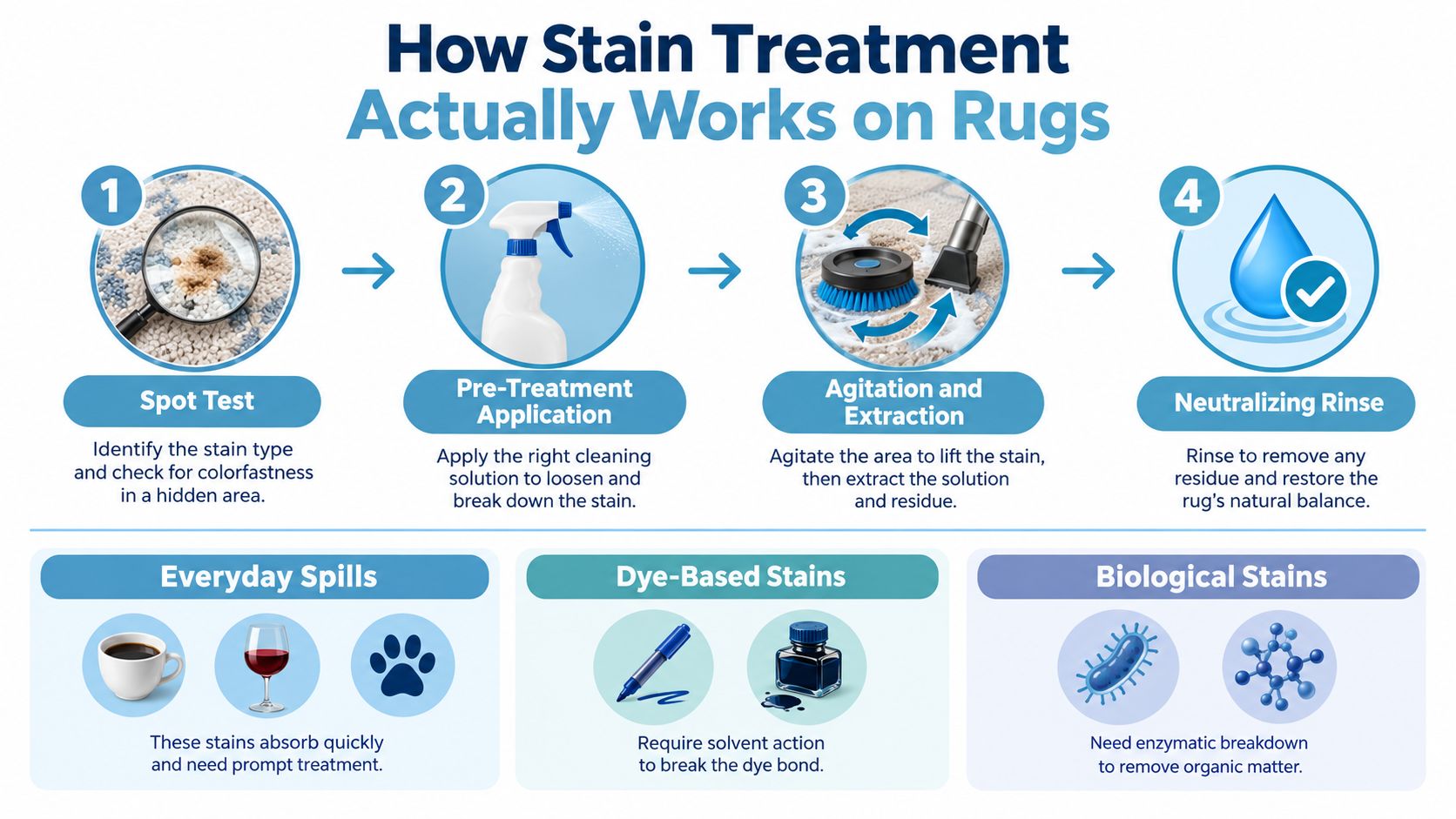
Stain treatment starts with identification, not scrubbing. Coffee, red wine, pet accidents, ink, and food dye each behave differently on wool, cotton, and viscose, so the technician has to know what they are dealing with before choosing a solvent or rinse strategy. The wrong first move can set the stain deeper or spread it across the pile.
A technician checks the stain under UV light or a similar inspection method, then pre-spots the area with a fibre-appropriate solution. Wool can take more controlled agitation than viscose, so pressure and rubbing are adjusted carefully instead of applied the same way across the rug. The aim is to lift the stain without opening the door to colour loss or pile damage.
Fast response matters for everyday spills. Dye-based stains and biological stains usually need more specialised chemistry, and the backing matters too, because a stain that has soaked through the face of the rug can keep bleeding back up if it is not fully neutralised and rinsed.
Some stains disappear cleanly. Others fade and blend. Some stay visible because the fibre was already damaged, sun-faded, or bleached before treatment began. If bleach has removed colour, cleaning will not put the dye back. If the rug has water-sensitive silk, dry-side powder treatment can be the smarter choice than wet spotting.
The same principle applies to textiles. The complete guide to stain removal for clothes shows the same sequence in garment care, identify first, treat second, and do not force a wet method onto a fragile material. Rug stain removal follows the same logic, just with heavier fibres and more expensive mistakes.
Singapore rug cleaning pricing reflects labour, handling, and drying control, not just size. On-site rug cleaning usually sits around S$120–S$180 per rug, while pick-up-and-workshop cleaning for delicate or heavily soiled rugs is typically S$150–S$220+ per rug. Those numbers line up with a market where specialist handling is the cost, not a quick surface wipe. HomeJourney price guide
Small doormats and cotton dhurries are usually the cheaper end of the range because they are easier to lift, inspect, and dry. Mid-size machine-made rugs sit in the middle. Hand-knotted wool or silk rugs cost more because they need slower handling, better stain control, and a lower-risk workflow. If a provider charges separately for pickup, delivery, stain treatment, anti-moth, or anti-bacterial treatment, that is normal. Ask for the line items before you agree.
The method matters just as much as the size. On-site cleaning fits rugs that can be handled in place and dried fast. Workshop cleaning suits pieces that need dust extraction, controlled washing, and proper drying in a managed space, especially in Singapore humidity. For a clear reference point on processing expectations, see our dry cleaning service expectations guide. If you want to see how controlled processing changes the workflow, Tumble Laundry's dry cleaning process shows the difference between a quick treatment and a full care cycle.
Rug Size / TypeOn-Site Price Range (SGD)Workshop Price Range (SGD)Typical TurnaroundSmall doormatLower end of the on-site rangeLower end of the workshop rangeSame day to next dayCotton dhurrieMid on-site rangeMid workshop rangeA few working daysMachine-made mid-size rugMid to higher on-site rangeMid to higher workshop rangeA few working daysWool or silk rugHigher on-site range, if suitableHigher workshop rangeLonger, especially with stain workAntique or hand-knotted rugUsually not ideal for basic on-site cleaningHighest workshop handling tierLonger, with inspection and finishing
The table is the practical split most buyers miss. On-site work is about convenience and light treatment. Workshop work costs more because it includes dust removal, wash control, drying space, and a final check before the rug goes back into a humid flat or landed home.
Turnaround follows the same logic. Straightforward on-site jobs can be same-day or next-day. Workshop cleaning takes longer because the rug has to be dusted, washed, dried, and checked properly. If a rug needs serious dust removal and controlled drying, pay for that workflow instead of pretending a fast in-home touch-up is the same job.
Preparation saves time and prevents avoidable damage. Before pickup or on-site arrival, vacuum both sides of the rug if you can, move furniture off it, and clear enough space for the technician to inspect every edge. If there are known stains, pet accidents, frayed corners, or a spot that gets the most foot traffic, point them out right away.
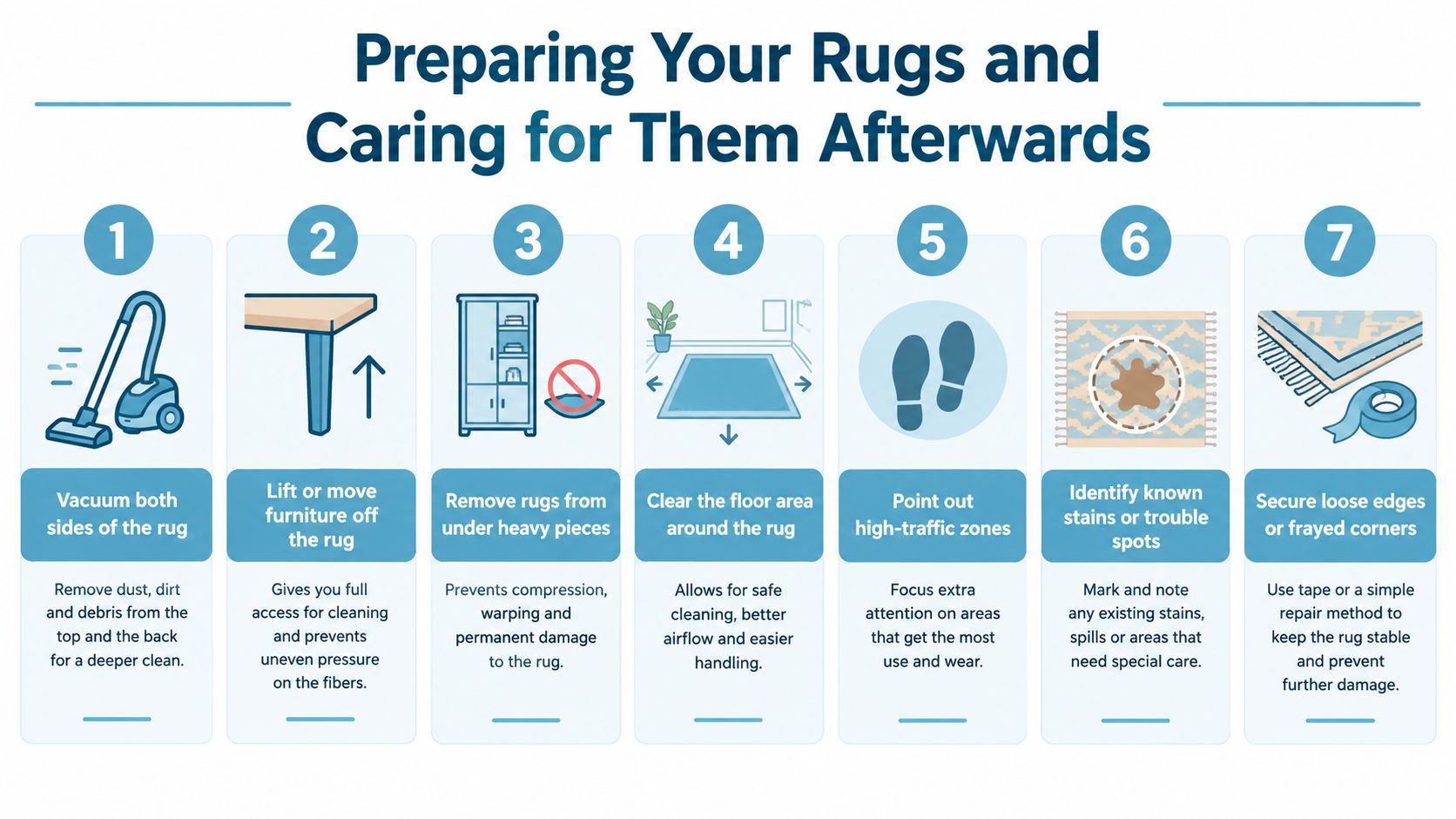
Heavy pieces create the biggest delay. If a rug sits under a sofa, bed, or cabinet, get it freed before the cleaner arrives so the whole surface can be checked. Flag loose edges and frayed corners too, because they can catch during handling and get worse if nobody spots them early.
After the rug comes back, drying conditions matter as much as the wash. Open windows when the weather allows, run fans, and use a dehumidifier if the room feels heavy. Do not lay a damp rug straight back onto parquet or keep it under furniture before the backing is fully dry, because trapped moisture leads to odour.
Rotate the rug every six months if it sits near HDB or condo windows, since UV exposure fades fibres unevenly. Use a rug pad to reduce slippage and limit dye transfer onto vinyl flooring. If you are storing a spare rug, use breathable wraps, not plastic bags, because plastic traps moisture and invites mildew.
A clean rug can still fail early if it goes back onto a damp floor or gets folded into plastic for storage.
For ongoing care, a scheduled pickup keeps the rug hygienic without forcing you to handle heavy pieces in a humid flat. That is the part many owners miss. The wash is only half the job. What happens after the rug returns decides how long the fibres stay in good shape.
A rug that looks fine on the floor can still be holding dust deep in the pile, and Singapore humidity makes slow drying a bad bet for workshop-free cleaning. On-site cleaning suits a quick refresh on rugs that only need light treatment. It struggles when the soil is embedded, the backing holds moisture, or the fibres need a proper wash outside the home.
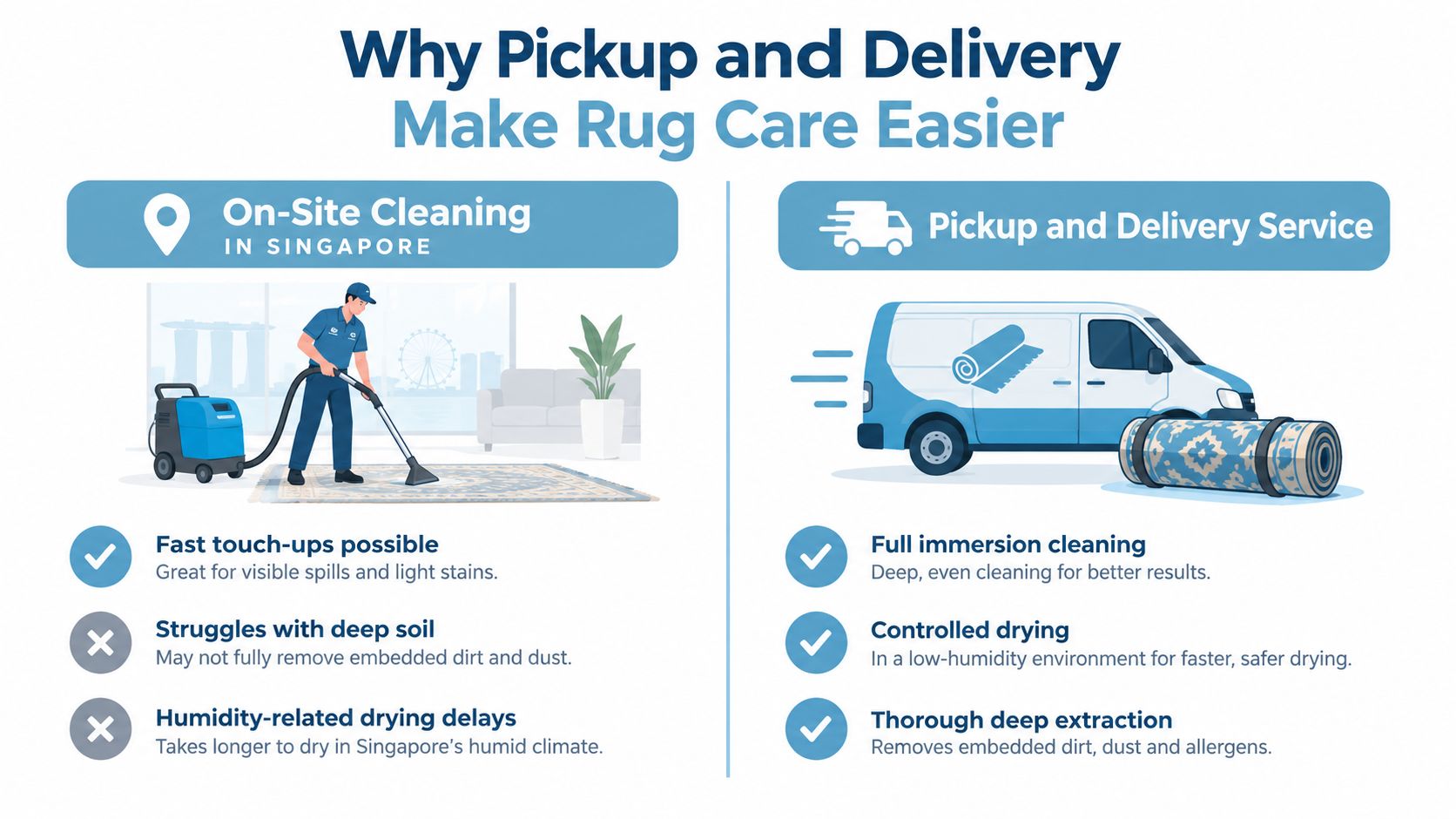
In a workshop, the rug can be dusted flat, washed in dedicated baths, spun out, and dried under controlled conditions. That gives the cleaner room to remove soil properly instead of rushing moisture out in a living room or corridor. It also means the rug gets inspected under proper light before any method is chosen, which matters for antique, wool, silk, and higher-value pieces.
For large area rugs, office carpet tiles, or rugs that still smell musty after repeated home cleaning, the workshop usually wins. You avoid wet floors, machine noise, and dye transfer onto tiles during on-site extraction. Tumble Laundry's schedule page shows the pickup-and-delivery model in practical terms.
The trade-off is simple. You need a pickup window, the rug must be accessible, and you wait for the return. In Singapore, that is a fair trade for rugs that need real wash care, because islandwide courier-style collection removes most of the friction that used to make off-site rug care inconvenient.
The decision is blunt. On-site cleaning is for convenience. Workshop care is for results. If the rug is valuable, delicate, or heavily soiled, the workshop option protects the fibres and saves time later.
Use on-site cleaning for small washable rugs, quick stain touch-ups, or rugs that are too heavy or fixed in place to move easily. Use pickup-and-delivery for anything larger than a 2 x 3 metre piece, natural fibres like wool or silk, antique or hand-knotted rugs, and rugs with persistent odours or heavy soiling. If vacuuming no longer lifts the dust and the rug smells musty in Singapore's humidity, another surface pass is just delaying the necessary repair.
The Sofa Cover Crafter's guide to choosing the right rug size is useful if you're deciding whether a rug is still practical for an on-site touch-up or whether it's already in workshop territory. My rule is simple. Entryway rugs need cleaning more often because they collect the most grit, living room rugs usually need a stronger deep clean schedule than bedrooms, and delicate pieces should be treated as maintenance items, not emergency jobs.
For busy households, businesses, and anyone dealing with delicate fibres, a scheduled pickup keeps the rug hygienic without dragging furniture around. Choose the method that matches the fibre, not the method that sounds quickest. That's how you keep the rug looking good and stop paying for avoidable damage later.
Tumble Laundry handles islandwide pickup, professional cleaning, and door-to-door delivery for Singapore homes and businesses, so rugs can be collected, processed, and returned without you managing the heavy lifting. If your rug needs controlled care rather than another surface clean, visit Tumble Laundry and book a pickup that fits the fibre, the soil level, and your schedule.

We make laundry days fast and easy for you. We collect, clean and deliver your laundry and dry-cleaning.
53 Ubi Ave 1 #03-43, Singapore 408934
Mon - Fri | 8:30 am–5:30 pm
Sat | 8:30 am–12:30 pm
hello@tumble.sg
+65 62554222
Whatsapp Us


