Remove Mould Smell from Clothes in Singapore
This is some text inside of a div block.


You wash a shirt, hang it indoors, and put it away once it feels dry. A few days later, you pull it from the wardrobe and get that familiar damp, earthy odour. The fabric looks clean, but the smell returns whenever the shirt sits in a closed cupboard.
That frustration is especially common in Singapore. Removing mould smell from clothes isn't only a washing problem. It's a moisture-control problem involving the garment, the washing machine, the drying area, and the wardrobe where the item eventually rests.
Singapore's average relative humidity is about 84%, while mould can grow once humidity reaches around 60% or higher. That leaves very little margin for error when laundry is dried inside an HDB flat, condominium, or enclosed service yard. You can read more about how to manage indoor humidity when the same rooms repeatedly feel damp.
A shirt may feel dry on the outside while its seams, cuffs, waistband, lining, or thicker sections still hold moisture. If the garment then goes into a crowded wardrobe, the trapped moisture has nowhere to escape. The result is often a musty smell that seems to appear after washing, even though the underlying problem began during slow drying or damp storage.
Damp clothes can begin developing odour within 24 to 48 hours when they remain wet or are left in a washing machine for too long, as explained in Singapore guidance on removing mould smell from clothes. This is why adding fragrance to a garment rarely solves the problem. Perfume may cover the odour briefly, but it doesn't remove the moisture or residue inside the fibres.
The same principle applies to household textiles. Curtains, for example, can absorb humidity and cooking odours while hanging close to a wall or window. If your curtains smell stale as well as your clothing, this guide to why curtains smell musty can help you inspect the wider room rather than treating shirts in isolation.
Practical rule: If a garment smells musty again after it has been washed, don't keep adding scent. Check whether it was completely dry before storage and whether the wardrobe itself carries the same odour.
Look at the full laundry route:
• Machine: Wet items left in the drum create a poor starting point.
• Drying rack: Overlapping garments dry slowly at collars, pockets, and hems.
• Room: Closed windows and limited air movement allow humid air to collect around the rack.
• Wardrobe: Tight packing prevents residual moisture from leaving the fabric.
• Storage bags: Sealed plastic can trap dampness against the garment.
Fast drying and complete moisture removal are the first controls to put in place. Washing matters, but a clean garment that stays damp will soon smell stale again. In Singapore homes, the best odour routine therefore treats drying as part of cleaning, not as an afterthought.
For washable cottons, linens, and many synthetic garments, use a controlled routine rather than throwing the item through repeated wash cycles. Start by separating affected pieces from fresh laundry, then check each care label. A method that suits a cotton T-shirt may be unsuitable for an elasticated activewear garment, printed fabric, or coloured linen.
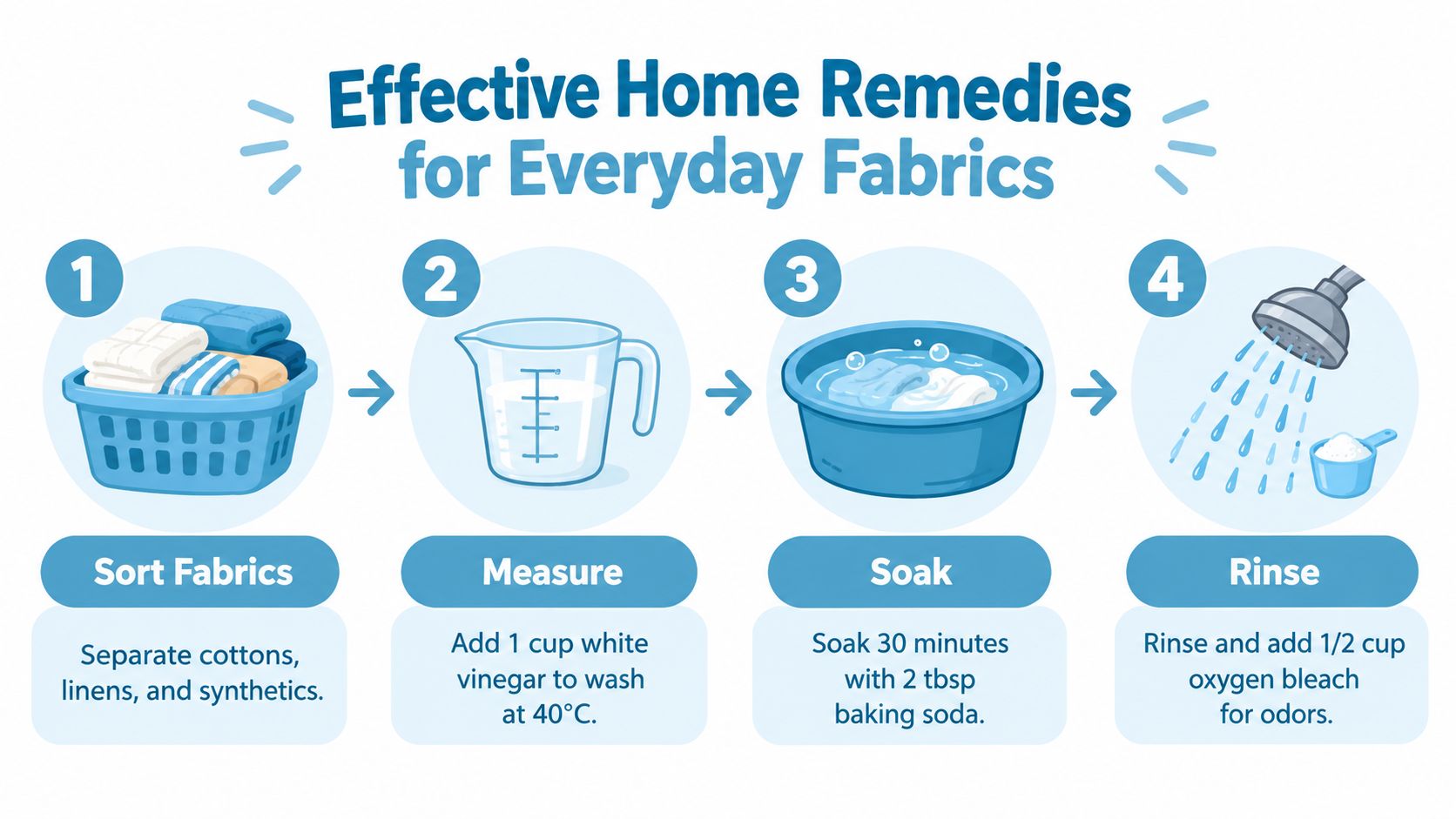
1. Sort the load. Separate cottons, linens, and synthetics. Keep strongly affected pieces apart from garments that smell fresh, especially if there are visible marks or residue.
2. Use white vinegar carefully. For suitable everyday fabrics, add 1 cup of white vinegar to a wash at 40°C, following the garment label and your machine instructions. Don't combine vinegar with chlorine bleach or other cleaning chemicals. Test a hidden area first if the colour is unfamiliar or the fabric has a special finish.
3. Pre-soak when the label allows it. Soak the garment for 30 minutes with 2 tablespoons of baking soda, then rinse or proceed according to the care instructions. Baking soda can help with trapped odour, but it isn't a reason to ignore the label or use a stronger mixture on delicate fibres.
4. Rinse and assess. If the fabric and care label permit it, add ½ cup of oxygen bleach for persistent odour. Use an oxygen-based product only as directed on its packaging, and don't assume it is safe for every colour, print, wool item, or silk item.
A vinegar wash and baking soda treatment should be viewed as a practical option for suitable everyday laundry, not a universal mould treatment. If the smell is strong, visible mould is present, or the odour returns after complete drying, stop repeating the same home remedy and move to a more suitable assessment.
Run an extra spin cycle when the fabric and machine programme allow it. Removing more retained water before the garment reaches the rack shortens the drying challenge, which is particularly useful in a closed bedroom or compact service yard.
Don't pack the rack tightly. Leave space between pieces, open pockets, turn thick items so air reaches both sides, and separate overlapping hems. If your laundry room has no air movement, use a fan or dehumidifier instead of relying on a closed room to dry everything naturally.
A deodorising wash can improve the garment, but it can't compensate for a damp wardrobe or a rack where wet clothes touch one another.
Household odour control is also a matter of using the right product for the setting. Commercial spaces often require purpose-designed warehouse odour control solutions, while home laundry needs fabric-safe handling and careful separation. For everyday clothing, the priority remains simple: wash appropriately, extract as much water as possible, and dry every layer fully before storage.
If fragrance is your main concern after the odour has gone, choose a detergent based on the fibre, skin sensitivity, and care label rather than using perfume to hide a problem. This guide to best-smelling laundry detergents is useful for comparing scent preferences, but fragrance should come after proper cleaning and drying.
A cotton shirt can tolerate a more active home treatment than a silk blouse, jacket, cheongsam, baju kurung, lined dress, or heavy curtain. The risk isn't limited to shrinkage. Moisture and household chemicals can affect dyes, adhesive interfacing, linings, trims, shape, and surface finishes.
Read the label before doing anything. If the item says dry clean only, contains a structured lining, or has sentimental or financial value, don't test vinegar, baking soda, bleach, or vigorous brushing on the garment. Advice on caring for delicates, bras, lingerie, and undergarments is a useful reference for items where fibre tension and construction matter.
A lightly stale garment with no visible marks may improve after careful airing and label-approved cleaning. A persistent smell inside a lining, pocket, seam, or thick waistband is more difficult because the odour source may not be exposed during a quick wash.
Visible spotting needs extra caution. Scrubbing can spread residue and damage the fabric, while strong stain products may remove colour along with the mark. If the garment smells again after it has been properly cleaned and dried, the home method has reached its limit.
The decision rule is straightforward. DIY is reasonable for washable, ordinary garments with a mild odour and no visible mould. Professional assessment is safer for valuable, delicate, structured, heavily affected, or repeatedly smelly items. Treating the wrong fabric more aggressively doesn't make the result more reliable. It can turn an odour problem into colour loss, distortion, or permanent fibre damage.
Washing removes some of the material causing the odour. Drying determines whether the garment stays fresh. In a compact flat, the rack may sit beside a bed, in a service yard, or near a kitchen, so the surrounding air can become humid before the laundry has finished drying.
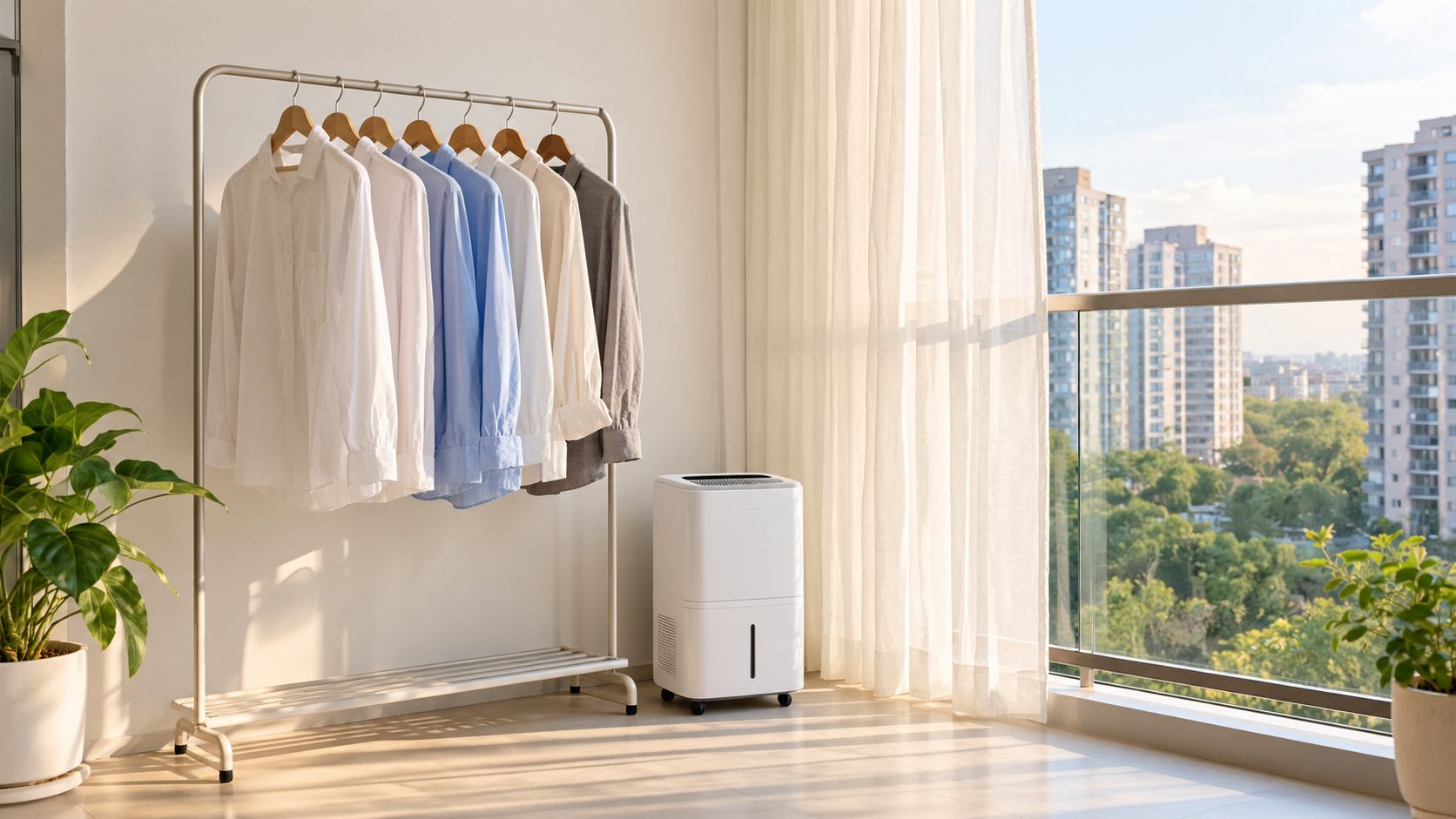
Start the extra-spin cycle immediately after washing. Then spread garments so air can reach the front and back. Shirts shouldn't be pressed together, trousers shouldn't be folded over a narrow rail while wet, and towels shouldn't cover smaller garments.
Use cross-ventilation when outdoor conditions allow it. Open an opposing window or door, position a fan so it moves air across the rack instead of blowing at one item, and keep the room door open if that improves circulation. A dehumidifier works best when placed near the drying zone with enough clearance for air intake and exhaust.
For mould control, aim to bring indoor humidity into the 50–60% range, as recommended in Singapore laundry-room cleaning guidance. The objective isn't to make the room feel cold. It's to stop the air around the garments from remaining saturated while moisture leaves the fabric.
A drying rack with built-in airflow or heat can reduce drying time from about 8 hours to 2–3 hours, which reduces the period when microbial growth can develop in an enclosed space, according to the same Singapore-focused source. Use heated equipment according to its instructions and keep heat away from garments that the label says should not be exposed to it.
Practical rack organisation also makes a difference. These cabin organisation tips for hanging clothes are written for a different setting, but the principle applies at home: distribute weight, leave breathing room, and avoid bunching garments into one wet mass.
Don't leave wet laundry in the washer while you decide what to do next. If plans change, move it to an open rack or run the appropriate wash or rinse programme before drying. Also avoid sealing clothes in a wardrobe, suitcase, or plastic garment bag until every thick section feels dry.
If your home repeatedly struggles with indoor drying, use the practical layout advice in this guide to drying clothes indoors without musty smells. The most effective setup is the one you can operate consistently, even during rainy weather: enough extraction, enough airflow, and enough space between garments.
Home treatment has a clear place. It works best when the garment is washable, the odour is limited, and you can control the drying environment afterwards. It becomes less attractive when the item is large, valuable, difficult to dry, or still smells after a careful label-approved wash.
Scent masking is the least reliable option. Fabric spray may make a wardrobe smell pleasant for a while, but it doesn't clean seams, linings, padding, or thick fibres. If the odour returns after humid storage, the garment needs proper cleaning and controlled drying rather than another layer of fragrance.
Choose a professional service when:
• The label restricts washing: Dry-clean-only workwear, structured jackets, silk garments, and special-occasion clothing need an appropriate process rather than an improvised soak.
• The smell survives proper care: A persistent odour after suitable washing and complete drying suggests that repeating the same home routine may not solve the underlying issue.
• The item is bulky: Curtains, large covers, and heavy textiles can retain water long after their surface feels dry.
• The garment matters: Sentimental attire, formal clothing, and traditional garments aren't good candidates for trial-and-error cleaning.
• The load is too large to dry: A crowded home rack creates the same moisture problem that caused the odour in the first place.
A professional laundry provider can inspect the care label, identify stains, separate items into dedicated loads, and choose between wash-and-fold, clean-and-iron, dry cleaning, or curtain care. In-house processing also gives the operator more control over handling, while itemised tracking helps prevent confusion when several pieces need different treatment.
For households with limited drying space, pickup and delivery remove the wet laundry stage from the flat altogether. For businesses, recurring commercial laundry arrangements can also make sense when uniforms, towels, or other textiles need consistent handling.
The useful question isn't whether professional cleaning is always necessary. It's whether the item and the home setup give you a reasonable chance of removing the odour without damaging the garment or recreating the damp conditions. When the answer is no, outsourcing is a risk-control decision, not a failure of housekeeping. For dry-cleaning decisions and service options, review this guide to dry-cleaning service in Singapore.
The smell stays away when the wardrobe, drying area, and laundry routine work together. Clean a garment properly, dry it completely, and then store it where air can move around it. If the cupboard remains crowded or damp, even a successful treatment won't last.
Start with a short weekly check. Feel thicker hems and waistbands before putting clothes away, look for condensation or a musty cupboard smell, and remove anything that still feels cool or damp. Keep garments spaced apart rather than compressing them against the back panel, especially on an external wall.
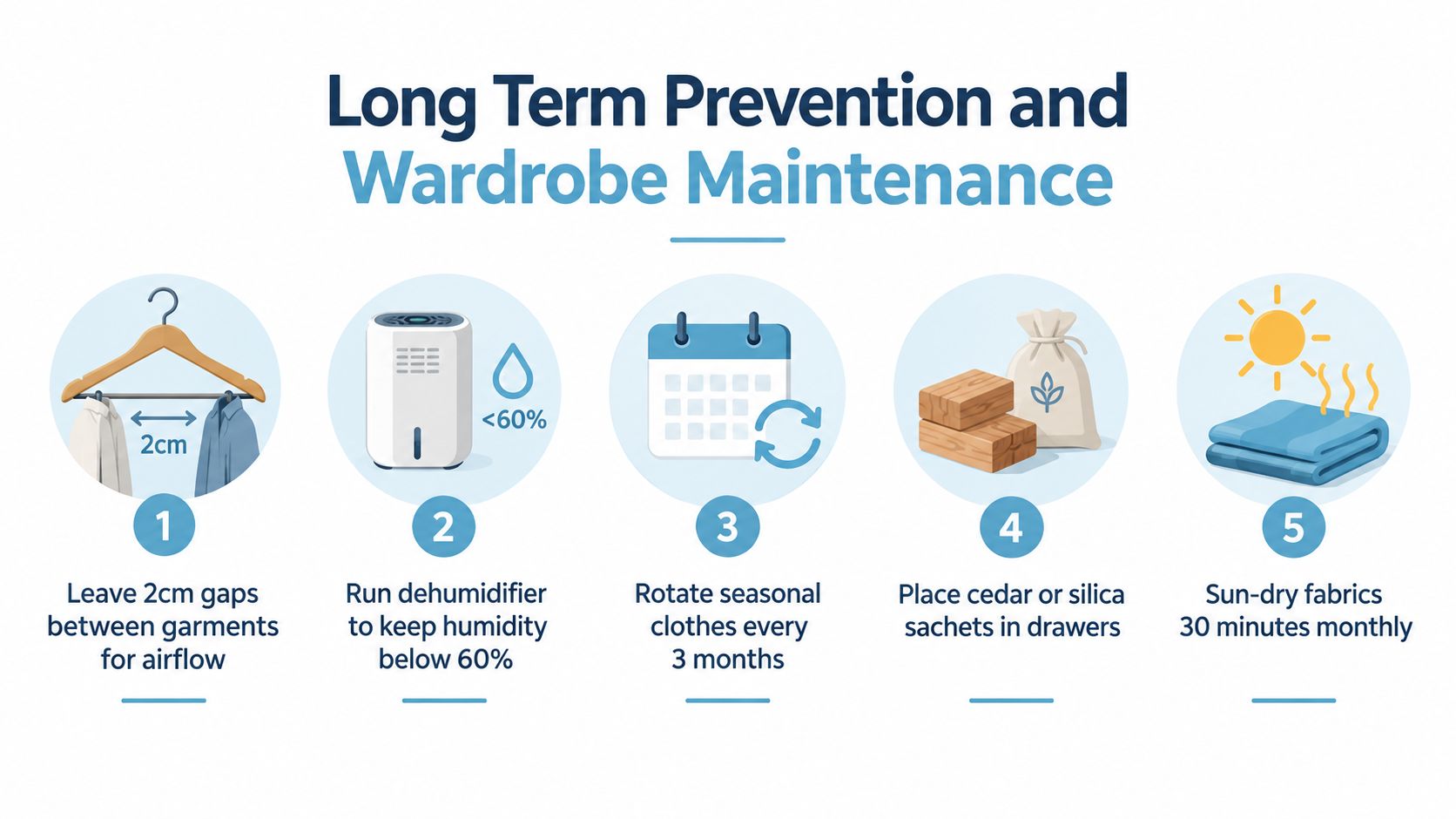
• Dry before storage: Never put away a garment that still holds moisture in seams, pockets, or thick layers.
• Leave breathing room: Avoid overpacking rails, drawers, and shelves. Air needs a path around stored textiles.
• Control the room: Use a dehumidifier when needed and monitor whether the space remains within the 50–60% humidity range recommended for mould control. This target is supported by the Singapore laundry guidance cited earlier.
• Avoid sealed damp storage: Plastic bags and closed containers can trap moisture against clothing. Use them only when the garment and container are completely dry.
• Inspect neglected items: Rotate and check stored clothing instead of leaving it untouched until the next season.
• Treat the source: If the wardrobe, wall, curtain, or room smells damp, clean and dry that area as well as the clothes.
For a broader routine covering washing, drying, sorting, and storage, use these laundry best practices in Singapore. The climate is demanding, but the solution is manageable: remove moisture quickly, choose a treatment that suits the fabric, and escalate to professional care before repeated home experiments cause damage.
Tumble Laundry offers islandwide pickup and delivery, wash and fold for household loads, dry cleaning for workwear and delicate garments, and curtain cleaning for bulky textiles. If persistent mould smell or limited drying space is disrupting your routine, visit Tumble Laundry to arrange a suitable service.

We make laundry days fast and easy for you. We collect, clean and deliver your laundry and dry-cleaning.
53 Ubi Ave 1 #03-43, Singapore 408934
Mon - Fri | 8:30 am–5:30 pm
Sat | 8:30 am–12:30 pm
hello@tumble.sg
+65 62554222
Whatsapp Us


