Hypoallergenic Detergent That Smells Good: A Singapore Guide
This is some text inside of a div block.

On a damp Singapore morning, the laundry you folded before work can still feel a little clingy by evening. The shirt smells clean, but your neck starts itching after the commute, and suddenly the “fresh” detergent doesn't feel so fresh anymore. That's the dilemma for a lot of HDB and condo households, especially when you want clothes that smell pleasant without waking up sensitive skin.
A hypoallergenic detergent that smells good sounds simple until you stand in the aisle and realise the usual choices split into two camps. One camp promises softness and fragrance, but can be rough on skin. The other camp goes fragrance-free, which is safer for many people, but can leave towels, tees, and bedsheets smelling a bit flat in Singapore's humid air.
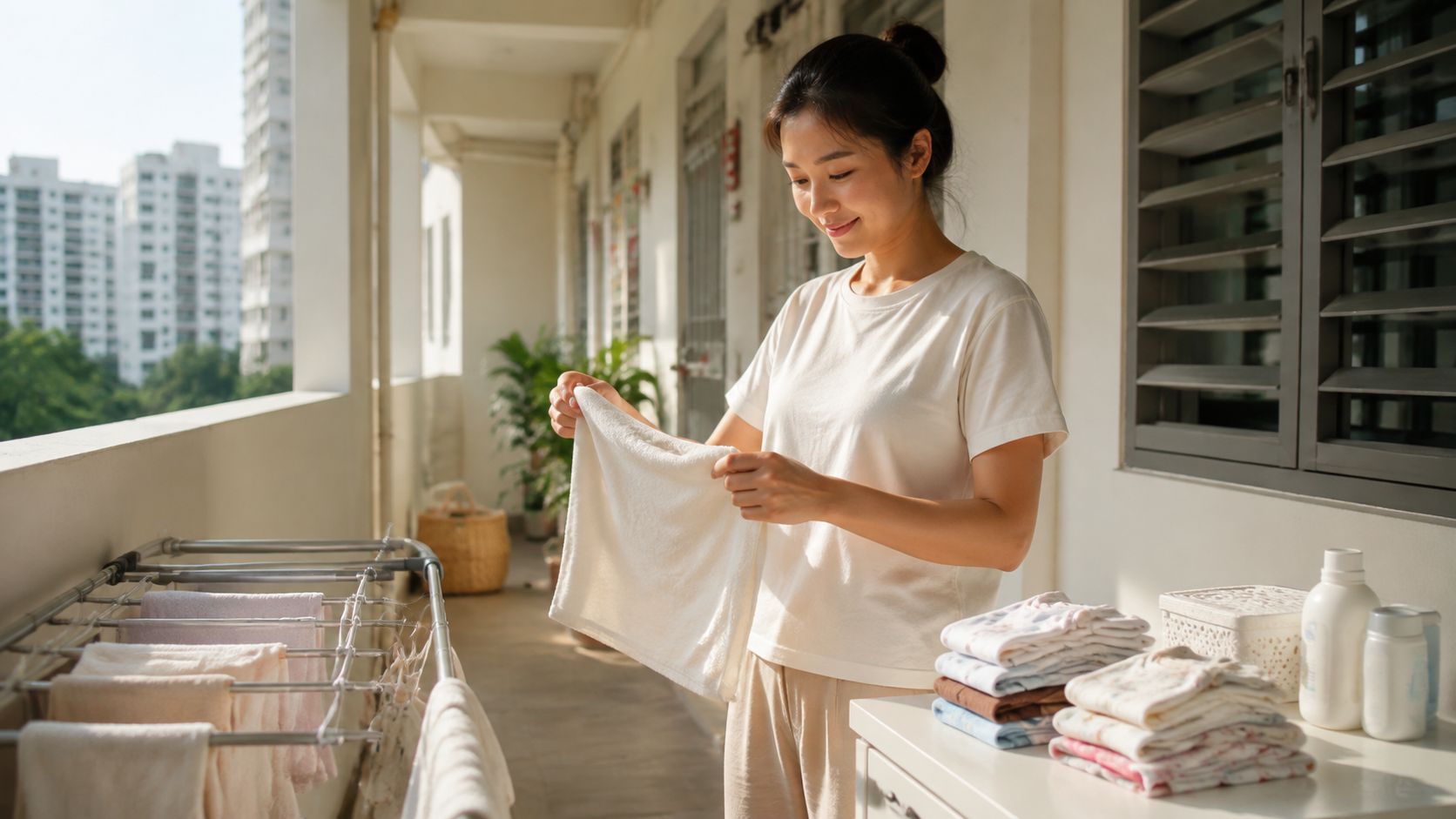
A parent in a Tampines flat opens the washing machine, and the service yard smells like detergent and warm air. The clothes look spotless, but by dinner time the child's inner elbows are red again. A River Valley professional has a similar story, a shirt washed the night before feels crisp, yet the collar stings where skin meets fabric.
In Singapore, that tension makes sense. Clinical guidance lists detergents, soaps, and fragrance/perfume as triggers for allergic contact dermatitis, and fragrance has long shown up in local patch-tested patients. A 1989 National Skin Centre dataset found 12.3% of patch tests positive to fragrance mix and/or balsam of Peru, with later Singapore patch-test work still showing fragrance mix among common sensitizers.
Singapore weather makes the scent question harder, not easier. Moist air, sweat, and slow drying can turn plain laundry stale fast, so people often reach for stronger perfume to compensate. That can hide a wash problem without fixing it. If fabric still holds residue, heat and humidity keep that residue close to skin for longer.
Practical rule: if a detergent only feels “fresh” when it is heavily perfumed, it may be hiding a compromise rather than solving the wash.
Fragrance-free options are still the safest starting point for many sensitive-skin households, but they can feel too neutral when clothes are line-dried on shaded balconies or HDB corridors. The better question is not “fragrance or no fragrance.” It is how much scent, where it comes from, and how much of it touches the skin. That is where a pleasant smell can stay in the picture without making skin comfort an afterthought, especially in Singapore's humid routine.
The word hypoallergenic sounds reassuring, but on a detergent label it's more of a consumer promise than a fixed scientific category. That's why it helps to read it the same way you'd read a skincare label for an eczema-prone moisturiser. A short ingredient list is nice, but only if the formulation, testing, and transparency back it up.
First, look at the formulation. A gentler detergent usually leans away from dyes, heavy perfume, and unnecessary extras that can complicate rinsing. Second, look for testing language. Claims like dermatologist-tested or repeat-insult patch-tested are more useful than the word hypoallergenic alone, because they hint at some form of skin-focused evaluation. Third, check label transparency. If the back panel hides fragrance under a vague “perfume” catch-all, you're left guessing about what's touching your clothes.
For a practical example of how product pages can present skin-friendly positioning, browse Saforelle solution at Healtsy and compare how ingredient language is handled versus pure marketing language.
A good mental shortcut is to treat detergent like skincare. You wouldn't choose a face cream just because the box says “gentle” if the ingredient list still looks loaded with potential irritants. The same logic applies here. If you want a hypoallergenic detergent that smells good, start with the gentlest base formula you can find, then decide separately how you want scent handled.
For a broader local shortlist of wash options, Tumble's guide to the best laundry detergents for sensitive skin in Singapore is a useful comparison point, especially if you're trying to narrow the shelf down before you shop.
A fresh scent can make laundry feel clean before you even touch the fabric. That same fragrance is also the part most likely to bother sensitive skin, which is why this choice matters so much in real households. In Singapore, patch-test findings have kept fragrance mix near the top of local allergen lists, while dermatology guidance also makes clear that true laundry-detergent allergy is uncommon. The practical takeaway is simple, if your skin reacts easily, fragrance is the first place to look closely.
Fragrance behaves a bit like a bright topcoat on a wall. It changes what you notice first, but it can also leave more behind on the surface. On clothes, those molecules sit against warm skin, and Singapore's heat, sweat, and slow-drying laundry can make residue feel more irritating than it would in a cooler, drier place. That is why a gentler scent profile often feels easier to wear than a strongly perfumed one, even when both products clean well.
The trade-off is easiest to understand if you compare it with skincare. A California brand fragrance free moisturizer shows the same logic in another aisle, fewer scent variables usually means fewer questions for reactive skin.
For readers who still want laundry that smells pleasant, Tumble's guide to the best smelling laundry detergents is useful because it shows how scent profiles differ without assuming stronger always means better. That matters in a humid city, where you may want a clean smell, but not at the cost of comfort on skin.
Think of a detergent label the way you'd scan a moisturiser INCI list. You're not looking for one magic ingredient, you're looking for the families most likely to affect comfort on skin and fabric. In laundry, the main buckets are surfactants, enzymes, optical brighteners, preservatives, and fragrance. Among these, the fragrance family is the one most often implicated in the Singapore patch-test story, but the others still matter because they influence how much residue stays behind.
Start at the bottom of the ingredient list, because fragrance usually sits there. Scan for parfum, fragrance, MIT, SLS, SLES, and dye codes that begin with CI. Then look at how “foamy” the product seems to promise itself. Heavy foam doesn't automatically mean poor performance, but it often points to a formulation that may need more rinsing to get fabric feeling comfortable.
Quick habit: if a detergent has a long scent story and a short ingredient story, keep reading before you put it in your basket.
Ingredient FamilyWhat It DoesReaction RiskLabel ClueSurfactantsLift dirt and oils from fabricCan irritate if residue lingersNames like alcohol ethoxylates or glucosidesEnzymesBreak down protein, starch, and grease stainsUsually useful, sometimes irritating for very sensitive usersLipase, amylase, proteaseOptical brightenersMake whites look brighter under lightMore of a preference issue than a skin issueStilbene-derived termsPreservativesKeep the liquid stable in the bottleCan be sensitising for some peopleMIT, phenoxyethanolFragranceAdds scent to washed clothesMost relevant to allergy-prone usersParfum, fragrance, scent blend
If you're comparing two shelveside detergents, transparency matters. A label that names its scent components gives you more control than one that hides everything under “fresh fragrance.” For a broader ingredient-transparency mindset, ingredient transparency in home fragrance products is a useful parallel read, even though it sits outside laundry.
For shoppers deciding between formats, Tumble's guide to powder vs liquid detergent is worth keeping in mind, because format affects how easy a product is to dose and rinse in a small Singapore machine.
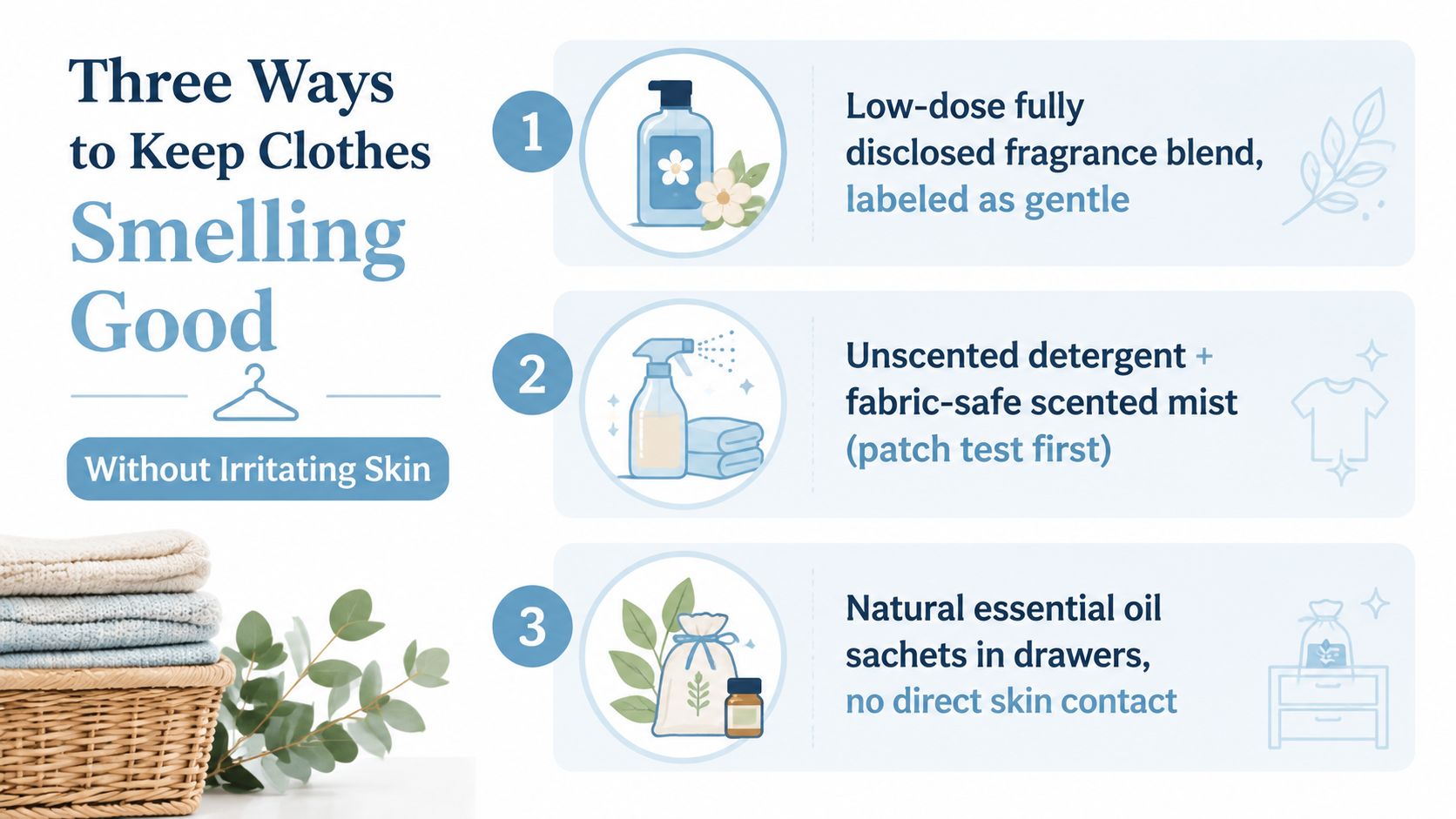
A lot of people assume you have to choose between “safe” and “nice-smelling”. That's not quite true. The smarter approach is layered scent, where you decide how close scent gets to the skin and how much of it stays in the wash cycle itself.
This is the closest thing to a middle path. Choose a detergent that's lightly scented and fully discloses its fragrance direction, then patch-test it on one cotton item before you commit the whole wardrobe. The upside is obvious, your clothes can still smell fresh when you open the cupboard. The trade-off is that the scent is still part of the rinse water, so anyone with strong fragrance sensitivity should stay cautious.
Lavender sachets, cedar blocks, or scent-infused wool dryer balls move fragrance away from skin contact during washing. That matters because the smell lives in the wardrobe or drying phase instead of the wash water. In humid Singapore homes, the scent won't last forever, especially if storage space traps moisture, but it can give shirts and bedsheets a clean lift without adding more detergent to the drum.
A laundry service with a hypoallergenic preference option can keep the detergent choice controlled, then let you add mild fragrance only if you want it. That's useful when you'd rather not manage patch tests, dosing, and drying space at home. Tumble Laundry is one Singapore option that lets customers select a hypoallergenic detergent preference during ordering, which fits households that want scent control without turning laundry day into a chemistry exercise.
LayerCost and EffortScent Longevity in HumidityResidual Skin RiskLow-dose fragrance blendLow to moderate effort, one-step washModerateHighest of the three if you're very fragrance-sensitiveNatural scent boostersLow effort after setupShort to moderate, depending on storageLower, since fragrance usually stays out of the rinseLaundry service with preference controlHighest convenience, least home effortDepends on service handlingVariable, but controlled by process
If you air-dry indoors often, the guide to drying clothes indoors without musty smells pairs well with this approach, because a pleasant scent disappears quickly if the fabric turns stale in a damp room.
The easiest routine is the one you'll repeat on a worknight. Start with a simple patch test, because reactive skin gives you better information than a glossy label ever will. Soak a cotton square in your detergent solution, press it against the inner arm for a test period, and read the area again at 24 and 48 hours. If it looks calm, that still doesn't guarantee every body will tolerate it, but it gives you a useful starting point.
1. Test first, then scale. Patch-test a small fabric sample before washing the whole load.
2. Dose lightly. Singapore machine drums are often smaller than the big default loads people imagine, so keep liquid detergent restrained, even for gym wear or baby clothes.
3. Rinse when the weather is sticky. An extra rinse helps when humidity slows drying and residue has more time to sit against the skin.
4. Dry with air moving. A shaded, ventilated balcony is better than a cramped bathroom, because mildew smell tempts people to overuse fragrance later.
Useful habit: smell the fabric after it's fully dry, not straight from the machine. Wet laundry can fool you into adding more scent than you need.
For households that like a more hands-off rhythm, l laundry best practices in Singapore is a helpful reference for keeping residue, odour, and drying problems from building up over time. The basic idea is simple. Less residue, better airflow, and cleaner storage usually beat stronger scent every time.
A lot of irritation survives because people make good-faith guesses that sound sensible but aren't. The first myth is that “dermatologist tested” and “hypoallergenic” mean the same thing. They don't, because testing methods vary and the label itself isn't a fixed regulatory guarantee.
MythWhy It PersistsThe Reality“Dermatologist tested” equals hypoallergenicIt sounds clinical and reassuringIt only tells you some testing happened, not what the formula containsNatural scents are always safer“Natural” feels gentler than “chemical”Plant-based fragrance can still be a trigger for reactive skinMore detergent means cleaner clothesHeavy foam feels effectiveOverdosing can leave residue that clings to fabricScent boosters are neutral finishersThey're added after the washMany still release fragrance with heat and wear
The second myth is that essential oils are automatically kinder because they're natural. That's too simple. The third is that extra detergent guarantees a better clean, when it often does the opposite by making rinsing harder. The fourth is that scent boosters are harmless add-ons, even though many are built to release fragrance as clothes warm up.
If one of these sounds familiar, the fix is straightforward. Use less detergent, choose a clearer formula, and treat fragrance as a separate decision rather than part of the cleaning itself. That shift alone solves a lot of the “why are my clothes still bothering my skin?” confusion.
A good decision starts before you buy anything. Check the label for transparency, decide how much fragrance your skin can handle, and choose the lightest scent path that still feels pleasant in your cupboard. Then keep the wash itself simple, because residue, not just scent, is what makes clothes uncomfortable after the fact.
The most workable Singapore routine usually has three checkpoints. First, the purchase filter, where you compare fragrance level and ingredient clarity. Second, the wash filter, where you keep dosing sensible and rinse properly. Third, the storage filter, where you stop damp fabric from reabsorbing stale odours in a closed room or overloaded wardrobe.
If you want to hand the whole problem off, a service with a hypoallergenic detergent preference can save a lot of trial and error, especially when your flat has limited drying space. That's where Tumble Laundry fits naturally for some households, because it offers pickup-and-delivery laundry with a hypoallergenic detergent option and lets you keep scent management inside one process instead of juggling bottles at home.
If you're tired of guessing which detergent will smell good without upsetting your skin, try a wash routine that's built around comfort from the start. Visit Tumble Laundry to see how its pickup-and-delivery service can fit a sensitive-skin laundry routine, especially if you want a cleaner, simpler way to manage scent in Singapore's humidity.

We make laundry days fast and easy for you. We collect, clean and deliver your laundry and dry-cleaning.
53 Ubi Ave 1 #03-43, Singapore 408934
Mon - Fri | 8:30 am–5:30 pm
Sat | 8:30 am–12:30 pm
hello@tumble.sg
+65 62554222
Whatsapp Us


