How to Remove Mould from Clothes in Humid Singapore
This is some text inside of a div block.

A favourite shirt comes out of the back of the wardrobe with dark speckles at the collar and a smell you can't ignore. The garment may have looked clean when it was stored, but a little leftover moisture, limited airflow and Singapore's humid conditions can turn a closed wardrobe into a mould problem.
The obvious response is to scrub harder or add stronger detergent. That's often the wrong priority. How to remove mould from clothes successfully is a two-part job: treat the garment safely, then change the drying and storage conditions that allowed mould to return. A washed shirt that goes back into a damp wardrobe is still at risk.
Mould can return to a garment that looked clean when it was stored. Fibres hold moisture after indoor drying, and dampness can remain hidden in seams, cuffs, pockets, padding or a lining. Fold the item too soon, place it in a tightly packed wardrobe, or press it against a cool wall, and the trapped moisture has time to support new growth.
Singapore's warm, humid conditions make this problem more likely, especially in apartments with limited airflow. A wardrobe can feel dry at the door while remaining stale inside. Clothes packed closely together block circulation, and heavier fabrics or lined garments dry more slowly than a simple cotton shirt. These differences matter when choosing treatment. A washable everyday item may tolerate a thorough wash, while silk, wool, leather, structured tailoring and bonded materials can be damaged by the same approach.
Drying discipline is part of mould control. Garments need to be dry through the thickest section, not merely dry to the touch on the outside. Pay attention to collars, waistbands, cuffs and linings before folding or hanging them among clean clothes. Singapore mould removal guidance also highlights the role of room conditions after cleaning, so treating the stain without correcting the storage area leaves the cause in place.
Mould is not only a cosmetic problem. Spores and musty odours can transfer between garments, particularly when affected clothing is brushed or shaken inside a bedroom. The wardrobe itself may retain the smell, allowing the next damp item to develop a problem.
Practical rule: If one garment smells musty, remove it from clean clothing and inspect the items stored beside it.
Treat a musty odour as an early sign rather than covering it with fragrance. Advice for humid homes recommends acting when that smell first appears (mould prevention advice for humid homes). Check nearby garments, the back of the wardrobe and any enclosed storage space. A delay gives moisture and mould more time to spread.
A visible stain is not the whole test. Colour may fade while residue remains in the weave, and a garment can look clean while retaining enough dampness to develop another odour. Success means the treatment suits the fabric, the garment is fully dry, and storage allows air to circulate.
Detergent can remove soil, oils and some residue around a mark. It cannot dry a crowded wardrobe or fix moisture trapped in a lining. In Singapore apartments, changing the storage conditions may matter more than changing washing powder. The right treatment therefore depends on both the garment and the place where it is kept.
Preparation is where many home attempts go wrong. People often carry a mouldy shirt into the bedroom, shake it over the laundry basket and wet the stain immediately. That spreads loose material and can press the mould further into the fibres.
Start by isolating the garment. Place it away from the wardrobe and keep it separate from the rest of the laundry until you've removed loose spores. If several items are affected, handle them as a group but don't mix them with unaffected clothing.
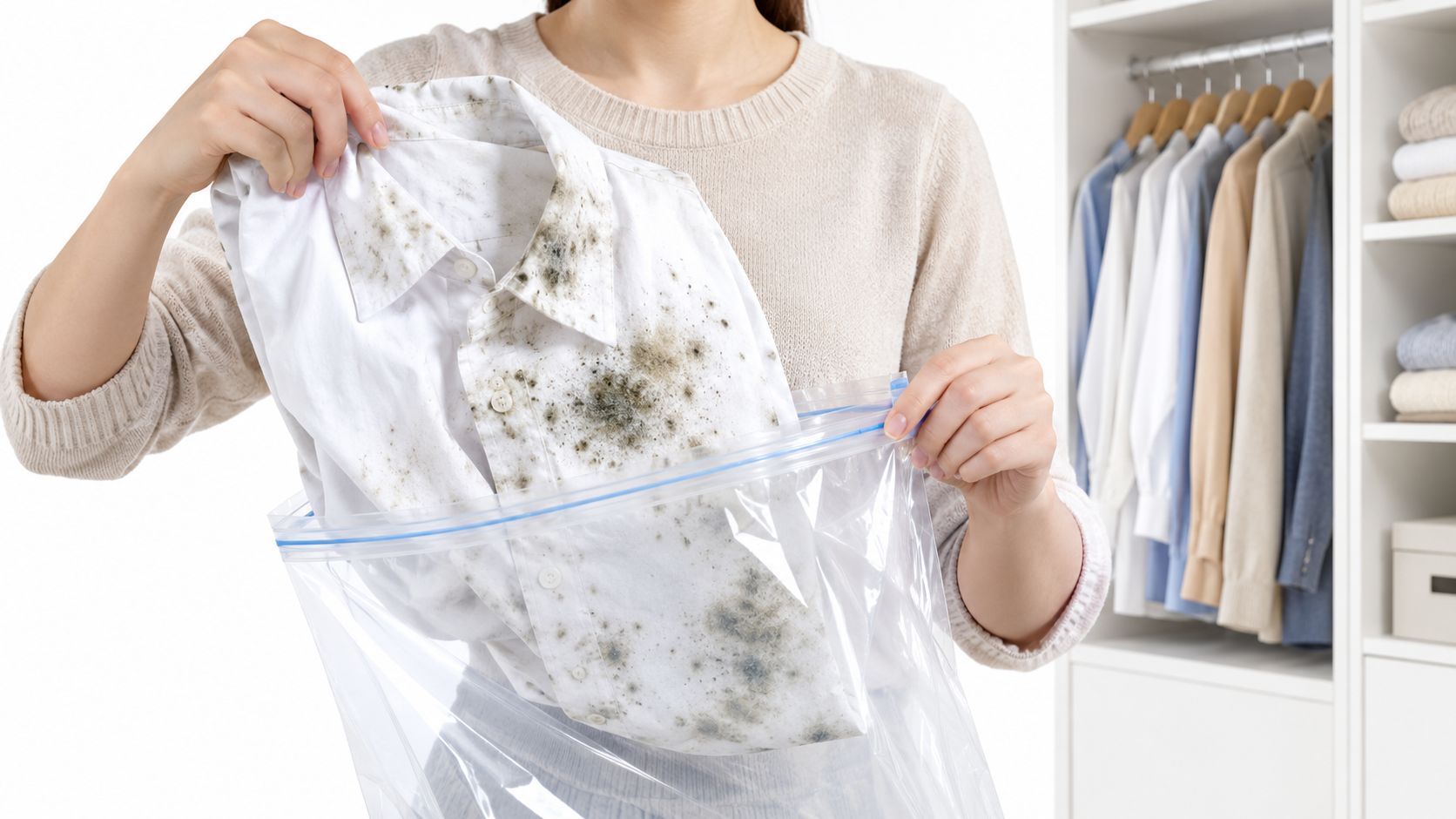
Take the item outdoors, onto a balcony with good airflow, or to another well-ventilated area. Don't dry-brush it beside your clean laundry, sofa or bed. Cover a nearby surface with a disposable sheet or place a clear bag beneath the garment to catch loosened debris, then dispose of that material carefully.
If you're sensitive to dust or mould, use suitable personal protection and avoid leaning over the garment while brushing. The aim isn't to create a cloud of particles. It's to remove surface growth in a controlled area before liquid treatment causes it to smear.
Use a soft clothes brush for broad areas. An old, clean toothbrush can help with seams, cuffs and small patches, but don't scrub aggressively. Work from the outside edge of the affected patch towards the centre, using short strokes that lift material away from the fabric rather than grinding it across the surface.
Do this while the garment is dry. Singapore-specific care guidance recommends dry-brushing before washing because wetting the mould first can smear it deeper into the weave (practical mould removal workflow for clothing).
Inspect the care label before choosing the next step. Symbols for washing, bleaching, drying and professional cleaning determine whether a cotton-shirt method is suitable. If you're unsure how to interpret them, this guide to laundry symbols and care labels is a useful reference.
After brushing, keep the item separate until you're ready to pre-treat it. Don't shake it indoors, and don't place it in the washing machine with ordinary clothes. The preparation stage reduces what you're carrying into the wash and protects the rest of your wardrobe from unnecessary contamination.
Cotton shirts, towels, linen blends and many polyester garments can usually be treated at home when the care label permits washing. Use a staged process: remove loose spores, pre-treat, wash at the hottest fabric-safe setting, then dry completely. That sequence matters because a quick wash followed by damp storage often leaves the conditions mould needs to return.
Mix equal parts white vinegar and water. Apply enough to cover the affected area, or soak the whole washable garment if the dye is stable and the care label allows it. Leave the solution in contact with the mould for about 10 to 15 minutes. On coloured clothing, test it first on an inconspicuous hem. Stop if the colour changes or transfers.
The pre-treatment loosens surface growth and reduces musty residue before the machine cycle. It does not make every stain disappear, particularly when mould has altered the fibre or lining. Avoid leaving coloured garments in the solution longer than necessary, since extended contact can affect some dyes.
Wash the garment separately, or with other similarly affected, colourfast items. Select the highest temperature the fabric safely allows. A lukewarm cycle may remove ordinary dirt while leaving established mould and odour behind. Follow the label rather than choosing a hotter setting because the mark looks stubborn.
Use your regular detergent, and never combine vinegar with chlorine bleach. The mixture can release dangerous fumes, while bleach may damage coloured, synthetic or delicate fabrics. If you use any additional stain treatment, check its label and do not mix products in the same container.
After the first cycle, let the garment dry before judging the result. A damp patch can look darker than it really is, making it difficult to tell whether the remaining problem is mould, staining or shadowing in the weave.
The following visual summarises the sequence for everyday washable fabrics.
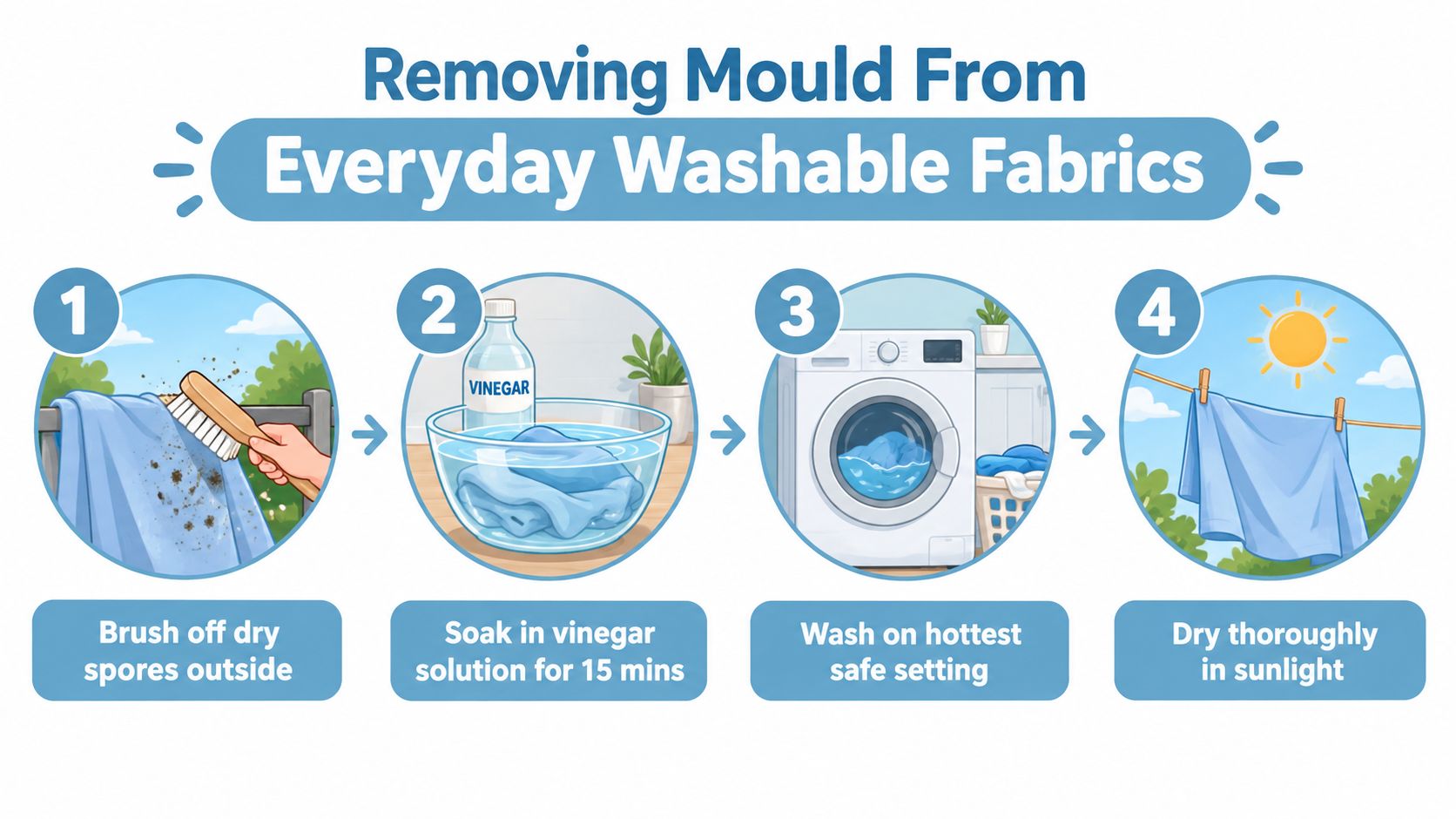
Dry the garment fully in direct sunlight where the care label allows it. Open pockets, turn thick areas inside out and separate folded layers so air reaches seams, hems and linings. In Singapore apartments, the drying stage is often where treatment fails. A garment can feel dry on the surface while retaining moisture in a waistband, cuff or heavy seam.
Sunlight helps, but prolonged exposure can fade coloured fabric or leave it brittle. Use strong airflow and partial shade for items that cannot tolerate bright sun. A dryer can help when rain or limited apartment space prevents line-drying, provided the label permits machine drying and the garment has already received treatment.
Before storage, check:
• Odour: A persistent musty smell means the problem needs further attention.
• Fabric: Inspect seams, hems, underarms, pockets and the reverse side.
• Dryness: Press the thickest section between your fingers. It must feel dry throughout.
Repeat the process only if the fabric remains sound and the label permits further treatment. Stop escalating home remedies when the garment is fading, weakening or retaining mould in its lining. That is the point at which a fabric-specific professional assessment can prevent further damage.
For related stain-handling principles, consult this complete guide to removing stains from clothes. It helps distinguish a removable surface mark from permanent fibre discolouration. If the affected item is a rug, cushion or another bulky textile rather than clothing, trust Rubber Ducky Rug Cleaning for guidance suited to outdoor rugs and larger materials.
A silk blouse, wool knit, leather jacket or embellished cheongsam isn't a smaller cotton shirt. The same vinegar soak and hot wash that may suit a durable washable garment can alter colour, shrink fibres, distort shape, damage adhesives or affect a lining.
Start by reading the care label and examining the construction. A garment marked dry clean only, an item with bonded layers, or a piece with embroidery, sequins, beads or metallic thread deserves a conservative approach. Brush only when the surface can tolerate it, and keep moisture to the smallest practical area.

Silk can water-mark, lose surface finish or suffer colour movement when treated with a household solution. Don't soak it in vinegar, scrub a dark patch with a toothbrush or expose it to intense heat. After removing loose surface material in a ventilated place, blot a very small hidden area with a barely damp white cloth to check for dye transfer. If there's any transfer, stop.
Wool can felt, shrink and lose its shape when exposed to heat, friction or excess water. Keep it flat while inspecting it, avoid rubbing, and don't twist or wring it. Light airing may reduce the smell temporarily, but it doesn't replace proper treatment when mould is visible.
For either fibre, professional cleaning is the safer route if the garment is valuable, fitted, vintage or sentimental. A dry-cleaning process guide explains why professional handling considers the textile and construction rather than applying one home recipe to everything.
Leather needs a different risk assessment. Moisture can stain the hide, affect surface coatings and encourage further damage if the item dries slowly. Wipe only loose surface debris when appropriate, keep the garment away from humidity and avoid vinegar, bleach and prolonged soaking. A leather specialist should assess visible mould, especially on suede or nubuck.
Lined office wear, jackets and traditional attire present another problem. The outer fabric may feel dry while the lining, padding or interlining retains moisture. Beaded garments and saris can also contain trims that react differently from the main fabric. Treating one visible patch can leave the underlying source untouched.
A useful external reference is this black mould removal guide, particularly for understanding why extensive contamination requires more caution than a small surface mark. It isn't a substitute for the garment's care label or a textile professional.
Home treatment is most defensible when the item is washable, colourfast, structurally sound and only lightly affected. Even then, test any solution on a hidden seam and stop if the dye bleeds, the texture changes or the fabric becomes weak.
Do not home-treat a formal garment just because the visible patch is small. The risk comes from the garment's construction, not only the size of the stain. A professional can inspect the whole item, identify whether the odour is in the lining and choose a process that respects the fabric.
A garment can feel dry after washing and still return to the wardrobe with enough moisture to support mould. In Singapore apartments, prevention depends on controlling room humidity, improving airflow and checking hidden damp spots before storage. Aim for 40–60% indoor humidity, a practical range for reducing recurrence after cleaning (mould control guidance for Singapore homes).
Wardrobes often hold humid air between tightly packed layers. Leave space between hanging clothes, avoid overfilling shelves and keep garments from resting directly against the back panel. Before storing an item, check the waistband, collar, pockets, folded hems, linings and other thick sections by touch. These areas can remain cool and damp after the outer fabric seems dry.
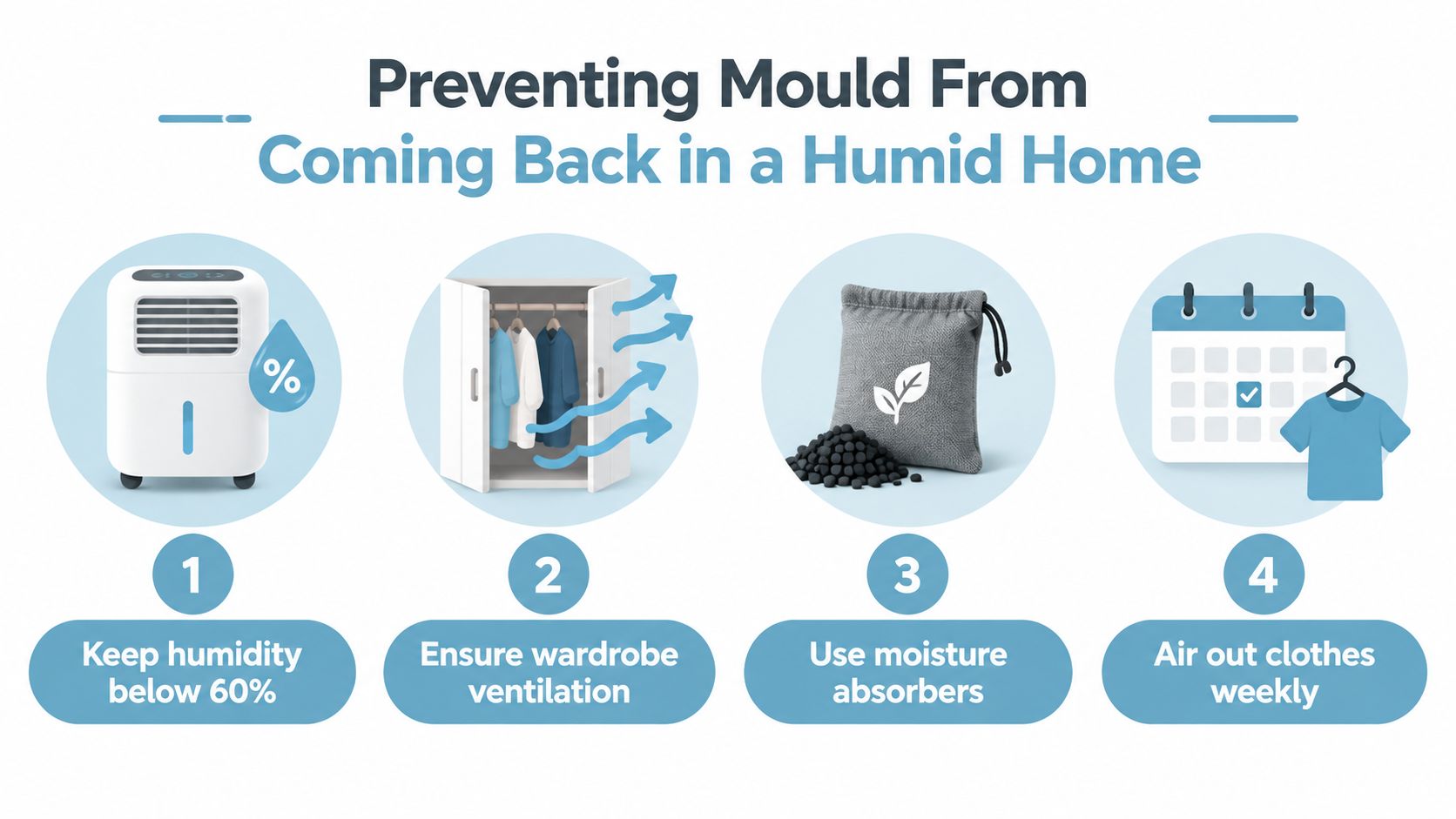
Use the same sequence after every wash:
• After washing: Remove clothes promptly and spread thick items open so moisture can escape.
• During indoor drying: Run a fan, open windows when outdoor conditions allow and use a dehumidifier if the room stays damp.
• Before storage: Check seams, pockets, waistbands and linings. If any area feels cool, heavy or damp, continue drying.
• At the first musty smell: Isolate the garment and inspect nearby items before the odour spreads.
Moisture absorbers can help inside enclosed cupboards, but they cannot dry damp laundry or replace ventilation. A small container will not correct a wardrobe packed with wet clothes. Fragrance sachets create the same problem in another form, masking odour while leaving the moisture behind.
Sunlight can help after treatment, but rainy periods make it unreliable as the only drying method. Mechanical drying may be more practical when the care label permits it, since it removes moisture without depending on clear weather. The method matters less than the result. Every garment, including its waistband, lining and folded areas, must be fully dry before storage.
For workable apartment methods, follow this guide to drying clothes indoors without musty smells. If the room repeatedly feels humid, review broader household controls as well. This resource on reducing home humidity covers room-management measures that can support wardrobe care.
Act when one item develops a musty smell, not after several garments show visible mould. Separate it, dry the storage area and check neighbouring clothes. Stronger detergent will not solve a wardrobe that keeps receiving damp garments.
Home treatment suits a washable, inexpensive garment with limited mould. Choose professional care when the item is silk, wool, leather, lined, embellished or marked dry clean only. Expensive workwear, uniforms, cheongsams, saris and formal clothing also carry more risk. Shrinkage, colour change or distortion may cost more than the cleaning service.
Several affected garments create a separate problem. The batch needs sorting, inspection and enough controlled drying space. If your apartment cannot dry every item completely, washing more clothes at home can leave them damp while you wait for space.
Tell the cleaner about the mould or persistent musty smell before handing over the garment. Identify visible patches and delicate trims. A careful service should follow the care label, inspect stains, keep garments in a dedicated customer load and select a suitable cleaning and drying process. Treating silk, wool and embellished clothing like basic cotton can cause avoidable damage.
For collection and delivery, a professional dry cleaning service in Singapore can suit formal and non-washable garments. Tumble Laundry provides islandwide pickup and delivery, wash and fold, clean and iron, dry cleaning and garment care through in-house processing. Its service information describes care-label adherence, stain inspection and dedicated customer loads, all relevant when mould affects more than one basic shirt.
Professional cleaning cannot correct a humid wardrobe. Check the storage conditions before returning the garments. Treatment makes the garment wearable again, while moisture control keeps the problem from returning.
If mould has affected everyday laundry, formal wear or garments that will not dry properly at home, Tumble Laundry offers pickup, professional cleaning and door-to-door delivery in Singapore. Book a collection for washable loads or request garment-specific care for delicate and dry-clean-only pieces, and report the mould before processing.

We make laundry days fast and easy for you. We collect, clean and deliver your laundry and dry-cleaning.
53 Ubi Ave 1 #03-43, Singapore 408934
Mon - Fri | 8:30 am–5:30 pm
Sat | 8:30 am–12:30 pm
hello@tumble.sg
+65 62554222
Whatsapp Us


