How to Remove Makeup from Clothes in Singapore
This is some text inside of a div block.

Oil-based makeup like foundation and lipstick binds to fibres like grease, and in Singapore's humidity those stains set faster if you leave them alone. The first move is simple, blot it right away, then treat it before heat or rubbing pushes the colour deeper.
You've probably had the moment already, a white blouse at the start of the day, lipstick on the MRT, and a collar stain by lunchtime. The good news is that most fresh makeup marks are still removable if you use the right method for the stain and the fabric, not the method that looks fastest.
A makeup stain on a shirt collar can look minor at first, then spread as the fabric absorbs oil. In Singapore's humid weather, that matters even more, because foundation and lipstick behave like oil-based stains and can set faster than plain dirt.
The first move is blot, don't rub. Rubbing presses pigment and oil deeper into the weave, while blotting lifts what is still sitting on the surface. Use a clean tissue or cloth and press lightly, then pause and feel the spot. If it seems greasy, waxy, or powdery, that clue tells you more than the colour does.
That quick check helps you choose the right next step. Oil-heavy foundation and lipstick usually need a grease-lifting approach, while powder can often be removed dry before any liquid touches the fabric.
Practical rule: if the stain is fresh, handle it like a rescue job, not a normal wash-load problem.
Ask one question first. Is the fabric safe for spot treatment, or does the care label make that risky? A sturdy cotton blouse usually gives you room to work. Silk, wool, and lined garments do not. On those fabrics, a strong remover can leave a mark that is worse than the makeup itself.
The same local guide also recommends a hidden-area test before any liquid touches the visible stain, because cleaners can change colour, finish, or texture on delicate cloth. It also suggests absorbing oil-based makeup first with cornstarch or baby powder for 10 to 15 minutes, then pre-treating before washing in the warmest water the fabric can take. A separate complete stain removal guide is useful for general stain basics, but makeup still needs this kind of stain-by-stain judgment.
If you want a different first step, the same guide also suggests blotting with micellar water or a makeup-remover wipe, then washing in cold water. That fits the way stains behave in humid weather, where waiting too long gives oil and pigment more time to bind to fibres.
The point is simple. Treat the stain quickly, match the method to the makeup, and stop when the garment becomes too delicate for home care.
A foundation smear, a lipstick mark, and mascara on fabric may all look like “makeup stains,” but they do not respond the same way. The fibres, pigments, waxes, and oils behave differently, so the first decision is to match the treatment to the stain you can see.
Singapore product guidance gives practical directions for that choice. Vanish SG's makeup stain guide says you can apply gel directly to the stain, wait 5 minutes, then wash with 60 ml of gel. For tougher stains, the same guide also suggests soaking with 60 ml in 4 litres of warm water, leaving coloured fabrics for up to 1 hour and whites for up to 6 hours. It also offers an alternative dilution of 40 ml in 3 litres of warm water, followed by rinsing or washing as usual Vanish SG makeup stain guide.
Foundation usually feels oily and spreads at the edges. Lipstick tends to leave a thick, waxy mark with strong colour. Mascara often looks dark and stubborn because it is made to resist water. Powder makeup is different again, since it can sit on top of the cloth until moisture or friction pushes it into the fibres.
The texture tells you what to do first. Oily marks need the grease loosened. Waxy marks need the residue lifted before washing. Powdery marks should be cleared gently so they do not get rubbed deeper into the cloth.
Makeup TypeStain ChemistryFastest Effective Home ResponseFoundationOil-rich pigmentBlot, then pre-treat with a degreasing remover before washingLipstickPigment plus waxLift excess first, then apply a remover that breaks down waxy residueMascaraDark pigment and water-resistant filmTreat promptly, then wash after the remover has had time to workPowder makeupLoose pigment particlesTap or lift loose product before adding liquid
A single cleanser feels convenient, but convenience is where mistakes start. A remover that works on a liquid foundation stain may be too mild for waxy lipstick, while hard rubbing that seems harmless on cotton can damage a finer weave.
For oil and grease behaviour, the oil stain removal guide is a useful companion read because makeup often behaves like grease before it behaves like colour. That framing helps in Singapore's humidity, where oily products can set faster into fibres if you leave them too long.
The safest rule is simple. Read the stain, choose the method that fits the makeup type, and stop if the garment is too delicate for home treatment.
Good stain logic: remove the makeup type you see, not the stain you wish it was.
A treatment that rescues cotton can ruin silk. Fabric choice matters as much as stain choice, especially in Singapore, where humid air can keep residue sitting on fibres longer and make delicate garments harder to clean without damage.
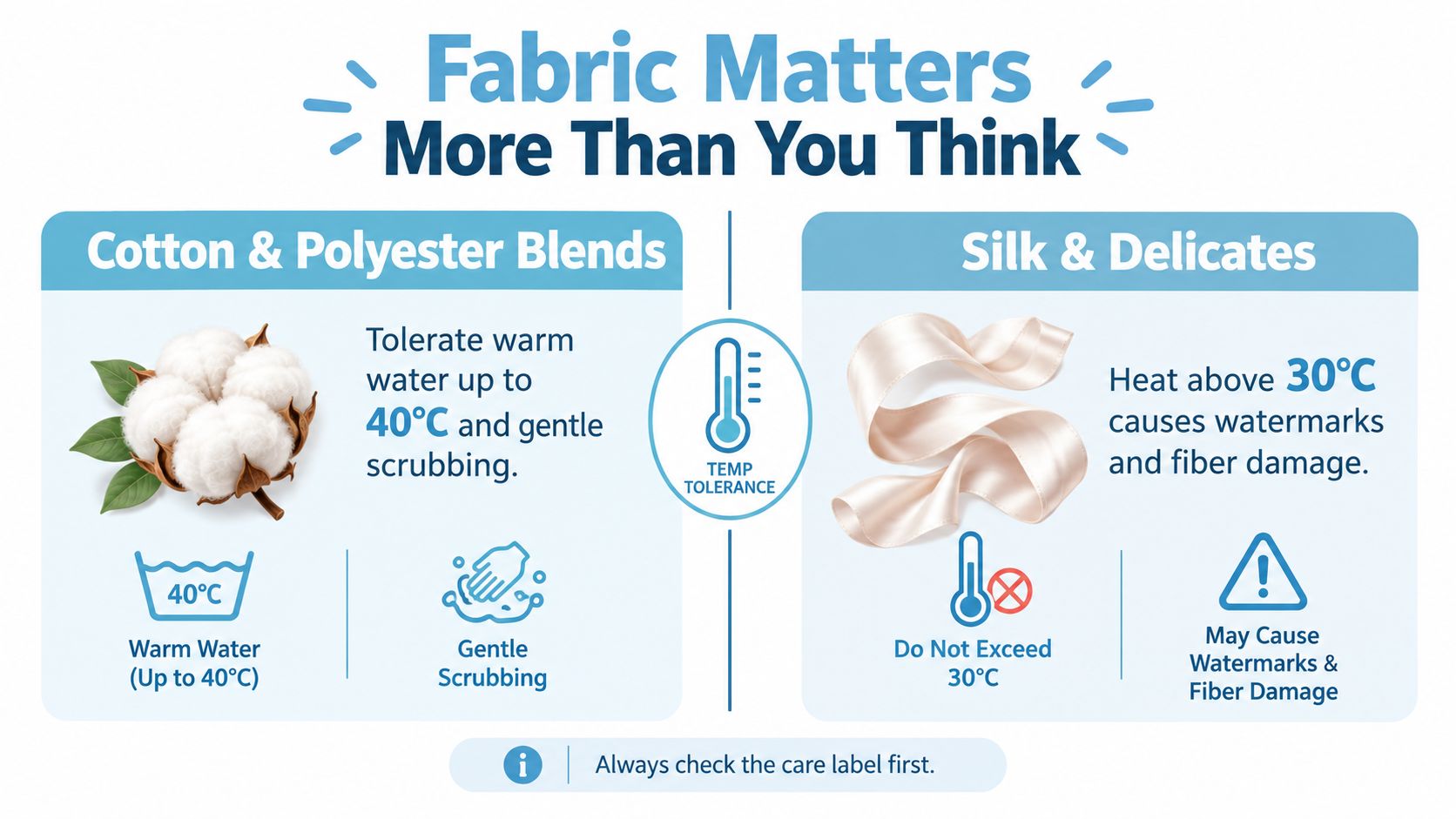
Cotton and many polyester blends usually tolerate gentle pre-treatment, moderate agitation, and label-approved water temperatures. Silk, wool, cashmere, and lined garments need a slower hand. They can lose finish, shape, or colour if treated like a basic T-shirt.
That is why a hidden-seam test should come before any remover touches the visible mark. As the Piing garment-care guide notes, advice on delicates is often incomplete, which is why a hidden-seam test matters before any remover goes on the visible mark. Home methods that work on casual clothes can fail on workwear, evening pieces, or traditional attire.
The care label tells you whether the garment can handle washing, water temperature, and mechanical action. If you need help reading it, the laundry symbols and care labels guide is a useful check before you start. One wrong temperature choice can do more harm than the stain itself.
For broader fabric-care context, fresh home fabric care tips can help you understand how delicate textiles react to moisture and treatment products. Use it as a general reference, not as a makeup-removal recipe.
Safety rule: if the garment says dry clean only, or the fabric feels fragile in your hands, stop before you improvise.
• Cotton and polyester blends: gentle pre-treatment is usually reasonable, and warm water may be acceptable if the care label allows it.
• Silk and wool: keep the approach mild, cool, and minimal. Avoid rubbing, heat, and strong spot-cleaning pressure.
• Lined garments: test first, because the outer fabric and inner lining may react differently.
•High-value pieces: if the garment is expensive or sentimental, professional care is often the safer call.
The Piing garment-care guide also shows that guidance on delicates can leave out the fibre-specific cautions you need, so the hidden-seam test is the practical safeguard before any remover goes on the stain. That small check can stop a strong cleaner from turning a fixable mark into permanent fabric damage.
Once you know the stain and the fabric, the process becomes orderly. Start with the gentlest method that still matches the garment, then increase intensity only if the cloth can handle it. In Singapore's humidity, that choice matters because oily makeup can settle fast and cling harder once it has time to dry.
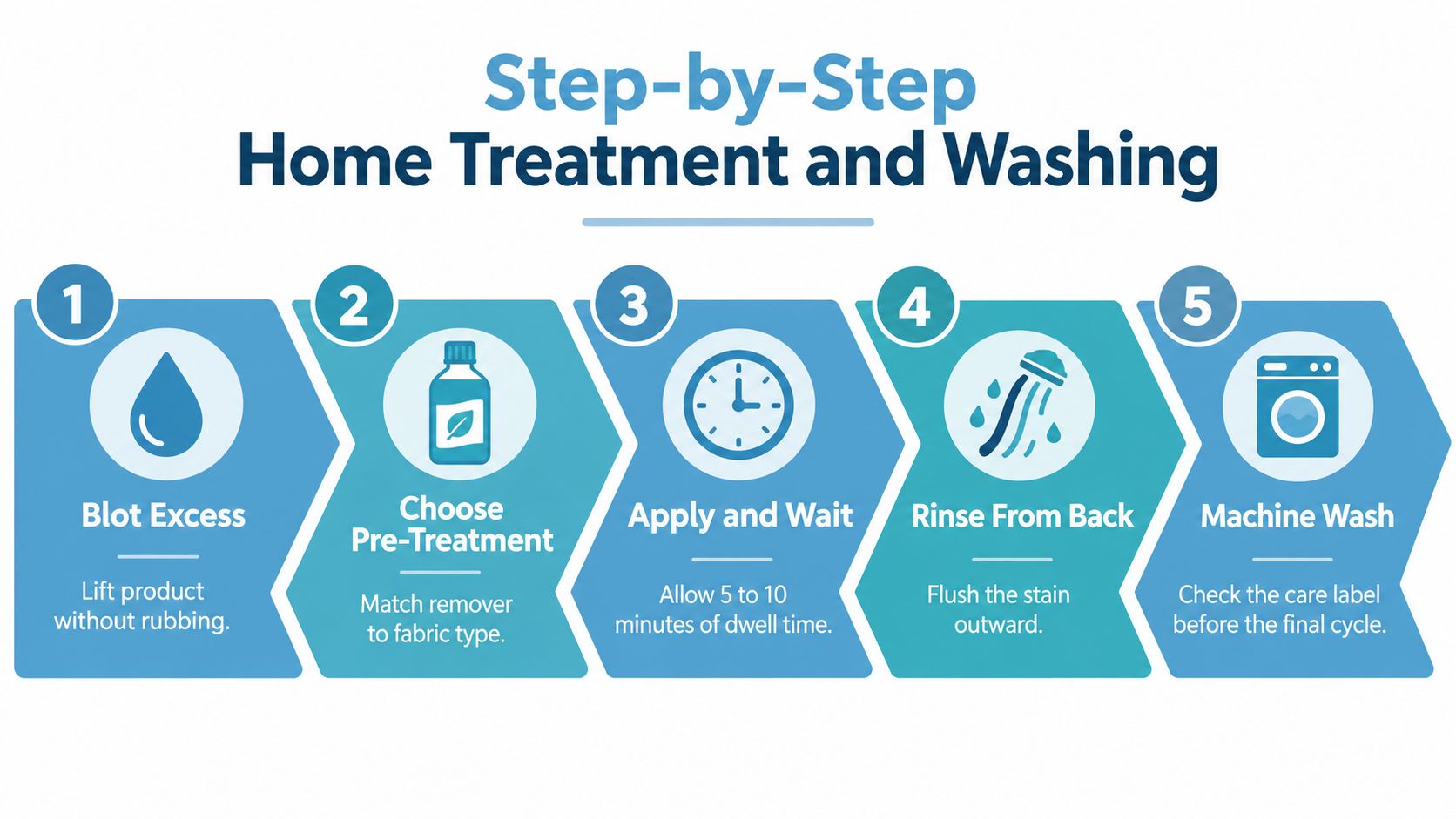
1. Blot the excess. Lift off as much product as you can without rubbing. If the stain is powdery, tap it from the reverse side first.
2. Choose the right pre-treatment. Use a stain remover suited to the fabric, then test it on a hidden area.
3. Let it work for the right amount of time. Product guidance in Singapore gives short dwell times, and the stain remover from Vanish SG makeup stain guide is meant to sit only for the period the label allows before washing. Follow the contact time on the pack, then wash while the stain is still in the treatment window.
4. Rinse or wash according to the label. Warm water suits fabrics that are marked for it, while delicates should stay cool.
5. Inspect before drying. If the shadow is still there, re-treat before heat touches the garment.
A useful reminder from local guidance is that treatment should happen as soon as possible, and both sides of the stain should be treated for best results Vanish SG main guidance. That matters most with oily foundation and similar products, because delay gives the stain time to bind into the fibres.
Use the volumes printed on the product label rather than estimating. Concentration decides whether the stain loosens or settles deeper, so a rough pour can leave the treatment too weak or too strong for the fabric. When the care label allows it, match the dwell time to the wash temperature, since hotter water can change how long a product sits safely on the cloth.
For a visual walk-through while you work, this embedded guide is handy.
Warm water helps only when the fabric can take it. Cold water is the safer default for delicates and for stains that have not been fully assessed yet. The error I see most often is someone reaching for hot water too early because they want the mark gone immediately.
If you are deciding between wash temperatures, the cold wash versus hot wash guide explains why the choice changes the result. For stubborn residue on compatible fabrics, a booster can help, and you can find HG stain remover for oxi wash, as long as you still follow the garment's care instructions.
Do not rush the finish. Heat should only come after you have checked that the stain has truly lifted.
A makeup stain can look minor at first, then settle fast once it sits in Singapore's heat and humidity. The first mistake is usually delay, or using heat before the mark has lifted. As noted earlier, treatment should begin quickly, both sides of the stain should be addressed, and contact time should stay within the product's limit before washing.
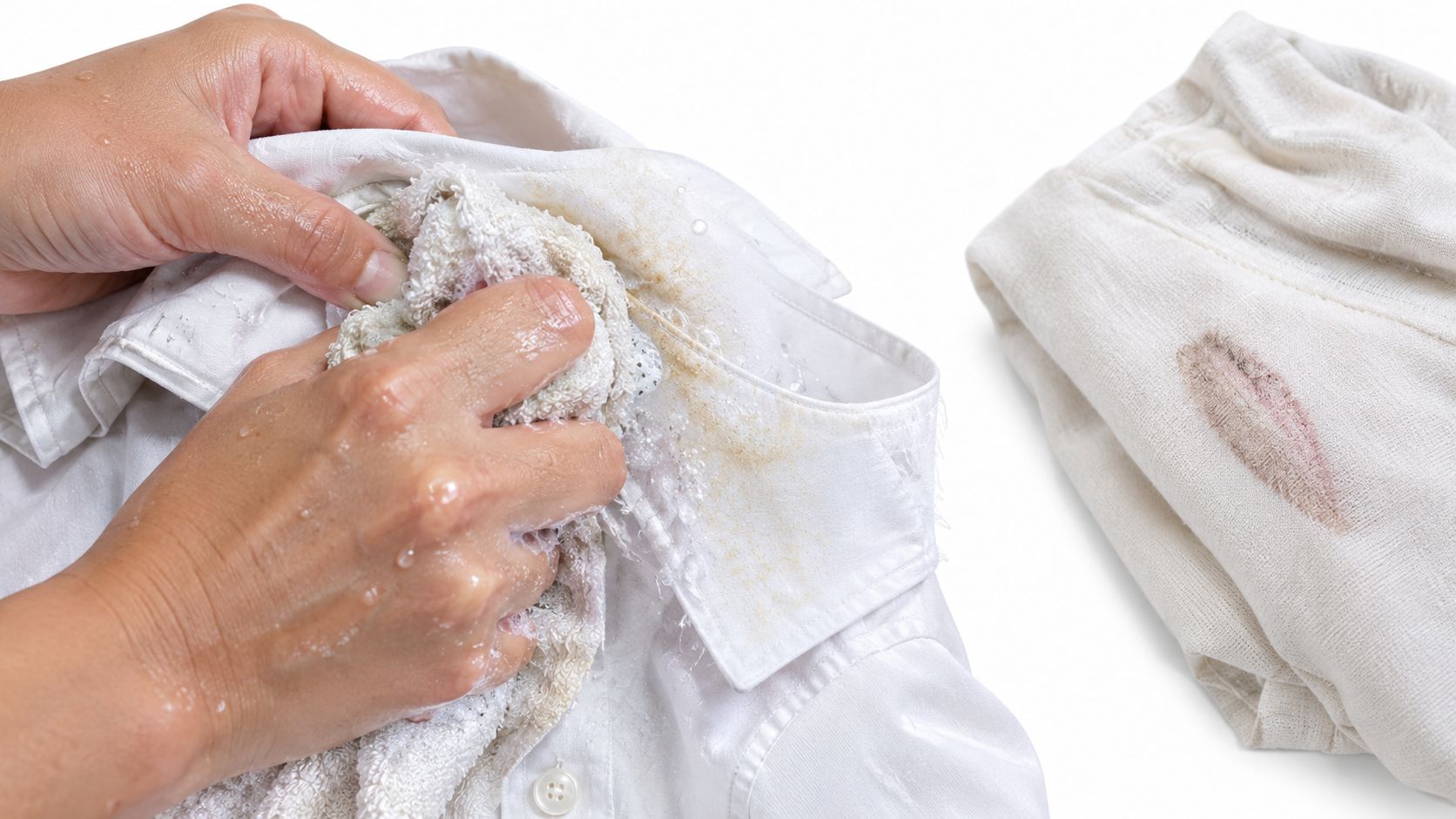
Fresh makeup usually still sits on top of the fabric. The edges look soft, the colour is easy to see, and some of the product may transfer to the cloth or cotton pad you use for treatment. Once it has set, the centre looks harder, the edge turns faint or uneven, and the stain starts to spread beyond the original spot.
Fabric damage is another warning sign. If the area around the stain turns dull, thins out, or looks bleached, the remover is probably too strong for that garment.
Some cosmetics carry a lot of pigment and need more dwell time than a quick wipe can give. That is why spot treatment sometimes works only after a proper pause, then a careful rinse and check. Vanish SG main guidance points to this kind of patient treatment, which is more useful than repeated rubbing.
Hot water too early is the first failure. It can set pigment into the fibres and make the stain harder to move. The second is rubbing too hard, which spreads the mark and can damage the weave. The third is ignoring the fabric, especially on silk, wool, and polyester blends that need gentler handling.
Fresh stains respond better to spot treatment, dried stains often need soaking, and some garments still need a second pass. Heat should only come after you have checked that the stain has lifted.
Singapore's climate adds a second problem. Sweat and sebum mix with makeup on collars and cuffs during the day, so the residue behaves more stubbornly than makeup alone. If a garment has already been washed once and still shows a shadow, repeating the same method rarely helps. Change the approach, or stop before the fabric takes more damage.
For garments that have already gone through basic attempts, the dry-cleaning process guide is a useful next read because it shows why solvent-based care can be the safer route for stubborn residue.
Some garments are poor candidates for home treatment. Silk blouses, wool pieces, lined formalwear, and traditional attire should go to professional care quickly if the stain is visible, the care label is restrictive, or your first attempt did not work.
Tumble Laundry is one Singapore option that offers stain inspection, fabric-specific treatment, and door-to-door pickup and delivery from its own facilities. That matters for workwear, event clothing, or any piece that cannot handle more rubbing, soaking, or heat.
Send the garment out if any of these apply:
• The fabric is delicate: silk, wool, cashmere, or a sensitive blend.
• The stain has aged: it was left untreated, or it has already set.
• The makeup is mixed: foundation plus sunscreen, sweat, or transfer from a long commute.
• The garment is high value: formalwear, uniforms, or sentimental pieces.
Prevention saves time, and it also keeps stains from becoming repeated problems. Put on makeup after dressing when you can, keep a blotting wipe in your bag, and choose transfer-resistant formulas on long days. In Singapore's humidity, makeup that reaches a collar or cuff can bind more quickly once sweat joins in, so small habits make a real difference.
Best habit: treat the first transfer quickly, because the first mark is always easier than the fifth.
If you want hands-on help with difficult makeup marks, fabric-specific treatment, or garments that should not be handled at home, visit Tumble Laundry and book a pickup. Handing over the piece before the stain settles is often the safer choice for delicates and anything you would rather not risk.

We make laundry days fast and easy for you. We collect, clean and deliver your laundry and dry-cleaning.
53 Ubi Ave 1 #03-43, Singapore 408934
Mon - Fri | 8:30 am–5:30 pm
Sat | 8:30 am–12:30 pm
hello@tumble.sg
+65 62554222
Whatsapp Us


