Day Curtain Fabric Guide for Singapore Homes
This is some text inside of a div block.


You're standing in front of a west-facing window in the late afternoon, holding two fabric samples up to the glass. One looks airy and soft, the other feels a little denser in your hand, and both seem fine until the sun starts pushing hard through the room and you realise the wrong choice will leave your sofa glowing, your TV washed out, and your neighbours able to see far too much once the lights go on.
That's the actual job of day curtain fabric in a Singapore home. It's not just decoration. It's the daytime layer that softens light, keeps a room feeling open, and gives you a workable middle ground between full exposure and full blackout. In a dense HDB block or condo stack, that middle ground matters because your window is doing more than framing the view, it's managing glare, privacy, and daily comfort at the same time.
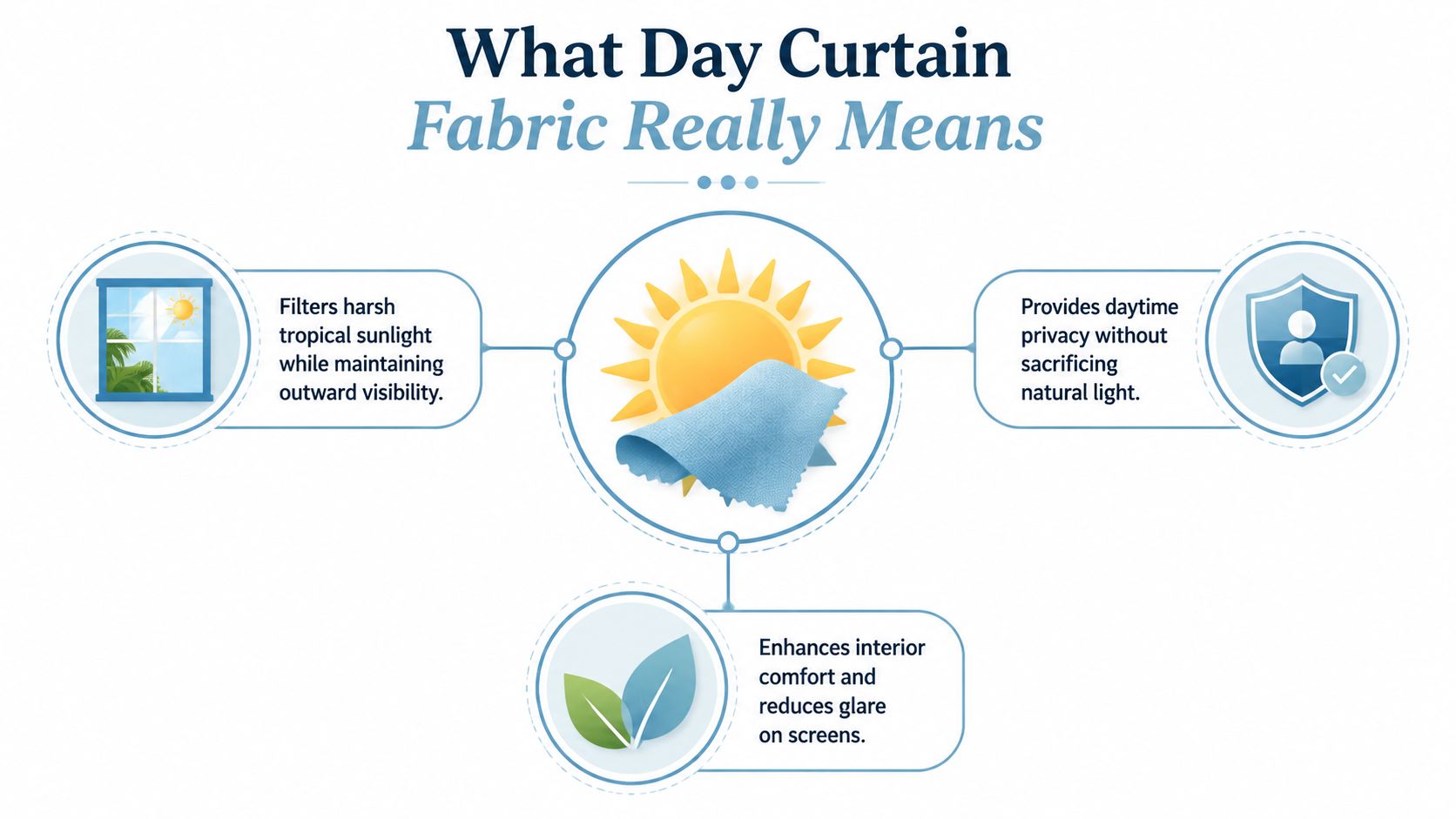
A day curtain is the light-filtering layer people use during the daytime to cut harsh sunlight without turning the room into a cave. It usually sits in front of, or alongside, a heavier night layer, so you can keep daylight, soften contrast, and still avoid feeling exposed. In Singapore, that often means pairing a translucent or semi-opaque panel with a blackout curtain, especially in bedrooms and west-facing living rooms.
The easiest way to think about it is this. If a curtain lets in glow but not full views, it's probably a day curtain. If it blocks most light and is meant for sleep, it's a blackout curtain. If it's mostly for visual softness and has very little practical screening, it may be more decorative than functional.
That difference matters because the same window often has to do two jobs. During the day, you want privacy and glare control. At night, you may need full coverage, especially in lower floors, units facing another block, or homes near a void deck.
Practical rule: if you can read a book comfortably by daylight but still feel visible from across the room, you're dealing with day curtain territory, not blackout territory.
A helpful way to sort samples is to ask three questions before you buy. How much daylight do I want to keep? How close are neighbouring windows or walkways? And how much upkeep am I willing to do? If the answers point toward soft light, moderate privacy, and easy maintenance, you're probably looking at the right fabric family.
For a quick companion read, the difference between daytime and night-time coverage is explained clearly in this guide on day curtain versus night curtain.
Sheers are the lightest option for a window that still needs some daytime privacy. They soften hard sunlight, blur the view from outside, and keep a room from feeling boxed in, which is useful in Singapore flats where neighbouring blocks can sit close to the window line and afternoon glare can be strong.
Voiles sit in the same family, but they usually feel a little more refined and a touch less transparent. If you've handled breezy blouse fabric choices made from cotton voile, the effect is similar, a soft surface, gentle fall, and enough openness to let daylight stay useful. The trade-off is straightforward. A lighter weave gives you more glow, but less screening once the room lights are on.
Linen has a relaxed, textured surface that many homeowners like because it reads calm rather than shiny. It hangs with natural body, but it also creases easily, especially after washing or after repeated opening and closing. That crease-prone behaviour is part of the appeal for some people, although it can be frustrating if you want a crisp finish every day.
Linen-look fabrics try to keep that visual texture while making the curtain easier to live with. In Singapore, that often fits rooms where you want a breathable, softened look without constant steaming. If you want the linen appearance but less maintenance pressure, this is usually the more practical direction.
Cotton feels familiar, matte, and easy to read in a room. It can work well for day curtains when you want a softer result than polyester alone often gives, especially if the weave is balanced and not too tight. Pure cotton can feel more natural in hand, but it also asks for more care after washing because shape, shrinkage, and wrinkles tend to show more clearly.
Cotton-polyester blends give a middle ground. The cotton side keeps the surface pleasant, while the synthetic side helps the panel hold its form in humid air. For busy households, that shape retention often means the curtain still looks tidy after repeated cleaning instead of starting to look limp.
Polyester is common for a reason. A Singapore-facing curtain specification may list 100% polyester, and technical sheets for higher-performance day curtains can show washable construction at 60°C plus abrasion resistance rated >100,000 Martindale. That kind of build helps when curtains need regular handling, cleaning, and rehanging.
Polyester also tends to recover its shape better than many natural fibres after a humid day. It is not as airy as linen, but it usually behaves better in real apartment use, where windows get opened, aircon cycles change, and panels are tugged often.
Silk day curtains are less common in everyday flats, but they do come up in rooms where homeowners want a softer sheen and a more delicate hand. The fabric can look elegant in filtered light, yet it is also more sensitive to heat, moisture, and cleaning method, which matters in a tropical climate where humidity works on fibres day after day. If silk is part of your shortlist, it helps to treat it as a low-tolerance fabric and read care instructions carefully, including guidance from this silk washing guide.
Silk-look fabrics try to capture that smoother visual finish without the same care burden. They can be a better fit for Singapore homes that want a polished look near the window but also need something less fussy for routine maintenance.
A home in Singapore can make a day curtain look completely different from a showroom sample. Close HDB blocks, condo-facing windows, and strong west-side glare change how fabric reads in real use, so colour alone is a weak way to compare options. Start with GSM, washability, and wear resistance, then judge how each fabric will behave in your window, not just how it looks on a display rack.
GSM means grams per square metre, and it gives a practical read on how light or substantial a curtain will feel. For day curtains, 60 to 90 GSM is common for airy sheers, 90 to 150 GSM suits linen and linen-look fabrics, and 150 to 200 GSM is more structured and decorative (GSM guide for curtain fabric weight). Lower GSM usually means more flow and more daylight passing through. Higher GSM brings more body, heavier folds, and stronger visual screening.
Heavier is not automatically better. A low-GSM sheer can work well in a bright living room where you want light to spill in, while a thicker panel may suit a room that needs more calm around the window. In a tropical apartment, the better question is how the fabric sits against your window size, your sightlines, and the amount of afternoon sun the room gets.
A day curtain in Singapore is often exposed to dust, humidity, and frequent handling. That makes washability matter more than the showroom description suggests. Some polyester curtain fabrics are designed for 60°C washing and high abrasion resistance, which helps them hold up when they need regular cleaning and rehanging (Gardinia product information). That kind of specification matters in flats near busy roads or in rooms where the curtains pick up grime faster than expected.
Abrasion resistance also tells you how well the surface will cope with repeated touch points, pulling, and movement over time. A Martindale rating above 100,000 is a strong sign that the fabric can handle that kind of use. Curtains do not just hang there untouched. They get drawn, adjusted, cleaned, and rehung, often over years, which is why the fabric needs to stay presentable through normal apartment life. If you want a quick reminder on what the symbols mean before you buy, use care-label reading for curtains rather than relying on product photos or marketing phrases.
Day Curtain Fabric GSM at a GlanceFabric typeTypical GSMDrape feelLight filteringCleaning notesSheer60 to 90 GSMVery light, fluidHigh daylight transmissionUsually needs gentle careLinen or linen-look90 to 150 GSMSoft body, natural hangModerate filteringMay wrinkle more after washingStructured decorative panel150 to 200 GSMFuller, firmer foldsBetter visual coverageCheck labels carefullyPolyester blendVaries by weaveStable, adaptableFrom light to moderateOften easier to wash
GSM does not tell the whole story. Weave matters too, because two fabrics with similar weight can behave differently at the window if one has a looser construction and the other is tightly built. A loose weave usually lets in more light and air, while a tighter weave gives a steadier look and more visual privacy from nearby blocks. That is the trade-off to watch in Singapore homes, where windows can sit close to another tower or face a corridor with direct sightlines.
Day curtain fabric works beautifully in Singapore when the trade-offs are understood. The wins are real. Sheers and voiles turn harsh tropical light into a soft glow, breathable linens bring texture to a humid room, and polyester blends can keep their shape after a lot of opening, closing, and cleaning. In a home that gets strong daylight for most of the day, those benefits make the room feel calmer without making it feel sealed off.
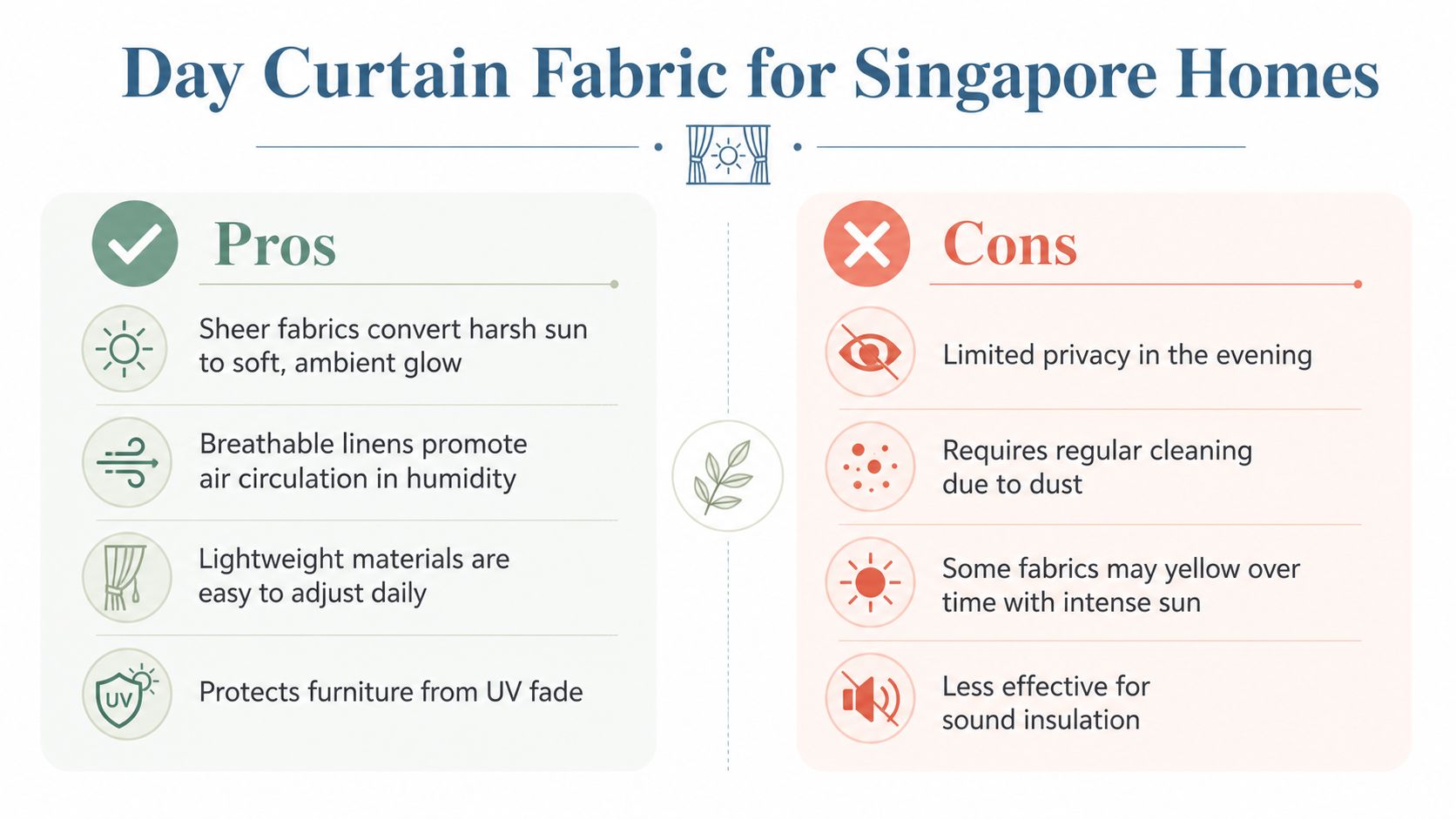
The biggest advantage is daylight control without over-darkening the room. That's valuable in Singapore homes where natural light is strong and can bounce off pale walls, tiles, and glass furniture. For living areas, a good day curtain keeps the room bright enough for reading or conversation while reducing the hard edge of the sun.
There's also a practical comfort angle. A fabric that softens glare can make screens more usable and interiors feel less harsh in the middle of the afternoon. For many people, that's the difference between drawing the curtain fully shut and keeping it lightly closed all day.
Privacy is the first limitation to face. Research on net curtains shows that some fabrics can increase daylight factor significantly at distances beyond 3 metres from the window, which is useful for brightness but also shows why these fabrics are chosen for light transmission rather than strong privacy (net curtain research). In high-density estates, that means a curtain can look ideal in the afternoon and still feel too open once the lights switch on.
Humidity and cleaning are the second issue. Natural-looking fabrics can crease, sag, or pick up dust faster than owners expect, and darker colours can show the effects of tropical sun over time. A steamy climate doesn't just test the fabric visually, it also tests how often you're willing to care for it.
A day curtain is a compromise fabric. The right one makes the compromise feel deliberate instead of temporary.
For a deeper cleaning reference, steam cleaning curtains is useful when dust and odour start to build up but the fabric still deserves a careful approach.
Room function matters more than fabric fashion. A day curtain that feels perfect in a living room may be wrong in a bedroom, and a beautiful sheer that suits a front-facing lounge can fail completely in a work corner where glare lands on a laptop screen. In Singapore, the window's orientation and your neighbours' distance should guide the choice as much as the colour card does.
For most living rooms, especially west-facing ones, breathable polyester blends or linen-look fabrics are the safest starting point. They filter glare without making the room feel gloomy, and they hold a more controlled shape than very light sheers. If your sofa faces the window, this matters because the curtain has to manage both comfort and appearance at the same time.
A very light sheer can work if privacy isn't a concern and the room gets too little daylight. But if you regularly watch TV in the afternoon, a slightly denser weave will save you from constant squinting and constant adjustments.
Bedrooms usually need layering. A day curtain alone may be enough for soft morning light, but many Singapore bedrooms work better with a separate blackout layer so you can sleep properly when the sun shifts or the room faces another block. If your bed is close to the window, the day layer should be chosen for calm light, not for full darkness.
Semi-opaque voiles or cotton blends make sense here because they give gentler light while still looking soft during the day. If privacy is tight, the blackout layer should do the heavy lifting, not the day curtain.
A study needs glare control more than drama. Fabrics that reduce brightness without turning the room dim are the right target, especially if your desk is near a bright window. In a compact flat, even a small amount of excess glare can make a screen uncomfortable after an hour or two.
Use a fabric with enough body to diffuse light, but not so much weight that the room feels shut in. The aim is visual relief, not darkness.
Kitchens and service yards call for practicality first. Lower-GSM synthetics are easier to keep clean, and they usually make more sense near moisture, cooking residue, and frequent handling. If the curtain is likely to catch splashes or smells, washable materials are the sensible route.
For homes that need a deeper clean from time to time, musty curtain smell solutions are worth checking because odour often shows up before visible dirt does.
A day curtain that is cared for in small, regular steps keeps its shape and light-filtering finish much better than one that is left alone until it looks tired. Dust works its way into folds, Singapore humidity can leave fabric feeling stale, and sunlight slowly changes how the surface reads in the room. In an apartment where windows are opened and used every day, that slow build-up shows up sooner than many homeowners expect.
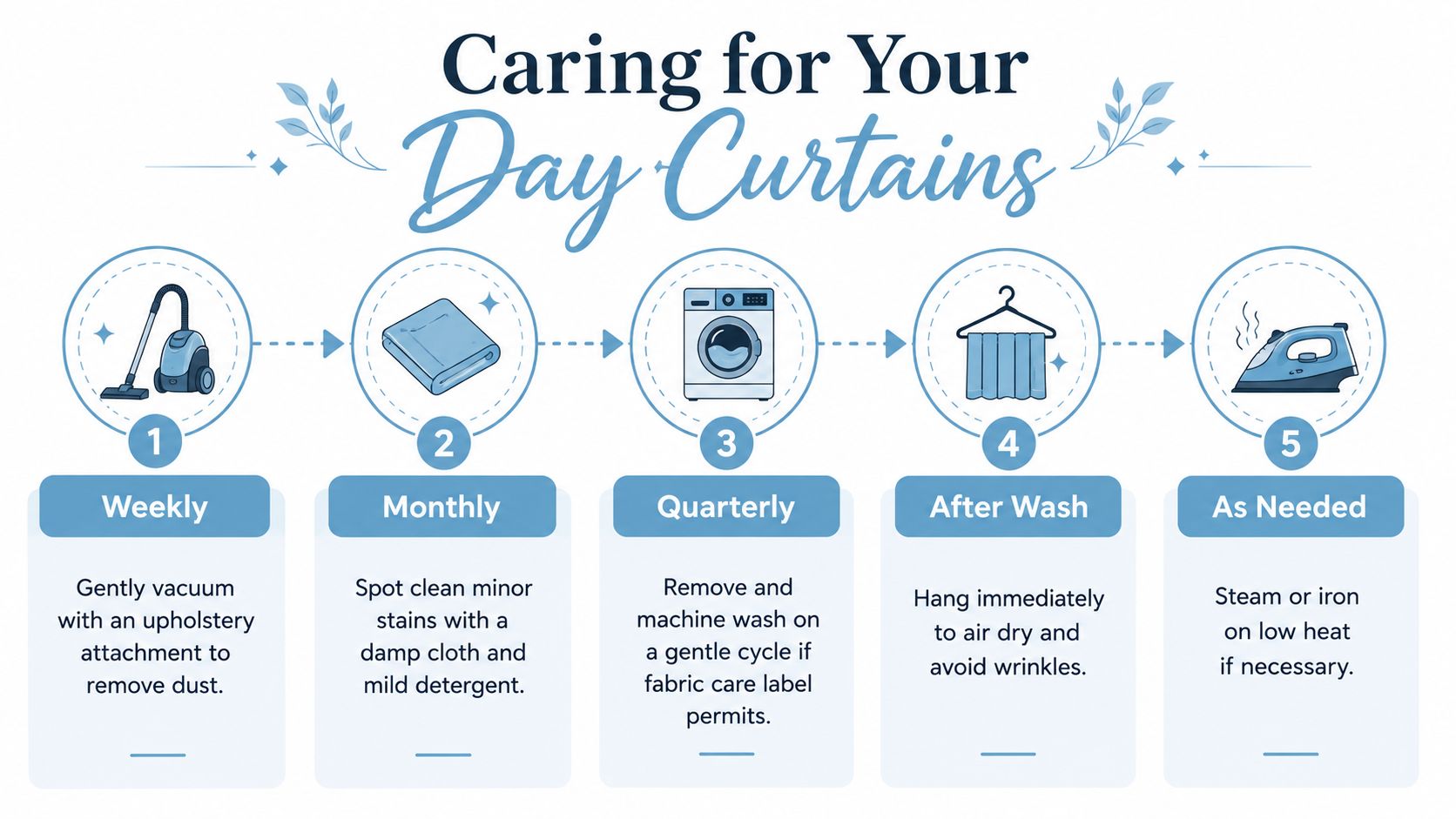
Begin with gentle vacuuming using an upholstery attachment. That lifts surface dust before it settles deeper into the weave, which is a bit like brushing grit off a shirt before it gets rubbed in. For small marks, use a damp cloth with mild detergent, then let the spot dry fully before moving the panel again.
Fabric construction changes how far you can go with home care. Polyester blends usually handle machine washing better than natural fibres, so the care label should guide whether a gentle cycle is reasonable. Untreated linen needs more caution because it wrinkles easily and can lose its crisp fall if it is washed too aggressively. Curtain care labels remain the clearest guide when the fibre content or finish is not obvious.
If the fabric is a lighter weave, handle it as though it were a fine shirt rather than a towel. That means less friction, cooler water where suitable, and careful drying so the panel does not shrink or hang unevenly once rehung.
Some curtains are awkward enough that home care stops being practical. Tall panels, lined curtains, and tracks that are not easy to dismantle are good candidates for takedown and rehanging by a professional. The same is true when the fabric has yellowed, picked up odour, or started to look dulled by long exposure to tropical light and indoor moisture.
A professional window cleaning service can make sense for homes that are already arranging broader window maintenance, especially in units where exterior access is part of the same cleaning plan. For curtain care specifically, Tumble Laundry offers curtain cleaning with optional takedown and rehanging, and the service starts from $100 with a 5-day standard turnaround via in-house facilities and islandwide pickup and delivery. If the curtain is difficult to remove, or if the folds have started to hold a stale smell, that is usually the point where a professional handoff is more efficient than trying to push a home clean further.
Simple rule: if removing the curtain feels harder than cleaning the curtain, it is probably time to book help.
A young couple in a west-facing condo doesn't need one fabric for every room. They might choose a sheer linen-look panel for the living room because it softens afternoon brightness, then use a lined day curtain in the bedroom so the space stays calm by day and properly dark at night. In the study, they pick a mid-weight fabric that cuts screen glare without closing the room in.
A few years later, instead of wrestling tall tracks and dusty folds themselves, they book curtain takedown and cleaning through Tumble Laundry and fold that into their normal home-care routine. That's the rhythm to aim for, one window, one room, one fabric, one cleaning plan.
If you're comparing options for your own flat, start with the window that bothers you most in the afternoon and choose a day curtain fabric that matches its light, privacy, and cleaning needs. If you want a simpler handoff for cleaning and rehang, Tumble Laundry offers curtain care with islandwide pickup and delivery in Singapore, so you can refresh the panels without pulling apart the track yourself.

We make laundry days fast and easy for you. We collect, clean and deliver your laundry and dry-cleaning.
53 Ubi Ave 1 #03-43, Singapore 408934
Mon - Fri | 8:30 am–5:30 pm
Sat | 8:30 am–12:30 pm
hello@tumble.sg
+65 62554222
Whatsapp Us


