Choosing Cloth to Cover Sofa That Lasts in Singapore
This is some text inside of a div block.

The sofa looks fine when you bought it. Then Singapore's humidity gets involved. A drink leaves a ring, a child's snack finds its way into the seams, pet hair catches on the weave, and the cover starts shifting every time someone sits down. If you've chosen the fabric by colour alone, the living room can become a cycle of washing, slow drying, trapped smells, and hurried re-fitting.
The right cloth to cover sofa should match how your household uses the sofa, how much drying space you have, and whether you'll wash the cover regularly or arrange professional cleaning. A beautiful loose throw may suit a lightly used guest room, while a tightly woven removable cover makes more sense for a family sofa in an air-conditioned HDB flat. This practical guide brings those decisions together, alongside simple home organisation and cleaning habits, so the cover supports daily life rather than creating another chore.
A sofa beside an open balcony door faces different demands from one in a rarely used guest room. Children may climb onto it after outdoor play, a dog may nap on the same cushion each afternoon, and a drink can reach the seams before anyone notices. A loose natural-fibre cover may feel comfortable, yet absorb spills, retain moisture, and dry slowly. The result is repeated washing without a reliably fresh sofa.
Singapore's humidity makes the care routine part of the fabric choice. Sofas are the largest segment of the upholstered-furniture market, so covers are not merely decorative additions. They form part of an ongoing furniture-maintenance cycle as noted by Deep Market Insights. For a busy household, the useful question is whether the cover can be cleaned, dried, and refitted before the sofa is needed again.
A raised pile can hold dust and feel unclean soon after vacuuming. A fitted cover that requires dismantling the sofa may look tidy but becomes impractical if the household needs frequent washing. Pale fabric in strong afternoon sun can also lose its fresh appearance sooner than a mid-tone, tightly woven alternative.
Practical rule: Choose the care method before choosing the colour. If you will not realistically remove and wash a cover, choose a fabric and format that can tolerate professional extraction.
The cloth also changes how the sofa feels. Breathable fabric is often more comfortable against bare legs, while dense synthetic material may feel warmer. The trade-off is drying time. Breathable cloth can take longer to dry after washing, especially where airflow is limited.
In a humid home, drying time is part of hygiene, not just convenience. Damp fabric with poor airflow can develop persistent odours, while mildew becomes harder to control. Plan where the cover will dry before buying it. A cover that needs weekly washing should have enough ventilation and space to dry fully.
The practical decision comes down to agreement between fibre, weave, fit, attachment, and cleaning method. A washable cover suits a household prepared to remove it regularly. A less washable option may work when professional cleaning is realistic. Pair that choice with simple home organisation and cleaning habits, and the cover supports daily life instead of adding another recurring chore.
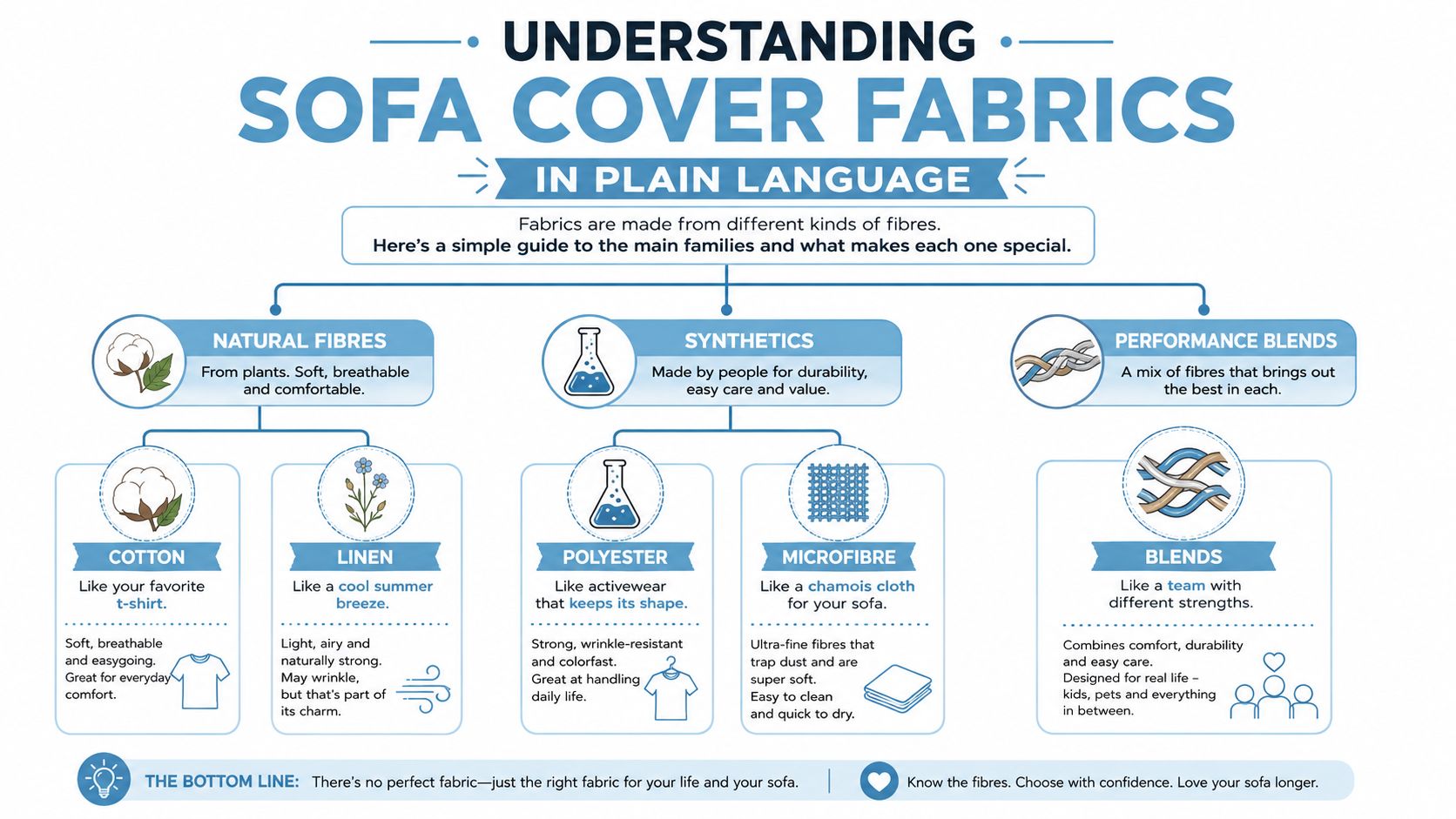
Start with the fibre family. Natural fibres such as cotton and linen feel familiar because they behave somewhat like clothing fabrics. Cotton resembles a sturdy T-shirt, soft and breathable, while linen has a dry, textured hand and a more relaxed appearance. Synthetic fibres such as polyester and microfibre behave more like technical equipment. Polyester is resilient and generally easier to live with, while microfibre uses very fine fibres to create a smooth, closely packed surface.
Performance blends combine fibre types to balance comfort and resistance. The precise result depends on the blend, weave, finish, and construction, so don't rely on the word “performance” alone. Ask how the cover should be cleaned, whether it can be removed, and what happens after repeated washing.
GSM means grams per square metre. It gives you a rough sense of fabric weight, not a complete durability rating. Singapore market commentary places residential upholstery fabrics commonly in the 250 to 450 GSM range for a balance of comfort, durability, and ease of upholstering according to Deep Market Insights. Use that range as a starting point, then inspect the weave and care instructions.
Weave tightness describes how closely the threads are arranged. A tighter weave leaves fewer obvious openings for grit, claws, and loose hair to enter. It can also make the surface easier to vacuum. A loose weave may look airy and casual, but it can snag or collect debris more readily.
Pile height refers to raised fibres on the surface. A low pile is usually simpler to vacuum and less likely to show crushed seating marks. A higher pile can feel plush, but it demands more attention and may hold onto hair and dust.
Before choosing cotton because it feels breathable, check whether you can dry it properly. Before choosing microfibre because it feels practical, sit on a sample and test whether the texture feels comfortable in warm weather. For additional guidance on surface wear and why fabrics pill and how to prevent it, look beyond the colour card and inspect the fabric construction.
The format determines how useful your cloth to cover sofa will be. A good fabric in the wrong format still becomes frustrating. The best choice depends on whether you need quick removal, a custom fit, strong allergen control, or a temporary protective layer.
FormatBest ForWashabilityFitSlipcoverRenters, families, pet ownersUsually removable and relatively easy to washForgiving, but may shiftThrowTemporary protection, occasional useSimple to remove and cleanLoose and prone to movementFitted coverFrequent hosts, style-conscious householdsDepends heavily on constructionTailored, but harder to removeAnti-allergen encasementAllergy-prone adults and carefully managed homesWashable only if designed for regular removalClose-fitting and protective
A slipcover is the practical middle ground. It protects the sofa, can usually be removed without specialist work, and accommodates small differences in shape. Its weakness is movement. Unless it has elastic edges, ties, or a reliable grip system, children and pets can pull it out of position.
A throw works as a low-commitment trial. Put one over the seat most exposed to spills and you'll quickly learn whether your household uses a cover. The trade-off is constant adjustment, loose folds, and limited protection for arms and back cushions. It's a cover layer, not a complete cleaning strategy.
A fitted cover gives the cleanest appearance. It's suitable when the sofa has a straightforward shape and appearance matters as much as removability. Curved arms, separate cushions, and tight corners can make fitting more complicated, so confirm the return policy and measure carefully.
An anti-allergen encasement is the most specialised option. It needs a close fit and a fabric that can be washed or cleaned according to a repeatable routine. If removing it is so difficult that you avoid doing so, the theoretical benefit disappears. For most homes, a tightly woven removable slipcover is more practical than a complex encasement that remains on the sofa indefinitely.
Fabric selection should follow the household's hardest routine, not its easiest day. In a Singapore home, that usually means considering humidity, air movement, children, pets, and whether the cover will be washed weekly or sent for professional cleaning. A quiet sofa used occasionally can accept more texture and care. A family-room sofa needs fabric that tolerates food, friction, and repeated handling without becoming a constant chore.
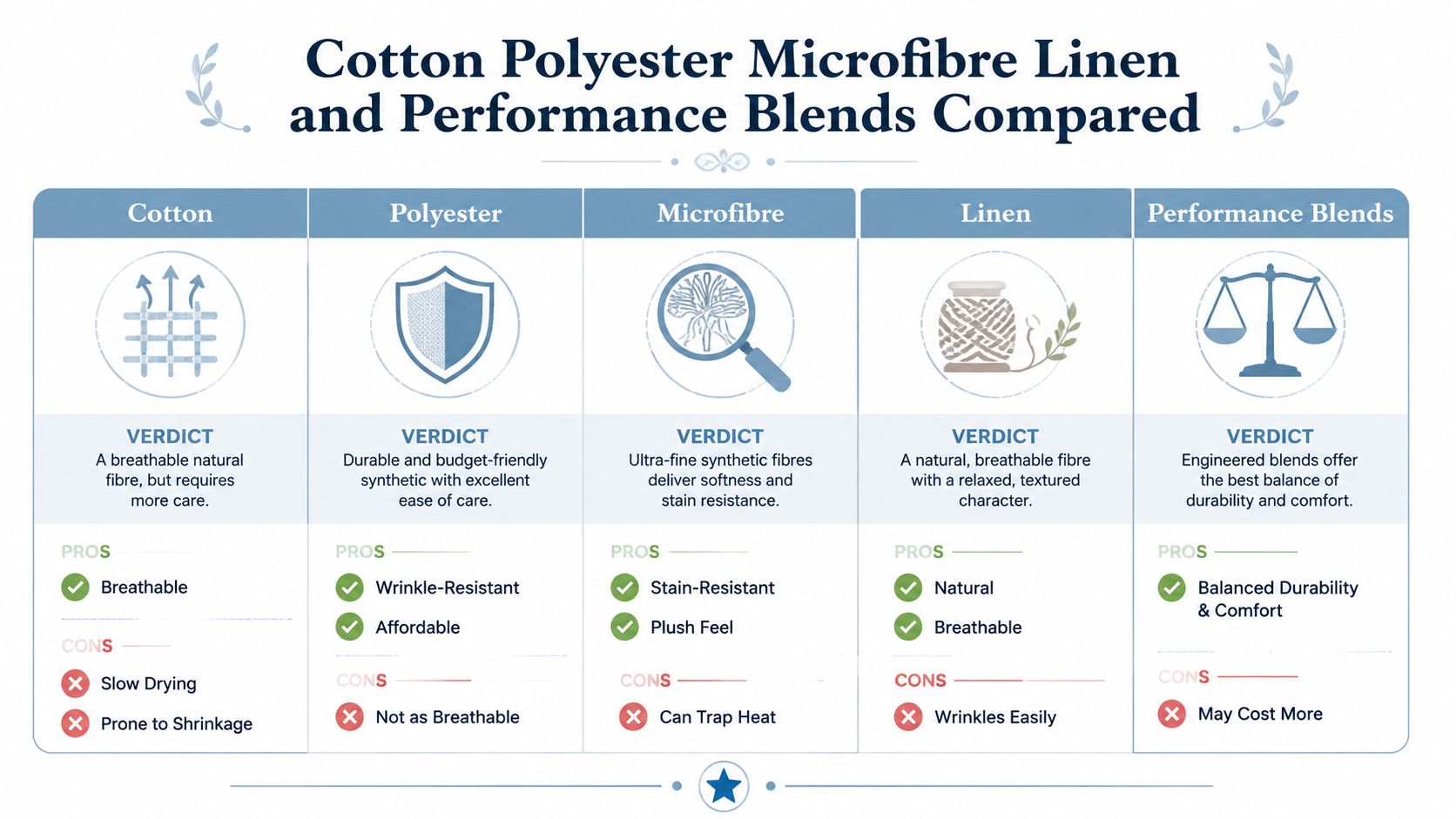
Cotton feels breathable and familiar, which suits warm rooms and direct contact with the cover. It works well for a removable slipcover in a lightly or moderately used room, particularly when the design allows easy washing. In humid conditions, however, cotton may dry slowly, and poor laundering can cause shrinkage. Its absorbent surface can also show spills quickly.
Verdict: Choose cotton when comfort and a natural hand matter more than fast drying. A cotton blend is generally easier to manage than a delicate pure-cotton cover, especially if washing is part of the weekly routine.
Polyester is a practical choice for daily use. It resists wrinkling, handles regular movement, and usually dries more readily than absorbent natural fibres. The surface may feel less airy against bare skin in a warm room without strong air movement, but that compromise often suits a busy family sofa.
Verdict: A tightly woven polyester cover is a sensible default when straightforward care and a stable appearance matter more than a natural feel.
Microfibre has a smooth, closely packed surface with a soft, plush feel. It can handle small spills well when they are treated promptly, although the care instructions still control what cleaning methods are safe. Some households like its suede-like touch. Others find it warmer or more synthetic than cotton.
Pet owners should inspect the weave before ordering. Hair can cling to some surfaces, while claws may catch on a loose or open weave. These pet-friendly fabric tips provide useful guidance on hair, snagging, and everyday wear.
Verdict: Pick microfibre for a busy sofa where softness and prompt stain response matter. Request a fabric sample first, because texture and hair retention vary considerably.
Linen offers a natural, premium appearance and a lightly textured surface. Pure linen creases readily and may look untidy after ordinary sitting. A blend makes that texture more forgiving, but linen-rich covers still need careful laundering and may not suit a household that expects frequent washing with little preparation.
Verdict: Use a linen blend in a lower-pressure living room or where visual texture is a priority. Follow the care label closely, and apply the same careful handling principles used when you clean linen garments.
Performance blends combine comfort with resistance to stains, moisture, or wear, depending on the specific construction and treatment. They often suit families, pet owners, and sofas used heavily every day. The trade-offs can include a higher cost, a less natural feel, or cleaning instructions that require professional service.
Verdict: Shortlist a performance blend when one cover must handle several competing demands. Ask the supplier exactly what “performance” covers for that fabric, then confirm whether it can be washed weekly or needs professional cleaning.
A cover fails most often because the measurements describe the visible cushion rather than the sofa's actual working shape. Use a flexible measuring tape, paper, and your phone camera. Photograph the sofa from the front, side, and back before ordering, especially if the arms curve or the back slopes.
1. Seat width: Measure across the usable seating area, then measure the full outside width if the cover must wrap around the arms. Record both figures rather than guessing from the cushion label.
2. Seat depth: Measure from the front edge to the back cushion or frame. Include the depth beneath any back cushion that the cover must tuck behind.
3. Back height: Measure from the floor or base to the highest point of the back. If the cover will sit over loose back cushions, measure with those cushions in their normal position.
4. Cushion thickness and shape: Note whether cushions taper, have piping, or curve at the corners. A flat rectangular measurement won't describe a shaped cushion accurately.
For an L-shaped sectional, measure each section separately. Record the chaise length, the internal corner, and the outside edges. Don't assume a universal sectional cover will match both sides. Recliners need clearance around the moving footrest and mechanism, while curved arms often need stretch fabric or made-to-measure panels.
Measure the sofa twice, then compare the numbers with photographs. A cover maker can correct an unclear photo more easily than an incorrect dimension.
Elastic hems work well around a simple sofa base. Ties are useful where the sofa has visible anchor points, but they need to be positioned so children and pets can't catch them. Foam inserts tucked into the gaps create a firmer appearance, though they may need replacing or repositioning after washing.
Non-slip grip strips can help on smooth upholstery, but test them on an unseen area first. Avoid any attachment that leaves adhesive residue or restricts a recliner's movement. Singapore homes also need a delivery check. A cover that can't pass through a narrow HDB doorway, condo corridor, or service lift is difficult to wash away from home, even if the sofa itself fits perfectly.
A sofa cover lasts longer when dry soil is removed before it becomes a wet-cleaning problem. Use an upholstery attachment on the vacuum and work across the seat, seams, piping, and the gap between cushions. Weekly vacuuming is a practical baseline for a heavily used sofa, while pet owners or allergy-sensitive households may need a more frequent routine.
Deal with spills immediately. Lift solids with a spoon, blot liquids with a clean cloth, and test any cleaning solution on a hidden area. Rubbing can push the stain deeper or roughen the surface, especially on microfibre and raised-pile fabrics.
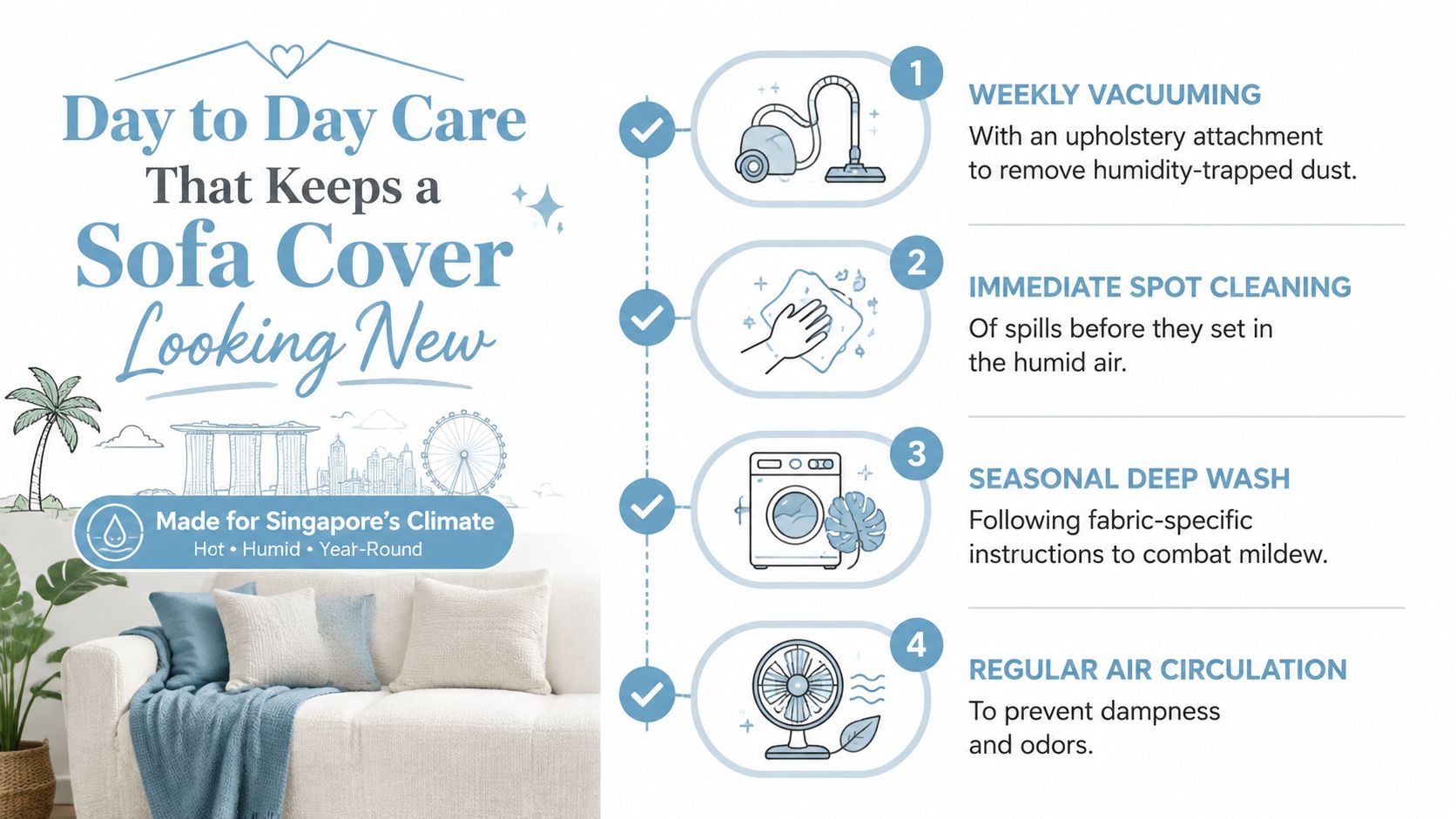
Machine washing is suitable only when the label permits it and the cover has enough room to move without being crushed. Cold water can be a safer request for vulnerable fabrics, but it won't correct every stain. Remove the cover promptly after the cycle and dry it with strong airflow. Never refit a cover while the seams or inner side still feel damp.
Hand washing can protect a delicate linen-rich or shaped cover, but it takes more time and needs careful rinsing. A damp cover folded into a basket is likely to develop odour, particularly in a humid flat with limited drying space.
Professional cleaning makes more sense after a pet accident, a deep musty smell, or staining that has reached the foam or backing. Fabric sofa cleaning in Singapore commonly begins with material identification, pre-vacuuming, stain treatment, and hot-water extraction. The extraction process injects cleaning solution and removes it promptly, reducing overwetting of internal padding. A well-extracted sofa is commonly touch-dry in about 4 to 8 hours and fully dry within a day, as described in this Singapore upholstery cleaning guide.
If water has reached the sofa frame or padding, ordinary cover washing isn't enough. A specialist explanation of how to fix water damage to furniture can help you recognise when structural drying is needed.
For a broader upholstery-cleaning routine, see this guide to clean upholstery properly.
A removable cloth cover doesn't automatically make a sofa better for allergies. Singapore health guidance identifies soft furnishings as important dust-mite reservoirs and recommends measures including HEPA vacuuming, damp dusting, frequent curtain washing, and reducing upholstered furniture where possible in guidance from NHG Health. The cover only helps when you can remove it, wash or clean it consistently, and dry it completely.
A loosely woven throw can add another textile surface without protecting the sofa beneath it. Food particles, skin flakes, and dust can settle in its folds, while the underlying upholstery remains difficult to clean. That isn't a useful arrangement for a household managing asthma, eczema, or an infant's sensitive environment.
A tightly woven, removable cover can be reasonable when the household has a realistic washing routine and enough airflow for complete drying. Pair it with HEPA vacuuming, humidity control, and fewer unnecessary soft furnishings. NHG also notes that dust mites aren't killed by detergents alone, so washing must sit within a wider control plan rather than act as the only intervention.
Hospital data from Singapore adds an important qualification. In a heavily cleaned environment, vinyl-covered sofas and tightly encased soft furnishings were associated with lower allergen levels as discussed in the NHG allergy guidance. That doesn't make vinyl the right answer for every living room. It does show that an easy-wipe surface can be more practical than fabric when cleaning frequency is high and allergen control is the priority.
For allergy-prone homes, choose the surface you can maintain consistently, not the material that sounds healthiest.
If a cloth cover repeatedly stays damp, gathers visible dust, or gets washed too rarely because removal is difficult, it may be the wrong answer. A wipe-clean or vinyl-style covering can reduce the number of fabric reservoirs, while a removable performance cover can preserve a softer feel when the household will maintain it. If mould has already appeared on textiles, address the source and use this guide on removing mould from clothes rather than covering the affected area.
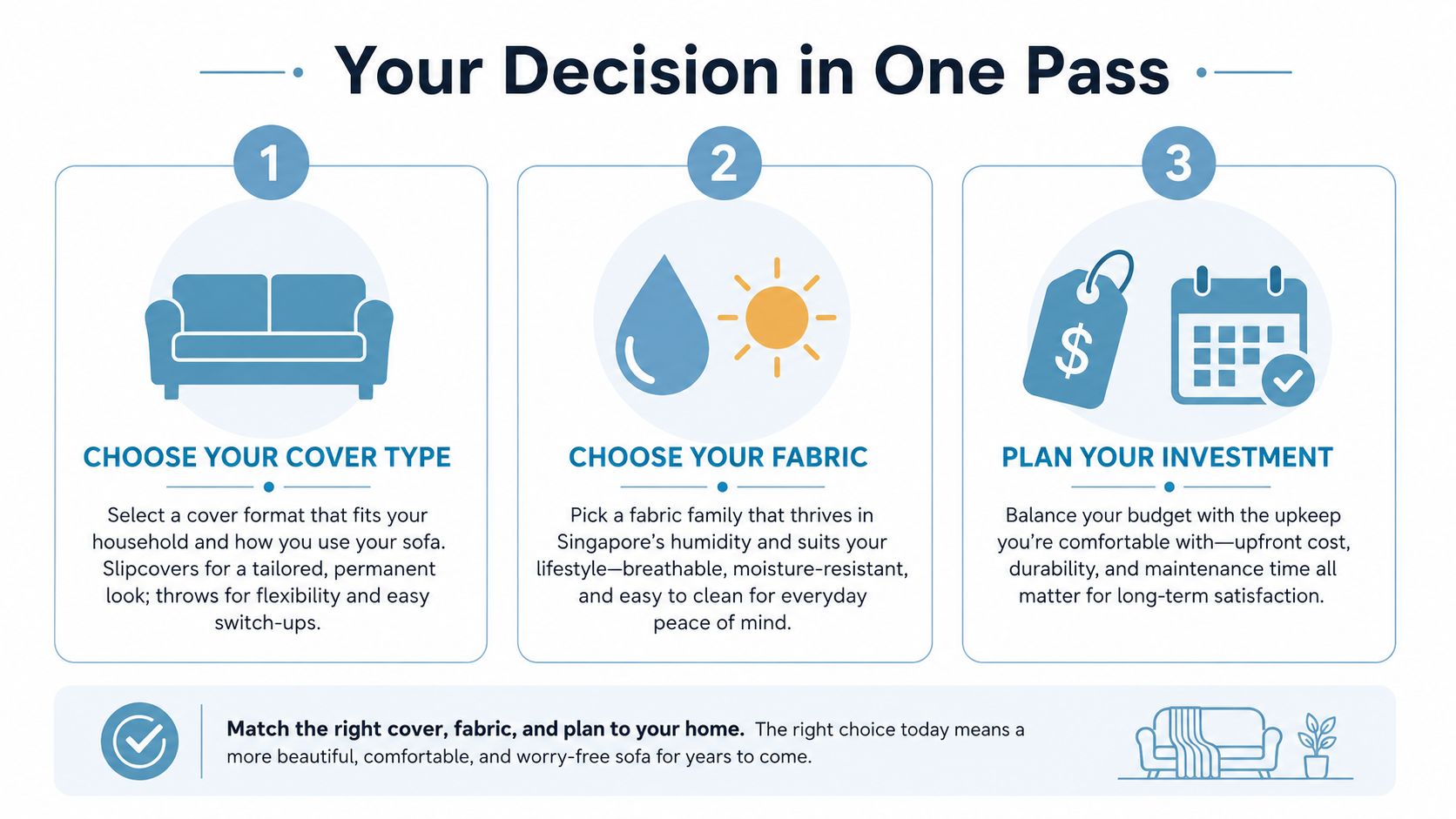
A cover may look right in the showroom and still fail at home. The workable choice comes down to three questions: who uses the sofa, what can you wash, and how much care will you provide? Reject any option that fails one of those tests, even if its fabric looks excellent in a sample book.
• Pet owners: Choose tightly woven polyester, microfibre, or a performance blend with a removable slipcover. Vacuum the surface and seams regularly. A loose throw is poor protection on its own because claws, hair, and spills can reach the upholstery.
• Families with toddlers: Prioritise a washable cover with secure elastic, ties, or grip support. A practical synthetic or performance blend usually handles repeated cleaning better than a delicate linen-rich fabric.
• Allergy-prone adults: Use a tightly woven removable cover only when you can wash and dry it consistently. Pair it with HEPA vacuuming and humidity control. If soft furnishings are already difficult to maintain, a wipe-clean surface may suit the household better.
• Condo renters: Select a forgiving slipcover that can pass through the doorway and come off without specialist alterations. Measure both the sofa and the access route before ordering.
• Frequent hosts: A fitted cover or refined performance blend keeps the room looking neater through regular use. Keep a removable seat layer ready for spills, and arrange professional cleaning when marks reach the upholstery beneath.
Singapore's upholstered-furniture sector is growing, but the household lesson matters more than the market forecast. A cover extends a sofa's useful life only when its format, fabric, and care routine fit the home.
Singapore's textile waste challenge supports that approach. The National Environment Agency reported 211,000 tonnes of textile waste in 2023, with 2% recycled, while later recovery efforts expanded collection infrastructure as documented by the National University of Singapore's circularity research. Repairing, re-covering, washing, and reusing a suitable cover can be more practical than replacing textiles whenever the sofa looks tired.
Choose a cover that will still work after spills, humid afternoons, and repeated sitting. This week, measure the sofa, check its fibre and care label, then decide whether home washing or professional cleaning is realistic before buying.
For sofa seat covers and other household textiles, Tumble Laundry offers wash-and-fold options, while its dry-cleaning service includes sofa cover cleaning. Pickup and delivery can help when drying space is limited or a demanding care label makes home washing impractical.

We make laundry days fast and easy for you. We collect, clean and deliver your laundry and dry-cleaning.
53 Ubi Ave 1 #03-43, Singapore 408934
Mon - Fri | 8:30 am–5:30 pm
Sat | 8:30 am–12:30 pm
hello@tumble.sg
+65 62554222
Whatsapp Us


