Cleaning Carpet Service Guide for Singapore Homes
This is some text inside of a div block.

You're probably looking at a carpet that looks fine from far away, but feels a little dull when you walk across it barefoot. In a Singapore flat, that usually means more than a few crumbs. It means dust in the fibres, fine grit brought in from shoes, and moisture that never quite behaves the way it should in a humid home.
That's why a cleaning carpet service isn't just about making the surface look brighter. It's about dealing with what vacuuming can't reach, while keeping drying time realistic for HDBs, condos, offices, and shared spaces. In a city where cleanliness expectations stay high and indoor living is the norm, the practical question isn't whether carpets get dirty, it's how to clean them without leaving them damp, sticky, or hard to maintain.

If you're trying to decide whether to book a service, compare methods, or understand what the technician will do on the day, this guide keeps things practical. It starts with the basics of how carpets hold dirt, then moves into what happens during a visit, what drying really looks like in Singapore humidity, and how to choose a provider without getting pulled in by vague promises. For a broader home-maintenance context, you can also look at Tumble Laundry, which offers home cleaning services alongside other fabric care options.
Practical rule: if a carpet holds dust, scent, or a slightly tired feel even after vacuuming, surface cleaning alone usually isn't enough.
A common Singapore scene goes like this. The sofa is clean, the coffee table is tidy, but the carpet in the living room still looks a bit flat, and the bedroom runner seems to collect dust no matter how often you vacuum. In a high-rise home, that usually happens because particles settle into fibres faster than people expect, especially when family members, visitors, and indoor airflow all share the same limited space.
Professional carpet care matters because carpets act a bit like quiet storage for everyday debris. They catch soil from shoes, shed fibres, pet dander, and tiny bits of moisture that don't always leave the room once they're inside. Weekly vacuuming helps, but it doesn't always lift what has worked down below the top layer.
For Singapore households, the bigger issue is not just appearance. The cleaning services market here is large, with about S$3.6 billion in operating receipts across roughly 2,316 establishments in 2024, up from about S$2.6 billion in 2019, while operating surplus stayed thin at about 2.4% and the sector reportedly posted a loss in 2022, which points to a competitive, low-margin environment where reliability matters Singapore Cleaning Services 2026. In practical terms, that kind of market usually rewards providers that keep scheduling tight, manage equipment well, and handle recurring maintenance properly.
That's useful context, because carpet cleaning isn't really a one-off “nice to have” in many homes. It sits inside a broader routine of keeping indoor spaces comfortable, hygienic, and presentable without turning the living room into a project.
A carpet behaves a bit like a sponge with a memory. It holds dust, body oils, and fine particles deeper in the pile, where a regular vacuum cannot always reach. That is why a professional cleaning carpet service uses more than suction alone.
The first step is usually pre-treatment, which loosens spots and breaks down sticky residue before deeper cleaning begins. Dried drink marks, tracked-in grime, and oily marks do not respond the same way as loose dust. The technician separates what sits on top from what has settled into the fibre structure.
A common professional method is hot water extraction. Cleaning solution and water are applied, then removed with strong suction. The goal is not to soak the carpet, but to flush out embedded soil and lift it away so residue does not stay behind. For readers comparing methods, advice from HomeProBadge is helpful because it frames low-moisture cleaning as a practical choice when drying time matters.
Singapore humidity changes the picture. Carpets can feel clean and still stay damp longer than expected if airflow is weak, which is why ventilation matters as much as the cleaning step itself. In dense homes, a technician usually needs to match the method to the room, the carpet type, and how much air movement the space can support.
A simple way to compare the logic is through the cleaning method itself. Tumble Laundry's dry cleaning process shows why low-moisture approaches are often chosen when fabric care and drying time both need attention, and the same idea helps explain carpet care at home.
Drying is not just a waiting game. A carpet that stays wet too long can feel uncomfortable underfoot and may hold onto that musty indoor smell that Singapore households know well. Fans, open windows when weather allows, and air-conditioning all help, but they do not work the same way in every flat.
That is where clear expectations matter. A good provider should explain whether the room needs low-moisture cleaning, stronger extraction, or extra airflow after the visit. The goal is simple. Clean fibres, manageable drying, and less disruption to daily living.
If you want a second opinion on maintenance habits, Goodrich Global carpet maintenance guide is also useful for understanding how routine care supports longer-lasting results.
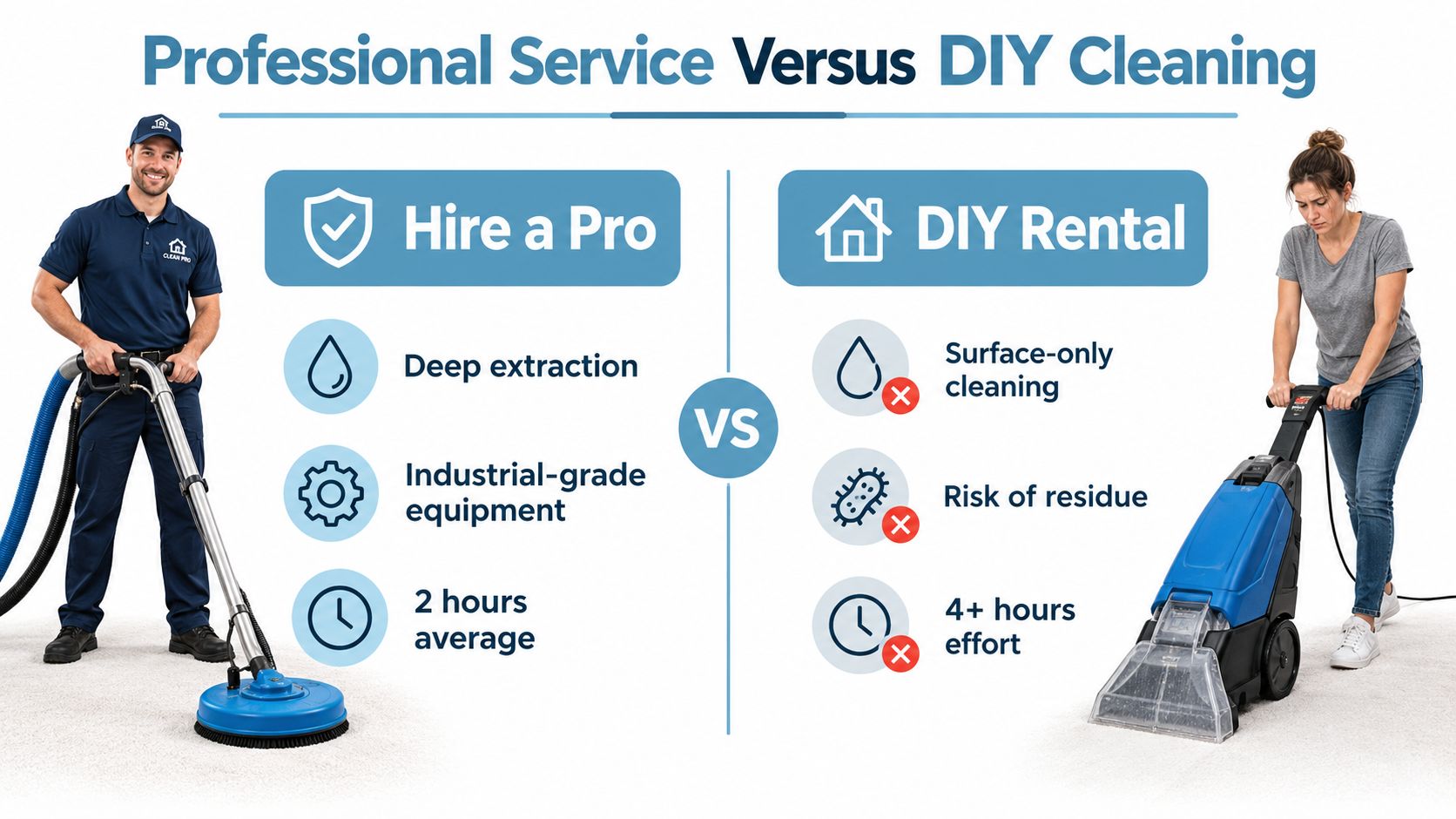
DIY carpet cleaning looks cheaper at first, and sometimes it is the right call for a small spill. A rented machine or a home spot treatment can help with a fresh mark before it settles. The trade-off is that the person doing the job has to manage water amount, detergent residue, drying, and furniture movement without professional equipment to back it up.
A professional team usually has better control over extraction and airflow. That matters in Singapore homes, because the goal is not only to clean but to avoid leaving fibres wet for longer than needed. DIY machines can leave carpets too damp if the operator moves slowly, over-applies solution, or doesn't rinse properly.
The other issue is residue. If detergent stays in the pile, the carpet can feel sticky or attract new dirt faster. That's one reason many households find that the job looks better for a day, then seems to dull again. For a side-by-side consumer view, Eco Clean Solutions helps you decide offers a practical comparison of hiring a pro versus doing it yourself.
CriteriaProfessional Cleaning Carpet ServiceDIY Rental or Home MethodsCleaning depthBetter access to embedded soil and heavier buildupUsually stronger on surface dirt and light marksDrying controlMore likely to include ventilation guidance and extraction focusDepends heavily on the user's technique and room airflowRisk of residueLower when the process is controlled wellHigher if too much solution is left behindTime and effortStaff handle the workYou manage lifting, moving, cleaning, and cleanupBest use caseWhole-room refresh, recurring maintenance, sensitive homesSmall spills, light spot care, quick touch-ups
If your carpet sits in a bedroom, study, or family room where people spend time daily, the deeper clean usually pays off in consistency. If the home has limited airflow, children, or allergy concerns, the margin for error shrinks quickly. A machine that extracts well is only half the job, the home still has to help the fibres dry properly.
The internal guide on how to clean upholstery is a good reminder that fabrics all behave a little differently. A sofa cushion, a curtain, and a carpet don't need the same water level or drying strategy, even if they all look like “just fabric” to the eye.
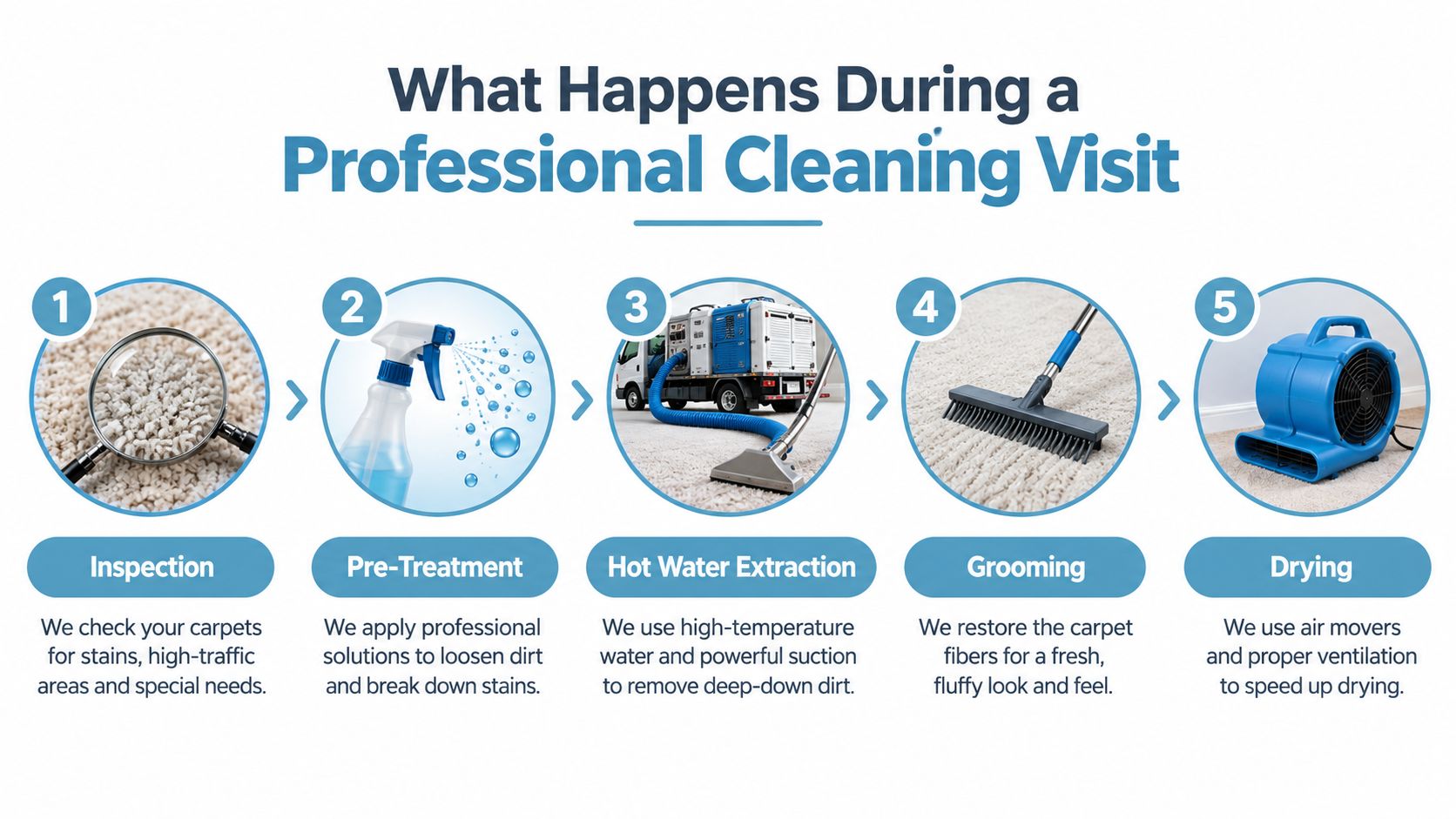
If your carpet lives in a Singapore home, the visit usually starts with one practical question: how fast can the room be usable again? Humidity, limited airflow, and tight living spaces all affect the answer, so the first check is about fibre type, stains, traffic lanes, and any areas that need careful handling. A bedroom rug and a hallway runner rarely need the same approach.
First comes arrival and walkthrough. The technician looks at problem areas, confirms what can be moved, and checks for spots that need extra treatment. Light furniture may be shifted if that fits the setup, so the cleaning path stays even.
Next is vacuuming and pre-treatment. Loose debris is removed first, because stain products work better on soil in the fibres than on a layer of dust. Then the deep-cleaning stage begins, often with extraction or a low-moisture method chosen for the carpet and the room conditions.
After that comes grooming. This lifts the pile so the fibres stand back up and dry more evenly. The last part is drying support, which usually means better airflow, air-conditioning, and clear advice on how long the room should stay undisturbed.
A clean carpet that stays damp for too long still needs more time.
Drying deserves special attention in Singapore. One local guide on carpet care notes that encapsulation may dry in 30 to 60 minutes, while extraction can take 6 to 12 hours with air-conditioning and fans in use Goodrich Global carpet maintenance guide. For a room that is used daily, that difference matters, so ask how the team plans to support airflow before they start.
The internal reference curtain steam cleaning helps explain the same point from another angle. Curtains and carpets both depend on the room setup after the cleaning pass, not only on the cleaning step itself. In high-density homes, drying space is part of the job, just like the cleaning machine.
Carpet cleaning quotes can feel slippery because different providers package the same work in different ways. Some price by room, some by area, and some offer bundled cleaning with optional extras like deodorising or stain protection. The important thing is not the label, it's whether the quote clearly says what is included.
A larger room usually means more labour, more solution, and more drying support. Heavier staining can also change the process, because pre-treatment may take longer than a standard refresh. If the carpet needs moving, takedown, or reinstallation work, that often belongs in a separate line item instead of being assumed.
Scheduling matters too. A booking window should match the home's actual routine, especially in apartments where you may need to coordinate with children, work-from-home time, or common-area access. If the team is collecting items off-site, turnaround becomes part of the cost because your carpet is out of use until delivery.
If you want a practical way to compare quote styles, an estimate calculator for cleaners can help you think through how size, labour, and add-ons usually stack up before you speak to a provider.
Use this simple checklist:
• What's included: Ask whether vacuuming, pre-treatment, extraction, and drying setup are part of the base price.
• What counts as an add-on: Clarify if stain protection, deodorising, or moving furniture costs extra.
• What happens if the carpet stays damp: Check whether they will revisit or advise on ventilation if drying takes longer than expected.
• How the job is tracked: Ask for itemised notes if you have rugs, runners, or mixed fabric items in the same order.
Tumble Laundry's own service model is a useful local reference point because it shows how transparent packaging can work in Singapore. Its broader cleaning and care services include curtain care and other fabric-focused items, with islandwide pickup and in-house processing, which is relevant when you're comparing providers that manage logistics differently from one another.
A smooth cleaning day starts with a little preparation. If the crew can move freely, identify stains quickly, and work in a room with decent airflow, the whole job usually feels less disruptive. In Singapore homes, that's especially important because space is tight and drying conditions can change room by room.
Start by clearing small items off the floor, especially toys, laundry baskets, and loose décor. If there are pets, keep them in another room or arrange for them to stay out of the cleaning area, because open doors and hoses can make them uneasy.
It also helps to point out specific stains before work begins. A fresh coffee mark, a food spill, or a dark patch near a doorway may need a different treatment path, and the technician can decide faster if you flag it early. If you know the carpet has had recurring dampness, say so.
The most important part is airflow. Use air-conditioning and fans to help move air across the carpet, especially in rooms that don't get much cross-ventilation. In Singapore humidity, that matters more than people usually realise, because trapped moisture is harder to notice than obvious wetness.
Useful habit: keep the room open to airflow, but keep foot traffic light until the carpet feels properly dry.
Don't rush furniture back unless the provider says it's safe. If you place heavy items too early, you can trap moisture or create fresh marks. Once the carpet is dry, a gentle vacuum helps lift any loosened debris that remained after the wet stage.
For maintenance between visits, the logic is simple. Vacuum regularly, deal with spills quickly, and avoid letting outside soil ride in on shoes. If the household is allergy-sensitive, a deeper clean on a more regular schedule makes more sense than waiting until the carpet looks visibly tired, because the fibres can hold onto material long before the surface changes.
A provider's credibility shows up in the details. Start with licensing. NEA states that cleaning businesses offering non-domestic general cleaning services, including carpet cleaning, require a Cleaning Business Licence, so vendors serving offices, condominiums, or similar premises should be able to show that requirement clearly NEA Cleaning Business Licence FAQ.
Ask whether the work is handled in-house or sent out. In-house processing usually makes it easier to trace who handled the job and what happened to the carpet along the way. Ask about the equipment too. A provider should be able to explain whether they use extraction, low-moisture methods, or both.
The stain question matters just as much. A good answer sounds specific, like a technician describing the problem, the treatment path, and the likely result. If a company only says “safe products” and “deep clean” without explaining the process, keep asking.
A clear services page should help you compare options without guessing. Tumble Laundry services is a useful reference for how a provider can explain cleaning choices across different household needs, what is processed, and where pickup or delivery fits in.
Selection rule: choose the provider that explains drying, stain limits, and licensing without making you guess.
For Singapore homes, that clarity matters because drying is not just about clean carpet, it is about airflow, humidity, and how long a room can stay partly closed after the job. If a provider can tell you how they handle ventilation in high-density housing, what they expect for drying time, and what allergy-sensitive homes should expect after cleaning, they are usually thinking beyond the sales pitch.
A good carpet cleaner should leave you with fewer questions, not more. If they can explain why one method suits your home better than another, and they can do it in plain language, that is a better sign than glossy promises.

We make laundry days fast and easy for you. We collect, clean and deliver your laundry and dry-cleaning.
53 Ubi Ave 1 #03-43, Singapore 408934
Mon - Fri | 8:30 am–5:30 pm
Sat | 8:30 am–12:30 pm
hello@tumble.sg
+65 62554222
Whatsapp Us


