Can You Wash Blackout Curtains Safely
This is some text inside of a div block.


You pull down a pair of blackout curtains because they've started to smell a bit stale, or the fabric looks dusty in the afternoon light. In Singapore, that's the moment many people ask the same question, can you wash blackout curtains without wrecking them? The honest answer is yes, sometimes, but the safe method depends on what's on the back of the curtain, not just the front.
Blackout curtains are not all built the same. Some use a woven triple-weave structure, while others rely on coated, bonded, or rubber-backed layers that handle light-blocking work. In humid homes, that backing can be the weak point, because heat, soaking, and rough agitation can damage the layer that makes the curtain blackout in the first place.
A standard day curtain is usually a straightforward fabric cleaning job. A blackout curtain often isn't. Local Singapore curtain cleaners explicitly warn that rubber-backed blackout curtains are not always safe to wash, and one service says it does not accept rubber-backed blackout curtains or roman blinds for cleaning, while another notes that rubber-backed curtains from certain brands may not survive machine washing, which tells you the backing matters as much as the fabric face. The distinction is especially relevant in Singapore, where blackout curtain care is treated as a specialised category rather than a casual laundry item, with separate quotes and workflows for these pieces from local providers, including $9.00/kg, $11.90/kg, $12.90/kg, or $32.70/piece depending on the operator Tumble Singapore curtain cleaning guidance, Luce SG curtain cleaning services.
Practical rule: if the backing can crack, peel, or delaminate, the curtain should never be treated like an ordinary cotton panel.
Singapore homes add another layer of risk. Humidity encourages odour, dust, and mould build-up, so people are often tempted to wash curtains sooner and more aggressively than the fabric can tolerate. That's where damage happens, because the safest cleaning method is chosen by construction, not by the word blackout printed on the label. If the curtain has a coated or rubberised backing, a hot wash, a high spin, or a tumble dryer can reduce blackout performance and leave the panel stiff or warped.
The best starting point is the same whether the curtain is new or years old, inspect the backing first. If the material is coated, bonded, or visibly rubbery, the wash decision changes immediately. For a broader comparison between curtain styles, see the practical difference between day curtains and night curtains in Tumble's guide to curtain types.
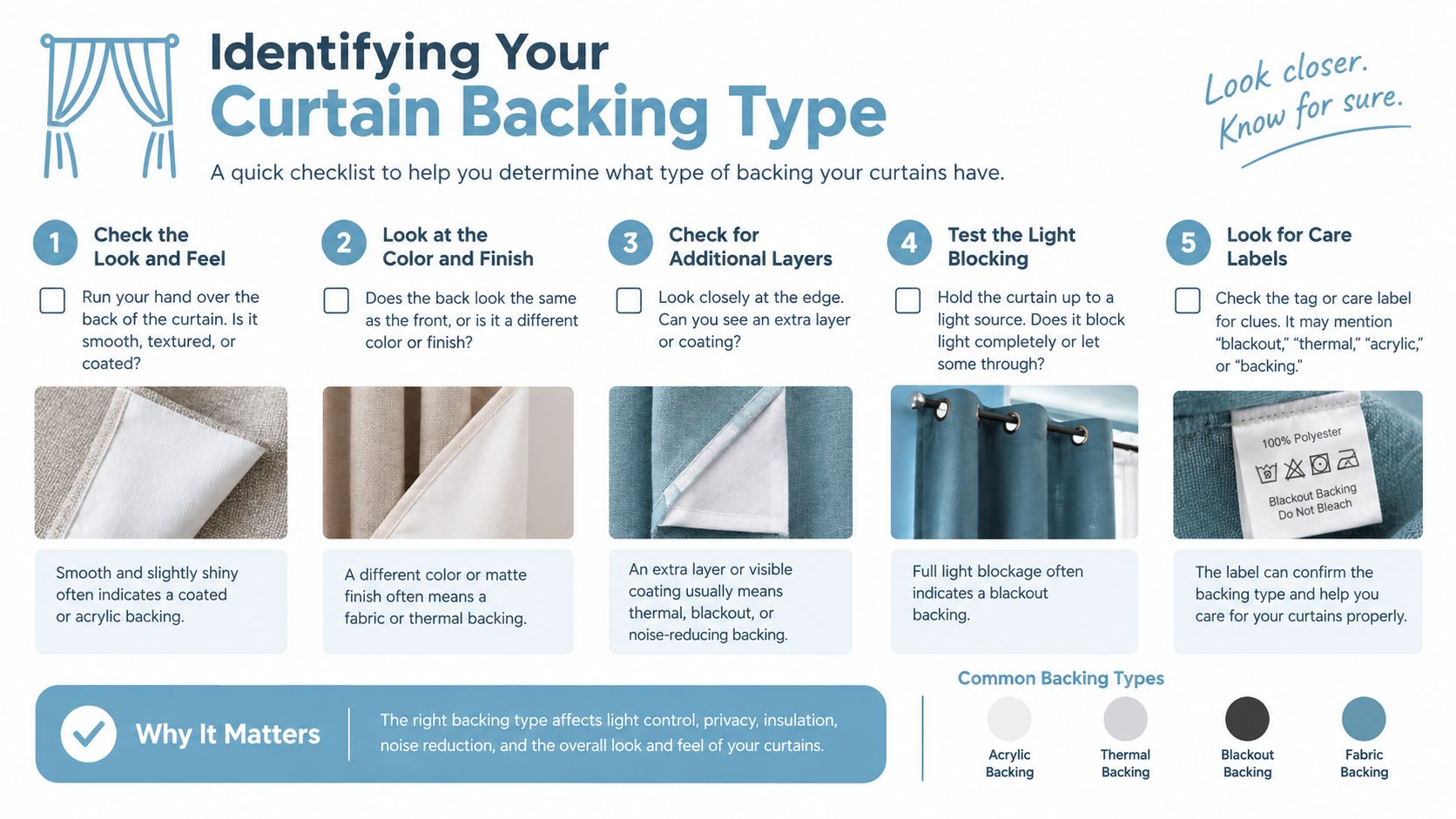
The back of the curtain tells you more than the care tag sometimes does. If the label is vague, damaged, or missing, use the fabric itself as the evidence. Singapore care guides repeatedly advise choosing the wash method by fabric, lining, coating, and curtain condition, because not all blackout products behave the same in water Big Mama curtain cleaning advice.
Start by laying the curtain flat and checking the reverse side in good light. A triple-weave curtain usually looks like a dense woven textile on both sides, with no obvious plastic feel. A foam-backed or rubber-backed curtain often has a smoother, heavier, or slightly tacky reverse side, which signals more caution.
A simple scratch or pinch test can help. If the backing feels brittle, flakes slightly, or seems separate from the face fabric, that curtain is not a candidate for rough machine washing. If the reverse side is fabric-like and flexible, the curtain may be more tolerant, but the care label still has the final say.
If the label says one thing and the material clearly looks like another, trust the material, then confirm with the label before you wash.
A care label should guide the decision, not override common sense. If it allows a gentle wash, that still doesn't mean every blackout curtain in the house should go in together. If it suggests dry clean only, that's usually the cleaner choice for coated or heat-sensitive structures, especially when the curtain feels heavy or layered.
For symbol reading, keep a photo reference handy and compare it with the tag rather than guessing. Tumble's laundry symbols and care labels guide is useful if you're unsure how to decode the markings on the header tape or sewn-in label.
The goal here is simple. Identify whether you're holding a woven blackout textile or a curtain with a fragile backing layer, then choose the mildest safe method. That one diagnostic step prevents a lot of expensive mistakes.
Once you know the backing type, the cleaning method becomes much easier to choose. Triple-weave fabrics usually tolerate the gentlest home wash, while foam-coated and rubber-backed curtains often need a lower-touch method or professional handling. Henson's Designs also shares practical cleaning tips for window treatments if you want another homeowner-focused reference on routine care, and it's a useful complement to the material-first approach in this guide: Henson's Designs cleaning tips.
Use machine washing only for curtains that are clearly approved for it, usually woven blackout fabrics with no fragile backing. Keep the cycle gentle, use cool water, and choose a mild liquid detergent. A low-spin setting reduces strain on seams and helps the curtain keep its shape.
Skip bleach, skip fabric softener, and avoid overloading the drum. Heavy panels absorb water fast, so they can become much weightier than a normal load and pull hard on the machine and the seams. If the curtain is large enough to crowd the drum, it's already too risky for a casual home wash.
If the curtain has a sensitive backing but the label still allows some water cleaning, a bathtub hand wash is safer than machine agitation. Use cool water and a small amount of mild detergent, then move the fabric gently instead of scrubbing it. Don't wring the curtain, because twisting puts stress on the coating and can distort the panel.
Rinse thoroughly until the water runs clear. Any leftover detergent can leave the face fabric dull and may attract more dust later. This method works best when the curtain is only lightly soiled and the backing remains intact.
For isolated marks, spot cleaning is often the least damaging option. Dab the stain with a mild detergent solution and a clean cloth, then blot again with plain water to lift residue. Keep the motion gentle, because rubbing can rough up the face fabric or push moisture into the backing.
If you're dealing with light dusting or fresh marks, this can buy you time before a full clean. For more detailed steam-related care, Tumble's curtain steam cleaning guide is a useful companion piece, especially if you're trying to freshen the fabric without saturating it.
A blackout curtain that looks manageable on the rail can still be a bad candidate for home washing once you check the backing. Rubber-backed, coated, and layered panels are the ones that usually fail first in a humid Singapore home, especially if the backing has started to feel stiff, sticky, or crumbly. In that state, the risk is not just a poor wash. It is backing damage, crooked hems, and a panel that no longer hangs flat.
Professional cleaning makes more sense when the curtain is large, heavy, or already showing wear around the coating. A local couple in a BTO flat with three bedroom windows and rubber-backed curtains may face a takedown-and-rehang quote that is easier to judge than a home-wash attempt that could crack the backing. That kind of trade-off is common here, because the true cost is not only the cleaning fee, it is the chance of ruining a set that is hard to replace and harder to rehang neatly.
A good provider looks at the curtain first, then chooses the cleaning method. That matters when the front fabric seems fine but the backing is fragile, because the correct process depends on the construction, not just the surface appearance. It also helps when access is awkward. Many Singapore homes do not have the floor space or drying area to deal with heavy panels safely.
Tumble Laundry offers curtain cleaning with takedown support and rehang support, which fits that kind of setup Tumble's curtain cleaning service. The practical value is simple. You avoid forcing wet panels through a small washing setup, and you reduce the chance of stretching the fabric while moving it around.
Professionals are also useful when you want a cleaner result without guessing at the backing type. Photos can be checked before the job starts, and that screening step is worth using if you are unsure whether the curtain is meant for water cleaning at all. In humid homes, a bad wash can leave the backing weakened and slow to dry, which gives mould and odour more time to develop.
FactorDIY Home WashingProfessional ServiceBacking riskHigher with coated or rubber-backed panelsLower after inspectionHandling heavy curtainsYou manage removal and rehangingTakedown and rehang may be includedDrying controlDepends on your home spaceHandled within the service processBest fitClearly washable fabric onlyFragile backing, bulky panels, or uncertain construction
If you are comparing service formats, the 4 Seasons Dry Cleaners services comparison gives a useful reference point for the kind of choices homeowners often weigh before sending blackout curtains out.
Drying is where a lot of well-intended curtain cleaning goes wrong. Heat and direct sun can be hard on blackout coatings, and a dryer can be even harsher. The safer approach is to air-dry in a way that supports the curtain's own weight without stretching the fabric or trapping dampness in the folds.
Hang the curtain where air can move across both sides. Avoid piling damp panels together, because coated surfaces can stick and create texture marks. Keep the curtain out of direct sunlight, since harsh heat can make backing layers brittle over time and can fade the face fabric.
If the curtain feels very heavy after washing, support it from the header and let gravity straighten the panel naturally. Don't twist it, and don't use aggressive wringing to speed things up.
A slightly damp curtain often hangs better than a fully dry, crumpled one. Rehanging early lets the weight of the fabric pull wrinkles out as the curtain finishes drying on the rail. That helps restore the drape without pressing heat into the blackout side.
If the curtain still looks stiff after drying, check whether detergent residue was fully rinsed out before you blame the fabric. For shrinkage concerns, Tumble's curtain shrinkage guide is the right follow-up if the panel has tightened or lost shape after a wash.
Never use the dryer as a quick fix for a blackout curtain that has already been water stressed. Air movement is safer than heat.
Small mistakes can sometimes be improved, but a cracked backing or peeled coating usually can't be reversed. That's why gentle drying is part of the washing decision, not an afterthought.
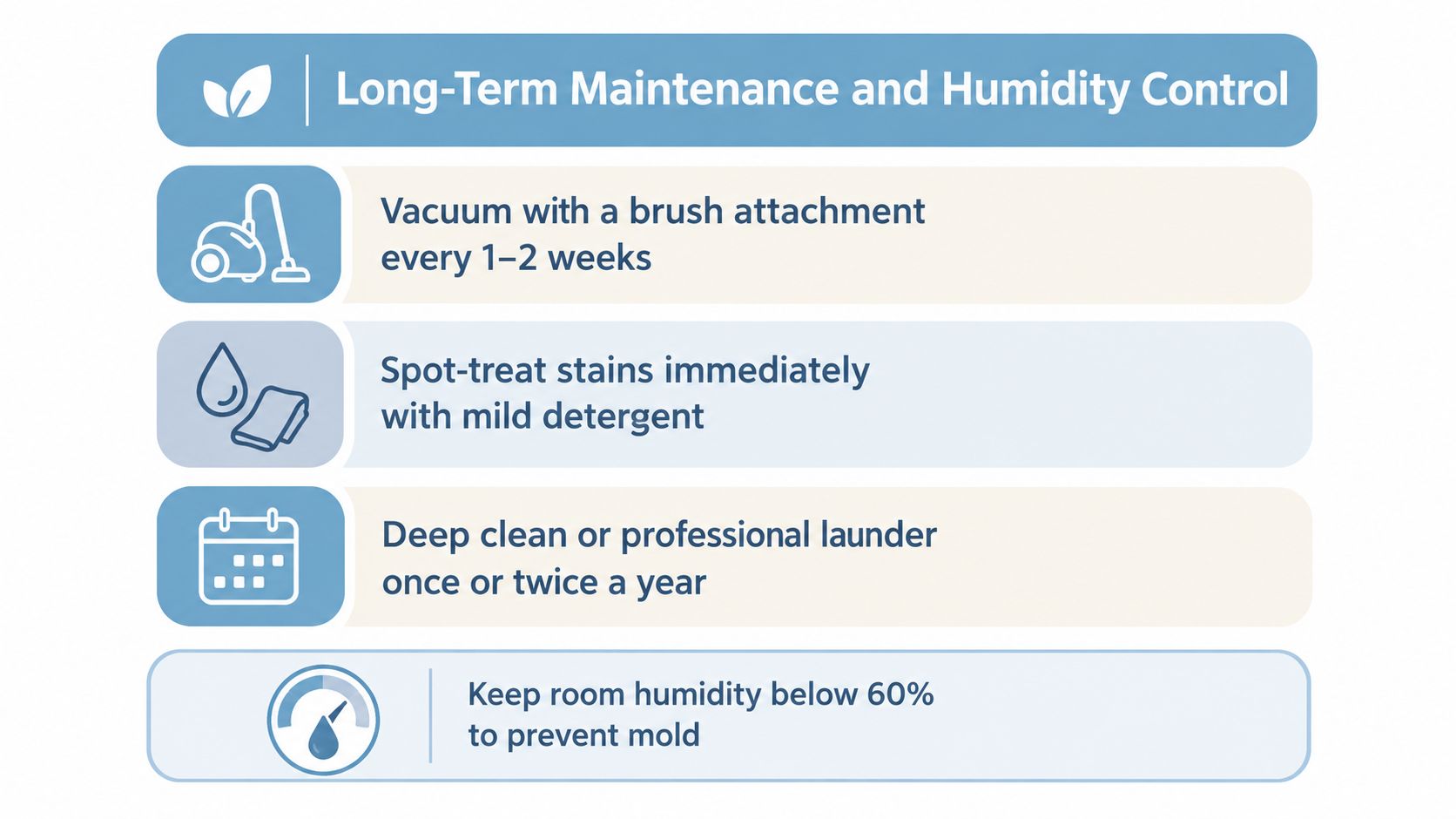
The easiest way to protect blackout curtains is to wash them less often and keep up with maintenance between cleans. In Singapore's humid climate, dust holds moisture, odours settle faster, and damp folds can become a problem if curtains stay closed for long periods. Regular vacuuming, quick spot treatment, and decent room airflow do more for curtain life than repeated full washes.
A simple routine works well. Use a brush attachment to lift dust without stressing the surface, treat marks as soon as they appear, and keep an eye out for lingering smells or patchy staining. If the curtain has a coated or rubber-backed layer, prevention matters even more because repeated washing puts more strain on the backing than on the face fabric.
For a homeowner, the decision is less about whether the curtain can be washed and more about how often it should be disturbed. Heavy panels, humid rooms, and awkward takedown all point toward gentler upkeep at home and a professional clean when the fabric starts to look dull. In Singapore's humidity, a quarterly vacuum and spot treatment can extend the life of coated blackout curtains significantly, reducing the need for full washes altogether.

We make laundry days fast and easy for you. We collect, clean and deliver your laundry and dry-cleaning.
53 Ubi Ave 1 #03-43, Singapore 408934
Mon - Fri | 8:30 am–5:30 pm
Sat | 8:30 am–12:30 pm
hello@tumble.sg
+65 62554222
Whatsapp Us


