Winter Wear Rental in Singapore: A Practical Guide
This is some text inside of a div block.


Your family has finally booked the winter trip. The flights are confirmed, the Hokkaido itinerary is taking shape, and then someone asks the expensive question: should you rent winter wear in Singapore or buy everything before departure? For a Singapore household, this isn't mainly a fashion decision. It's a calculation involving rental minimums, checked luggage, storage space, cleaning, deposits, and the chance that your child will outgrow the coat before the next cold-weather holiday.
Winter wear rental already has a commercial base in Singapore. The local clothing-rental subscription market was estimated at US$3.9 million a year, while reported subscription figures reached about 6% of women aged 20 to 40. Monthly plans in the market ranged from S$49 for six items to S$279 for unlimited items, according to Business Times coverage of Singapore's clothing-rental market. Specialist winter gear sits within that wider shift towards using clothing temporarily instead of owning every garment permanently.
A Singapore family of four flying to Hokkaido for 10 days in December should treat winter wear rental as a budgeting and logistics decision, not a fashion choice. Check trip length, cold-weather frequency, and household logistics before choosing a coat. Rental suits a one-off holiday, but a poorly timed booking can turn a reasonable fee into an expensive convenience charge.
Singapore winter-wear providers commonly set a 7-day minimum rental period, as stated in Winter Buddy's rental FAQ. That makes a five-day trip harder to justify unless the base price is low or the rental saves significant luggage space. A 10-day holiday fits the model better, particularly when the provider allows collection before departure and return after you get home.
Count the provider's chargeable days, not just the nights spent abroad. Include collection buffers, delivery timing, and extra days created by a multi-city itinerary. Doorstep delivery may also carry a surcharge, while bundled cleaning can make the quoted rental fee easier to compare with buying. Confirm these terms before paying, because a late-night arrival can force a longer booking window.
A short ski holiday may still require more than the travel dates suggest if the coat must reach you before the flight or be returned after you land. That timing matters as much as the daily rate.
For an adult who visits cold destinations regularly, repeated rental charges can make buying the core outer layer the better choice. For a growing child, renting avoids paying for a technically suitable coat that may not fit during the next winter trip. The same reasoning applies to bulky snow trousers, specialised boots, and heavy parkas that would otherwise occupy cupboard space in a Singapore flat.
Ask yourself:
• Is this an occasional trip? Rental makes more sense when the garment would sit unused for long periods.
• Will the wearer return to cold destinations soon? Frequent travellers should compare cumulative rental fees with one suitable purchase.
• Are several family members travelling? Rent the bulky or size-sensitive pieces first, rather than automatically renting every layer.
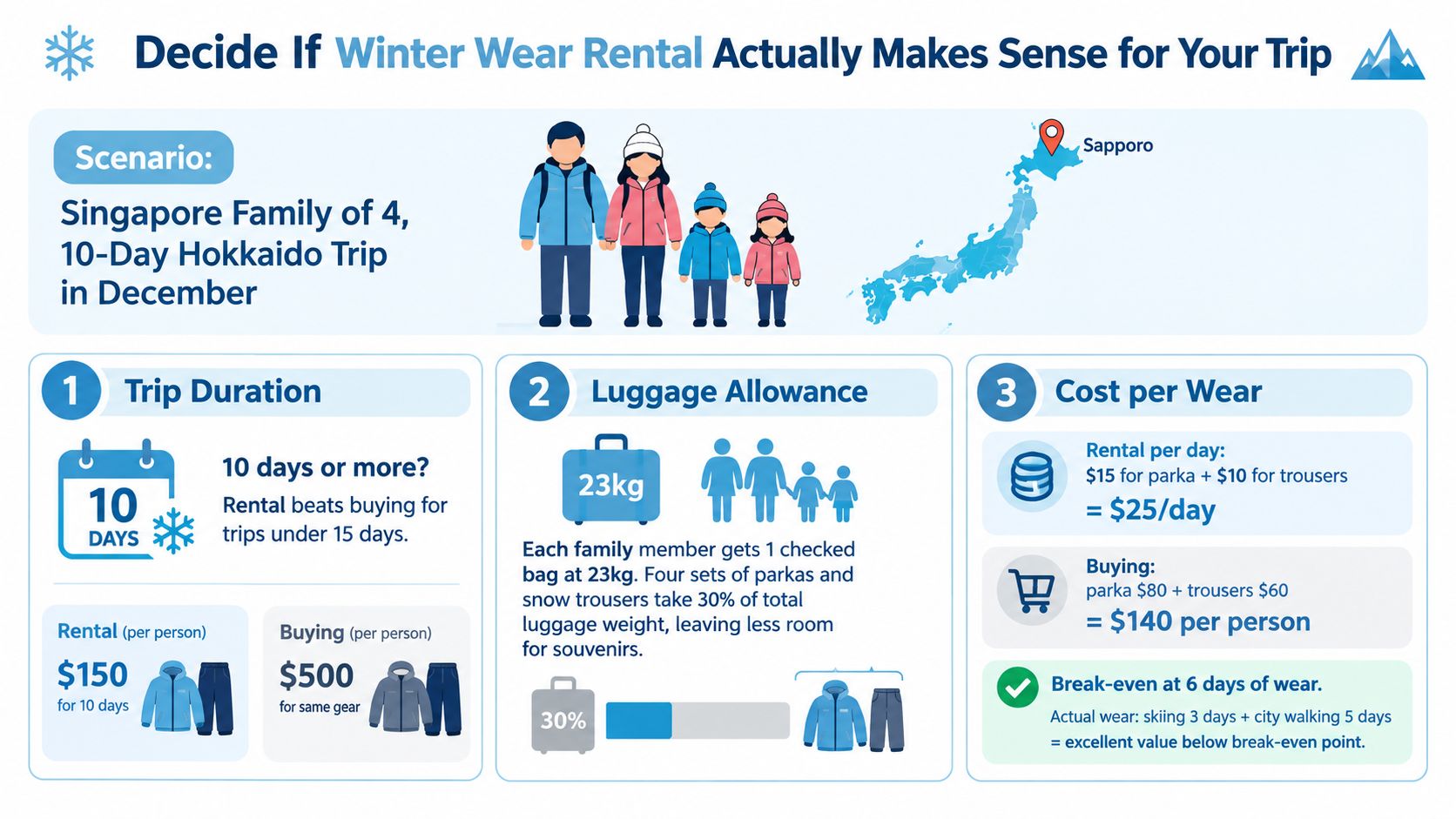
Practical rule: Rent when the trip is short, cold-weather travel is occasional, and storage is tight. Buy the core outer layer when someone travels to snow destinations repeatedly, then rent unusual extras such as specialised boots or snow trousers.
Singapore residents generally encounter winter wear rental through three channels. They overlap, but they don't offer the same protection when sizing, cleanliness, or technical performance matters.
ChannelTypical MinimumCleaning IncludedBest ForSubscription wardrobePlan-dependentUsually handled by the platformFashion-led users who want polished everyday clothingDedicated winter-wear specialistCommonly 7 daysUsually bundled into the rental workflowSki trips, snow destinations, families, and technical outerwearPeer or resale hybridSeller-dependentMust be confirmed directlyBudget-conscious borrowers who can inspect and clean items themselves
Platforms such as Style Theory and similar wardrobe services are useful when you want variety, convenient browsing, and a more polished handover process. The weakness is cold-weather depth. Winter coats, ski jackets, snow boots, and insulated trousers aren't always available when outbound travel demand peaks, so popular sizes and colours can disappear quickly.
Subscription wardrobes make sense for a city itinerary where you need a stylish coat more than specialised snow protection. They're less suitable when you need confidence that insulation, waterproofing, hood adjustment, and layering room will work in freezing conditions.
Specialist providers are the most practical route for a proper cold-weather holiday. Their catalogues tend to focus on parkas, down jackets, snow trousers, boots, base layers, and accessories, with cleaning and inspection built into the operating model.
Singapore demand is highly seasonal. An 8world report on winter-wear rental recorded customer volume during two peak travel months rising by as much as five times compared with the off-season. The same report included an operator's report of about 20% year-on-year business growth during that holiday period. Book early if you need several matching sizes, especially for a family.
Carousell listings, Telegram groups, and informal borrowing networks can produce lower headline prices. They also transfer more responsibility to you. You'll need to verify the size, inspect the garment, establish its condition, and decide whether the previous owner's cleaning standard is acceptable.
For a casual city trip, that risk may be manageable. For a ski holiday, a child, or a long journey with no easy replacement option, I'd use a specialist instead. If you want to browse physical retail and laundry locations while planning your handover, check Tumble's Singapore stores, but confirm winter-rental availability directly with the provider you're considering.
A coat can look fine on a hanger and fail within minutes on a snowy street. Inspect it at collection or immediately upon doorstep delivery, before you remove tags, pack it, or sign off on the condition report.
Bring the heaviest jumper the wearer will pack. Put it on under the coat, then check the shoulder seams, chest, sleeve length, and zip closure. Sleeves should extend past the wrist when the arms are raised, while the zip should close without pulling across the chest.
Don't rely on the rental label alone. Brand sizing varies, and a coat that fits over a T-shirt may become restrictive over a thermal layer and fleece. Ask for another size before leaving the collection point, because an exchange in Singapore is much easier than solving a bad fit in Japan.
Open and close every zip, pocket, snap, cuff adjustment, and detachable hood. Check the storm flap and inspect any trim or liner that could come loose in transit. Rental operators may charge for broken fastenings or missing components, so photograph anything questionable before you accept the item.

Press the body, sleeves, underarm area, and back panel. You're looking for unusually thin patches, clumped filling, or uneven insulation. A coat that has lost loft may still look presentable but won't perform as expected.
Then check the collar, cuffs, pockets, and inner lining for odours, makeup, perspiration marks, or stains. Singapore operators commonly inspect, professionally clean, sanitise, press, and store returned garments before the next rental. One operator describes a seven-step cleaning process and separate handling of returned items in CNA Lifestyle's coverage of fashion-rental services.
Bring your own base layer, gloves, and beanie for the fit test. A phone charger helps you take clear photos, and a small torch makes dark linings and inner seams easier to inspect. For care-label symbols, keep this guide to laundry symbols and care labels handy, but follow the rental provider's written instructions first.
The coat's advertised price is only one line on the quote. Ask for the total payable amount, then separate refundable deposits from costs you will not recover.
A rental quote may include the base fee, a cleaning charge, security deposit, delivery, collection, late-return penalties, and an optional damage waiver. Check the minimum rental period before comparing daily prices. Some Singapore providers require a 7-day minimum, professionally clean items after each rental, and do not expect customers to wash them before returning them. Cleaning may be bundled, while doorstep delivery or collection can carry an extra fee.
Cleaning terms still need precise questions. Ask whether post-return cleaning covers ordinary use, whether stains or special treatment cost extra, and whether an unworn item qualifies for a refund. For context on professional garment care, compare the provider's wording with Tumble's dry-cleaning service information, but do not assume a rental company follows the same process or pricing.
A deposit is usually refundable, but it can still tie up cash or available card credit. Record it separately from the rental fee. Ask when the provider releases it, which conditions trigger deductions, and whether the company places a full card hold.
Calculate your effective daily cost:
Total non-refundable spend ÷ actual days the garment is worn
Run the calculation again using the provider's charged rental period. This exposes the cost of minimum terms, collection buffers, unused days, and itinerary changes. A quote that suits one traveller may become less attractive when every family member needs a different size, or when delivery and collection are charged separately.
Cost Line ItemProvider A, Boutique SpecialistProvider B, Subscription WardrobeRental chargeConfirm per item and minimum periodConfirm whether outerwear is included in the planCleaningAsk whether post-return cleaning is bundledCheck whether specialist treatment is includedDepositConfirm amount, payment method, and release timingCheck whether a card hold appliesDelivery and collectionAsk for both directions and timingCheck plan inclusions and doorstep surchargesLate returnConfirm daily or per-item penaltyCheck the plan's extension rulesDamage handlingAsk about waivers, stains, and broken hardwareRequest the written condition policy
Get the terms in writing before paying. Confirm the refund rules for an unworn item, the deposit release timeline, the currency conversion method, and the penalty for returning late. Those details determine whether the rental is cheaper or merely appears cheaper on the first screen.
Treat a rented coat like borrowed equipment, not like an ordinary sweatshirt. Your job is to return it in the condition recorded at collection.
Pack the coat loosely and use a breathable garment bag if the provider supplies one. Put it into the suitcase last so it comes out first at the destination. I prefer a loose fold or gentle roll over sharp compression, especially for padded outerwear, because hard creases and overstuffing make inspection harder when you arrive.
Your layering system should do most of the warmth management:
• Base layer: Use a thermal layer that moves perspiration away from the skin.
• Middle layer: Add fleece or another warm layer that can be removed indoors.
• Outer layer: Use the rented parka or shell to block wind, snow, and moisture.
Avoid carrying a heavy backpack directly over the same shoulder and back panels all day. Constant pressure can compress insulation and create unnecessary rubbing, particularly around straps, zips, and pocket edges.
A damp coat needs to dry naturally. Hang it overnight in a ventilated room, away from direct heat. Don't put it in a hotel tumble dryer, on a radiator, or near a heater. For small marks, use a damp cloth and gentle dabbing rather than aggressive rubbing or an improvised wash.
If damage happens: Photograph the zip, lining, button, or tear immediately, then email the provider with the time, location, and a short description. Don't wait until you're back in Singapore.
For a broader cold-weather packing reference, this expert Iceland packing checklist is useful because it focuses on layering, weather protection, and avoiding unnecessary luggage. The destination differs, but the packing discipline transfers well.
Keep the original condition report and compare it before return. If you lose a button, tear the lining, or break a fastener, report it before flying home and follow the provider's instructions. The deposit is generally returned only when the garment matches the agreed condition, so clear timestamped photos protect both sides.
If you're tempted to wash a down coat yourself, stop and check the care label and rental contract first. This guide to washing down jackets and puffer coats explains why padded garments need careful handling, but a rented item should normally go back to the rental company for its approved cleaning process.
Save this checklist to your phone and tick each item before the booking becomes urgent.
• Confirm dates: Match the rental window to your flight, arrival, return, and any collection buffer.
• Measure the wearer: Record chest, waist, and height, then compare them with the provider's size chart.
• Shortlist providers: Compare two or three companies on item condition, turnaround, deposits, and delivery.
• Request a formal quote: Ask for the complete total, not just the coat's advertised rental price.
• Verify cleaning: Confirm who cleans the garment after return and whether stain treatment costs extra.
• Check the deposit: Ask how much is held, how it's held, and when it's released.
• Schedule delivery: Choose a slot that leaves enough time for fitting and an exchange.
• Photograph the coat: Capture the front, back, cuffs, lining, zips, pockets, and existing marks.
• Pack documents: Keep the receipt, condition report, provider instructions, and damage contact details.
• Bring backups: Pack spare gloves and an extra thermal layer in case an accessory is lost or damaged.
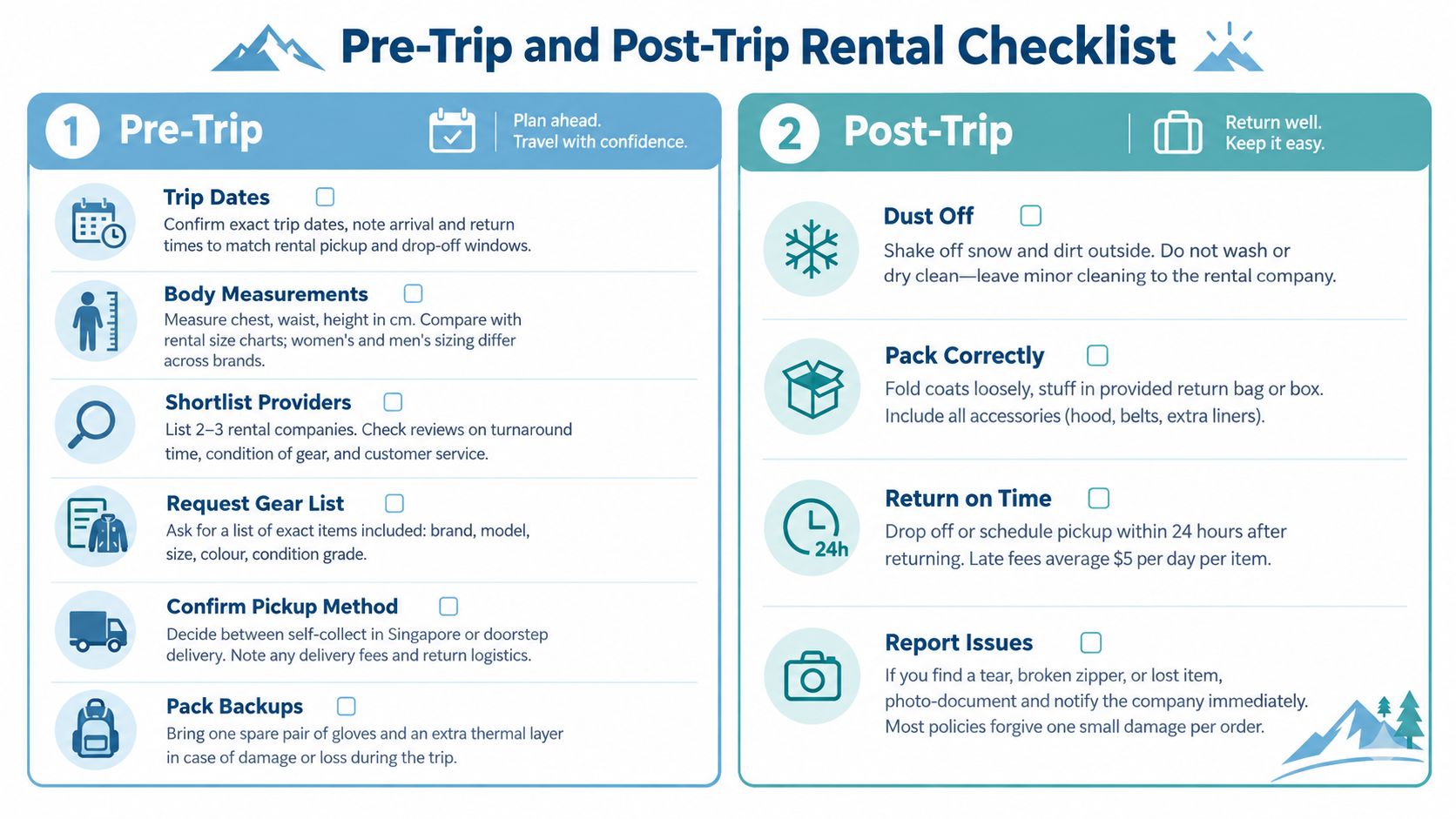
• Hang the coat nightly: Let moisture escape before packing it again.
• Spot-clean promptly: Dab marks with a damp cloth and avoid unapproved products.
• Limit pocket clutter: Keep sharp objects and overfilled pockets away from the lining.
• Store accessories together: Put the hood, belt, gloves, scarf, and hat in the garment bag.
• Inspect before return: Check the coat the night before collection or drop-off.
• Photograph it again: Take return-condition photos from the same angles as arrival photos.
• Repack carefully: Use the original bag or box and include every detachable component.
• Return on time: Keep the drop-off receipt or pickup confirmation.
• Follow up: If the deposit refund is delayed beyond the provider's stated timeline, contact support in writing.
If something goes wrong, document it immediately, message the provider before return, and keep the response. A credit-card chargeback should be a last resort, used only after you've tried to resolve a clearly documented dispute directly.
Use a simple rule. Rent for a trip of two weeks or less, for children who are still growing, or when cold-climate travel happens only occasionally. Renting avoids storing bulky coats in a Singapore home and keeps you from buying specialised gear that may spend most of its life in a cupboard.
Buy when someone takes cold-weather trips frequently, skis regularly, or needs a technical jacket with a precise fit for a specific activity. Frequent travellers also benefit from knowing the garment's quirks, warmth level, pockets, hood adjustment, and layering capacity. If a provider offers to credit part of the rental fee towards a later purchase, include that credit in your comparison before deciding.
The best compromise for many households is mixed ownership. Buy thermal base layers, gloves, and beanies that get used repeatedly, then rent the bulky parka, snow trousers, or child-sized outerwear. That keeps your personal kit familiar while limiting storage and luggage pressure.
If you already own winter wear, arrange professional care before storing it and after returning from the trip. Tumble Laundry's services include wash-and-fold and clean-and-iron options, with winter coat and jacket cleaning listed within its dry-cleaning offering. Choose the service according to the care label and garment construction rather than putting a down jacket into an overloaded home washing machine.
If you're storing a winter coat in Singapore or preparing one for your next trip, book Tumble Laundry for pickup, professional cleaning, and door-to-door delivery. Visit Tumble Laundry to choose the service that fits your coat and arrange the cleaning before the garment goes back into the cupboard.

We make laundry days fast and easy for you. We collect, clean and deliver your laundry and dry-cleaning.
53 Ubi Ave 1 #03-43, Singapore 408934
Mon - Fri | 8:30 am–5:30 pm
Sat | 8:30 am–12:30 pm
hello@tumble.sg
+65 62554222
Whatsapp Us


