Winter Coat Jacket Care Guide for Singapore Homes
This is some text inside of a div block.


You've got the jacket out of storage, the trip is booked, and then the first thing you notice is a faint stale smell, a crushed collar, or a mark you don't remember putting there. That's the normal Singapore winter coat jacket problem. The garment only comes out a few times a year, but when it does, it needs to look polished, feel fresh, and hold up through travel, air-conditioned meetings, and cold evenings abroad.
Singapore's climate changes the whole logic of outerwear care. A winter coat jacket here isn't a daily weather shield, it's an investment piece for travel, business, and indoor cold, which means it spends much more time stored than worn. That matters because long storage in humid conditions can leave garments flat, odorous, or harder to revive before a trip.
The travel pattern is a big part of the story. The Singapore Tourism Board recorded about 9.2 million outbound departures by Singapore residents in 2019, and that helps explain why outerwear demand here is tied to overseas use rather than local winter weather, as noted in the outerwear market overview. Singapore is also described as a 100% urban city-state, so winter coats tend to be used for flying, business travel, and time in cold interiors, not for months of snow-country wear.
A coat that looks fine hanging in a wardrobe can still need attention before the next trip. Down can lose loft if it has been compressed for too long, shell fabrics can pick up odour, and leather trim or delicate finishes can look dull even if the coat was only worn a handful of times. That's why care is less about frequent washing and more about preserving the garment between uses.
Practical rule: treat every stored coat like a premium item waiting for its next flight, not like a seasonal throw-on jacket.
The local housing context adds another layer. The resident population was 5.92 million in 2024 according to Singapore's Department of Statistics, and most residents live in high-rise housing. In compact homes, bulky outerwear is harder to air out, harder to keep uncompressed, and easier to forget until the day before departure.
That's why winter coat jacket care in Singapore is really a storage and recovery routine. If you protect the garment after each trip, you're far more likely to pull it out months later and wear it straight away, instead of sending it for emergency cleaning on the eve of travel.
A coat's care instructions make more sense once you know what it's made of. A lightweight packable down jacket, a synthetic insulated parka, and a technical shell all behave differently in wash, dry, and storage. The garment's structure determines how much moisture it can tolerate, how much compression it can handle, and how carefully you need to dry it afterwards.
Down insulation is usually described by fill power, which typically ranges from 300 to 900. Higher fill power means more loft per ounce, so the coat feels warmer without becoming bulky, as explained in this winter jacket guide. That loft is exactly what you want to protect. Too much heat, aggressive extraction, or poor drying can flatten the clusters and reduce thermal performance.
Synthetic insulation is usually discussed differently, often with GSM values such as 120 to 150 g/m² for quilted lining or wadding and 200 to 220 GSM shell fabrics for durability and thermal targets, according to the same outerwear construction reference. Synthetic pieces are often a bit more forgiving than down, but they still need proper drying so the fill doesn't clump or retain odour.
Shell fabrics add another layer of care complexity. Many travel jackets use water resistance measured by hydrostatic head in mm, and a jacket rated at 8,000 mm can resist more water pressure than a basic water-resistant shell, although it's still below the 10,000 mm minimum often used to classify rainproof protection and below the 20,000 mm / 20,000 g/m²/24h class often associated with high-performance waterproof-breathable systems, as described in this technical protection guide. Those jackets usually depend on a combination of breathable membrane, DWR finish, taped seams, and waterproof zips.
A down jacket, a wool-blend coat, and a membrane shell may all be called “winter coats”, but they do not want the same treatment. A jacket with leather trims or mixed fabrics can also have conflicting care needs, because one panel may tolerate water while another shrinks or stains easily. Read the fabric class first, then decide how to clean it.
The safest habit is simple. Match the care method to the construction, not to the outer look of the coat. A glossy shell might look wipeable, but if the label says otherwise, treat it as a technical garment, not a casual layer.
• Down jackets: protect loft, dry thoroughly, avoid rough handling.
• Synthetic insulated coats: easier to refresh, but still need full drying.
• Technical shells: focus on coatings, seams, and breathable membranes.
• Blended or trimmed pieces: follow the most delicate component, not the toughest one.
If you want a deeper walkthrough of at-home down jacket washing, this Singapore-specific guide to washing down jackets and puffer coats is a useful companion read.
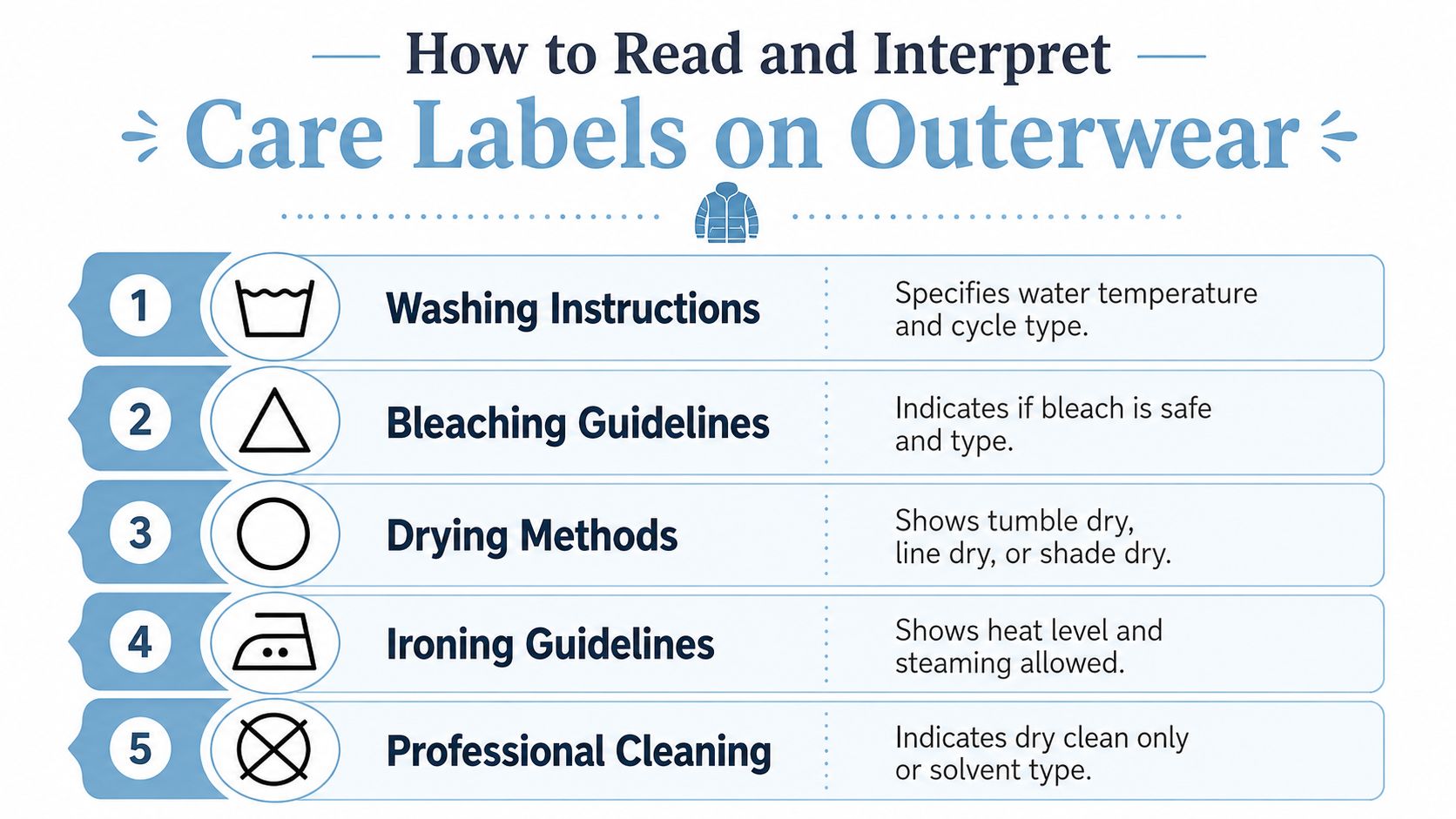
Care labels are the garment's instruction sheet, but many people skim them and guess. That's where mistakes start. A small icon can tell you whether the coat wants cold water only, no tumble drying, low iron, or professional care, and outerwear labels often include extra warnings about coatings, membranes, or delicate trims.
The wash basin symbol is usually the first thing to check. It points you to water temperature and cycle type. If the basin is crossed out, don't assume a gentler machine cycle will make it safe, because some coats are built with adhesives, membranes, or trims that can fail in water.
The triangle covers bleach guidance, and that matters more than many people think. Bright shell fabrics, colour-block coats, and mixed-material jackets can react badly even to mild bleaching agents. If the label restricts bleach, treat that as a hard stop.
Practical rule: if the label has a crossed-out circle, a crossed-out basin, or a crossed-out iron, treat it as a limit, not a suggestion.
The circle tells you about drying and professional care. A tumble-dry icon can mean the coat is engineered to handle machine drying, but temperature still matters. A circle with an X, on the other hand, usually means the garment needs dry cleaning or another approved professional process.
Outerwear often combines fabrics. A coat may have a water-resistant shell, synthetic fill, fleece lining, and leather trim, all sewn together with different tolerances. That means one part of the garment may tolerate gentle cleaning while another part will warp, shrink, or lose finish if you push it too hard.
People get tripped up when they see “machine washable” on one part of the care tag and ignore the rest of the panel. If the label also warns against heat, steam, or agitation, follow the stricter instruction.
For a plain-language explanation of symbol sets, this laundry symbols and care labels guide is handy when the tag looks crowded or unclear.
Some labels feel overly cautious, but outerwear is expensive to repair after a mistake. Adhesives around taped seams can loosen, waterproofing can degrade, and the coat may still look clean while losing performance. That's why label reading should happen before stain treatment, not after.
If a coat has a care tag you can't confidently decode, take a clear photo of the full label and compare the front and back panels. The full set of symbols tells a more complete story than any single icon.
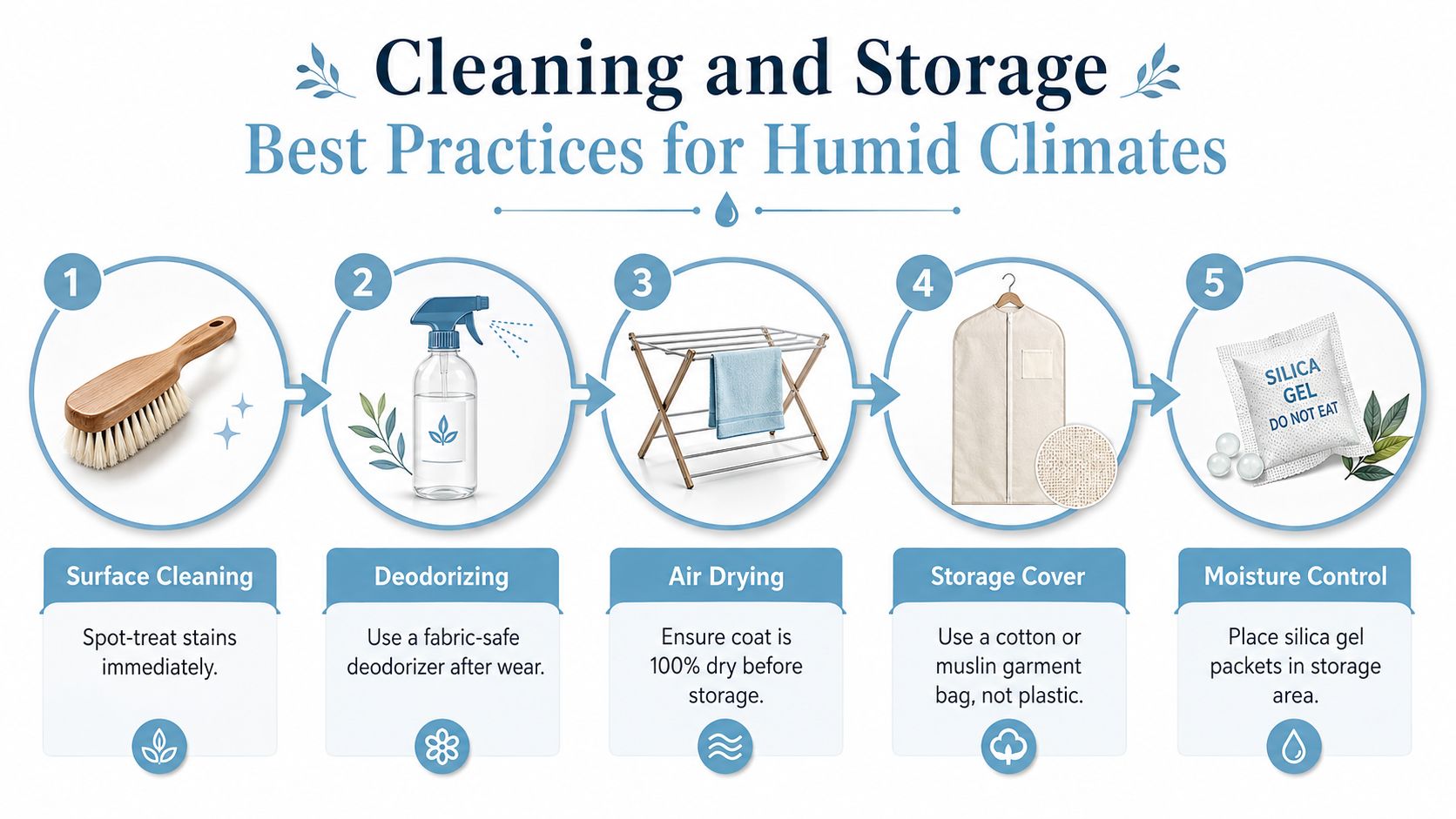
Singapore humidity changes the storage equation. A winter coat jacket doesn't just need to be “put away”, it needs to be fully cleaned, fully dry, and stored in a way that lets trapped moisture escape. If you skip that sequence, odour and fabric fatigue can show up long before your next trip.
Start by removing surface dirt before anything else. Brush off dust, wipe fresh marks gently, and deal with spill spots before they settle into fibres. Sweat, perfume, and food residue are especially important to remove, because they can become hard-set stains during long storage.
Once the coat is clean, dry it all the way through. That sounds obvious, but thick insulation often holds moisture deeper than the surface. A coat that feels dry at the collar can still be damp inside the baffles or lining seams.
The next step is storage material. Use a breathable cotton or muslin garment bag, not plastic. Plastic traps moisture and creates the kind of stagnant environment that encourages odour build-up. If you need a ready-made storage option for bulkier garments, a product such as the Q20 dust cover from B-Sew Inn shows the right idea, breathable protection rather than sealed wrapping.
Hang the coat on a broad, supportive hanger so the shoulders don't collapse. Thin wire hangers create dents, and folded storage can flatten insulation in the places where you want loft the most. If the garment is especially bulky, leave some breathing room around it instead of packing it tightly between other clothes.
Moisture control matters in Singapore homes because closet air can feel still and damp. A few silica gel packets in the storage area can help, especially if the wardrobe sits near a wall, window, or bathroom. Replace them when they stop working effectively.
Dry it completely, then give it room to breathe. That one sequence prevents a lot of avoidable complaints.
For readers who struggle with humid indoor drying, this guide to drying clothes indoors without musty smells is a useful reference, especially if a coat has been lightly cleaned and still needs time before storage.
• Brush and spot-clean first: don't store dirt or salt marks.
• Dry every layer thoroughly: feel the lining and seams, not just the surface.
• Use breathable covers: cotton or muslin works better than plastic.
• Leave space in the wardrobe: crushed insulation recovers poorly.
• Use moisture control: silica packets help in enclosed closets.
For a quick visual comparison of when to clean at home and when to hand the garment over, the cleaning and storage video guide can help you see the sequence in action.
Home care works for some outerwear, but not all of it. The decision comes down to fabric, construction, stain type, and how much risk you're willing to take with an expensive garment. A coat that looks simple on the outside can hide glued seams, delicate linings, or insulation that reacts badly to a normal laundry cycle.
If the shell is polyester or nylon, the fill is synthetic, the lining is removable and washable, and the soil is light, home care can be enough. That's especially true for coats that only need refreshing after a short trip or a few wears in air-conditioned spaces.
The internal difference between washing and dry cleaning matters. A plain-language comparison of laundry and dry cleaning helps separate “can be cleaned” from “should be cleaned this way”. Many people assume dry cleaning is always gentler, but that isn't automatically true for every coat.
Wool, cashmere, and silk blends deserve more caution. So do coats with natural down, intricate insulation, non-removable linings, or decorative trims that can't be isolated safely at home. Heavy soiling, odour, or stains on leather trim are also signs that the garment needs a different approach.
The risk with home washing is damage that doesn't show immediately. Down clusters can collapse, waterproof finishes can weaken, colour can bleed across panels, and wool blends can shrink or distort. Once that happens, the coat may still be wearable, but it won't hang or perform the way it should.
Practical rule: if the coat cost enough that you'd hesitate to replace it casually, don't gamble with the wrong cleaning cycle.
Professional care doesn't always mean the garment is submerged in aggressive solvent. Some items mainly benefit from expert stain inspection, controlled cleaning, and proper finishing. The point is not the label “dry clean” by itself, but the matching of method to garment structure.
That's why itemised handling matters. A technician can inspect the coat, assess the fabric mix, and decide whether pressing, spot treatment, or a specific cleaning method is the safer route. For mixed outerwear, that judgement is often what protects the piece.
Winter outerwear collects the sort of marks that happen on travel days. Coffee splashes, makeup transfer from scarves, mud at the airport curb, and yellowing after storage all need different treatment. The wrong response can set a stain deeper, so the first rule is to work gently and test a hidden area before doing anything visible.
Coffee on a synthetic shell usually needs quick blotting with a clean damp cloth, followed by mild fabric-safe treatment on the surface. On a wool blend or a coat with delicate trims, rubbing is a bad idea because it can spread the stain and rough up the texture.
Mud should dry before you brush it away. If you try to wipe wet mud immediately, you push it further into the fibres. Once dry, a soft brush and gentle spot treatment are usually safer than heavy scrubbing.
Makeup and sunscreen transfer often show up on collars and scarves zones. Those marks are common on travel coats because they sit close to the face. A small amount of fabric-safe cleanser applied carefully is better than household stain removers that may strip colour or leave a ring.
A loose button, a small seam opening, or a minor snag can often be handled quickly. A clean reattachment is much better than leaving the coat in rotation with a weak closure, because tension spreads the damage. Tiny shell tears also need early attention, since wind and friction can enlarge them fast.
Water repellency deserves separate care. If the finish has started to fade, the coat may need a reconditioning treatment rather than a full wash. That is particularly useful for travel jackets that rely on DWR to shed rain between flights and hotel commutes.
• Don't use hot water on unknown fabrics: heat can set stains and distort fibres.
• Don't scrub waterproof coatings hard: you can wear down the finish.
• Don't iron over trims or taped seams: adhesives can soften or fail.
• Don't wait months on a stain: old marks are harder to remove safely.
If a stain sits on leather, silk, or an expensive mixed-fabric panel, stop early and hand it over. The same applies if you're unsure whether the stain is oil-based, dye-based, or protein-based. Guessing is what turns a small blemish into a permanent one.
For many Singapore households, professional care is the easiest way to keep outerwear ready between trips. The value isn't just convenience, it's control. Dedicated processing, itemised tracking, and professional stain inspection help reduce the chance that a stored coat comes back limp, marked, or still holding odour.
Winter coats are awkward to manage at home because they're bulky, slow to dry, and easy to crush in a crowded wardrobe. In-house processing with the right equipment can extract moisture more evenly from thick insulation than a domestic setup, and finishing can help restore shape before the garment goes back into storage.
This is also where service choice becomes practical rather than indulgent. A provider that handles items individually, follows care labels, and tracks pieces by order can reduce the risk of cross-contact with other garments. For families and busy professionals, that matters just as much as stain removal.
One useful reference for understanding the machinery and chemistry behind this work is Evo Dyne's guide to industrial strength cleaners, which helps explain why specialist processes often differ from what a household machine can do.
Tumble Laundry offers winter coat and jacket care within its garment services, along with pickup, professional cleaning, and delivery in Singapore. If you prefer to outsource the coat before travel season, the dry-cleaning service in Singapore page shows how that kind of support fits into a broader laundry routine without requiring you to sort, transport, or manage the bulk at home.
That matters for apartment living. When a coat comes back cleaned and finished, you can store it immediately in a breathable cover instead of leaving it draped over a chair while you “find time” to deal with it later. The fewer handoffs, the less likely the garment is to pick up a new smell or wrinkle before the trip.
If the coat is lightweight, synthetic, and lightly soiled, home care may be enough. If it's expensive, mixed-material, heavily structured, or difficult to dry properly in a humid home, professional care is the safer route. That decision protects both the garment and your time.
If you want your winter coat jacket cleaned, finished, and returned ready for storage, visit Tumble Laundry to book a pickup and see which service fits your garment. It's a straightforward way to keep premium outerwear in rotation without worrying about humidity, drying space, or last-minute prep before your next trip.

We make laundry days fast and easy for you. We collect, clean and deliver your laundry and dry-cleaning.
53 Ubi Ave 1 #03-43, Singapore 408934
Mon - Fri | 8:30 am–5:30 pm
Sat | 8:30 am–12:30 pm
hello@tumble.sg
+65 62554222
Whatsapp Us


