Mould on Clothes: A Complete Guide for Singapore Homes
This is some text inside of a div block.


You open the wardrobe before work and reach for a shirt that looked perfectly clean when you put it away. Instead, it has a faint musty smell, a grey mark near the collar, or a scatter of dark spots along the hem. In an HDB flat, where drying space is limited and wardrobes often sit in rooms with modest airflow, mould on clothes can appear before you realise there's a moisture problem.
The right response is not to run another wash. You need to identify whether the growth is superficial or established, match the treatment to the fabric, and correct the drying and storage conditions that allowed it to develop.
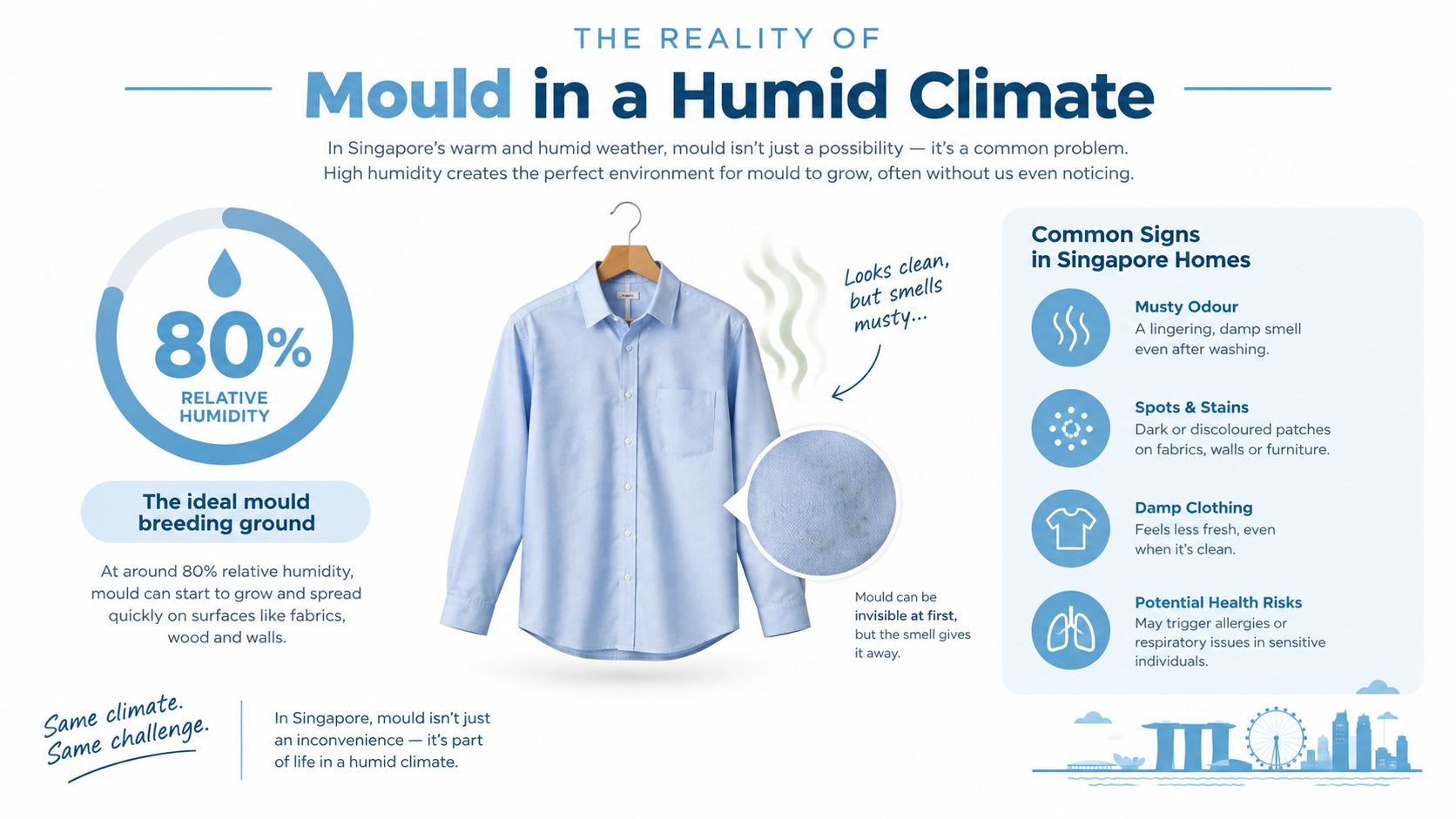
Singapore's climate gives mould a long operating window. One Singapore-focused guide describes average outdoor relative humidity as about 84%, while mould can grow at around 60% relative humidity, leaving a substantial gap between the surrounding air and a safer storage environment for garments. The same guidance warns that prolonged rain can push humidity towards saturation, which helps explain why a shirt that feels “almost dry” can still become musty inside a drawer or wardrobe. (Singapore mould guidance)
That moisture becomes harder to manage in compact homes. Laundry may dry on a service yard rack beside a kitchen, on a portable stand in the living room, or near a bedroom window that stays closed during heavy rain. A garment can feel dry on the outside while its seams, waistband, cuffs, or folded layers retain enough moisture to create a problem once it's placed in an enclosed cupboard.
Practical rule: “Dry to the touch” isn't the same as safe to store. Check thick seams, pockets, collars, and folded sections before putting clothing away.
A standard machine cycle can remove soil and odour from lightly affected clothing, but it doesn't fix a wardrobe that remains humid or overcrowded. It also may not reach mould that has settled deep into absorbent fibres, and heat from a dryer isn't a substitute for proper treatment when residue or moisture remains.
Natural materials can be especially vulnerable because they retain moisture readily. Cotton work shirts, school uniforms, towels, linen, and traditional garments often need more careful handling than a quick wash and fold. Sealed containers and tightly packed cupboards create another problem by limiting air movement around the fabric.
For broader indoor-air considerations, a mould air purifier from EcoQuest may be useful as part of a wider moisture-control plan. It shouldn't replace garment cleaning, ventilation, or dehumidification, because an air device can't remove moisture trapped in a folded uniform.
Singapore laundry habits also matter. Guidance on laundry best practices in Singapore reinforces the need to deal with garments promptly and avoid returning incompletely dried items to storage. The underlying lesson is straightforward: mould on clothes is usually a drying and storage failure as much as a washing failure.
Start with isolation, not bleach. Move affected garments away from clean laundry and avoid shaking them indoors, since loose particles can spread onto nearby textiles and surfaces. If anyone at home has asthma, allergies, or a weakened immune system, keep that person away from the handling and cleaning area.
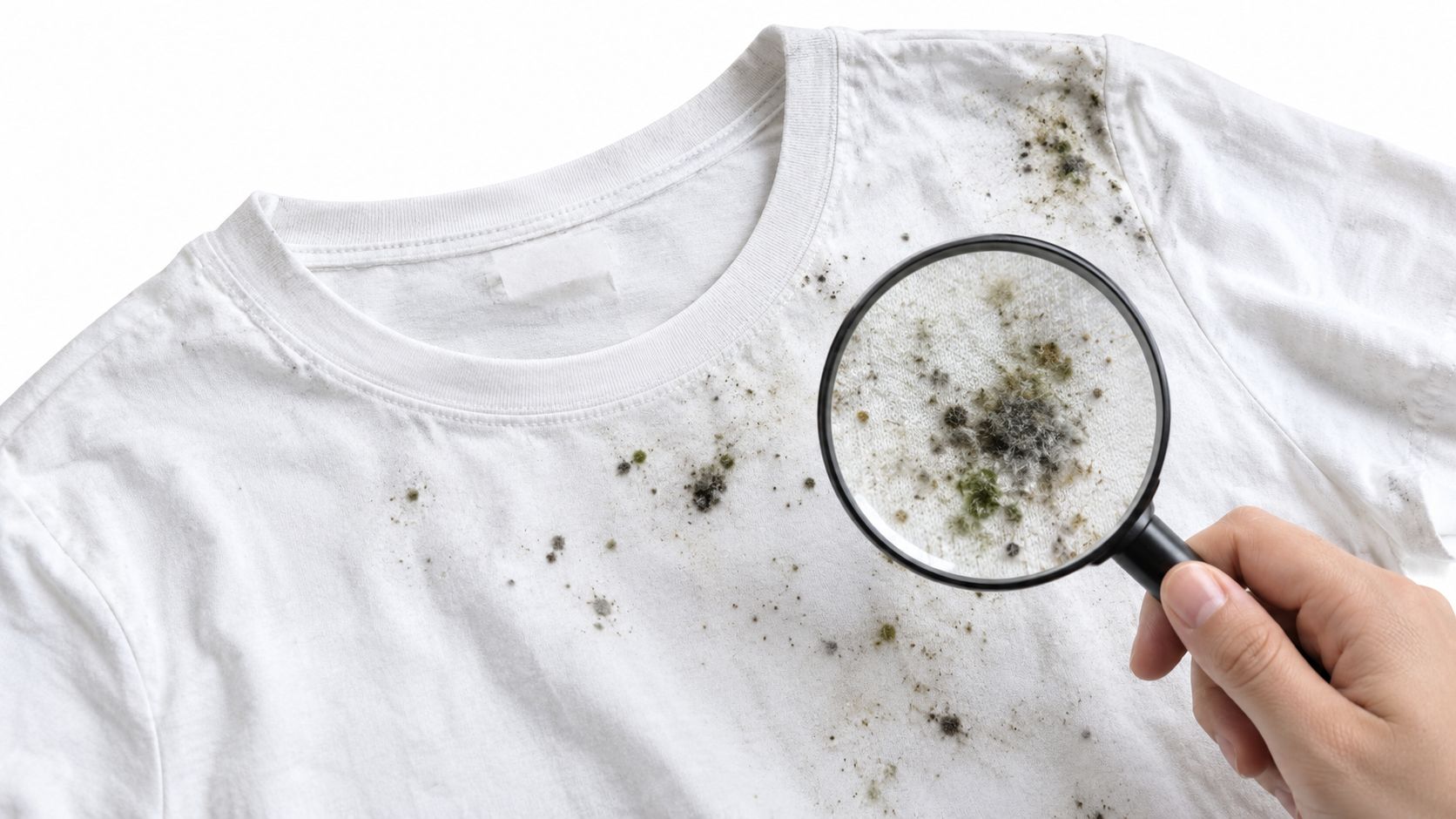
Surface growth often appears as small dark, grey, greenish, or powdery patches, accompanied by a damp, earthy smell. Dust usually brushes away without leaving a persistent odour or staining, while active mould tends to return as a smell even after the visible specks have been removed. A magnifying glass can help you inspect the weave, but it won't tell you whether the fabric is safe to rescue on its own.
For washable cottons and sturdy synthetics, use this sequence:
1. Separate the load. Don't put affected garments in with school shirts, towels, or other everyday laundry. Wash them separately until you're satisfied that the smell and visible growth have gone.
2. Remove loose growth outdoors. If practical, take the garment to a ventilated area and gently brush the surface. Don't aggressively scrub indoors, because that can spread particles through the room.
3. Pre-soak carefully. A diluted white vinegar soak is a common fabric treatment for odour and light surface growth. Test an inconspicuous section first, particularly on dyed garments, trims, and printed designs. Never mix vinegar with chlorine bleach.
4. Treat visible residue. A paste made with bicarbonate of soda and water can help lift marks from sturdy, washable fabric. Apply gently rather than grinding it into the weave, then rinse thoroughly.
5. Wash according to the care label. Use the warmest setting the garment permits, with normal laundry detergent. A hotter setting isn't automatically safer if it damages the fabric or fixes a stain.
6. Dry completely and inspect. Air-dry in strong daylight where possible, then check the garment for lingering smell, marks, or damp areas before storage.
Household treatments have limits. They may reduce surface mould and odour, but they won't guarantee that a heavily contaminated item is suitable for continued use. Guidance on closet mildew prevention tips is also useful when the same cupboard repeatedly affects clean garments, because the storage environment needs attention as well.
Discarding a low-value item may be more sensible when the fabric is extensively covered, remains strongly musty after treatment, or has begun to deteriorate. For a school uniform, inspect the collar, underarm panels, cuffs, and elastic areas closely, because these sections hold perspiration and can retain moisture.
If the garment is valuable, sentimental, lined, embellished, or labelled dry-clean-only, stop before applying vinegar, bicarbonate, bleach, or high heat. The complete guide to stain removal can help with ordinary marks, but mould treatment still depends on fibre, dye, construction, and the extent of contamination.
The same remedy can be sensible for a cotton T-shirt and damaging for a silk blouse. Fabric composition, colourfastness, lining, trim, and the care label should decide the treatment, not the appearance of the mould alone.
Cotton and durable blends are usually the most forgiving. For a washable white cotton shirt with light surface growth, a careful pre-treatment followed by a label-approved wash may be reasonable. Coloured cotton and polycotton need a hidden-area test first, because even mild acids or stain treatments can affect dyes and finishes.
School uniforms deserve a separate approach. They're often worn repeatedly, washed frequently, and made from blended fabrics with printed badges, pleats, elastic, or synthetic panels. Treat one garment first, check the colour and shape after drying, and don't use chlorine bleach just because a spot is dark. A damaged school badge or weakened waistband can make a technically clean uniform unusable.
Wool and silk are poor candidates for aggressive home experimentation. Hot water, vigorous brushing, alkaline powders, and incorrect drying can shrink, distort, felt, or weaken them. Blot rather than scrub, keep the garment away from ordinary laundry, and use a cleaner experienced with the relevant fibre.
Traditional and ceremonial wear can combine delicate fabric with embroidery, metallic thread, lining, interfacing, or decorative fastenings. A dry-clean-only baju, sari, cheongsam, kebaya, or formal outfit may look sturdy but conceal construction that a home washer can't handle safely. Tell the cleaner that mould or a musty smell is involved, rather than describing it only as a stain.
A home washing machine is convenient for routine loads. It gives you control over detergent, temperature, and drying, but it cannot assess every garment individually, identify hidden construction issues, or reliably treat fabric that must not be immersed. A domestic cycle also won't solve contamination in the machine seal, detergent drawer, or surrounding laundry area.
Professional cleaning is a better choice when the care label restricts washing, the item has deep odour, or the garment has sentimental or replacement value. The trade-off is cost and turnaround time, but the alternative may be colour loss, shrinkage, dye bleeding, or a permanently distorted shape.
Before treating a recurring problem, clean the appliance itself. This guide to cleaning a laundry washing machine is a useful starting point, particularly if clean loads leave the drum with a stale smell.
Mould can also affect nearby household textiles. If the wardrobe sits beside a rug or carpet that smells damp, consult guidance on musty carpet solutions rather than assuming the clothing is the only source. Treating garments while leaving a moisture-holding surface nearby can allow the smell to return.
Professional treatment makes the most sense when the garment's value or construction raises the risk of home cleaning. A dry-clean-only traditional outfit, an important work uniform, a lined dress, or a delicate school costume shouldn't be used as a trial piece for bleach or an unfamiliar home remedy.
Tumble Laundry offers islandwide pickup, professional cleaning, and door-to-door delivery in Singapore. Its services cover households and businesses, including wash and fold, laundry and dry cleaning, ironing, and curtain cleaning, with subscription and on-demand options processed through in-house facilities. (Tumble Laundry service information)

Contact the service before packing a heavily affected item. Describe the fabric, the visible growth, the odour, how long it may have been stored, and anything you've already applied. That information helps the team decide whether the item needs a specific workflow and prevents an unsuitable treatment from being selected.
Keep affected garments separate from clean laundry during collection. Don't seal a damp garment in plastic for longer than necessary, because trapped moisture can worsen the smell. If you're sending several categories, separate everyday washable clothing from delicate or dry-clean-only pieces and identify them clearly.
Professional cleaning can provide inspection and fabric-specific handling that a home machine lacks. It also removes the drying burden from households with a small service yard or no suitable place to hang formal garments during wet weather. The service doesn't remove the need to correct the wardrobe environment, but it can reduce the chance of damaging an item while attempting repeated DIY treatments.
For garments that need a formal cleaning workflow, read about dry cleaning service in Singapore before booking and check which items require special instructions.
A pickup-and-delivery arrangement can also make routine care easier for busy families and professionals. Here's a short visual reference on how a laundry service fits into the process:
Once the garment returns, don't put it straight into an overcrowded wardrobe. Let it reach room temperature if it has been packaged, check for any remaining odour, and store it only when it's completely dry. Professional cleaning addresses the item. Your drying and storage routine determines whether the problem stays away.
Prevention begins before the wardrobe door closes. Singapore guidance recommends keeping indoor humidity around 50% to 60%, while other local prevention advice gives a 40% to 60% operating range and recommends dehumidification where clothing is dried. (Singapore home mould-prevention guidance)
In a compact flat, you may not have a separate laundry room, so create a controlled drying zone instead. Keep the rack away from tightly enclosed corners, improve air movement with a fan, and use a dehumidifier when wet weather prevents natural drying. Don't point warm air at a garment and assume it's dry. Check thick seams and folded sections by hand.
Wardrobes should not be packed so tightly that garments touch continuously. Leave breathing room between hanging pieces, avoid pushing the wardrobe flush against a potentially cold external wall, and don't fill the bottom with damp bags, shoes, or folded laundry.
A small dehumidifier or silica gel can help inside wardrobe areas, particularly during prolonged rain. Local guidance also suggests running a dehumidifier near the wardrobe for 30 to 60 minutes per day during wet spells, though the useful duration depends on the room, the device, and the moisture load. (Singapore wardrobe humidity advice)
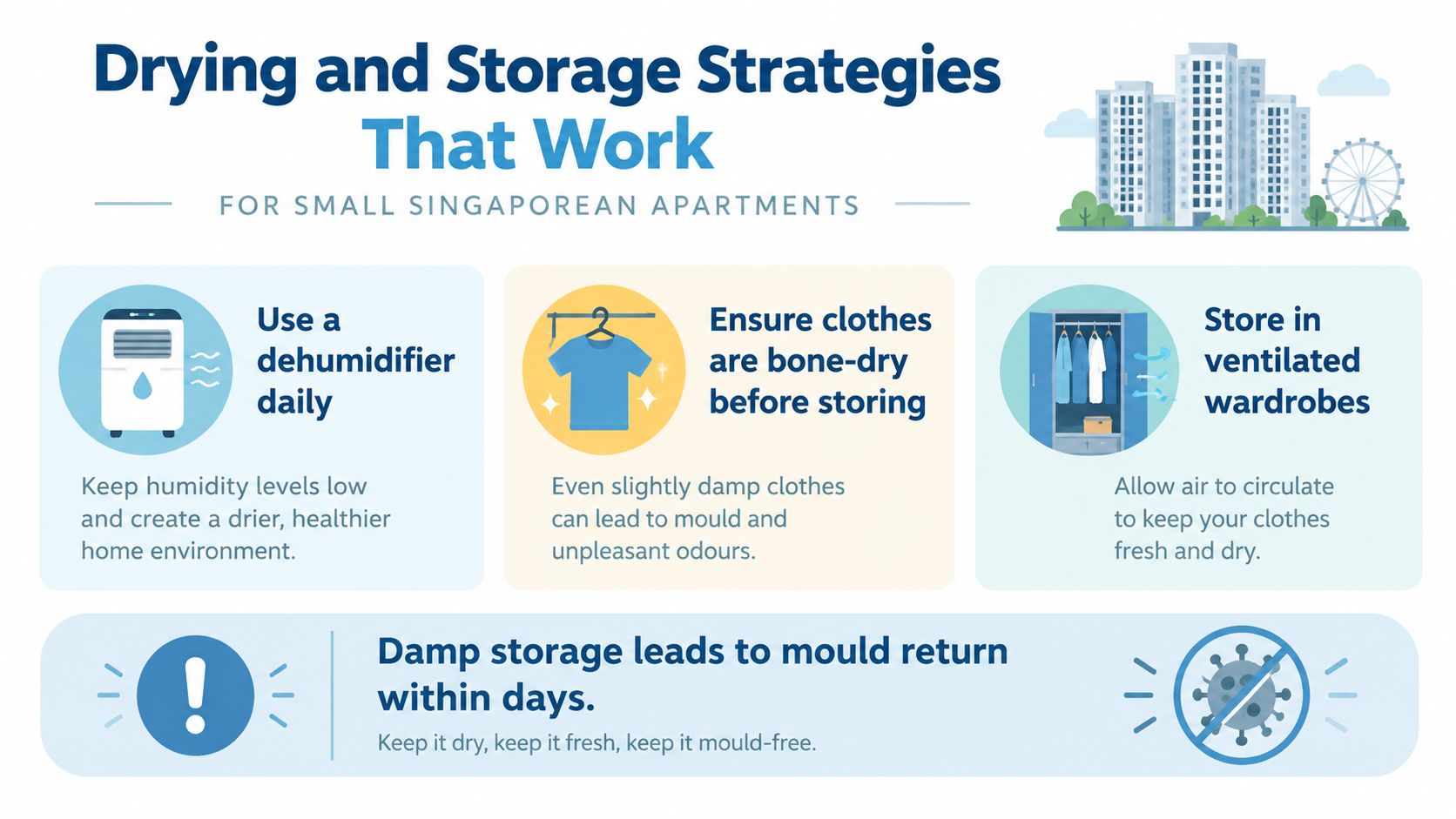
Use this routine after every wash:
• Check the thickest areas: Feel cuffs, collars, waistbands, pockets, and seams rather than judging dryness from the outer surface.
• Separate damp laundry: Don't leave wet clothes compressed in a basket, machine, gym bag, or pile.
• Ventilate the storage space: Open wardrobe doors periodically when practical and keep air pathways clear.
• Rotate rarely worn garments: Inspect formalwear, costumes, and traditional attire instead of leaving them undisturbed for long periods.
• Respond to the first smell: Remove the garment, dry the storage area, and investigate before a small problem affects adjacent clothing.
For a small-home drying setup, these indoor drying methods for avoiding musty smells provide practical options. The key is consistency. A clean garment stored damp is still at risk, while a fully dried garment kept in ventilated, controlled storage has a much better chance of staying fresh.
Yes, it can leave lasting discolouration, weaken fibres, or create an odour that survives repeated washing. Light surface growth on a washable cotton uniform may be salvageable, while a heavily affected delicate garment may not be worth risking with home treatment.
Start with a care-label-approved wash and a cautious vinegar or bicarbonate treatment, testing a hidden area first. Avoid combining cleaning chemicals, and don't assume that a colour-safe label makes every product suitable for silk, wool, prints, or embellished clothing.
Inspect it whenever you notice a musty smell, damp garment, condensation, or recurring marks. Remove clothing, clean visible dust, improve airflow, and check humidity during wet spells rather than waiting for mould to become widespread.
Only when the care label clearly permits it and the garment has no vulnerable lining, embroidery, or trim. For dry-clean-only or valuable pieces, professional assessment is the safer choice.
If mould on clothes has affected your school uniforms, workwear, household laundry, or delicate traditional garments, Tumble Laundry provides pickup, professional cleaning, and door-to-door delivery across Singapore. Visit Tumble Laundry to arrange a suitable laundry or dry-cleaning service before the next damp spell turns a small wardrobe problem into a larger one.

We make laundry days fast and easy for you. We collect, clean and deliver your laundry and dry-cleaning.
53 Ubi Ave 1 #03-43, Singapore 408934
Mon - Fri | 8:30 am–5:30 pm
Sat | 8:30 am–12:30 pm
hello@tumble.sg
+65 62554222
Whatsapp Us


