How to Clean Pillows: The Singapore Home Guide
This is some text inside of a div block.


You've washed the pillowcases, changed the sheets, and made the bed. Then you notice the pillow itself has a stale smell, a yellowed patch, or a damp feel that hasn't quite gone away. In Singapore, that's more than a cosmetic problem. A pillow can look clean while retaining sweat, dust, detergent residue, and moisture inside its filling.
The right method depends on what's inside the pillow. Down, feather, and polyester pillows can usually be washed carefully, while memory foam and latex need a completely different approach. Singapore's humidity also makes drying just as important as washing. A pillow that goes back onto the bed while it's still damp can develop mould.
Singapore's warm, humid conditions change the usual laundry rules. Moisture can remain trapped in fabric and filling long after the surface feels dry, creating conditions that support dust mite and mildew growth. That's why advice written for a cool, dry climate often falls short in local flats and condominiums.
Pillow care guidance for Singapore commonly recommends washing washable pillows every three to six months, while households managing allergies may need to wash them every one to two months. These frequencies come from regional guidance on humidity, dust mites, and bedding maintenance, rather than from appearance alone. You can find further local advice in this guide to laundry best practices in Singapore.
Before adding a pillow to the machine, check its care label and identify the filling. Down, feather, and polyester pillows are generally the washable categories, provided the label allows it. Memory foam and latex pillows should normally be spot-cleaned and aired, because soaking or agitating them can damage their structure.
A pillow protector helps reduce the amount of sweat, skin oil, and dust reaching the insert. It doesn't remove the need for cleaning, but it can make routine care less aggressive, particularly for pillows that can't be immersed.
Practical rule: If the pillow is damp, don't return it to the bed. Dry it completely first, because trapped moisture can encourage mould in Singapore's climate.
Routine airing and fluffing also have a role. These actions help release surface dust and improve airflow through the filling, but they shouldn't be treated as a substitute for washing a washable pillow or controlling allergens with suitable covers. The useful question isn't just, “Does the pillow look fresh?” It's, “Can this filling be cleaned safely, dried fully, and protected from recurring allergen buildup?”
Machine washing works well only when the pillow's construction allows it. Down, feather, and polyester pillows can often go through a washing machine, but careless washing can leave them misshapen, clumped, or slow to dry. Read the label first, and repair or cover any worn casing where filling is escaping.
1. Remove every outer layer. Take off the pillowcase and protector. Wash those separately according to their own care labels so the insert isn't carrying unnecessary soil into the wash.
2. Wash two pillows together. Place two similar pillows in the drum, positioned to balance the load. Washing a single bulky pillow can make the machine vibrate excessively, while a balanced pair allows the drum to move more evenly.
3. Choose a gentle cycle with warm water. Use approximately half the normal detergent dose, as recommended in Singapore pillow-care guidance. Too much detergent can remain inside the filling, making it stiff, encouraging clumping, and extending the drying period in humid weather. See this explanation of front-load and top-load washing machine differences if your machine struggles with bulky bedding.
4. Run an extra rinse. This step removes detergent that the first rinse may leave behind. Don't skip it just because the pillow looks clean. Soap residue inside the filling can attract more soil and hold moisture.
5. Inspect the casing before drying. Look for leaks, torn seams, or areas where the filling has gathered. Gently redistribute the filling before the pillow enters the dryer.
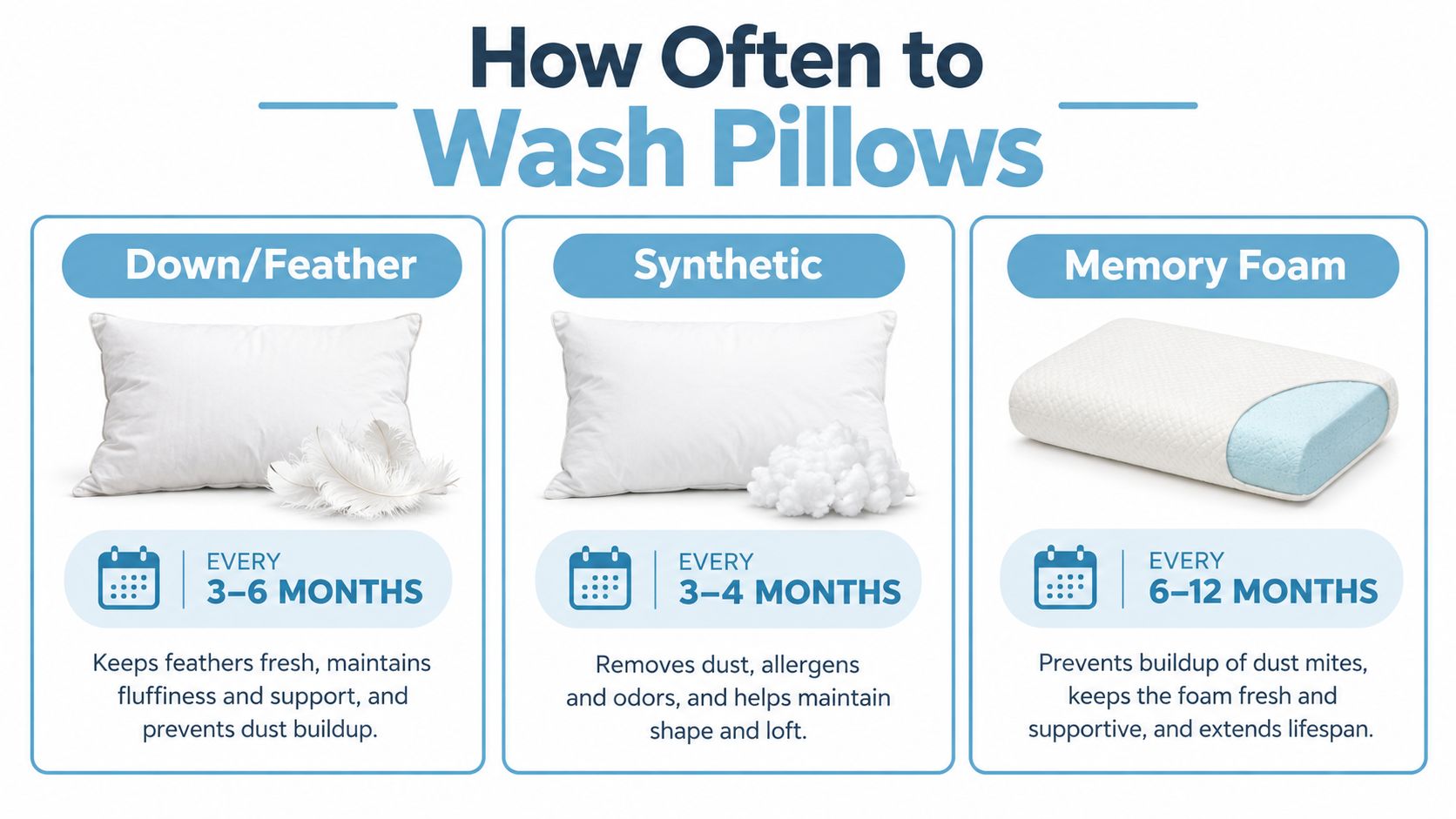
Down and feather pillows need particular attention because moisture can gather around the filling and leave dense pockets. Polyester pillows may recover more easily, but they can still develop hard clumps when detergent remains or drying is incomplete. Neither type should be put back into use because the outer fabric feels dry.
Avoid adding bleach or strong cleaning chemicals unless the care label specifically permits them. These products can affect fabric and filling, and they aren't a substitute for proper rinsing and drying. For a small isolated mark, local treatment may be less disruptive than washing the entire pillow.
A machine-safe label is permission to wash, not permission to use the hottest or most aggressive programme. Gentle agitation, restrained detergent use, and complete drying protect the loft far better than a forceful cycle intended for towels.
Memory foam and latex are where many home-care routines go wrong. These materials aren't ordinary fibre-filled bedding. Don't put a memory foam or latex pillow into the washing machine, and don't submerge it in a basin. Immersion can affect the internal structure, while agitation may deform the pillow. Heat from a dryer can cause further damage.
Singapore cleaning guidance generally recommends spot-cleaning these pillows and allowing them to air-dry fully. Start by removing the cover and checking its label. Wash the cover separately, then treat only the affected area of the insert.
• Blot first. Use a dry towel to lift sweat, spilled liquid, or saliva. Rubbing can push the stain deeper into the material.
• Use mild detergent sparingly. Mix a small amount of mild detergent with water, dampen a clean cloth, and work gently from the outside of the mark towards the centre. The cloth should be damp, not wet enough to saturate the foam.
• Remove residue carefully. Wipe the area with another cloth lightly dampened with clean water. Leaving detergent behind can create a sticky surface that attracts dirt.
• Air-dry completely. Place the insert in a well-ventilated area, away from enclosed storage and strong direct heat. Turn it as needed so air reaches all sides. Don't use a tumble dryer.
• Refit the cover only when dry. Trapping even slight moisture beneath the cover can lead to stale odours and, in the right conditions, mould.
Routine airing and fluffing can help manage surface dust, but foam and latex shouldn't be beaten, twisted, or wrung. If the pillow has absorbed a large amount of liquid, developed a persistent smell, or shows visible mould, cleaning may not restore it safely. The care label and the condition of the core should decide whether you continue cleaning, replace the insert, or seek specialist advice.
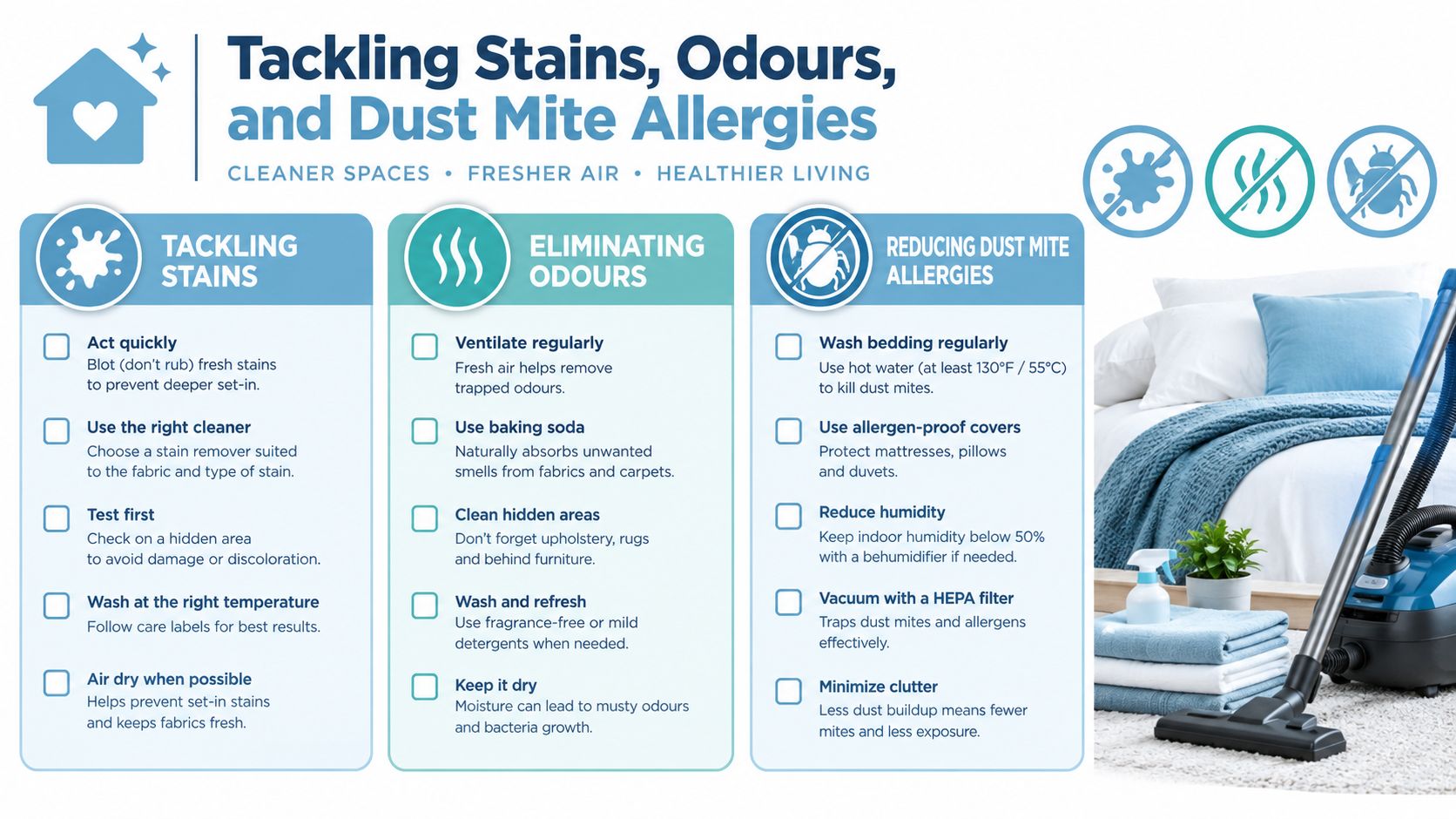
A yellow patch usually points to accumulated sweat, skin oil, or saliva. Treating the visible mark can improve appearance, but it doesn't automatically address dust mites or allergens inside the pillow. Clean-looking bedding isn't always allergen-controlled bedding, particularly when a pillow has a natural filling or can't be washed at a high temperature.
For fresh spills, blot rather than scrub. A lightly damp cloth and mild detergent are safer starting points than saturating the pillow with a strong product. After treatment, remove soap residue with a clean damp cloth and dry the area thoroughly. For broader stain-removal principles, use this practical guide to removing stains from clothing, adapting the level of moisture to the pillow material.
Singapore clinical guidance places strong emphasis on allergen-impermeable pillow covers or frequent washing. Hospital guidance also recommends washing bedding in hot water at approximately 60 to 65°C to kill mites. That temperature isn't appropriate for every pillow insert, so don't assume a foam, latex, or delicate natural-fill pillow can be treated in the same way as a washable synthetic one. The College of Family Physicians Singapore guidance is useful context for the difference between ordinary cleaning and allergen management.
A practical decision tree looks like this:
• The pillow is washable and structurally sound: Launder it according to the care label, then dry it completely. Use a protector afterwards to reduce future exposure.
• The pillow is foam or latex: Keep the insert out of the washing machine. Spot-clean small areas, air it thoroughly, and wash the removable cover.
• The pillow is a natural fill and allergy symptoms persist: Cleaning may not be enough. Singapore guidance from NUH advises replacing natural-fill bedding such as feather pillows with synthetic fibres to reduce house dust mite growth.
• The pillow has mould, a lasting damp smell, or damaged seams: Don't keep masking the problem with fragrance. Replacement or professional assessment is more sensible than returning a compromised pillow to the bed.
Daily surface care also matters. A consistent household routine for dusting, ventilation, and handling laundry can support pillow hygiene, and Gmaids' daily cleaning guide offers a useful reference for organising those tasks. It won't replace correct pillow treatment, but it can prevent dust and moisture from accumulating around the sleeping area.
Washing removes soil. Drying determines whether the cleaning was successful. A pillow can feel dry on the outside while its centre remains damp, especially when the filling is dense or has clumped during the wash.
For washable pillows, tumble-dry on low or medium heat rather than relying on high heat to shorten the process. Add clean tennis balls or dryer balls to help break up clumps and keep the filling moving. Check the pillow repeatedly, remove it to shake and redistribute the fill, then continue drying until the centre feels as dry as the surface.
Air-drying in a Singapore flat requires more than placing the pillow on a chair. Support it so air can reach both sides, leave space around it, and use a fan to keep air moving through the room. Avoid pressing it against a wall or leaving it in a closed bedroom with limited ventilation.
A balcony or sheltered outdoor area can help, but protect the pillow from rain and prolonged harsh sunlight if the care label warns against it. Turn the pillow during drying and squeeze different sections gently to check for cool or dense damp spots. Don't use a pillow until those spots have disappeared.
The test isn't whether the pillow smells fresh. The test is whether the filling is completely dry throughout.
If you're drying laundry indoors, the same principles of ventilation and moisture management apply. This guide to drying clothes indoors without musty smells can help you plan airflow in a compact home. For wider concerns about recurring dampness or mould around a property, environmental hazard detection for property managers provides useful background on identifying environmental risks.
Fluff the pillow by hand after drying rather than folding or compressing it straight away. Store spare pillows in a dry, breathable space, not in a sealed plastic bag while any moisture remains. If a pillow develops a persistent musty odour after careful drying, take that as a warning that moisture may still be trapped or mould may already be present.
Home washing is practical for a suitable pillow when you have a compatible machine and enough room to dry the item properly. It becomes less practical when the pillow is bulky, heavily soiled, delicate, or needed back quickly. A small apartment can make drying the actual bottleneck, especially when several household items need attention at once.
Professional cleaning is worth considering when:
• The care label is restrictive: A specialist can assess whether the item needs a specific cleaning process rather than a standard wash.
• The pillow is heavily soiled: Stains and odours that have penetrated the filling may need controlled treatment and more thorough moisture extraction.
• You lack drying space: Industrial equipment can extract more water consistently than a crowded home drying area, reducing the risk of returning a damp pillow to use.
• You have multiple bulky items: Pillow inserts, protectors, pillowcases, and bolsters can be difficult to manage in a domestic machine without overloading it.
• You need a handled collection process: Pickup and delivery remove the need to transport bulky bedding through public spaces or fit it into a busy weekend schedule.
A provider should follow the care label, keep customer items in dedicated loads, inspect stains, and explain any limitations before cleaning. Those details matter more than a generic promise of freshness. For related fabric-care decisions, this overview of dry-cleaning services in Singapore explains why different materials may require different processes.
Tumble Laundry offers professional cleaning for pillows, pillow protectors, pillowcases, bolsters, and related household items, with islandwide pickup and door-to-door delivery. If your pillow can't be safely washed at home or you can't guarantee complete drying, book Tumble Laundry to arrange a suitable cleaning service and keep damp, allergen-laden bedding out of your sleeping space.

We make laundry days fast and easy for you. We collect, clean and deliver your laundry and dry-cleaning.
53 Ubi Ave 1 #03-43, Singapore 408934
Mon - Fri | 8:30 am–5:30 pm
Sat | 8:30 am–12:30 pm
hello@tumble.sg
+65 62554222
Whatsapp Us


