Linen Laundry Service: Home vs Business Guide
This is some text inside of a div block.

You're staring at another pile of sheets, towels, uniforms, and curtains, and the timing never seems to line up. The washer's busy, the dryer's slow, the wardrobe needs clean linen tomorrow, and a business can't afford to wait for a free afternoon to catch up. That's where a linen laundry service stops being a nice-to-have and starts acting like a real operational decision.
A parent finishing work late in the CBD doesn't need a lecture on laundry theory. They need clean bedding, fresh towels, and a way to stop the weekend from disappearing into sorting, washing, hanging, folding, and ironing. The same pressure shows up in a boutique hotel, where room turnover depends on clean linen arriving on time, not when someone has a spare hour.
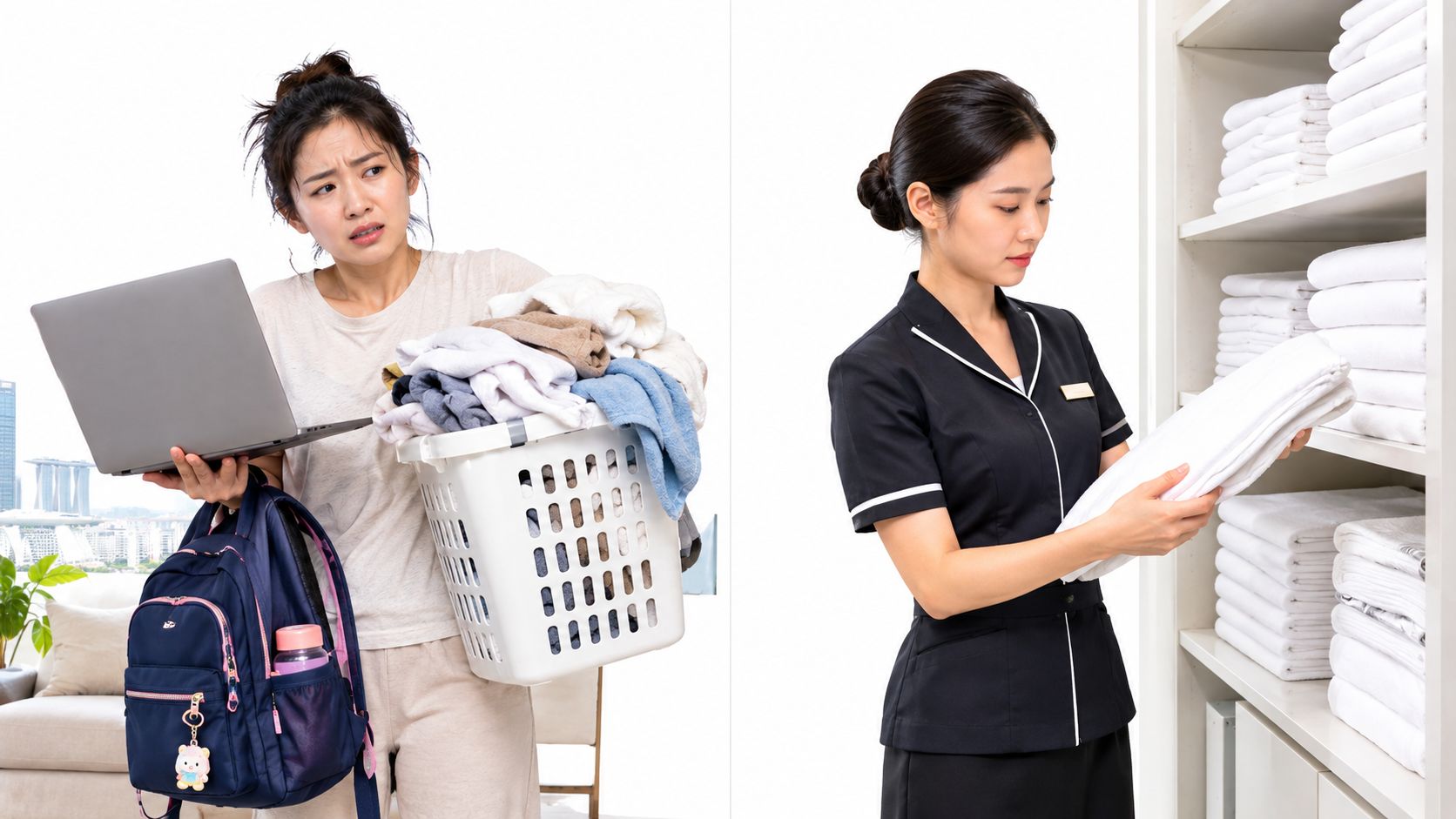
A linen laundry service covers more than household sheets and towels. It can also handle uniforms, curtains, table linen, workwear, and delicate pieces that need careful treatment instead of a one-size-fits-all cycle. For homes, the value is time and space. For businesses, the value is continuity.
A good rule of thumb is to match the service to the job, not the other way round. If you want a plain-language refresher on bedding care, the ideal temperature for washing bedding is a useful reference point before deciding how much of that work you want to outsource.
Singapore homes and businesses often live with tight storage, limited drying space, and packed schedules. For a quick look at how a pickup-and-delivery workflow is usually structured, see Tumble's service overview. Once the laundry starts competing with actual work or family time, the service becomes less about luxury and more about keeping the week under control.
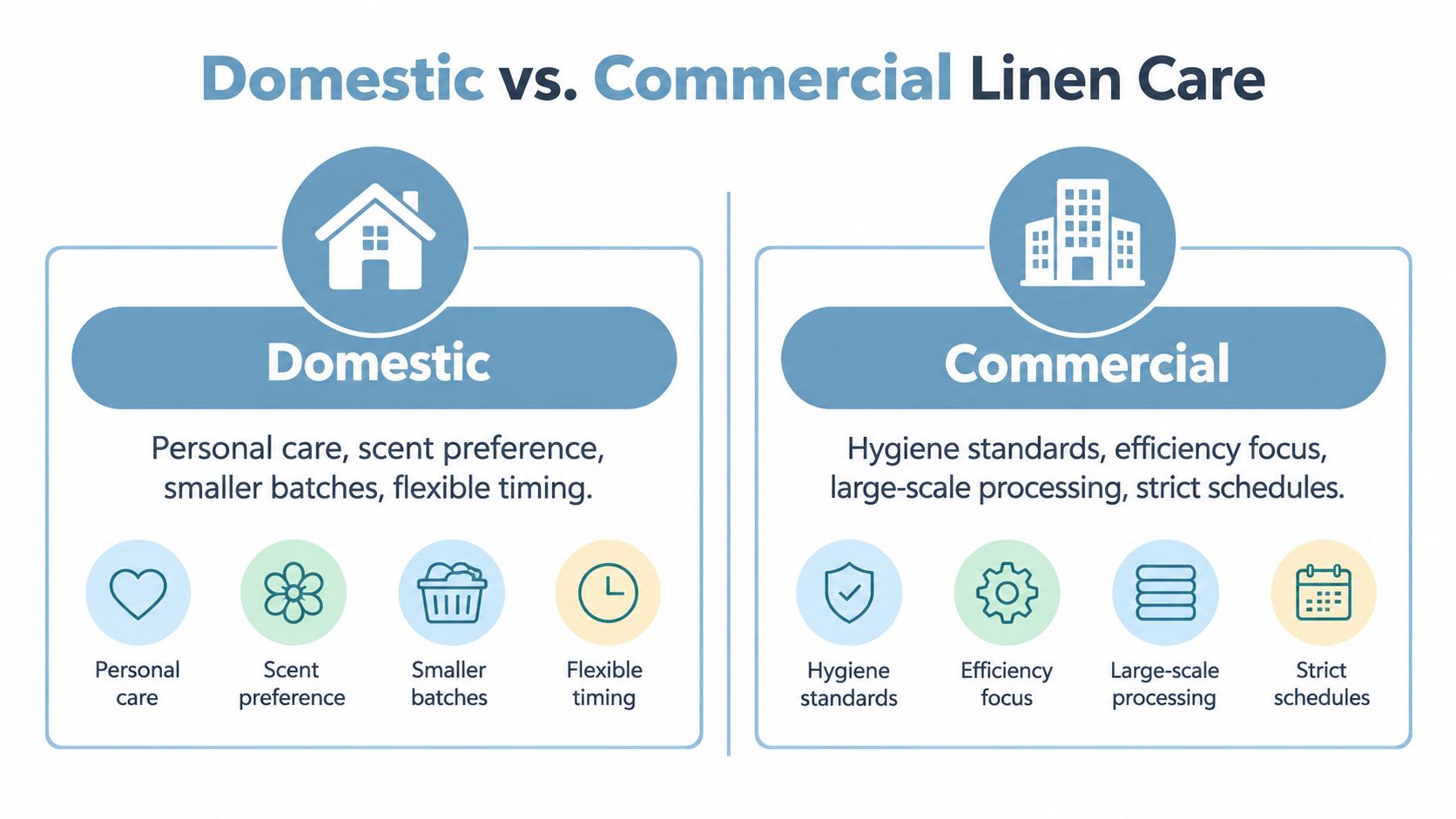
Home laundry and commercial linen care solve different problems, even when the fabric looks similar on the surface. At home, people care about scent, softness, delicate garments, and whether a favourite shirt comes back exactly how they like it. In business settings, consistency and hygiene take priority because one missed load affects guests, customers, or compliance.
Domestic laundry usually runs in small batches, with room for personal preferences. Someone can separate whites, lower the spin, skip softener, or choose a gentler cycle for a traditional outfit. Commercial workflows are built for throughput, repeatability, and load discipline, which is why dedicated facilities matter more than a single domestic machine trying to do everything.
Practical rule: if the item must look the same every time it comes back, it needs a controlled commercial process, not an improvised home routine.
For healthcare-sensitive textiles, Singapore guidance sets validated thermal disinfection thresholds at >65°C for at least 10 minutes or, preferably, 71°C for at least 3 minutes, with cycle times varying by loading level according to PUB's water-efficiency resources (PUB guidance). That's a good reminder that time-temperature control matters just as much as heat alone. Heavily soiled linen may need a sluice cycle first, while heat-labile fabrics should be separated and chemically disinfected instead of treated like regular wash items.
The practical difference shows up in the handling, too. Domestic laundry can tolerate some flexibility. Commercial linen care can't afford guesswork, especially for hotels, restaurants, schools, and clinics that need predictable turnaround and stable standards.
For a closer look at a commercial workflow built around organised processing, see Tumble's commercial laundry service. The distinction is simple, business laundry is a process, not an errand.
The biggest mistake people make is treating every laundry provider as if they sell the same thing. They don't. Some charge by bag, some by weight, some by piece, and some combine collection, cleaning, ironing, and delivery into one workflow. If you don't compare the model, you end up comparing only the headline price.
A wash and fold service is the cleanest option for everyday items, especially if you want laundry returned ready to put away. Clean and iron is different, because it's built for garments that need to look presentable on arrival, not just clean. Curtain cleaning and specialty handling sit in a separate category because the labour, fabric care, and reinstallation needs are different again.
Common Laundry Service ModelsPricing StructureBest ForWash and foldPer bag or per kilogramWeekly household loads, towels, everyday clothingClean and ironPer pieceOffice wear, uniforms, traditional attire, presentation itemsCurtain cleaningPer item, often with add-onsHomes, rental handovers, offices, hospitality spacesSubscription laundryFixed bag plan or recurring packagePredictable volume, regular households, steady business usePay-as-you-goPer kilogram or per orderIrregular demand, occasional overflow, trial use
The pricing model matters because it affects how you use the service. A subscription can suit steady weekly volume. Pay-as-you-go works better if your laundry needs shift from week to week. If you're comparing recurring plans, the subscription option page shows how a structured service usually bundles collection and delivery into a repeatable routine.
Turnaround time is part of the price, even when it doesn't appear in the number. Faster service reduces the amount of spare linen you need to keep at home or on-site. Slower service can be fine for overflow items, but it becomes a problem if you're counting on one set of sheets, one pool of towels, or one uniform rotation.
Useful filter: don't ask only “How much per load?” Ask “How often do I need it back, in what condition, and what happens if volume spikes?”
The right model depends on rhythm. Households usually need flexibility. Businesses usually need predictability.
Delicate linen doesn't fail loudly, it fades, stretches, pills, or loses structure over time. That's why the best providers start by reading care labels instead of guessing. A silk blouse, a formal uniform, or a traditional outfit can't go into the same process as towels and sheets just because the load is convenient.
Start with the fabric, not the label of the service. Tell them what the item is, what stains are present, whether you want cold-water treatment, and whether it needs ironing or hanging on return. If the piece is white and you're trying to keep it bright without harsh methods, this eco-friendly guide to white laundry is a useful reminder that cleaning quality and fabric longevity should be balanced, not assumed.
Use this checklist when the item matters:
• State the fabric clearly: Cotton, linen, silk, or mixed fibres behave differently in wash and dry cycles.
• Flag stains early: Oil, sweat, makeup, and food marks often need pre-treatment before the main wash.
• Ask about separation: Dedicated loads matter when you don't want delicate items handled with heavy household linen.
• Confirm the finish: Folded, hung, pressed, or bagged delivery changes how usable the item is when it comes back.
Heavily soiled pieces need a provider that knows when to pre-treat and when to stop. Heat-sensitive fabrics need a provider that can process them without forcing them through the same route as bedding or towels. The value is in the decision-making, not just the wash.
For more detail on garment-specific handling, see Tumble's linen garment care guide. Good linen care is less about being gentle in general and more about being exact where it counts.
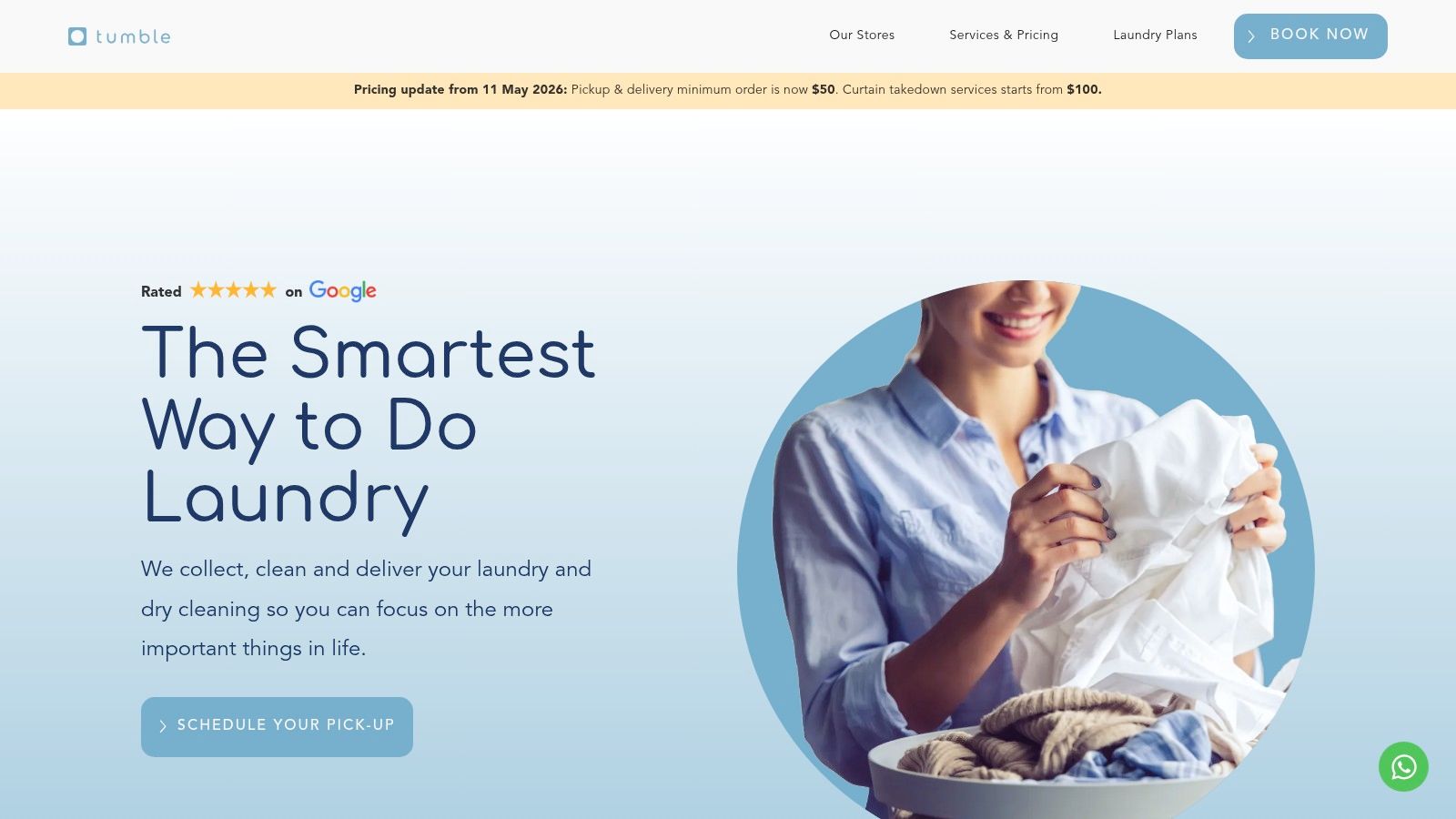
A modern laundry provider in Singapore has to do more than collect and return clothes. It needs a controlled process, clear pricing, and enough operational discipline to handle households and organisations without mixing standards. Tumble Laundry is one example of that model, with islandwide pickup and delivery, wash and fold, ironing, dry-cleaning, curtain cleaning, and commercial services operated from in-house facilities. Its public company information also describes a focus on quality control and direct processing, which matters when consistency is the main reason to outsource in the first place. See the company's background on Tumble's about page.
The useful distinction here is not branding, it's workflow. In-house processing gives a provider tighter control over how items are sorted, treated, tracked, and returned. Dedicated loads per customer reduce the risk of mixed handling, and itemised tracking helps with by-piece orders where the return condition matters as much as the cleaning itself.
Tumble's service structure also shows how real-world laundry decisions are made. Some customers need a recurring bag-based plan. Others need occasional, weight-based washing for overflow. Businesses may need scheduled commercial handling rather than ad hoc pickup. Those are different jobs, and a serious provider should make that difference visible.
• Separate processing: Items should not be mixed blindly with other customers' laundry.
• Clear turnaround: You want stated collection and return windows, not vague promises.
• Finish quality: Folded, pressed, or hung delivery should match the item type.
• Service fit: Households, curtains, workwear, and business linen shouldn't all follow one default path.
The embedded video below gives a sense of how a service can present its workflow and customer-facing process. That matters because laundry is not only about cleaning, it's also about coordination.
The strongest providers make the logistics invisible to the customer while keeping the process visible enough to earn trust. That combination is what turns laundry from a household burden into a managed service.
For a business, laundry is rarely just laundry. It sits inside staffing, utility use, equipment wear, space management, and service continuity. When a hotel, school, clinic, or F&B outlet handles linen in-house, the cost includes washing time, drying time, maintenance, storage, and the extra labour needed to keep the cycle moving.
Singapore's laundry market shows why this is not a niche issue. The market generated USD 455.1 million in revenue in 2022 and is projected to reach USD 873.1 million by 2030, implying an 8.5% CAGR from 2023 to 2030 (Grand View Research). The residential segment made up 59.04% of revenue in 2022, while commercial laundry was identified as the fastest-growing application segment in the same outlook. That split says something practical, businesses are looking for a more dependable way to handle linen.
Commercial laundry reduces the burden on staff who should be serving guests or customers. It also removes the hidden drag of maintenance, especially when equipment is running hard and unpredictably. The water side matters too, because PUB's benchmark for commercial laundries sits at 13.1 m^3 per tonne of laundry processed, a useful planning ratio when you're assessing water intensity and reuse opportunities (PUB benchmark).
If linen turnaround is tied to your front-of-house service, outsourcing is a resilience decision, not just a convenience decision.
The question for small operators isn't “Can I wash this myself?” It's “What happens when the machine breaks, the staff are short, or occupancy spikes?” A business that depends on clean linen every day can't afford a laundry bottleneck to become a customer-facing failure.
Recent Singapore coverage also points to a practical tension in hospitality and institutional settings, with operators balancing labour constraints, occupancy volatility, and the need for reliable turnaround (6Wresearch market commentary). For many SMEs, outsourcing shifts the risk away from the business and onto a specialist whose core job is to absorb that load.
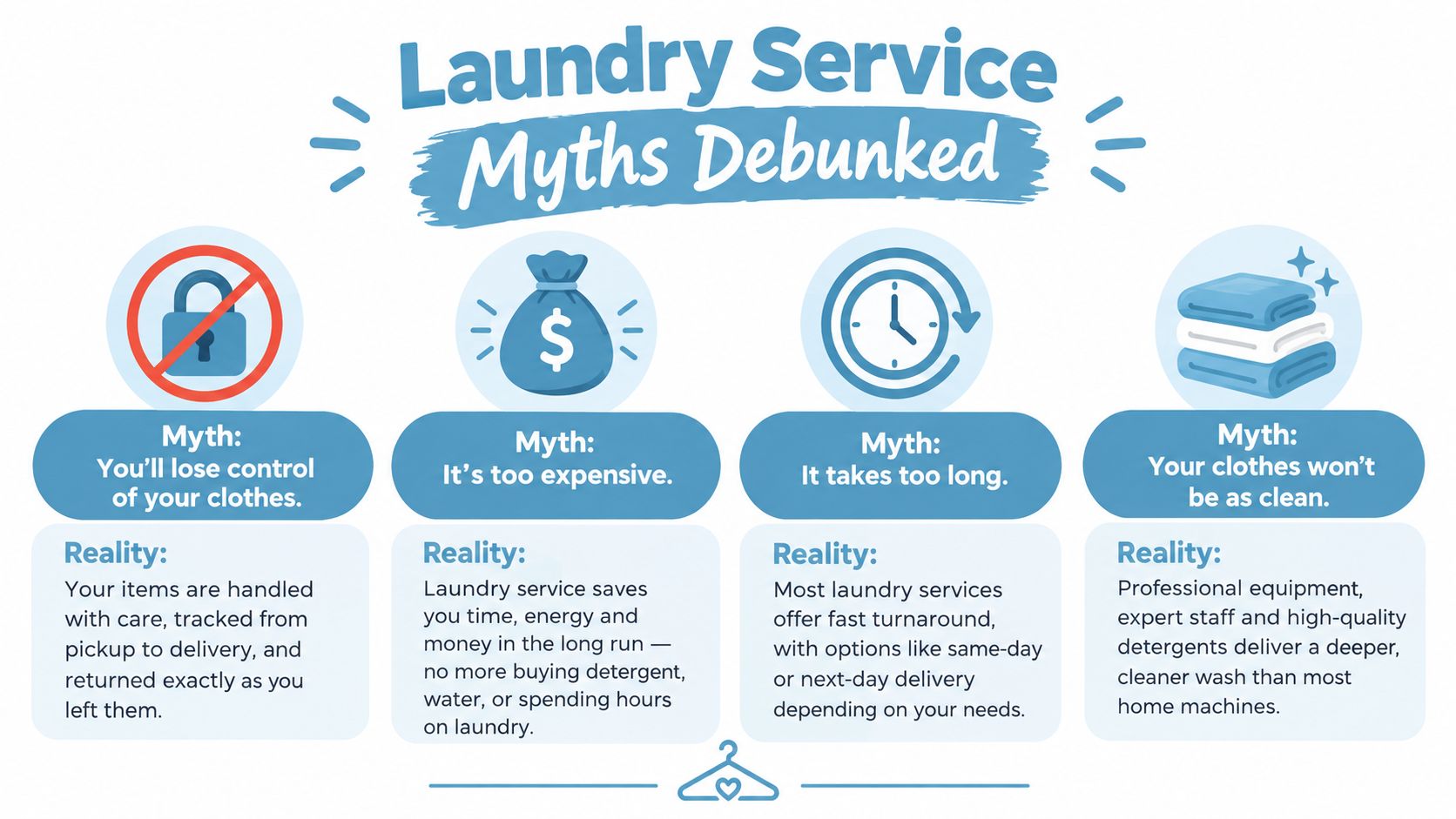
The first myth is that outsourcing means losing control. In practice, the opposite is often true when the provider uses dedicated loads, item tracking, and clear care instructions. You may have less physical handling, but you gain process control.
The second myth is that it's always too expensive. That only holds if you compare the service price to the surface cost of pressing a machine button at home or on-site. It ignores labour, wear, utilities, and replacement linen, all of which accumulate.
The third myth is that commercial laundry is only for big hotels. It isn't. Boutique hotels, schools, F&B outlets, clinics, and even households with limited drying space can all benefit from a managed workflow.
The last myth is that “greener” always means better for the fabric. Singapore's sustainability conversation is real, but greener methods still need to protect linen lifespan, because textile and leather waste remains material in the local waste stream. The trade-off is energy and water use versus cleaning strength and replacement frequency, not a simple yes-or-no badge.
The right laundry setup depends on what failure costs you most. If the problem is time, then pickup, delivery, and folding matter most. If the problem is presentation, then ironing and garment handling matter more. If the problem is scale, then turnaround consistency and process control matter most.
A simple decision framework helps:
• Households with steady weekly volume: look for a bag-based or subscription model with clear pickup windows.
• Homes with delicate or formal items: prioritise by-piece care, pressing, and fabric-specific handling.
• Businesses with regular linen turnover: ask about commercial workflows, dedicated loads, and return discipline.
• Spaces with curtains or bulky items: confirm takedown, cleaning, and rehang support before you book.
The most useful questions are practical ones. Who handles the items? Are loads mixed? What happens if an item needs special treatment? How long does the turnaround really take? If the provider can answer those clearly, the service is usually built for real life, not just marketing copy.
For Singapore households and businesses that want islandwide pickup, in-house processing, and options across wash and fold, dry cleaning, ironing, curtain care, and commercial service, Tumble Laundry is one place to compare those needs against a structured workflow. If your linen has started competing with your time, it's worth checking whether a managed service fits the way you live and work.

We make laundry days fast and easy for you. We collect, clean and deliver your laundry and dry-cleaning.
53 Ubi Ave 1 #03-43, Singapore 408934
Mon - Fri | 8:30 am–5:30 pm
Sat | 8:30 am–12:30 pm
hello@tumble.sg
+65 62554222
Whatsapp Us


