Ironing Service from Home: A Complete Guide for 2026
This is some text inside of a div block.

Monday morning in Singapore has a habit of exposing every unfinished chore at once. The shirts that should be crisp are still creased, the school uniform needs a quick rescue, and the formal wear for work or a family event is hanging somewhere with no time left for a proper press. That is usually when an ironing service from home stops sounding like a luxury and starts looking like a sensible household process.
For many Singapore homes, the issue is not just laziness or convenience. It is time scarcity, limited drying and pressing space, and a wardrobe that mixes office wear, uniforms, and delicate garments that need more than a rushed pass with a household iron. Singapore's resident labour force participation rate was 67.4% in 2024, with female participation at 62.0%, and the country is 100% urbanised in World Bank country data, which helps explain why pickup-and-return garment care fits daily life here better than it does in less dense places (Grand View Research reference).
The strongest reason this service works here is simple. Most households don't have the space or patience to set up a serious pressing station, dry racks, and garment staging area in a flat or condo unit, especially when workwear has to cycle through the week without looking tired. Singapore's dense housing pattern makes pickup-and-delivery ironing more practical than a home-based setup for many residents, because the service solves a space problem, not just a convenience problem.
A good operator also shortens the mental load of laundry day. Instead of sorting shirts, trousers, uniforms, and occasion wear around the clock, the household passes the load to a provider that can collect, process, and return items in a predictable rhythm. If you want a practical benchmark for how these services are usually organised, the guide to laundry pickup logistics is a useful starting point, because it shows how routing, timing, and handoff discipline shape the whole experience.
Practical rule: if your wardrobe needs regular pressing and your home doesn't have a proper place to sort and hang garments, pickup-and-return will usually fit better than trying to press everything yourself.
The Singapore context matters here. Many households live with compact storage, mixed fabric care needs, and a wardrobe that includes office shirts, schoolwear, and traditional attire. That mix makes ironing a recurring operational task, not a once-in-a-while errand.
If you are comparing providers, a service like Tumble Laundry's ironing and laundry services shows the model clearly, because the collection and return flow is built around doorstep handling rather than self-managed drop-off. The key question is whether that workflow matches your living situation. For most households that are already stretched for time and space, it usually does.
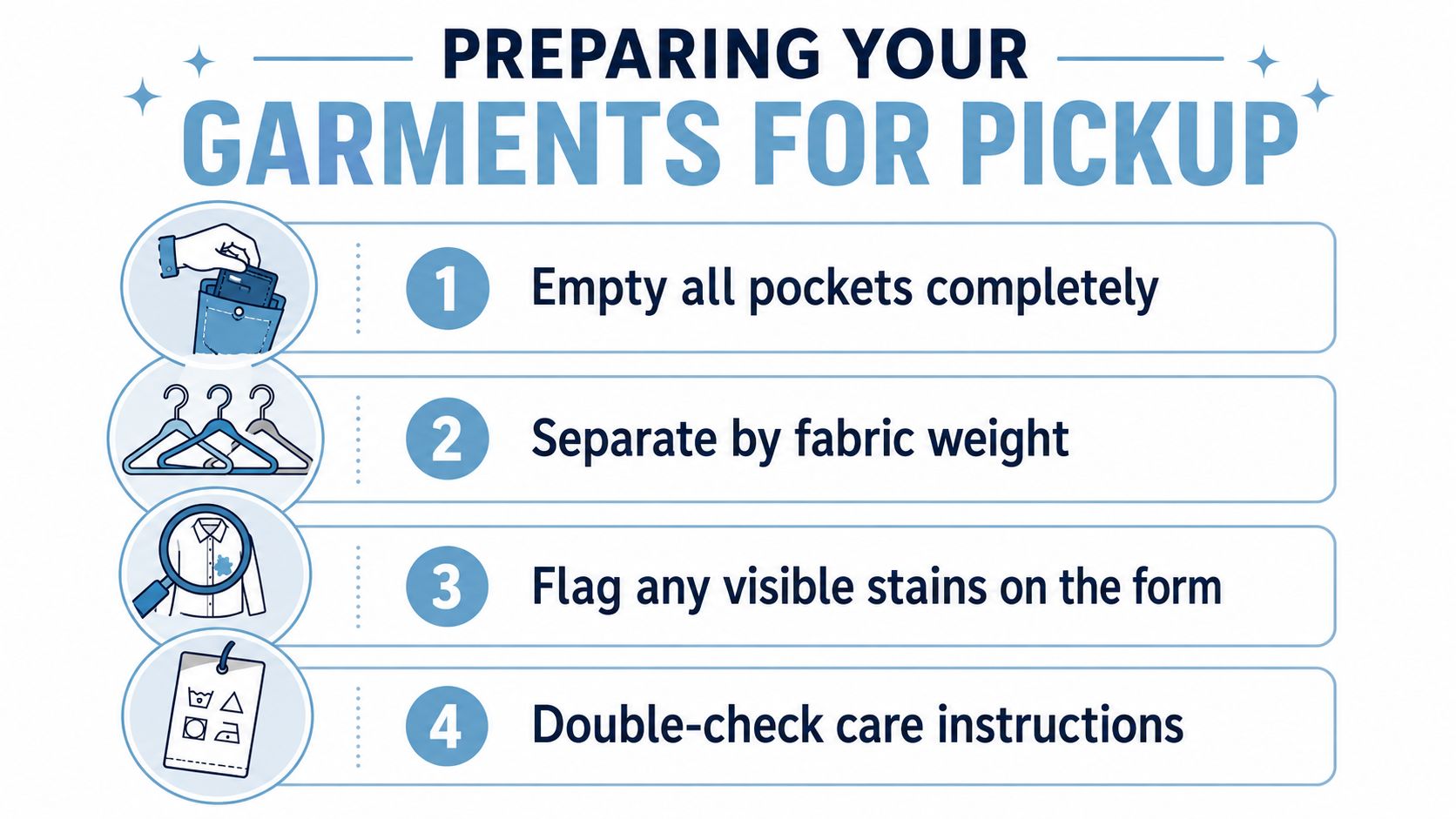
The customer controls quality before the driver even arrives. A five-minute prep pass can prevent mix-ups, protect delicate pieces, and save a second trip for a shirt that should have been flagged from the start. That matters even more in Singapore, where households often book ironing pickup because they're already short on time and don't have spare space to re-sort garments after collection.
Empty every pocket. Receipts, pens, lip balm, and loose coins are the most common things that get missed in a rushed pickup, and they can create avoidable problems once garments are in transit. Then separate by fabric weight, because a light blouse, a school polo tee, and a heavier work shirt don't belong in the same careless pile.
Visible stains should go straight onto the order form or message thread, not left for the processor to guess. A Friday dinner stain on a collar, for example, needs different handling from an everyday sweat mark. The same logic applies to school uniforms, which should be grouped as a set so one missing item doesn't hold up the whole rotation. If you're unsure about symbols or fabric notes, the laundry symbols and care labels guide is worth checking before pickup.
A saree or kebaya with a dry-clean-only label shouldn't be treated like a standard press job. If the care label calls for a different process, flag it clearly. The same goes for embellishments, pleats, or trims that can flatten badly under heat if nobody notices them early.
Garment prep isn't busywork. It's quality control done at home, before the service starts.
If the provider offers hanger return, decide that before pickup. Shirts and trousers that are meant for the office usually come back easier to store on hangers, while some everyday items are better folded. That choice affects how quickly you can put the load away when it returns.
Singapore households usually face two workable models. One is per-piece Clean & Iron, where each garment is processed individually and returned on hangers in protective sleeves. The other is a subscription wash-and-fold plan, where everyday laundry is handled in bag-based loads and a light press may be included depending on the service structure.
The choice isn't about which one sounds cheaper on the page. It's about what kind of wardrobe you have and how often the same items need to be wearable again without wrinkles. Workwear, formal shirts, and special garments usually sit better in a per-piece model. Everyday tees, socks, towels, and general household laundry tend to fit a subscription load much better.
OptionPricingTurnaroundBest ForPer-Piece vs Subscription Ironing OptionsPer-piece, itemised service for garments that need individual handling5 working days for Clean & Iron, according to the service structure described by the providerOffice wear, formal pieces, delicate garments, mixed wardrobesPer-Piece vs Subscription Ironing OptionsBag-based subscription, priced by load for recurring household laundry2 days for subscription loads, as stated in the plan detailsWeekly family laundry, towels, basics, larger recurring loads
The structure matters because it changes how much you need to think about every booking. With per-piece ironing, you are paying for item-level handling, so it makes sense to send shirts, trousers, and other garments that benefit from individual tracking. With subscription loads, the efficiency comes from volume and repetition, which suits routine household cycles.
If you're comparing the two in practice, the subscription page is useful because it shows how bag-based recurring service differs from item-based garment care. The best fit depends on wardrobe mix, not preference alone.
Practical rule: if you'd be annoyed by a mixed return or a rushed fold, choose per-piece. If the priority is clearing recurring everyday laundry quickly, subscription is usually the cleaner fit.
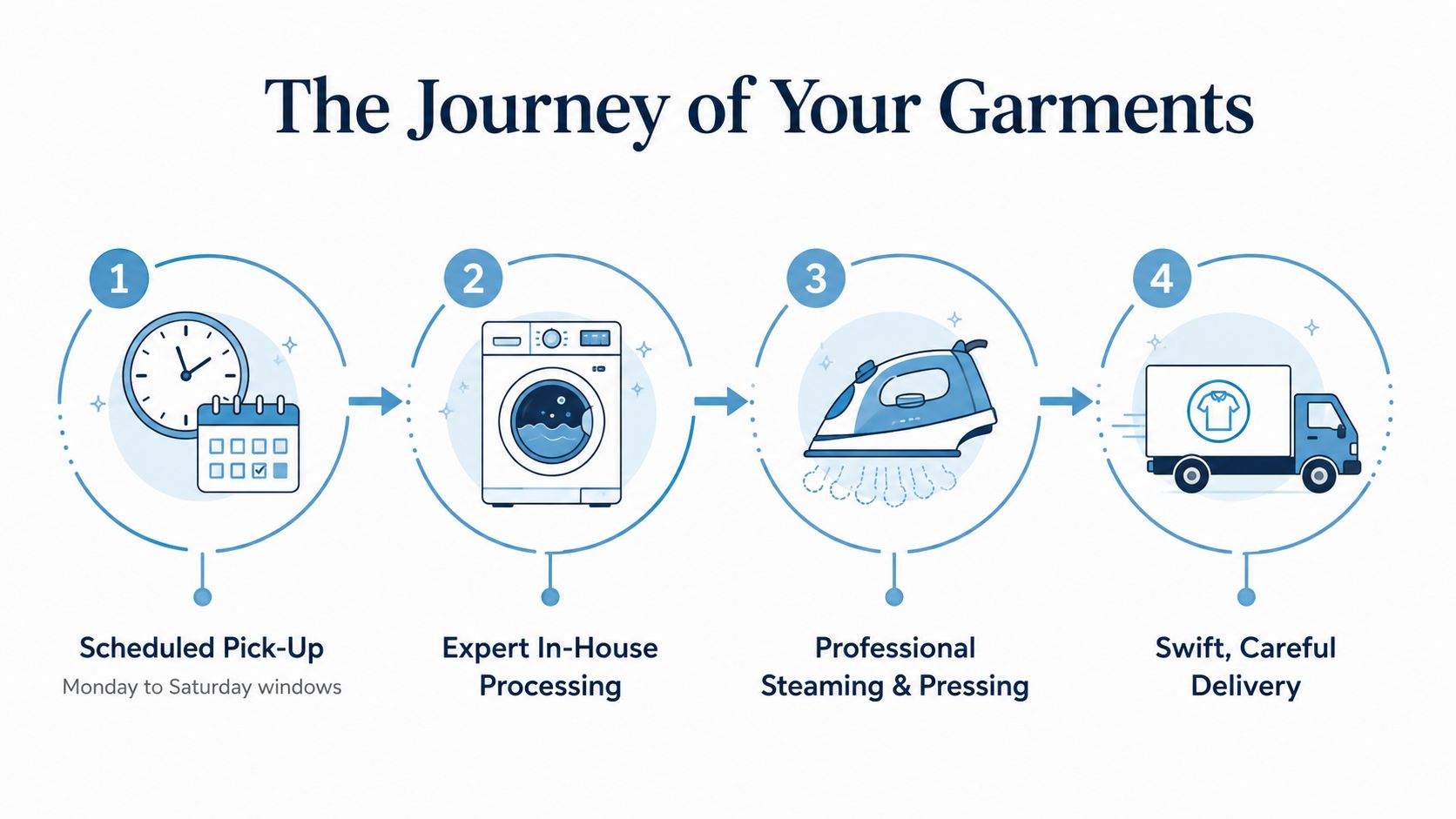
The handoff is where a lot of service quality is either protected or lost. A solid ironing provider in Singapore will collect within scheduled windows from Monday to Saturday, keep processing in-house, and avoid mixing one customer's garments with another customer's items. That makes the workflow more predictable, and it gives the operator a better chance of preserving care-label instructions and visible garment condition.
Once the pickup is booked, the garments are logged and moved into a dedicated load. For by-piece orders, itemised tracking matters because it keeps shirts, trousers, dresses, and special garments accountable from collection through return. That tracking is especially useful when customers send in office wear and formal items that need to come back in exactly the right condition.
At the facility, the garments are inspected for stains and care-label requirements before pressing or laundering begins. The point is not just cleanliness. It is consistency, so the same shirt isn't treated the same way as a delicate blouse or a piece of formal wear with a stricter finish requirement.
Clean & Iron returns on hangers in protective sleeves, which is the right format for garments that need to go straight into a wardrobe or back into the office rotation. Wash & Fold returns in bags, which works better for general household laundry and items that don't need immediate hanger storage. Those are different delivery outcomes, and you should judge them as separate services rather than one interchangeable laundry option.
If you want a provider example, the order flow on Tumble Laundry's order confirmation page shows how the booking stage connects to fulfilment. That kind of transparency matters more than a headline price when you are deciding whether the service can really handle your wardrobe type.
The main trade-off is turnaround versus handling depth. The service gets faster when the handling is more standardised, but piece-level care takes longer because the garments aren't just being folded into a bulk load. This is why service windows matter more than marketing claims.
The best ironing job can still look tired if the customer stores it badly in Singapore's humidity. Once the bundle arrives, the first move is not to leave it on a sofa or chair while you get dinner started. It is to hang or fold it immediately, because pressed creases begin to relax again the moment the garment sits in a warm, damp room.
Work shirts and blouses should go straight onto sturdy hangers in the wardrobe if they're needed over the next few days. If a piece is meant for long-term formal storage, keep it separate from the weekly rotation so it doesn't get crushed under daily wear. Fold only the items that are supposed to live folded, because hanger clutter creates more wrinkles than it solves.
Breathable garment bags help when you want to keep office wear protected without trapping too much moisture. That matters after Clean & Iron returns items on hangers in protective sleeves, because sleeves protect during transport but they are not always ideal for long-term storage at home. Remove the outer sleeve, check the finish, then move the garment into the right wardrobe space.
A small crease after delivery is not unusual, especially if the item was packed tightly or the fabric is stubborn. A re-iron request is reasonable when the crease is obvious, the finish is uneven, or the garment clearly did not return in the condition you expected. It is less useful for a wrinkle that appears after you've left the item folded in a warm room for several hours.
Keep one rule in mind, store immediately, judge later. If the garment sat on a chair before it went into the wardrobe, the crease may be on your side of the handoff.
Leftover protective sleeves don't need to be thrown away immediately, but they also shouldn't become permanent storage for every shirt. Use them for transport, short-term protection, or garments that need a clean return trip. For everyday pieces, a proper hanger in a ventilated wardrobe is usually the better end state.
First-time users usually ask the same few questions, and they're the right ones to ask before the first booking.
Is there a minimum order? For some service types, yes. Pay-as-you-go laundry in the publisher's service structure has a $50 minimum order, while other recurring plans are bag-based and structured differently. The safe move is to check the minimum for the exact service you're booking rather than assuming every pickup follows the same rule.
What happens if an item is missing or damaged? Report it as soon as the delivery is checked. Good practice is to compare the returned items against the booking list while the order is still fresh in mind, especially for shirts, trousers, and any garment with a special finish. That makes it much easier to separate a service issue from a household mix-up.
What if a care label is missing? Don't guess. Set the item aside and flag it clearly in the booking notes or WhatsApp message so the provider can decide whether it should be treated as a normal press, a gentler garment-care job, or a different service entirely. Missing labels are common on older uniforms and altered clothing.
Do same-day collection windows mean same-day return? No, not usually. Collection windows and turnaround are separate parts of the workflow, and the published timelines still apply after the pickup is made. That's why it helps to plan ahead when you need a shirt for a meeting or event.
How do I book if I'm busy at work? Use the channel that matches your day. Online booking is best when you can plan properly, while phone or WhatsApp is often easier when you need to confirm a pickup around a changing schedule. If you prefer to schedule in advance, the booking page is the cleanest place to start.
A first booking goes smoothly when you treat it like a short checklist, not a leap of faith. Confirm your wardrobe mix, choose per-piece or subscription based on what needs pressing, prep the garments, and set a pickup window that matches your week. Then store the pressed items properly on return so the result lasts.
If you're still comparing service models, it helps to see how another pickup-and-delivery category handles handoff discipline. The layout of Rug Cleaning Pickup and Delivery in Birmingham is a useful reminder that good logistics always depend on clear collection, careful handling, and realistic delivery expectations.
If your household needs regular ironing, garment tracking, and a return format that fits Singapore apartment living, a provider like Tumble Laundry handles that workflow through collection, in-house processing, and door-to-door return. The next sensible step is to check the booking flow, ask how items are tracked, and confirm what happens if a crease survives delivery before you send the first load.
If you want a straightforward pickup-and-return garment care routine in Singapore, visit Tumble Laundry to see how its ironing, wash-and-fold, and garment-care services are set up. It's a practical place to start if you want to compare turnaround, handoff, and storage expectations before your first booking.

We make laundry days fast and easy for you. We collect, clean and deliver your laundry and dry-cleaning.
53 Ubi Ave 1 #03-43, Singapore 408934
Mon - Fri | 8:30 am–5:30 pm
Sat | 8:30 am–12:30 pm
hello@tumble.sg
+65 62554222
Whatsapp Us


