How to Remove Coffee Stains from Clothes That Actually Work
This is some text inside of a div block.

A coffee spill never waits for a convenient moment. It lands on a work shirt before a client meeting, soaks into a school uniform on the way to tuition, or leaves a brown ring across a blouse at a hawker table when the cup tips too far. The fix is usually simple if you move fast, and frustrating if you let heat or rubbing do the wrong job.
Coffee stains are mostly tannin stains, which means they bind to fibres quickly and get harder to lift once they've had time to dry. In Singapore homes, where workwear, uniforms, and delicate office clothes all get washed in the same week, the safest approach is still the practical one, cold water first, then the right treatment for the fabric. That's the difference between a mark that lifts and a mark that turns permanent.
A kopi-O spill on a work shirt at your desk feels minor for about three seconds, then the liquid starts wicking into the weave. That first minute matters more than any fancy stain remover, because the stain is still sitting loose in the fibres instead of setting into them. Singapore-facing laundry guidance consistently starts with cold water from the back of the stain, plus blotting rather than rubbing, because that pushes coffee out instead of driving it deeper into the cloth. Treat fresh coffee spills becomes useful only if you start with that basic principle.
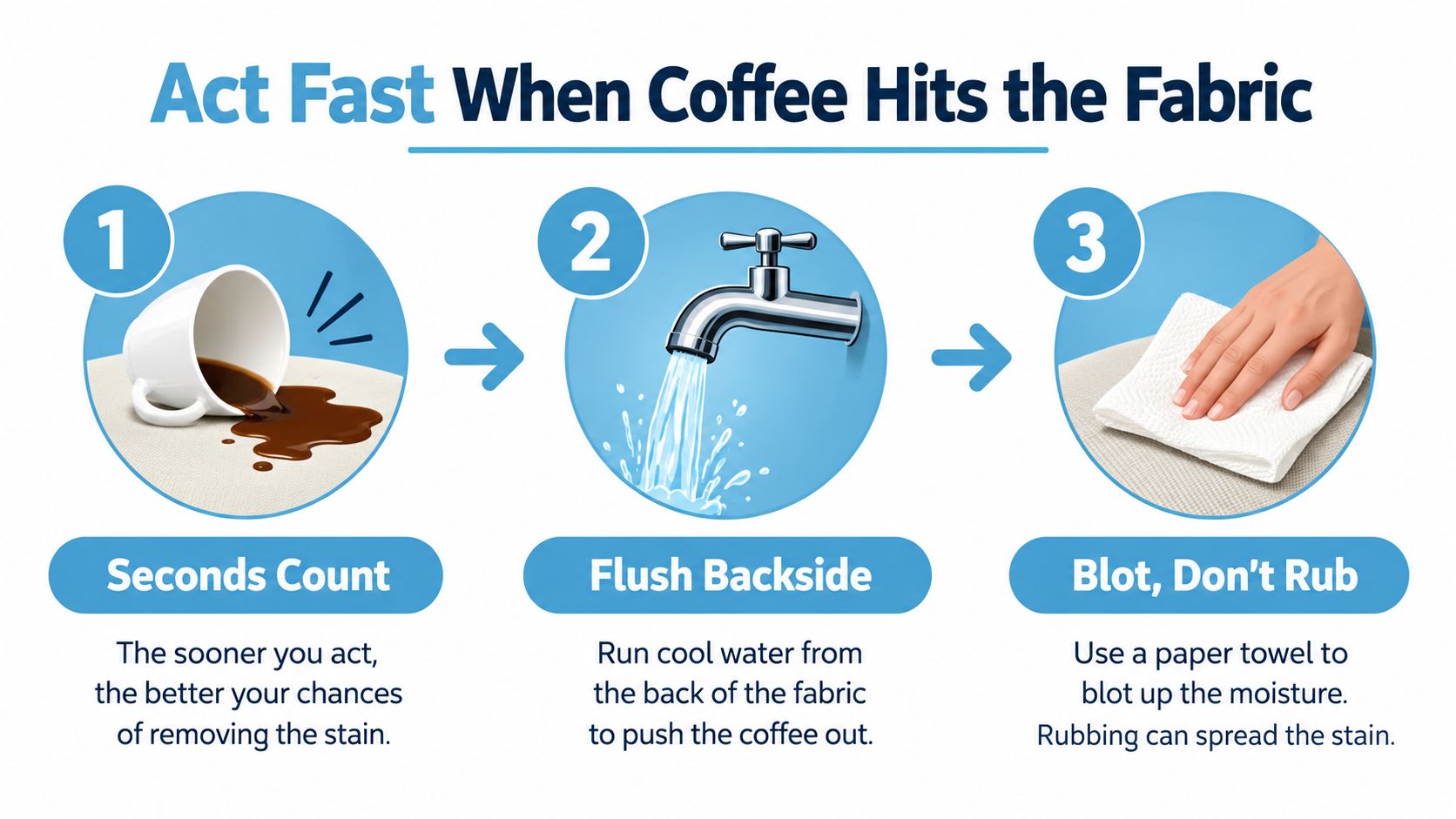
Start by lifting away any pooled liquid with a spoon edge or the corner of a clean cloth. Don't rub, because rubbing smears the stain across more threads and makes the ring wider. Then turn the garment inside out and run cold water through the back of the stain so the flow pushes the coffee outward, not inward.
Practical rule: if you can get the fabric under a tap before the stain dries, you're still in the easiest part of the job.
After the flush, blot with a clean white cloth or paper towel until the transfer slows. A tiny amount of liquid detergent or soap can go on next, but the priority in the first pass is to remove as much coffee as possible with water. That's why local guides also advise a brief wait only after the fabric has already been flushed, not before.
Hot water feels logical, but it's the wrong instinct. Coffee stains are tannin-based, and heat can lock those tannins into the fibres before you've had a chance to lift them out. The same problem shows up if you toss the shirt into a dryer too early, because machine drying can set the mark permanently.
If you want a broader stain workflow after the coffee is under control, keep a practical reference like common food stain removal steps for clothes in mind. The sequence is always the same at the pantry sink, flush, blot, treat, inspect, and only then wash.
Coffee stains don't all need the same remedy. A fresh espresso splash on polyester behaves differently from a dried latte ring on cotton, and a milk-heavy drink brings in oils and proteins along with tannins. The cleanest way to handle it is as a tiered toolkit, starting with the mildest option that fits the fabric and the stain age.
Liquid dish soap works well on damp stains, especially when there's milk or cream in the drink. Work a small amount into the spot with your fingers, let it sit briefly, then rinse thoroughly. Singapore stain-removal guides commonly recommend short dwell times, around 3 to 5 minutes or 5 to 10 minutes, before rinsing and checking before drying, which is the right rhythm for fresh marks rather than long soaks.
Baking soda paste is the next step when you want a little gentle abrasion and odour control. It's useful on sturdier fabrics, but it isn't a magic bullet. Enzymatic laundry detergent is more useful when the spill includes milk residue, because it's built to break down organic material rather than just masking the stain.
For white cottons, oxygen-based bleach can help when the mark has already resisted a normal wash. Chlorine bleach is a last resort only on bleachable, colourfast garments, because it can damage fibres and alter colour if you use it on the wrong item. That's why I tell people to stack treatments carefully, not dump every kitchen product onto one shirt.
A stain remover works best when you know what it's attacking. Tannin, oil, and protein need different chemistry.
For a more garment-focused product comparison, keep laundry detergent choices for stains in Singapore in your back pocket.
The stain isn't the only variable. The fabric decides how hard you can push, and treating everything like cotton is how people ruin good clothes. A coffee mark on a white T-shirt, a polyester office blouse, and a silk top all need different handling, even if the stain looks identical.
Cotton and linen usually tolerate the most assertive treatment. Full-strength detergent on the stain, oxygen bleach on whites, and a normal wash cycle are all reasonable if the care label allows it. These fibres can still show water rings if you spot-treat too narrowly, so flush or rinse the affected area evenly rather than obsessing over just the brown centre.
Polyester and blended office wear respond better to cooler water and light agitation. Too much heat or rough brushing can leave shine marks, especially on darker weaves, and it can also push oily residue deeper. Delicates such as silk, modal, and fine knits need a mild detergent, no scrubbing, and a final cool rinse.
If the label says dry-clean only, or the piece has structure, lining, or embellishment, stop there and hand it off. If you need a broader sense of how special-care garments are handled, what eco-friendly dry cleaning means is a useful lens for understanding why controlled treatment beats home improvisation on fragile pieces.
FabricMax TemperatureAgitationCompatible RemediesCottonCool to warm, if label permitsModerateDetergent, oxygen bleach on whites, careful pre-treatingLinenCool to warm, if label permitsGentleDetergent, careful rinsing, light stain removerPolyesterCoolLightDish soap, mild detergent, careful rinseSilkCold onlyVery gentleMild detergent, professional cleaning for valued itemsModal and fine knitsColdMinimalMild detergent, delicate hand-wash onlyDry-clean only garmentsNo home washingNone at homeProfessional cleaning only
For bras, lingerie, and other pieces that need close handling, delicate garment care guidance is a better reference than general laundry advice.
A dried coffee stain isn't just a fresher version of the same problem. Once the water evaporates, the tannins have had time to bond more tightly with the fibres, and the stain often oxidises into a dull shadow. That's why a shirt left overnight rarely responds to a quick rinse the way a fresh spill does.
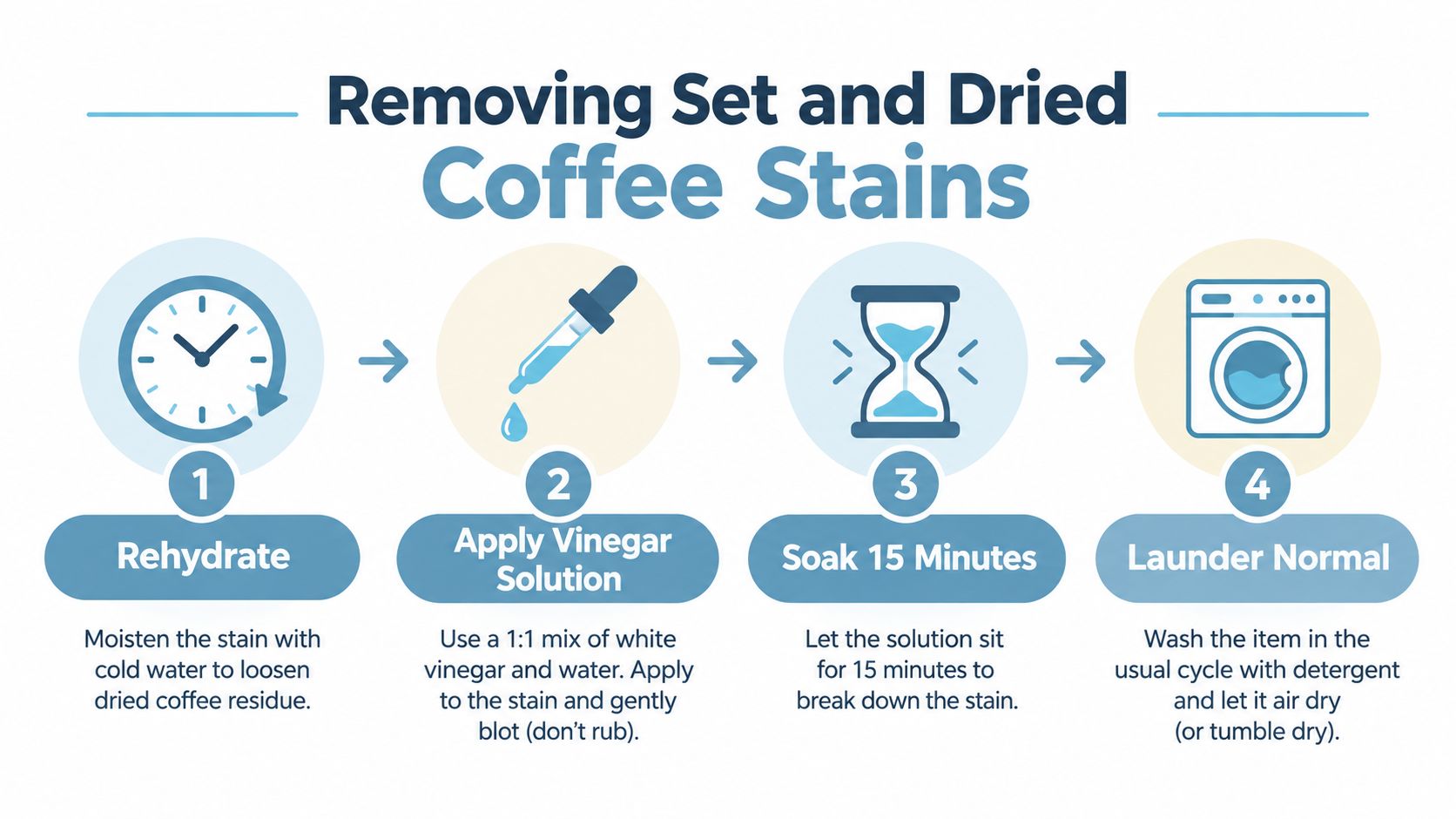
The first move is to rehydrate the stain. Soak the area in cold water with a little detergent for about 30 minutes if the stain is set, then inspect it again before doing anything harsher. That soak loosens the residue enough that the next treatment can reach the fibres.
A baking soda paste can follow when the stain is still visible after the soak. Apply it directly to the mark and give it time to sit, then rinse it out fully. If the stain is still stubborn, a white-vinegar solution mixed 1:1 with water is a useful next step on sturdier fabrics, especially for those faint coffee rings that keep reappearing after washing.
Drying is where many people ruin a recoverable garment. If a faint brown shadow survives and the item goes into the dryer, the heat can lock the residue in place and make the mark much harder to shift later. That's the moment I tell people to stop guessing and look at the garment with fresh eyes.
If the stain has survived a wash and still comes back after drying, you're no longer dealing with a simple laundry job.
That's especially true for old stains on workwear, uniforms, or favourite café clothes that have already been through one or two home treatments. The more the stain resists, the more likely it is that a professional cleaner will have a better shot than another round of kitchen remedies. For a wider stain-removal framework, the complete stain-removal guide for clothes is worth keeping alongside your laundry kit.
Most laundry damage starts with enthusiasm, not neglect. A person reaches for a brush, scrubs too hard, and only notices later that the colour has lifted or the fibres have roughened. Before you touch the stain, run through a short checklist so the fix doesn't become the new problem.
• Read the care label first. If it says dry-clean only, stop there and don't experiment with home soaking.
• Test colourfastness on an inner seam. Dab the chosen solution with a cotton bud on a hidden area and check for colour transfer.
• Confirm the fibre type. Silk, wool, rayon, and structured jackets need a lighter touch than cotton or denim.
Cold water is the safe default for coffee stains. Hot water can set the mark before you've finished treating it, and a dryer can do the same thing later in the process. Chlorine bleach is also a bad idea on many fabrics, especially protein-based fibres, because it can weaken or discolour the garment.
Simple rule: if the stain hasn't vanished, the dryer stays off.
That's the same logic behind professional caution in other fabric-care settings, including the guidance people use to save boat seats from stains. The principle is consistent, heat locks in residue, and once it's locked in, your options shrink fast.
If the garment is delicate, structured, or already showing colour loss, leave the scrubbing to someone who can assess it properly. For everyday clothes, the test spot and a cold-water rinse are usually enough to keep you out of trouble.
The easiest coffee stain is the one that never reaches your clothes. In Singapore, that means building habits around the places spills happen, the MRT commute, the office desk, and the hawker table. A sealed tumbler beats a loose takeaway cup in a crowded train carriage, and a wider base matters more than people think on shared worktables where one elbow can send the cup over.
Keep a tiny stain kit in your office drawer. A blotting cloth, a small water spray, and a detergent pen are enough to buy you time when a spill happens between meetings. Darker or patterned tops also make sense on days when you know you'll be drinking coffee at your desk, because they hide minor mishaps better than pale linen.
Morning coffee culture adds another wrinkle. Kopi-o-peng and teh-si are easy to carry until the cup slips, so the habit of balancing a takeaway drink on a packed table is often the problem. A cup with a wider base, or a lidded tumbler, is a better choice than hoping your shirt will survive another crowded breakfast run.
Reserve light-coloured linen and other high-visibility pieces for lower-risk settings. If you're heading into a long commute, a packed office day, or a café meeting, choose fabrics that tolerate quick spot treatment and are less heartbreaking if a mark lingers. That's not about dressing cautiously all the time, it's about matching the garment to the day.
There's a point where more scrubbing stops helping. Once a coffee stain has survived two treatment cycles, resurfaced after drying, or turned into a shadow on silk, wool, rayon, or a dry-clean-only garment, the home route is usually done. The same applies to anything that's already been heat-set in a previous wash or dryer pass.
• Old stains that keep returning. If the mark is older and still visible after repeat treatment, the fibres may need controlled spotting rather than more detergent.
• Delicate or structured garments. Silk blouses, wool pieces, lined jackets, and embellished items can lose shape or colour fast.
• Heat-set marks. Once hot water or a dryer has fixed the stain, the stain chemistry has changed and the fabric needs more careful handling.
Professional laundry and dry-cleaning services work differently because they don't treat every garment the same way. They can use specialised solvents, controlled spotting agents, and finish pressing that resets the surface so the stain doesn't sit in the fabric's texture. In plain terms, they can work more precisely than a kitchen sink ever will.
That matters for the Singapore wardrobe, work blouses before a client meeting, uniforms stained mid-shift, and dresses marked during a weekend café visit. Tumble Laundry handles laundry and dry cleaning with stain inspection and treatment on request, and customers can flag stains so the team can choose the most suitable method for the item. That kind of process is often more sensible than another round of at-home experiments when the garment already has value or the stain has had too long to settle.
When you're choosing a pickup laundry or dry cleaner, ask three things. Check the turnaround time, ask whether stain treatment is included, and confirm how they handle delicate fabrics and dry-clean-only labels. If the answers are vague, that's usually a sign to keep looking.
If you've got a coffee mark that won't budge, send it to a cleaner before the heat sets it for good. Visit Tumble Laundry for pickup-and-delivery laundry and dry cleaning in Singapore, and flag the stain when you book so the garment gets the right treatment from the start.

We make laundry days fast and easy for you. We collect, clean and deliver your laundry and dry-cleaning.
53 Ubi Ave 1 #03-43, Singapore 408934
Mon - Fri | 8:30 am–5:30 pm
Sat | 8:30 am–12:30 pm
hello@tumble.sg
+65 62554222
Whatsapp Us


