Eco Friendly Laundry: A Practical Guide for Singapore Homes
This is some text inside of a div block.


Singapore's household water-use study shows that showering, flushing, kitchen use, and laundry account for about 80% of total household water consumption PUB water conservation note. That makes laundry one of the fastest places to save water at home, especially when the wash habit is easy to change and the bill is already being driven by daily routines. In a city where washing machines sit inside the household energy footprint alongside air-conditioners, refrigerators, lighting, and water heaters NEA household electricity profile, eco friendly laundry isn't a niche idea, it's a practical one.
The blunt truth is that many households clean clothes more often than they need to, use hotter cycles than the fabric asks for, and dose detergent by habit rather than by load. In Singapore's humid climate, that adds up quickly because laundry isn't just about dirty clothes, it's also about sweat, damp storage, and the temptation to rewash items that only needed better sorting or drying.
Singapore already treats household laundry as a real utility issue. PUB's household water-use study, based on about 400 households, found that showering, flushing, kitchen use, and laundry together account for about 80% of total household water consumption PUB water conservation note. That puts laundry inside a very concentrated slice of domestic water demand, so small habit changes, like full loads and lower-water settings, can have a bigger effect than many households expect.
NEA's household electricity profile places washing machines in the same group as the appliances that make up about 80% of typical household energy consumption NEA household electricity profile. Eco friendly laundry in Singapore involves both water and electricity consumption. A machine that uses less water per wash can also reduce the home's overall utility footprint, especially when residents stop running frequent partial loads.
Tropical living makes the problem stickier. Clothes pick up sweat quickly, towels stay damp if they are left in a closed bathroom, and many condo residents batch laundry around busy schedules instead of washing at the right moment. Those habits push people toward extra cycles, not better cleaning.
Practical rule: if a garment is not actually dirty, it usually needs airing, spot treatment, or better drying, not a full rewash.
The waste is often in the details. Heated cycles, half-full drums, and too much detergent raise water and power use without making clothes much cleaner. PUB's guidance on clothes-washing machines points to 6 litres per kilogram or less per wash load as a useful efficiency target, which is why machine choice and load discipline matter so much in Singapore homes eco laundry guidance.
For readers comparing broader home upgrades, explore eco bathroom renovations as a useful reference point, because the same logic applies, choose systems that reduce resource use without asking for more daily effort. If you want a more detailed local primer on household wash habits, this practical guide to laundry best practices in Singapore is worth keeping nearby.
A wash routine saves the most when it starts before the drum turns. In Singapore, the practical gains come from full loads, cold water, and the right cycle for the soil level. That matters because many loads are sweat, dust, and everyday wear, not heavy grime.
Run the machine only when the load is ready. A full drum spreads water and electricity across more clothing, so each wash does more useful work than a series of small top-ups.
Practical rule: if the drum still has plenty of empty space, wait. One careful wash beats two lazy ones.
Condo living makes this worth treating as a habit. Drying racks, balcony space, and shared laundry timing all push residents toward smaller, more frequent washes, but batching clothes across the week usually cuts waste and keeps the routine simpler.
Cold water is the right default for most everyday loads in Singapore, especially workwear, school uniforms, and gym clothes that are lightly worn. Hot water belongs to cases where fabric care or soil level really calls for it. For ordinary sweat and dust, heat is usually the part that adds cost without improving the result.
That cost shows up in water heating. Heating water is one of the biggest energy draws in a wash cycle, so cold washing keeps the machine from doing extra work. It also helps colours hold up and reduces wear on fabric over time.
For a quick decision rule near the washer:
1. Full load available, use the normal cycle.
2. Light wear or only a few pieces, wait and batch it.
3. Sweat and daily dust, use cold water.
4. True heavy soil, use a stronger cycle only when needed.
If your household is trying to cut waste without adding more admin, the 2026 energy saving tips resource is a useful companion. For planning around busy weeks, the local guide to the ultimate laundry schedule for busy people fits Singapore routines well, and it pairs neatly with the kind of pickup-and-delivery service Tumble Laundry runs for condo residents.
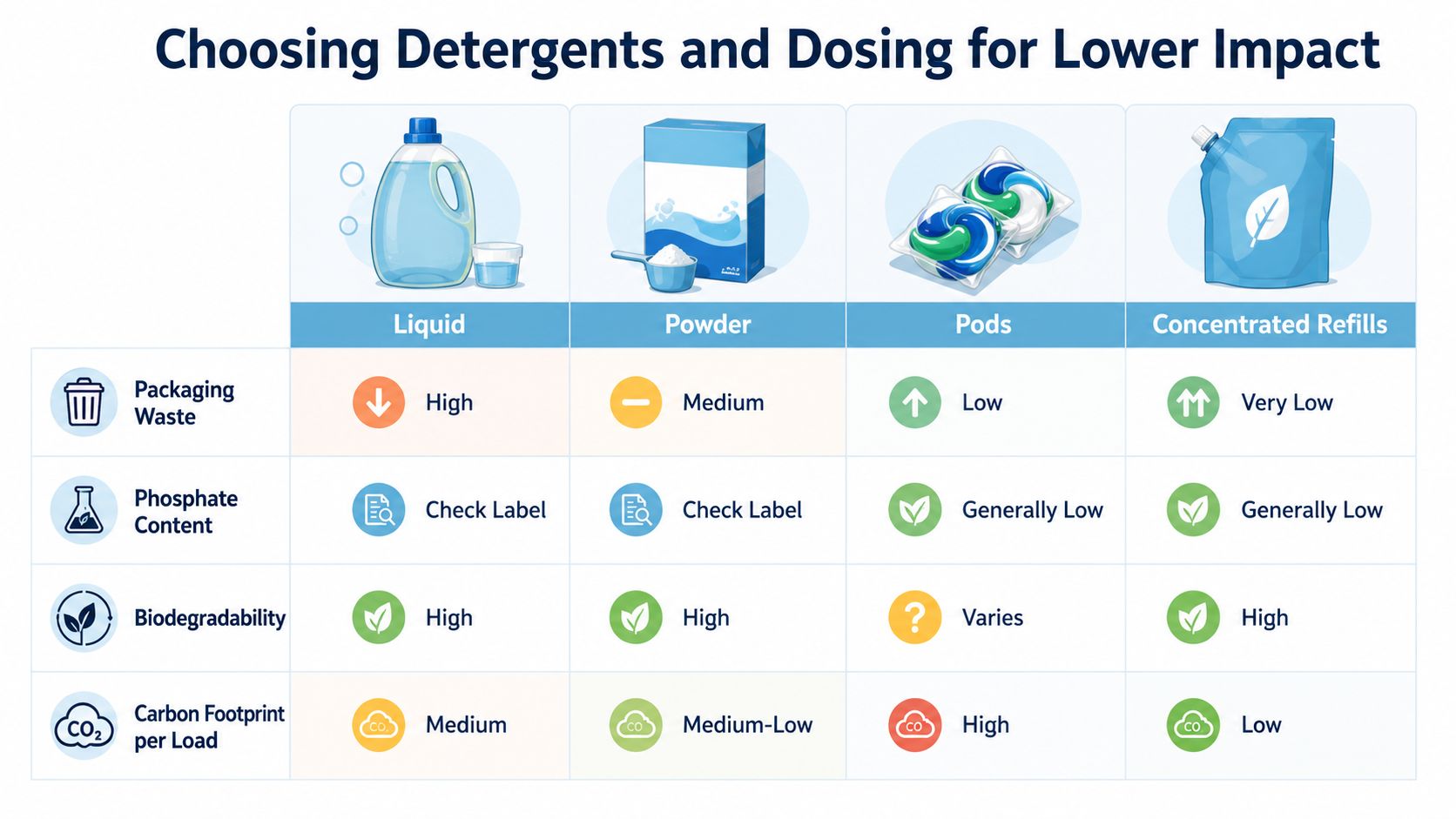
Detergent is where a lot of eco friendly laundry claims get fuzzy. The format matters, the dose matters, and the label matters, but not every “green” label means the same thing. For most Singapore homes, a concentrated liquid or powder in recyclable packaging, measured properly with a cap or scoop, is the most practical starting point.
Pods are convenient because they remove guesswork, but they still create packaging waste and don't suit every household's load size. Powders in cardboard packaging often look less polished on the shelf, yet they usually make more sense when the goal is lower waste and tighter control over each wash. Concentrated refills sit in the middle, because they reduce shipped water and let you portion more carefully.
The biggest mistake is using too much detergent. When households over-dose, they waste product and often trigger extra rinsing. That means more water used and more residue left behind on clothing.
The comparison infographic below shows the trade-offs people face when choosing between liquid, powder, pods, and concentrated refills.
Words like plant-based and biodegradable are not enough on their own. The useful checks are the ones that can be verified, like a third-party certification or a full ingredient disclosure. A detergent can sound natural and still be poorly packaged, over-perfumed, or more concentrated in marketing than in substance.
Singapore households also have an advantage here, because local water conditions generally don't require the same detergent load as harder-water regions. That means there's little reason to pour in extra just in case. Use the minimum that gets the wash clean, then adjust only if the machine or the fabric really needs it.
If you want a brand-agnostic reference on dosage, the local guide on how to dose detergent properly is practical reading. For broader laundry chemistry and viral inactivation context, VirusFAQ.com viral inactivation tips is a useful reminder that clean laundry still depends on the wash method, not just the product claim.
Practical rule: start with less detergent than you think, then add only if the machine genuinely leaves soil behind.
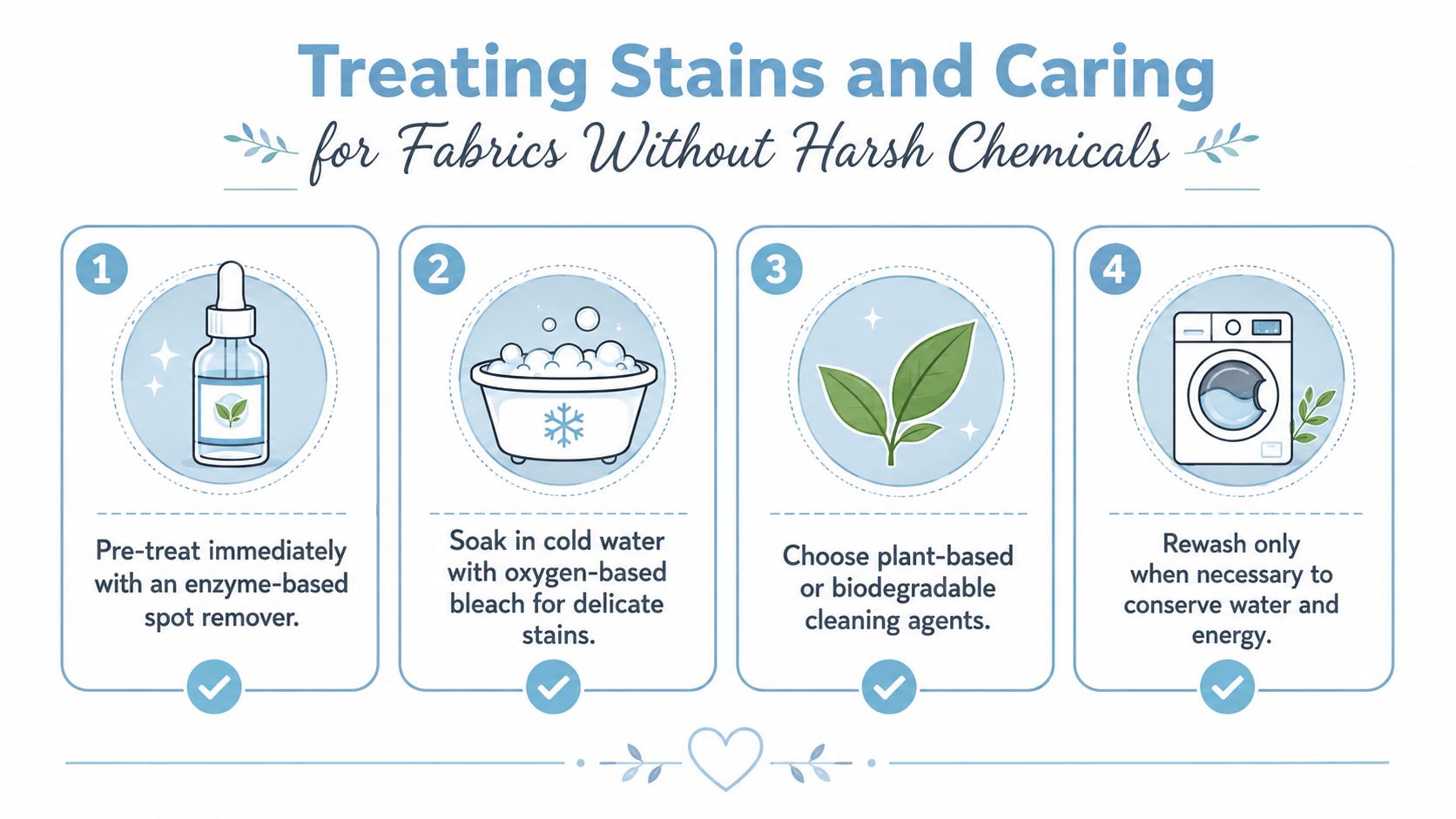
Stains are the fastest way to turn one garment into two wash cycles. That's why stain treatment matters so much in eco friendly laundry, it's not about being delicate for the sake of it, it's about stopping the rewashing loop before it starts. If the first treatment works, you save water, electricity, detergent, and fabric life in one go.
For fresh marks, pre-treat early with an enzyme-based or plant-derived spot remover. That approach is usually enough for everyday food stains on cotton and work shirts, as long as you don't scrub so hard that you damage the weave. For protein-based marks like sweat on workwear, a cold soak is often the safer move.
Curry on a cotton top usually needs immediate pre-treatment and a rinse before the stain dries in. Ink on school uniforms is different, because the aim is to lift as much as possible without spreading the pigment. Mildew on towels left in humid bathrooms usually tells you the washing problem isn't the wash itself, it's the drying and storage routine after it.
Not every garment should be treated like gymwear. Silk kebayas and batik need cool water and pH-neutral soap, because harsh handling can flatten the finish or distort the fabric. Technical activewear is the opposite problem, fabric softener can trap buildup and hold onto odour, so it's better avoided on those pieces.
The small habits matter too. A vinegar rinse can help strip detergent buildup when clothes start to feel stiff or carry a dull residue. Oxygen bleach is a more fabric-friendly option than chlorine bleach for many stubborn odours, especially when the goal is to preserve the garment rather than strip it harshly.
The laundry habit to avoid is simple.
Don't rewash first and think later. Fix the stain, then wash once.
If you want a detailed stain-by-stain walkthrough, the local guide to the complete guide to stain removal is a sensible companion. The main lesson is consistent across garment types, right treatment early beats a second full wash later.
Drying is where Singapore's humidity becomes a laundry problem of its own. Over-drying wastes energy, while under-drying invites mildew, stale smells, and premature discarding of clothes that could have lasted longer. A good post-wash routine protects both the electricity bill and the wardrobe.
Spin the clothes well before they leave the machine, because every bit of water removed in the drum is one less bit that has to leave in the air. For everyday cottons, cross-ventilated balcony racks or indoor drying with good airflow usually do the job without drama. Heat should be the backup plan, not the default.
Sensor settings on dryers are more sensible than timed cycles because they stop when the load is dry. Timed cycles keep going even after the moisture has gone, which is how households burn more power than they need. If you do use a dryer, keep it on low heat or sensor-dry settings where the machine allows it.
Clothes need to be completely dry before they go back into the wardrobe. Breathable storage helps more than strong fragrance, and simple tools like cedar blocks, reused silica gel, or a wardrobe dehumidifier on a timer can reduce musty smells without masking the problem.
Knits do better folded than hung, because hanging stretches the shape. Seasonal rotation helps too, since repeating the same few pieces day after day wears fibres faster than a steady rotation does. Minor repairs matter more than people think, because a loose seam or small tear becomes a reason to replace the garment earlier than necessary.
Practical rule: if a garment smells damp, dry it properly before you store it. Don't cover up the problem with fragrance.
The saving here is longevity. Better drying and storage means fewer rewashes, less dryer use, and fewer clothes sent to replacement too soon. In a humid city, that's one of the most underrated forms of eco friendly laundry because it reduces waste without asking you to change the clothes you already own.
Singapore households already know the utility picture is not abstract. PUB and NEA data both point to the same reality, laundry habits sit right inside day-to-day water and electricity use. A pickup-and-delivery service can carry those savings further without adding another task to a packed week, which is useful for condo dwellers who want lower-impact washing but cannot spend time managing every cycle.
Tumble Laundry uses cold-water washing on request, eco-friendly cleaning products, and in-house processing instead of sending loads elsewhere. That lets the team match the wash to the fabric and soil level, rather than pushing everything through one routine. It also keeps each customer's laundry separate, which helps avoid sorting mistakes and the rewashes that come with them.
The operational difference matters. Commercial machines can handle larger, better-filled loads than many home setups, so water and energy are spent more efficiently per kilogram of laundry. A well-run process also gives more consistent results on stains and delicates, which is where many home routines break down and waste starts to creep in.
The goal is simple, cleaner clothes with less wasted water, less wasted electricity, and fewer garments damaged by the wrong setting. You still get the outcome you want, but the work of dosing, sorting, washing, and managing drying space does not sit on your own machine timer.
This kind of service makes the most sense when laundry volume is climbing, balcony space is tight, or some items need more careful handling than a standard home wash can give. That includes workwear, delicate pieces, and recurring loads that are easy to delay until they become a larger job. In a humid climate, delay often means a second wash.
For businesses or recurring household loads, the commercial laundry service shows how the same approach can scale without the household having to build a bigger routine around it. The value is not in replacing good habits. It is in keeping those habits consistent when the load gets heavier.
If you want laundry handled properly without taking on the admin yourself, Tumble Laundry offers pickup, professional cleaning, and delivery across Singapore. That keeps the process practical for busy homes, while still supporting the same low-waste habits that make eco friendly laundry work in the first place.

We make laundry days fast and easy for you. We collect, clean and deliver your laundry and dry-cleaning.
53 Ubi Ave 1 #03-43, Singapore 408934
Mon - Fri | 8:30 am–5:30 pm
Sat | 8:30 am–12:30 pm
hello@tumble.sg
+65 62554222
Whatsapp Us


